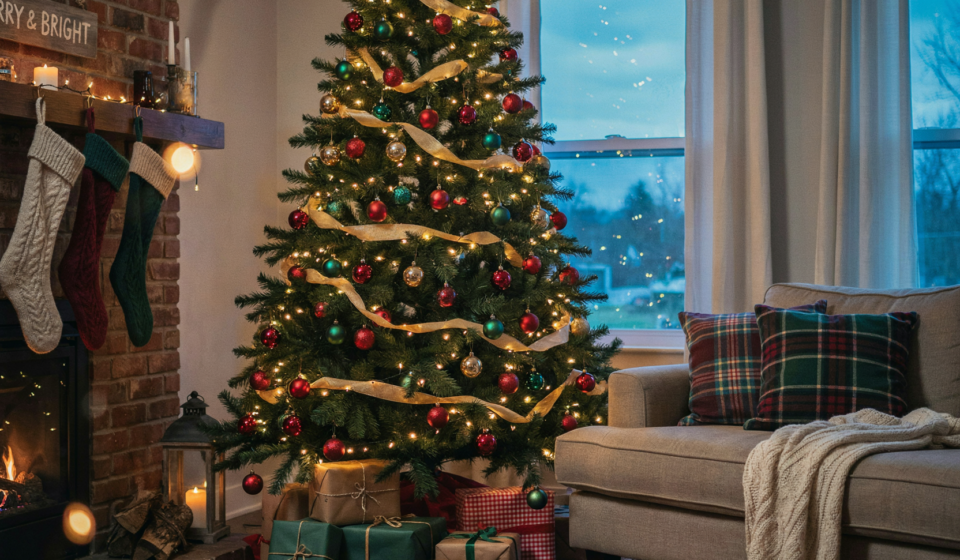

My neighbor puts up the same tree every single year. Same red ornaments, same tinsel, same star that’s been slightly bent since 2014. And honestly? It works for her. But last December I stood in front of my own tree holding a box of leftover ornaments from three different eras of my life, half of them clashing, and thought: this doesn’t look “collected,” it looks like I gave up halfway through.
That’s usually the real problem people run into when they search for Christmas tree decor ideas. It’s not that they don’t have decorations, most of us have a closet full. It’s that the decorations don’t add up to anything. There’s no theme holding it together, so the tree ends up looking busy instead of beautiful.
This year, Christmas trees are leaning harder into having an actual point of view. Some people are going full drama with black branches and gold accents. Others are turning their tree into a shrine to their favorite fantasy series. And a lot of people are just finally admitting they hate traditional red and green and want permission to do something else. Wherever you land, the goal of this guide is the same: give your tree a theme, not just a pile of ornaments.
Table of Contents
- What Actually Makes a Christmas Tree Look “Themed”
- Black and Gold Trees (This Year’s Boldest Move)
- Cherry Cola and Berry-Tone Trees
- Personalized “Hobby” Trees, Fantasy, Bookish, and Fandom
- Coquette Pink Trees
- Mob Wife Glam Trees
- Coastal and Warm-Climate Trees
- Dark Academia Trees
- Quiet Luxury Neutral Trees
- Classic Red, Green, and Gold (Still Not Going Anywhere)
- The Layering Method That Makes Any Tree Look Expensive
- Ornament Ratio: How Many Is Too Many
- Mistakes That Make a Themed Tree Look Accidental
- FAQs About Christmas Tree Decor Ideas
- Final Thoughts
What Actually Makes a Christmas Tree Look “Themed”
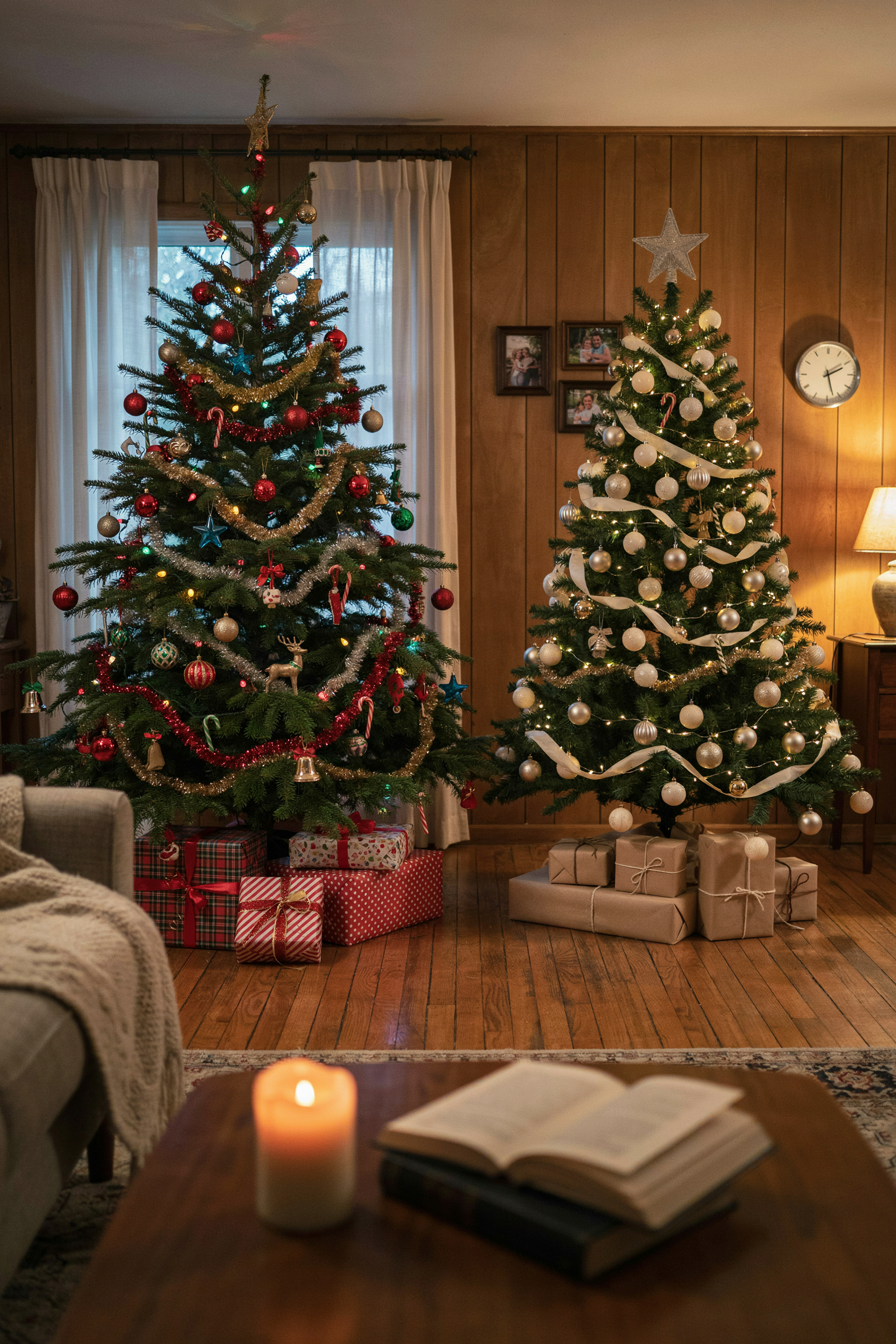
Before getting into specific looks, it helps to know what separates a “themed” tree from a tree that just has a lot of stuff on it. A themed tree has three things working together: a consistent color palette (usually 2-3 colors max), a consistent material or texture (all matte, all glass, all fabric, whatever), and a clear visual anchor, like a topper, ribbon color, or light tone, that ties the whole thing together.
That’s really it. You don’t need a bigger budget or more ornaments to get a themed look. You need fewer, more consistent choices. Most of the “wow” trees you see online are actually simpler than the cluttered ones, they just committed to one direction instead of mixing five.
Black and Gold Trees (This Year’s Boldest Move)


This is genuinely one of the boldest Christmas tree trends going into this year, and it’s not subtle. A black artificial tree (or a green tree with black ribbon and accents) creates a dramatic, moody backdrop that makes gold ornaments practically glow against it. The contrast between black branches and metallic gold, deep reds, and dark greens gives off a dramatic look that trades the usual North Pole feel for something closer to a gothic luxury hotel lobby.
If a fully black tree feels like too much of a commitment, you can get most of the same effect by keeping a regular green tree but going heavy on black ribbon, dark gold ornaments, and warm gold lights instead of white ones.
Cherry Cola and Berry-Tone Trees
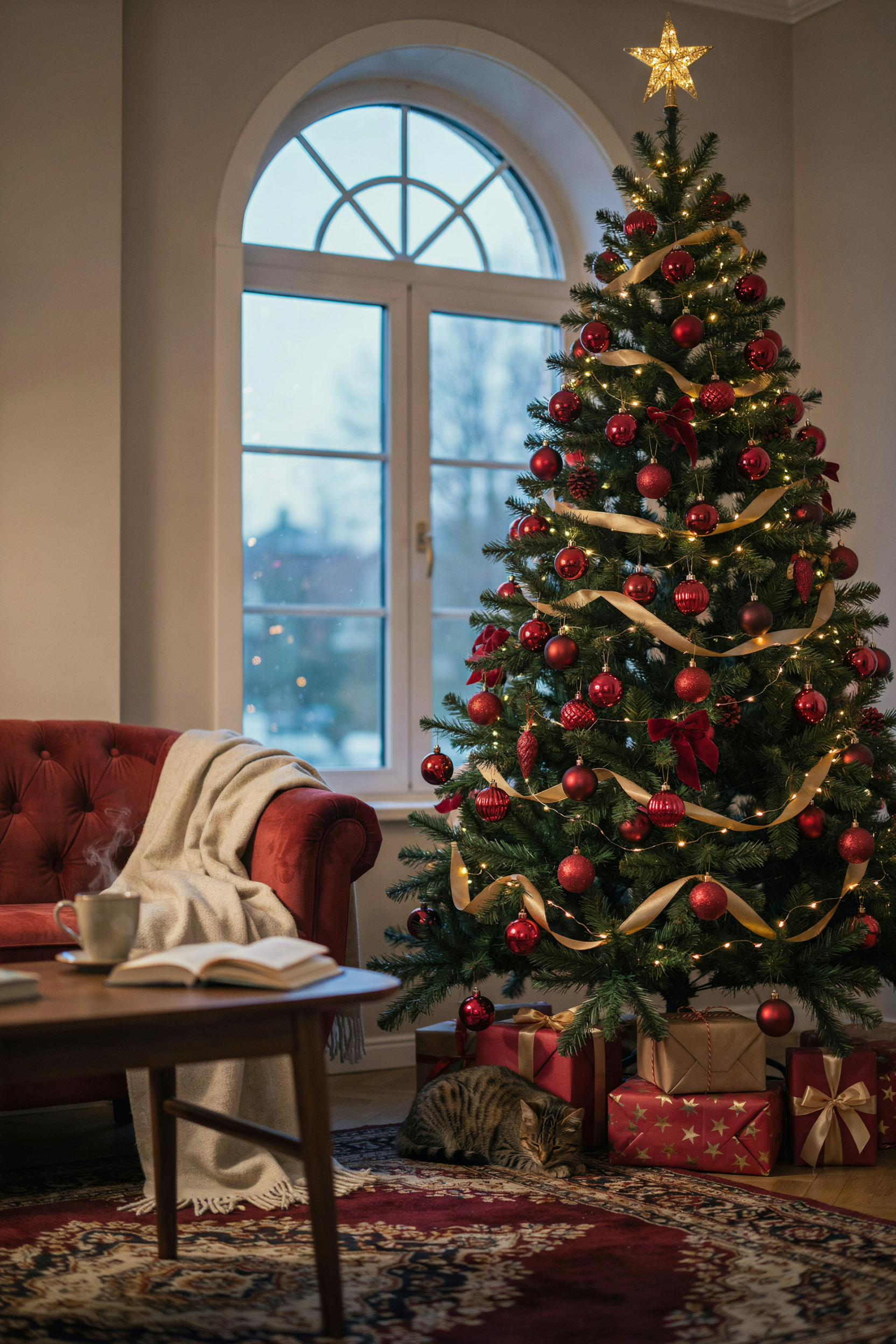
If black feels too dramatic but you’re still bored of standard “Christmas red,” this is the middle ground. Cherry cola tones, rich cherry reds, deep burgundies, and chocolate browns, paired with metallic gold accents, have been trending across fashion and home design and are now making their way onto Christmas trees. It reads as warmer and more sophisticated than a bright red-and-green tree, without going full moody-black.
This palette works especially well if your living room already leans warm or earthy in its everyday colors, since it won’t clash with your furniture the way a bright traditional palette might.
Personalized “Hobby” Trees, Fantasy, Bookish, and Fandom
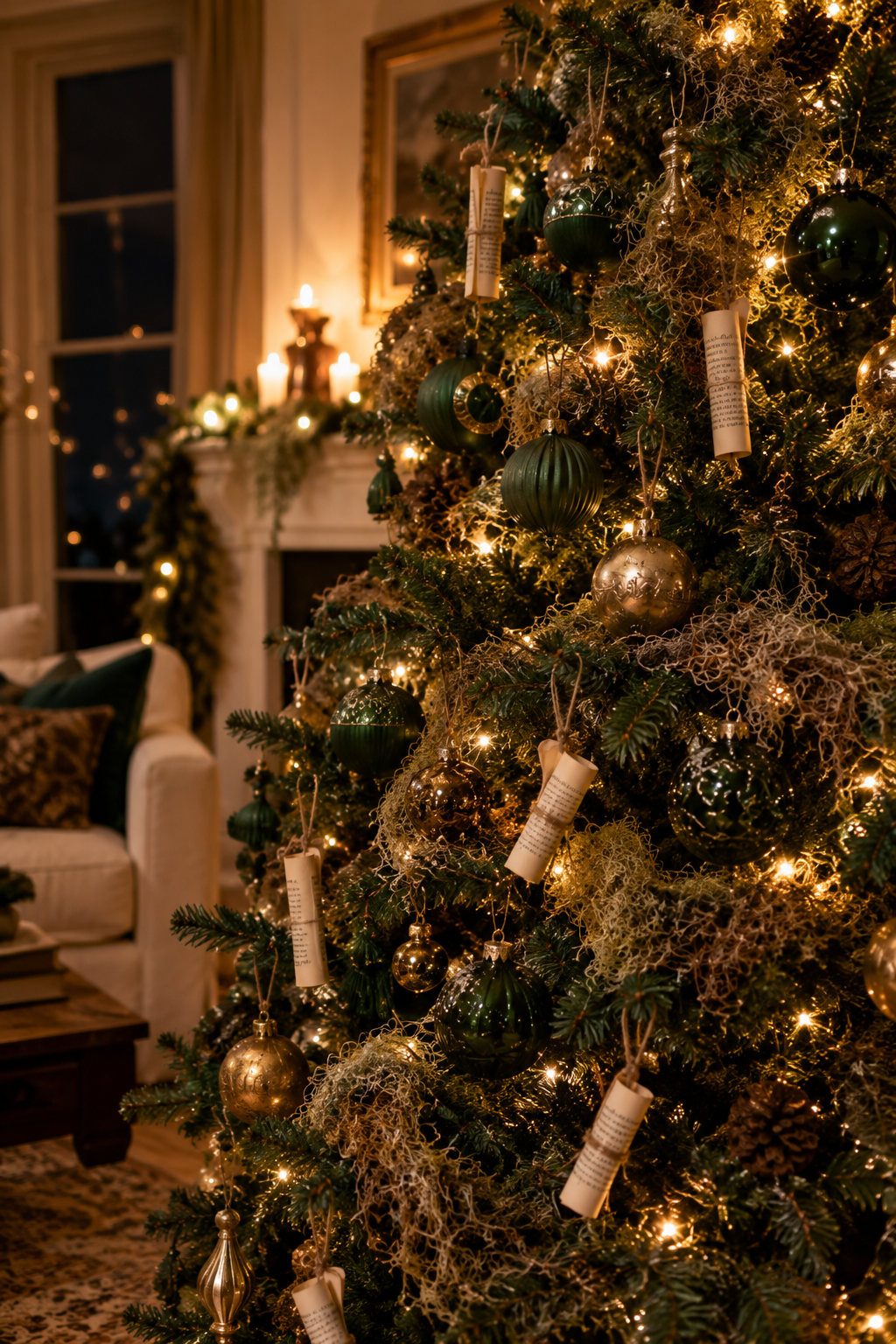
This might be the most interesting shift happening in tree decorating right now. Instead of following one set color palette, a lot of people are building trees around their actual interests, favorite books, movies, hobbies, even specific fictional worlds. Think fantasy-forest trees inspired by favorite novel series, complete with moss, tiny lanterns, and deep jewel tones, or trees built entirely around a favorite film’s color palette and props.
The appeal here is obvious once you think about it: a tree that reflects something you’re genuinely into is going to feel more meaningful than one copied exactly off Pinterest. If you’re a big reader, a gamer, or just deeply attached to a specific aesthetic, this is permission to build a tree around that instead of a generic holiday palette.
Coquette Pink Trees
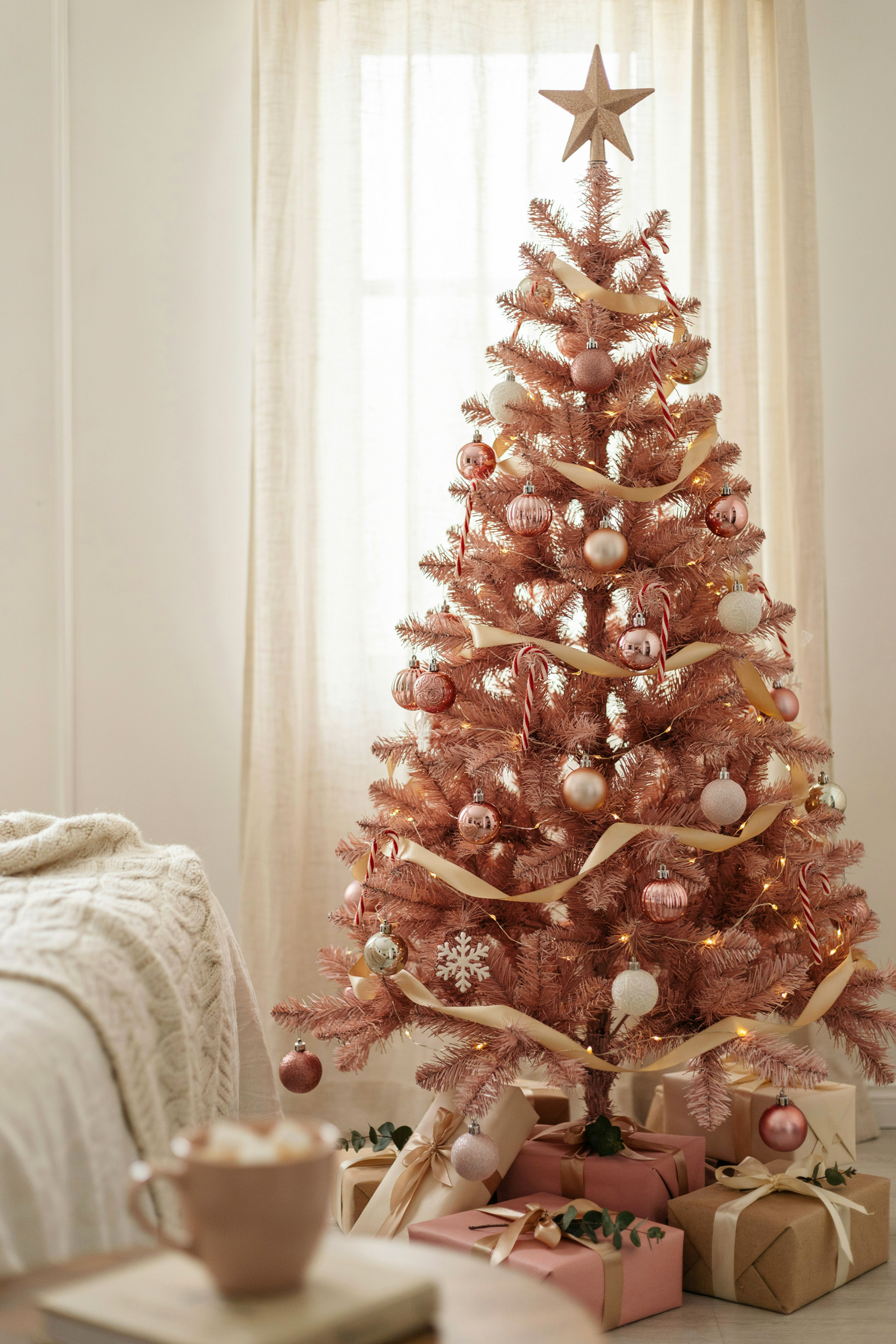
Pink trees have moved from “cute niche idea” to one of the most consistently searched tree looks out there, largely thanks to the crossover with the coquette and soft-girl aesthetic. Blush and dusty rose ornaments, candy-cane stripe accents, velvet bows, and champagne metallics all combine into a soft, romantic, very photogenic tree.
One honest note: because this look has become so popular, a straight copy of it can start to feel a little generic. Adding one unexpected detail, a vintage ornament, a single non-pink accent color, or a personal keepsake, keeps it from looking identical to every other pink tree on your feed.
Mob Wife Glam Trees
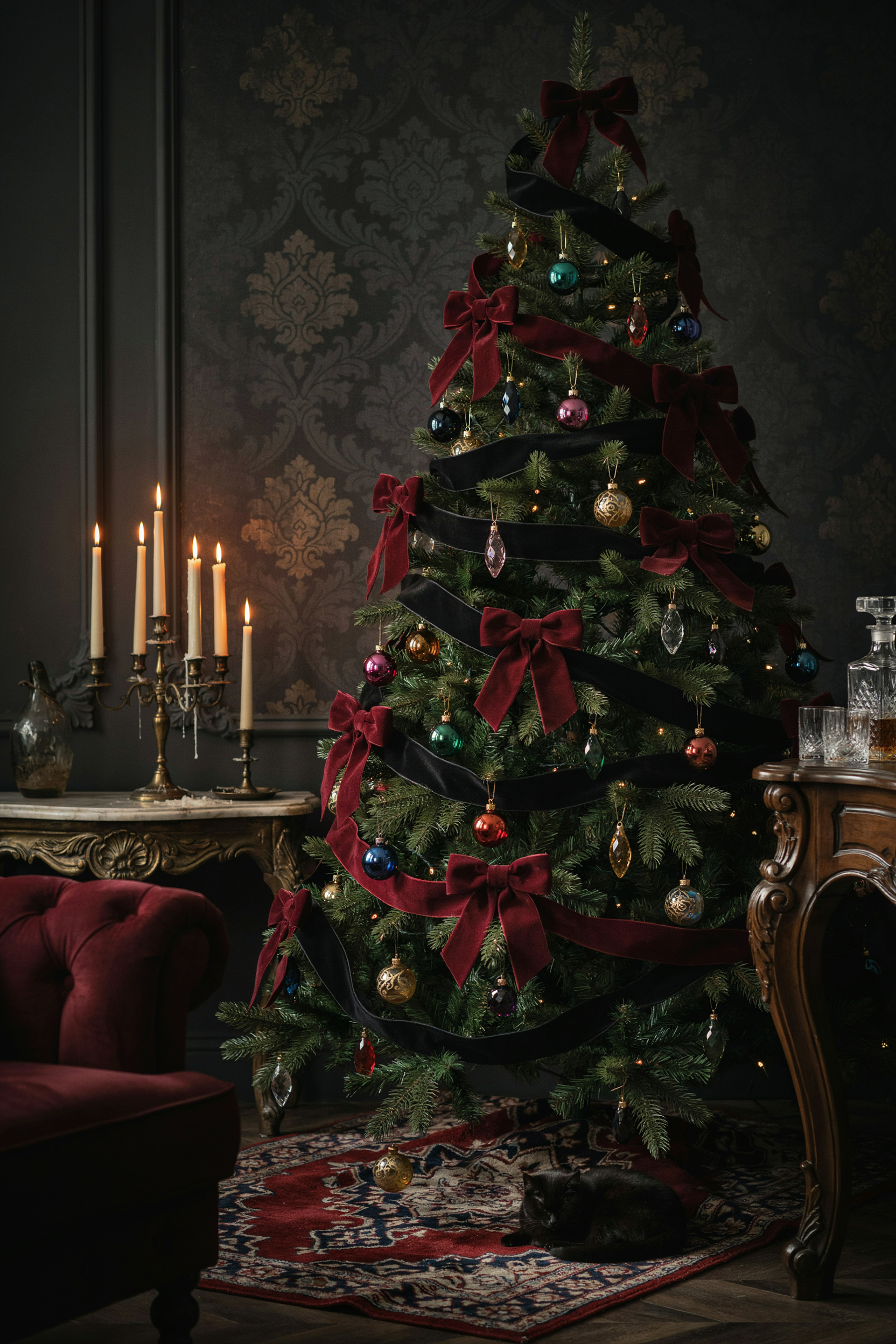
This is the tree version of the “mob wife” aesthetic that crossed over from fashion into home decor over the last couple of years, and it’s become one of the most dramatic looks in Christmas decorating right now. Velvet ribbon, oversized bows, deep jewel tones (black, burgundy, emerald), and crystal or glass ornaments come together for a tree that looks less like a craft project and more like a statement piece in a luxury hotel lobby.
If your personal style already leans a little maximalist or glamorous the rest of the year, this tree theme is going to feel the most natural to pull off, since you likely already have pieces (candlesticks, velvet textiles, crystal glassware) that fit right in.
Coastal and Warm-Climate Trees
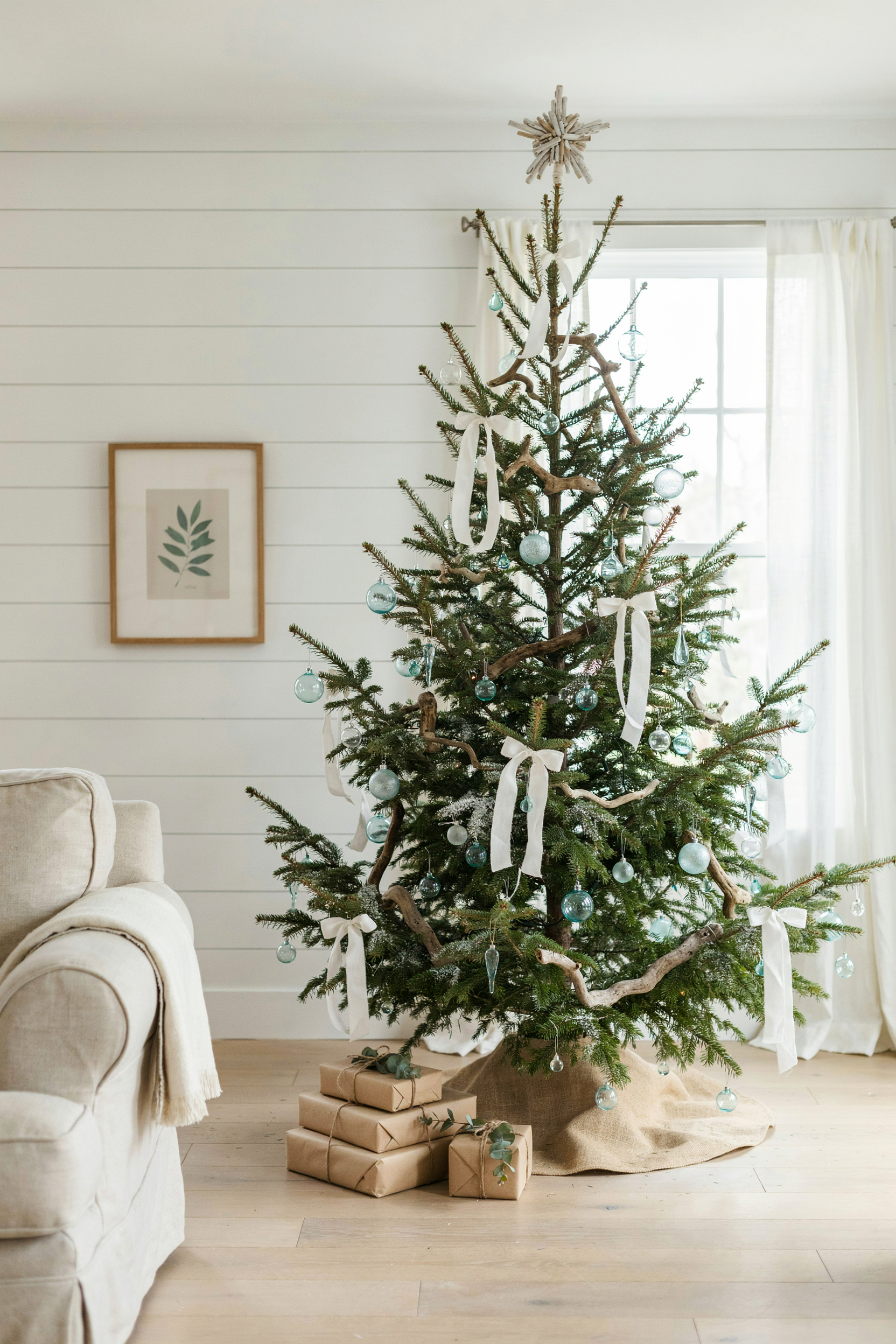
Not everyone wants their tree to look like it belongs in a snowy cabin, especially if you actually live somewhere warm. A coastal Christmas tree swaps traditional deep reds and greens for white linen bows, pale blue glass ornaments, bleached or driftwood-style branches, and simple, sparse greenery. It’s a genuinely refreshing option if you’re in a warm-climate state and tired of forcing a “cold Christmas” look onto a home that doesn’t match it.
Dark Academia Trees
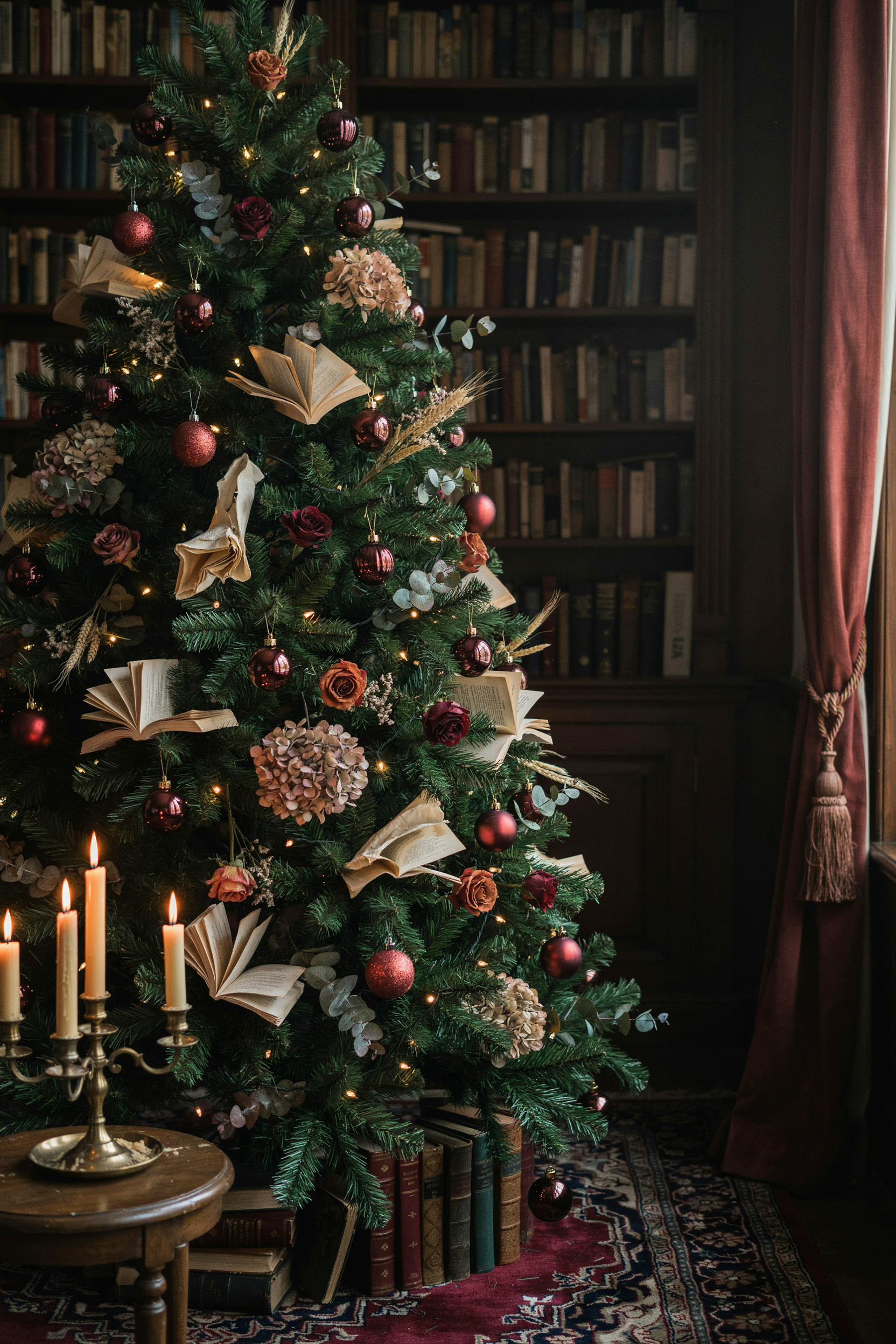
For anyone who finds bright, sparkly trees a little overwhelming, dark academia offers a quieter, more literary alternative. Deep burgundy, forest green, and bronze ornaments, dried florals, vintage book pages, and warm candlelight-style bulbs (instead of bright white or multicolor lights) come together for a tree that feels more like a cozy library than a department store display.
This theme pairs particularly well with a home that already leans traditional, vintage, or book-filled the rest of the year.
Quiet Luxury Neutral Trees
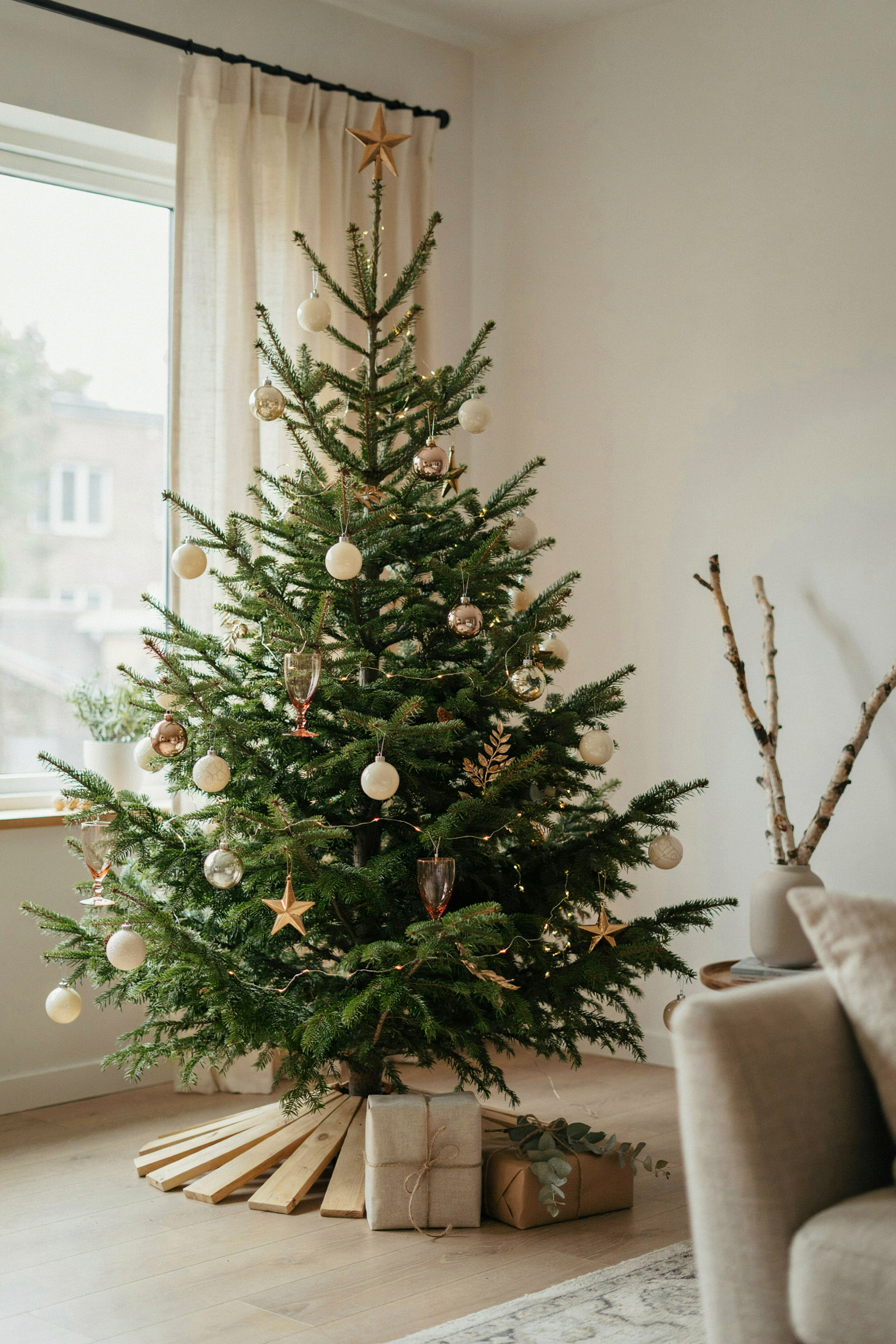
The “quiet luxury” aesthetic that’s been dominating fashion and interiors has made its way onto Christmas trees too. Think cream, champagne, and soft gold ornaments, natural materials like wood and linen, and a noticeably restrained ornament count compared to a traditional tree. It’s understated on purpose, the opposite of a maximalist mob-wife tree, and it tends to photograph beautifully because nothing on it is competing for attention.
Classic Red, Green, and Gold (Still Not Going Anywhere)
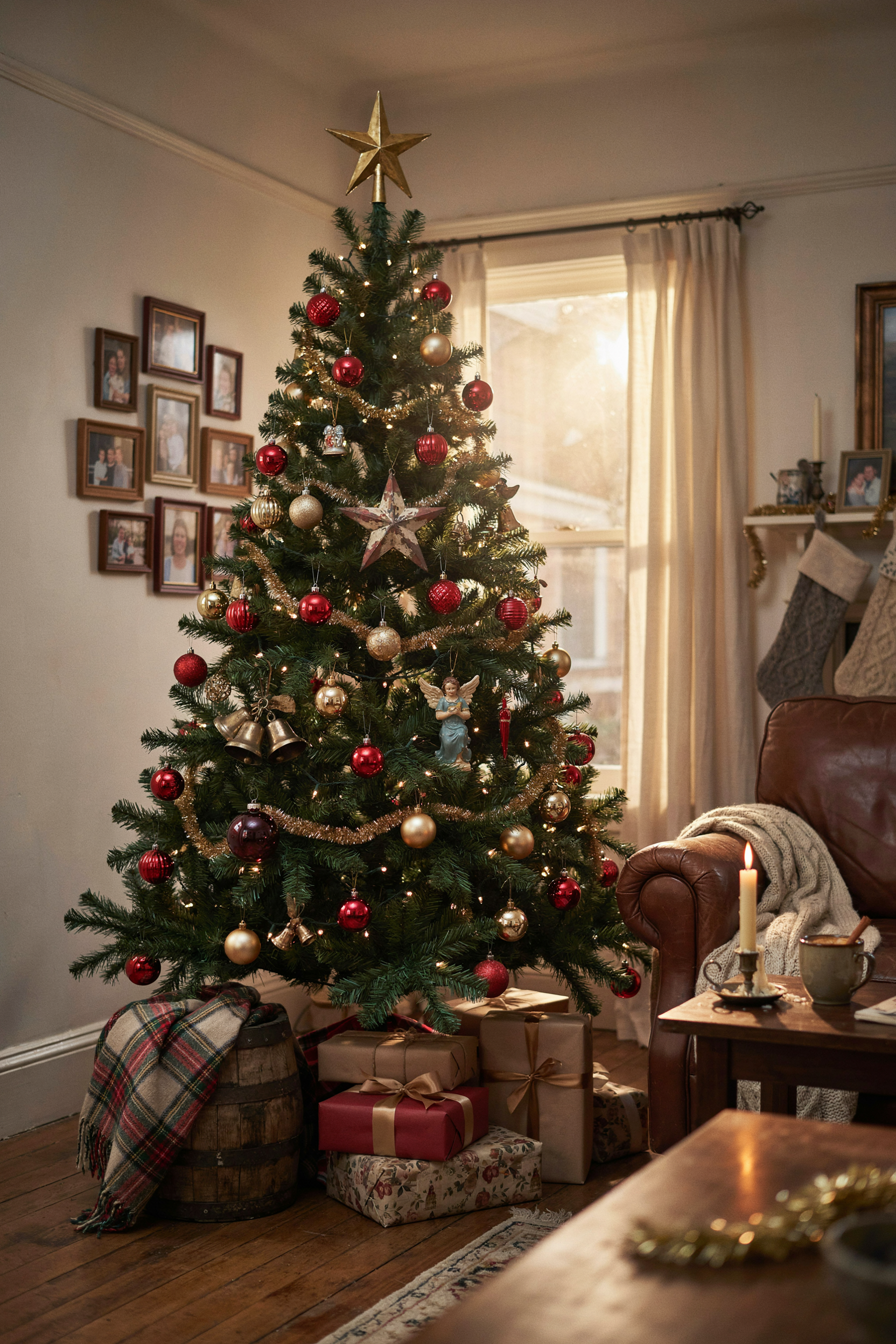
With all these new trends, it’s worth saying plainly: the classic red, green, and gold tree isn’t going anywhere, and it doesn’t need to. A tree built from ornaments collected over decades, family keepsakes, kids’ handmade pieces, whatever you inherited from a parent or grandparent, has something none of the trending aesthetics can replicate: actual sentimental history. If that’s your tree, you’re not behind on trends. You’re doing the one thing that was never actually about trends in the first place.
The Layering Method That Makes Any Tree Look Expensive
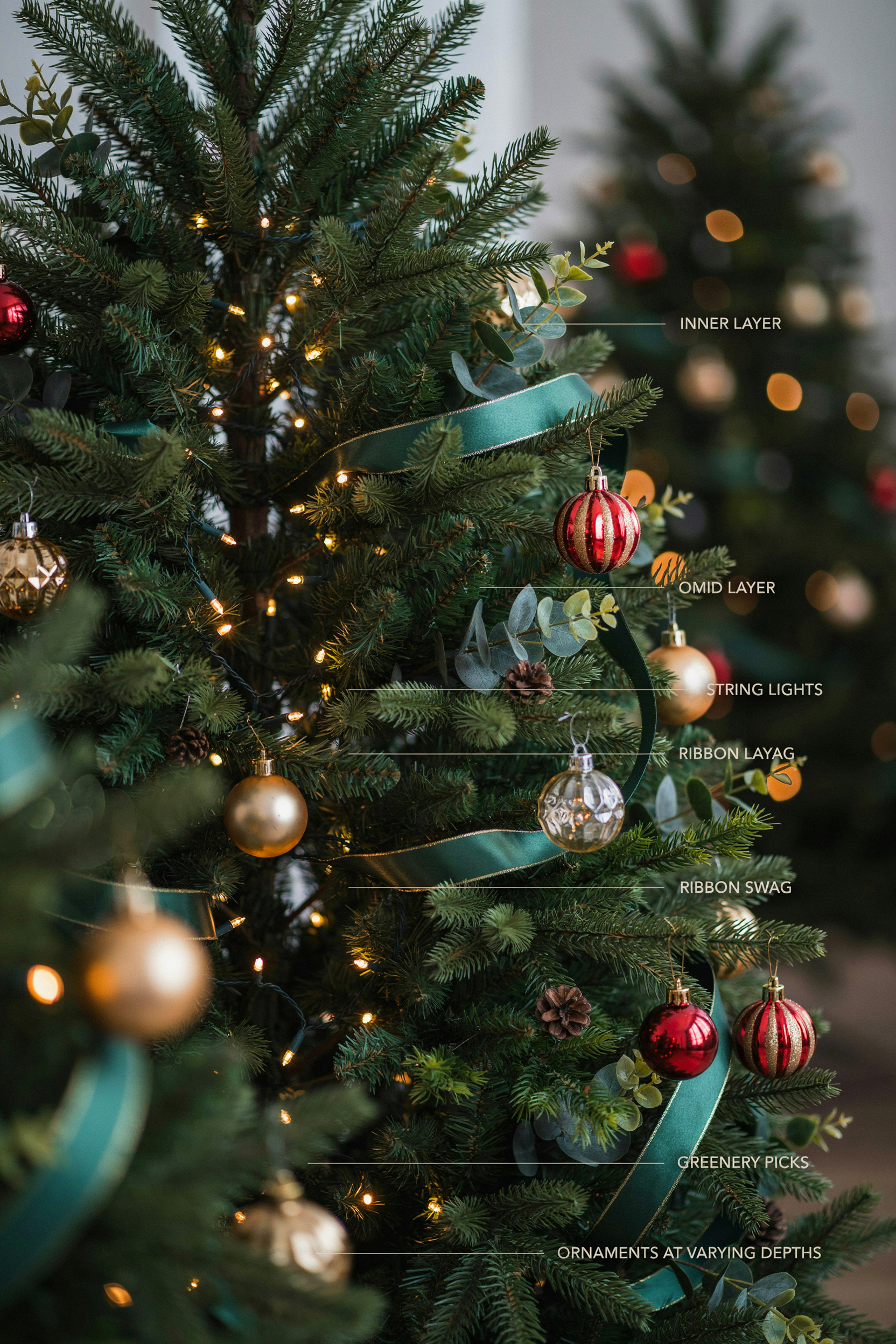
Regardless of which theme you pick, one styling technique shows up across almost every high-end-looking tree this year: layering. Instead of hanging ornaments evenly around the outside of the tree, layer your decorations in this order:
- Lights first, worked deep into the branches, not just the tips.
- Ribbon or mesh, woven vertically through the tree rather than wrapped in a spiral.
- Floral or greenery picks, tucked in at different depths for texture.
- Ornaments, in a mix of sizes, placed at varying depths, not just on the outer branches.
- A few statement or sentimental pieces, added last so they don’t get lost.
This single technique is probably responsible for more “how did they make it look so full” moments than any specific ornament choice.
Ornament Ratio: How Many Is Too Many

A rough guide that actually works: for a 7-foot tree, aim for roughly 100-150 ornaments in a mix of three sizes (large, medium, small) if you want a full, layered look, or closer to 50-75 if you’re going for the quiet luxury, more restrained style. The mistake most people make isn’t buying too few ornaments, it’s buying only one size, which makes even a fully-loaded tree look flat.
Mistakes That Make a Themed Tree Look Accidental
1. Mixing warm and cool lights. Warm white and cool white bulbs on the same tree fight each other visually. Pick one temperature and stick with it.
2. Hanging ornaments only on the outer branches. This is the single biggest reason trees look sparse even when they’re not. Push some ornaments deeper into the tree, not just on the visible tips.
3. Using more than 3 main colors. A themed tree needs restraint. Once you go past three main colors, it stops reading as “themed” and starts reading as “everything I own.”
4. Skipping a tree topper or treating it as an afterthought. The topper is often the visual anchor of the whole theme. A mismatched or forgotten topper can undercut an otherwise well-styled tree.
5. Forgetting the back of the tree if it’s visible. If your tree isn’t against a wall, decorate all the way around. A tree that’s clearly only decorated on one side reads as unfinished in photos and in person.
FAQs About Christmas Tree Decor Ideas
What is the trending Christmas tree color for this year? Black and gold, along with deep cherry and burgundy tones, are among the boldest trending palettes this year, alongside softer trends like coquette pink and quiet luxury neutrals.
How many ornaments do I need for a 7-foot tree? Around 100-150 ornaments in mixed sizes gives a full, layered look. For a more minimal, quiet luxury style, 50-75 is usually enough.
What theme should I do for my Christmas tree? Base it on colors and materials you already love in your home, or build it around a genuine personal interest, a favorite book series, film, or hobby, rather than copying a trend that doesn’t match your actual style.
How do I make my Christmas tree look fuller? Layer ornaments and lights at different depths in the tree instead of only on the outer branches, and mix ornament sizes rather than using one uniform size throughout.
Is the traditional red and green Christmas tree out of style? No. Classic red, green, and gold trees remain a timeless, sentimental choice, especially when built from ornaments collected over the years rather than a single trend-driven palette.
What ribbon works best for Christmas tree decorating? Wired ribbon holds its shape best for bows and loops, and velvet ribbon has become especially popular this year for its rich, luxurious texture against both traditional and dark-toned trees.
Final Thoughts
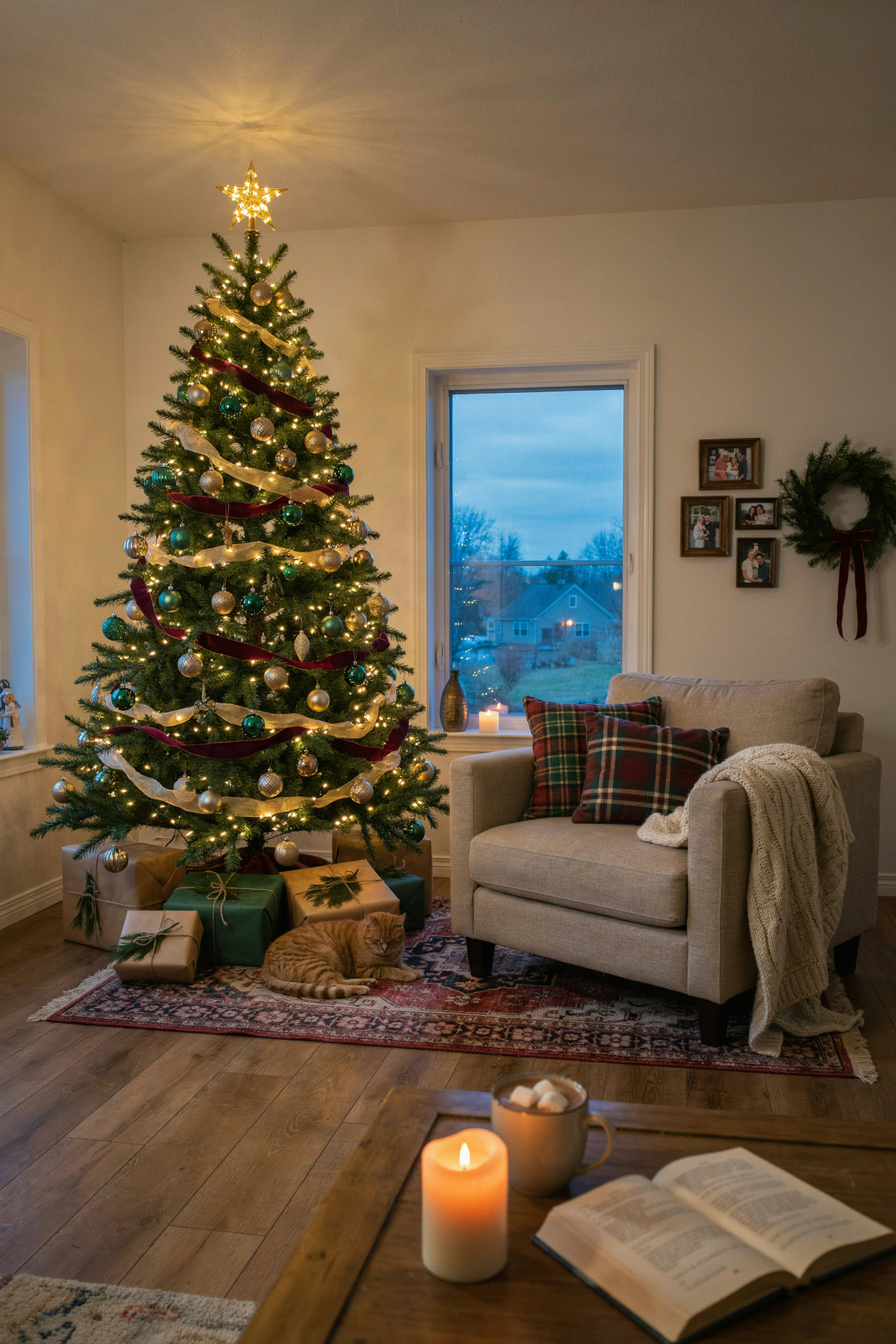
At the end of the day, a Christmas tree theme isn’t about following every trend at once, it’s about picking a direction and actually committing to it. Whether that’s a dramatic black-and-gold statement piece, a soft coquette pink tree, or your grandmother’s ornaments that have nothing to do with any trend at all, the trees that feel the most special are the ones that feel intentional, not the ones with the most decorations piled onto them.
Pick one theme, layer it in properly, and let the rest of the room build around it. That’s really the whole secret.