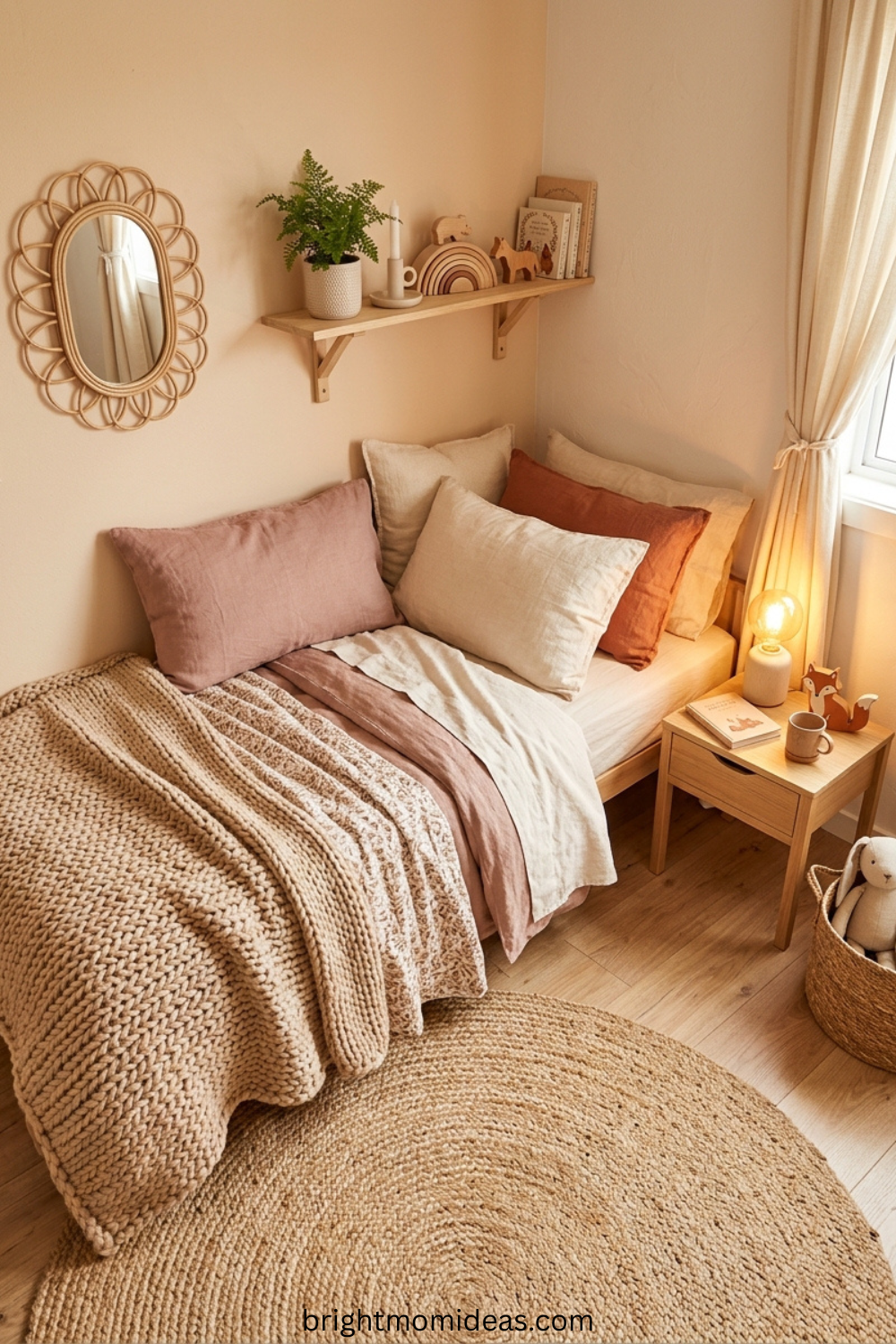

Choosing the right colors for your child’s bedroom is one of the most meaningful decisions you’ll make in your home. Colors don’t just decorate — they shape how your child feels, sleeps, plays, and grows. And if you’re looking for a palette that feels both beautiful and nurturing, warm kids room color palette ideas are exactly where to start.
I know how overwhelming it can be to stand in front of a paint swatch wall and feel completely lost. There are so many options! But warm tones — think peachy sunrises, cozy mustard yellows, soft terracottas, and creamy neutrals — have a magical way of making a space feel like a warm hug. They’re cheerful without being chaotic, and comforting without being boring.
In this post, I’m walking you through 8 of my favorite warm color palettes for kids rooms, along with styling tips, age-appropriate suggestions, and advice on how to balance everything beautifully. Let’s dive in!
Why Warm Colors Work So Well in Kids Rooms
Before we get into the palettes, let’s talk about why warm colors are such a great choice for children’s spaces.
Warm colors — yellows, oranges, reds, pinks, peaches, and earthy neutrals — are naturally inviting. They create a sense of safety and coziness, which is exactly what a child needs in their personal space. Unlike cool colors that can feel a little sterile or distant, warm tones feel alive and welcoming.
Here’s what warm colors can do for your child’s room:
- Create a cozy, nurturing atmosphere that supports sleep and rest
- Stimulate creativity and playfulness during the day
- Make small rooms feel warm and welcoming rather than cramped
- Add cheerfulness and energy without harsh brightness
- Work beautifully for both boys, girls, and gender-neutral spaces
The secret to making warm colors work is balance — and I’ll show you exactly how to do that for each palette below.
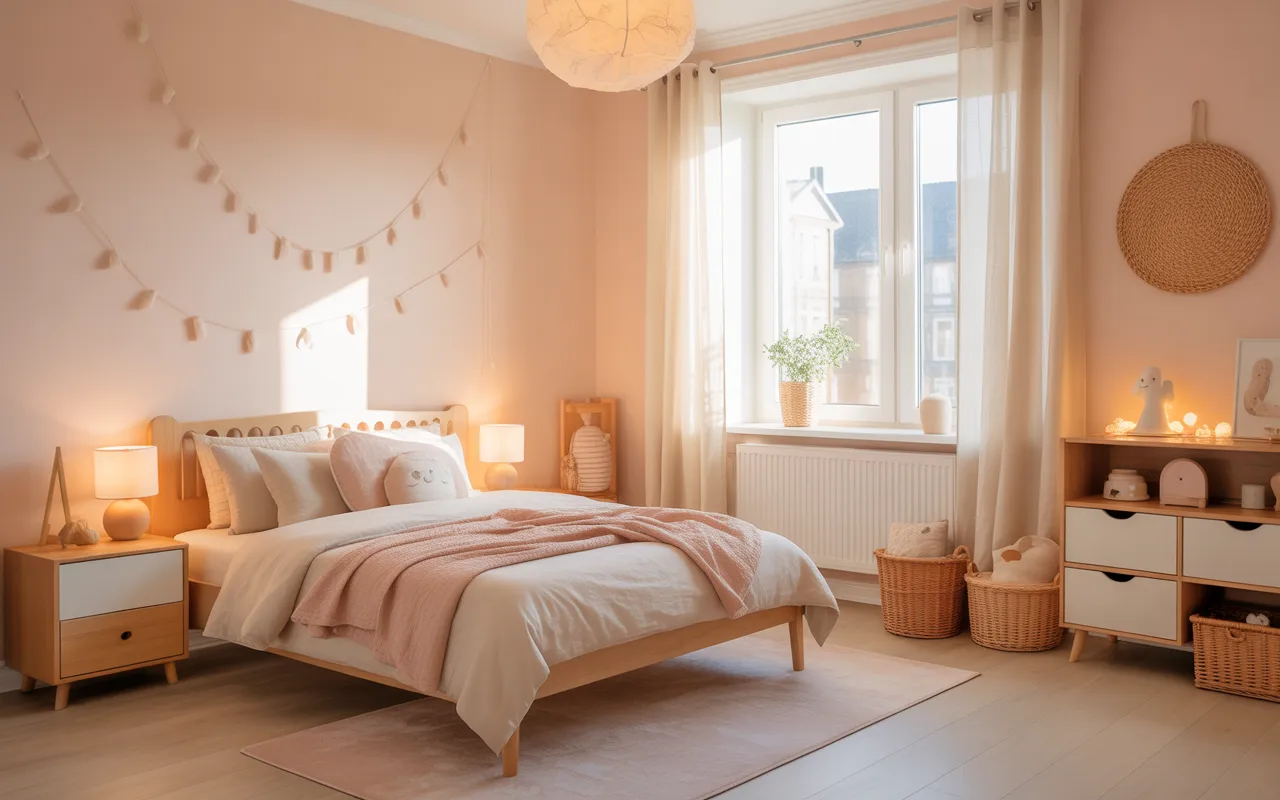
1. Soft Peach and Cream — Gentle and Timeless
If I had to pick one warm palette that works for every single age group, it would be this one. Soft peach and cream is gentle, soothing, and endlessly versatile. It feels like a warm sunset in your child’s room — peaceful and beautiful.
Peach has this wonderful quality of being warm without being too intense. It doesn’t demand attention, but it adds a lovely softness to the space that feels intentional and cozy.
How to style it:
- Paint walls in a soft peach or warm cream shade
- Choose light natural wood furniture — pine or oak work beautifully
- Layer cream and white bedding with a peachy throw blanket
- Add woven baskets for storage — they enhance the warmth naturally
- Hang warm fairy lights for a dreamy glow at bedtime
Best for: Nurseries, toddler rooms, and young children’s bedrooms.
2. Mustard Yellow and Warm White — Cheerful and Bright
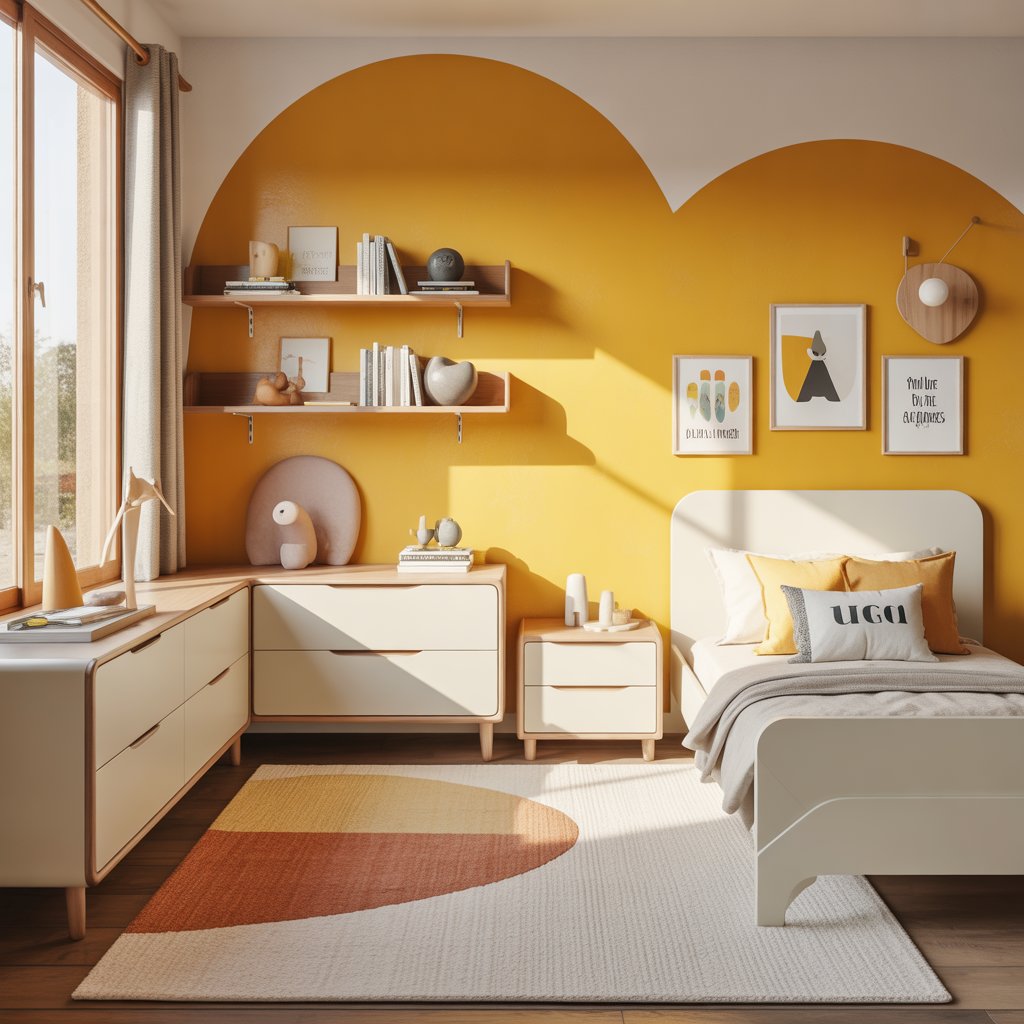
Mustard yellow might sound bold, but when you pair it with warm white, it becomes something truly special. It’s sunny and cheerful without being overwhelming — like a happy little burst of energy in the room.
This is one of my absolute favorite palettes for creative kids. Yellow is known to stimulate the mind and encourage positivity, and mustard specifically has that earthy richness that keeps it from feeling too juvenile. It’s a color your child can genuinely grow with.
How to style it:
- Use warm white on three walls and add a mustard yellow accent wall behind the bed
- Choose natural wooden shelves and furniture
- Add a beige or cream rug to ground the space
- Incorporate animal-themed or nature-inspired decor
- Keep bedding simple — white or cream with mustard cushion accents
Best for: Toddlers aged 3–7 and creative, playful kids.
3. Terracotta and Beige — Earthy and Grounding
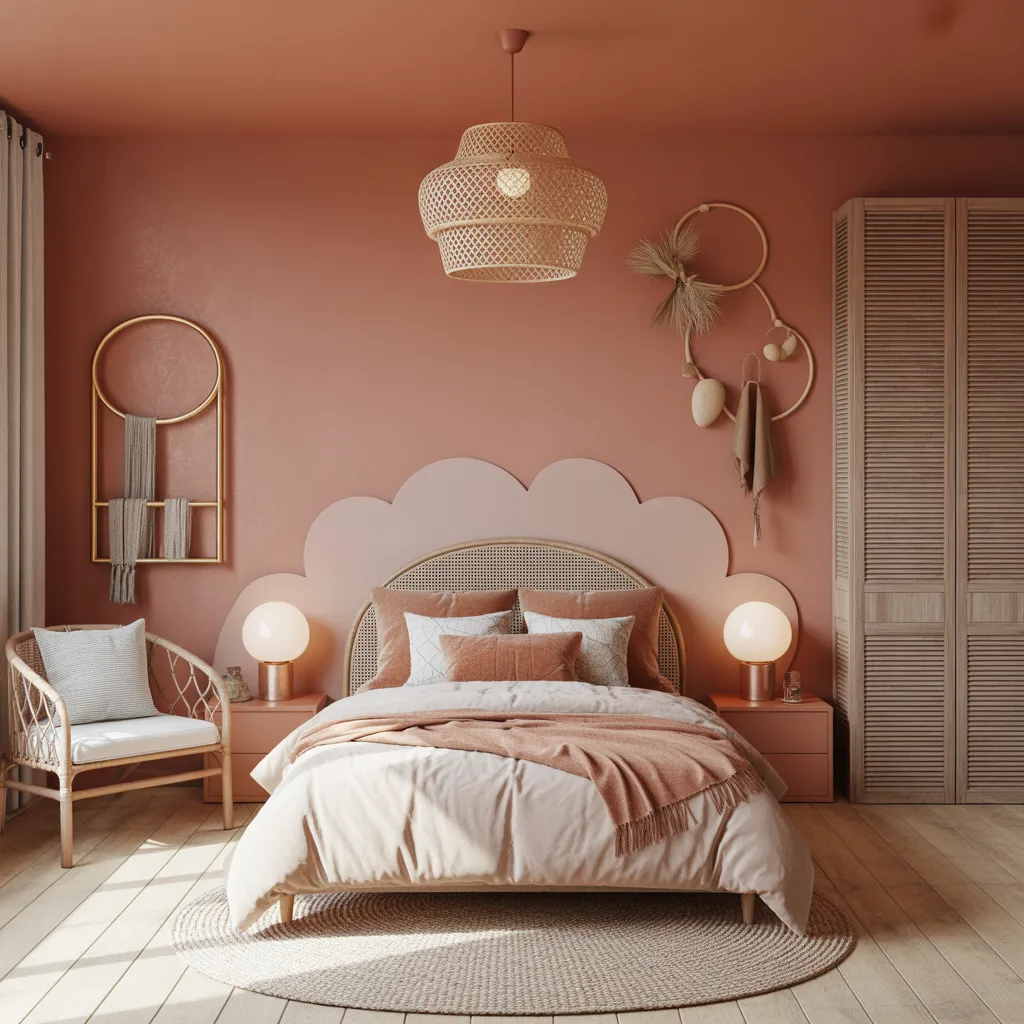
Terracotta is having a major moment in interior design right now — and honestly, I think it’s here to stay. This rich, earthy tone has a warmth that feels grounded and calm. In a kids room, it creates a space that feels both stylish and incredibly cozy.
The key with terracotta is not to overdo it. Use it as an accent — one feature wall, or through decor pieces like cushions, rugs, and artwork — and let beige do the heavy lifting as your base.
How to style it:
- Paint one feature wall in terracotta and keep remaining walls beige or cream
- Add rattan or wicker decor pieces for a natural, boho feel
- Choose light oak furniture to keep the space airy
- Layer warm-toned curtains in linen or cotton
- Add a terracotta throw or cushion on the bed for continuity
Best for: Shared sibling rooms, older kids aged 6–12, and gender-neutral spaces.
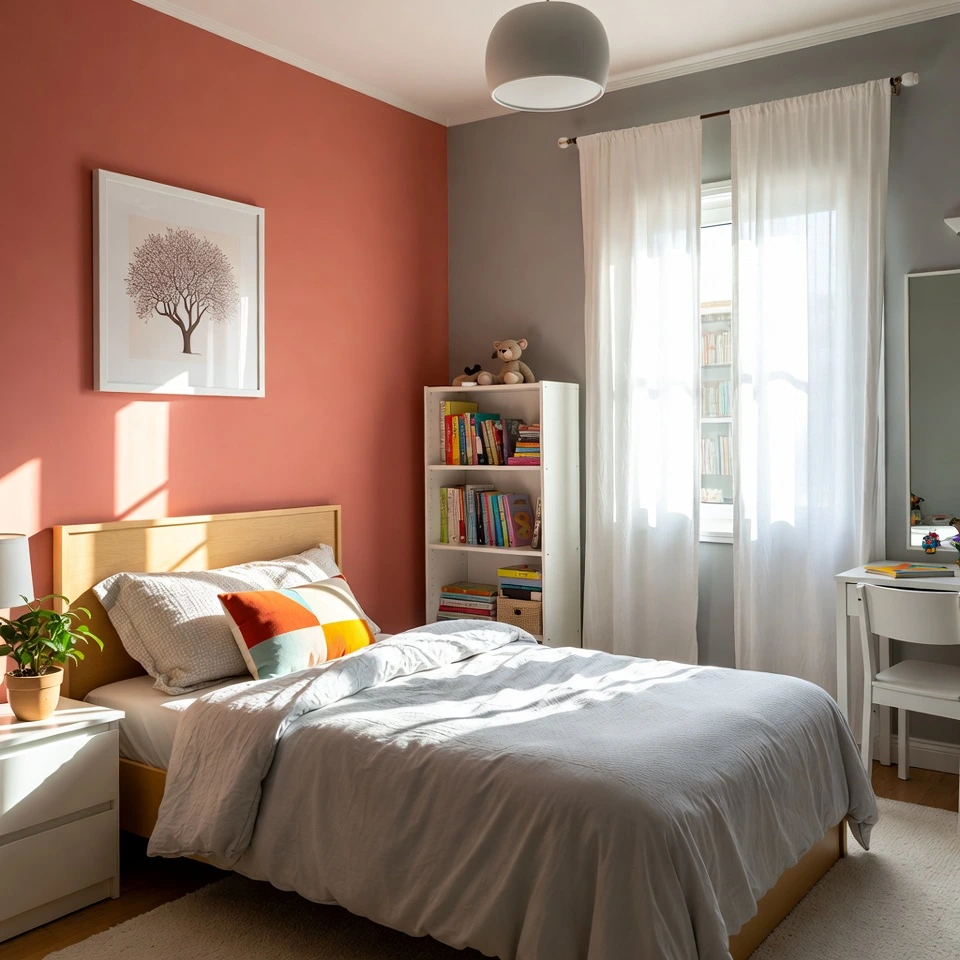
4. Coral and Soft Gray — Lively and Modern
If you want a warm palette with a modern edge, coral and soft gray is a stunning combination. Coral is vibrant and energizing — it brings life and personality to a space. And when you balance it with a soft warm gray, the result is fresh, contemporary, and beautifully balanced.
This palette works especially well if you want the room to feel lively during the day but still calm enough for bedtime. Coral wakes the space up; gray brings it back down.
How to style it:
- Use soft warm gray on walls as your base
- Introduce coral through bedding, cushions, and wall art
- Choose white furniture to keep things light and fresh
- Add gold or brass accents for a touch of warmth and sophistication
- Layer colorful cushions in complementary warm tones
Best for: Girls’ rooms, gender-neutral spaces, and kids aged 5 and up.
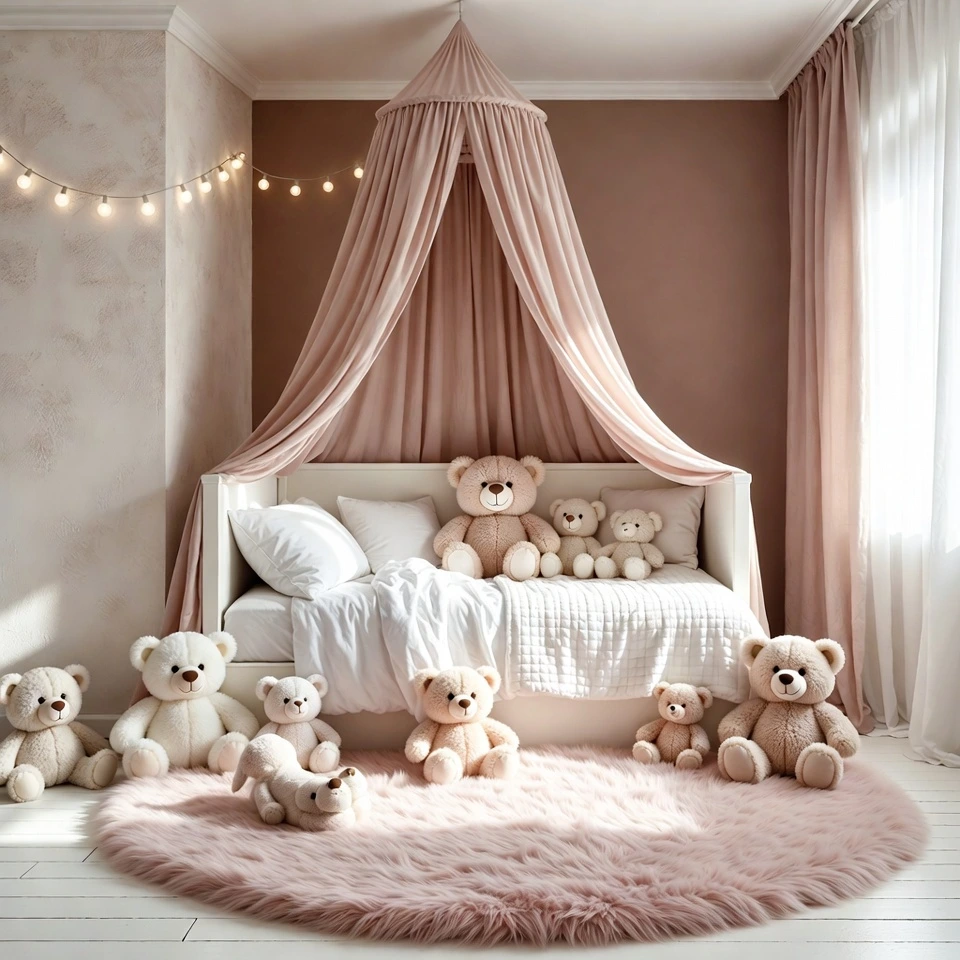
5. Blush Pink and Warm Taupe — Soft, Elegant, and Timeless
Blush pink is one of those colors that just never gets old. It’s soft without being saccharine, feminine without being overwhelming, and calming in a way that genuinely supports sleep and relaxation. Pair it with warm taupe and you have one of the most elegant combinations possible for a child’s bedroom.
What I love most about this palette is how long it lasts. You won’t feel the need to redecorate every few years because blush and taupe are truly timeless. As your child grows, you simply update the decor accessories while keeping the walls exactly as they are.
How to style it:
- Paint walls in a soft blush or warm taupe — either works as the dominant shade
- Choose white or natural wood furniture
- Layer soft bedding in blush, cream, and dusty rose shades
- Add a taupe or natural fiber rug
- Use warm white bulbs — they make blush look softer and taupe look richer
- Add fairy lights for a magical bedtime glow
Lighting tip: Always use warm white light bulbs in this palette. Cool blue lighting will completely change how blush pink looks on the walls — and not in a good way.
Best for: Nurseries, toddler rooms, and girls’ bedrooms of all ages.
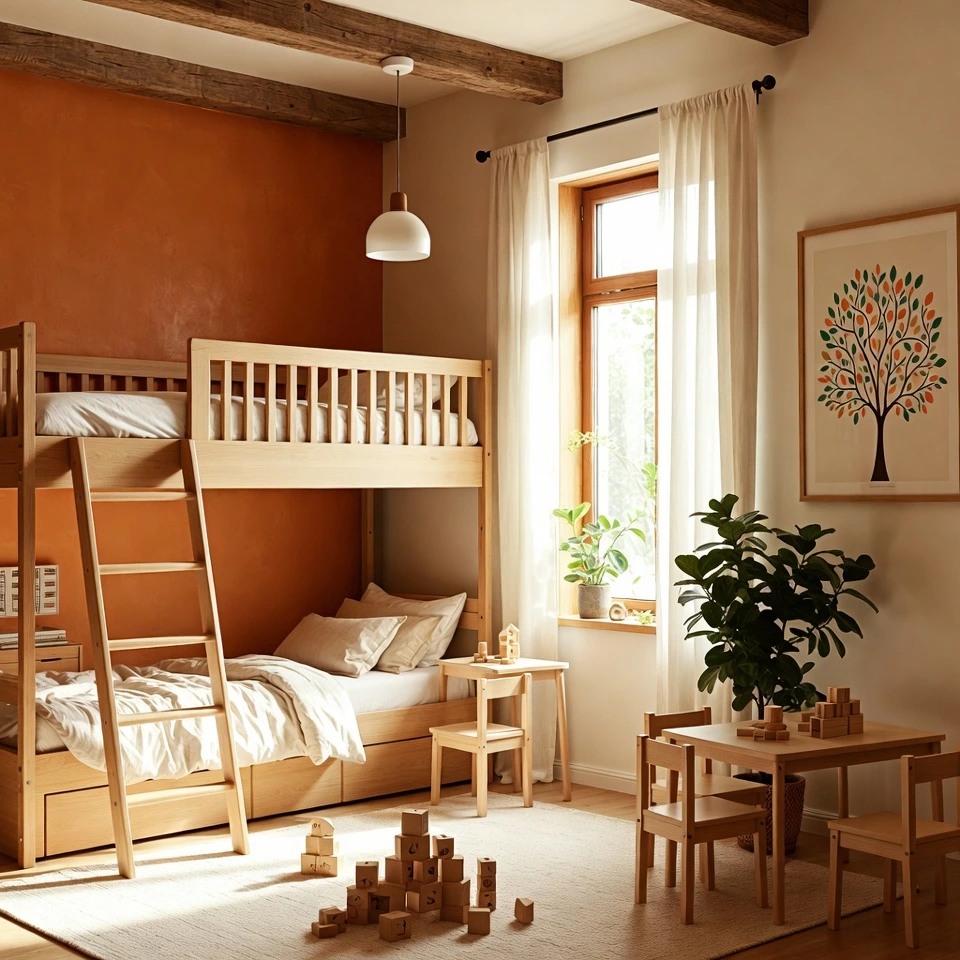
6. Burnt Orange and Cream — Bold, Creative, and Warm
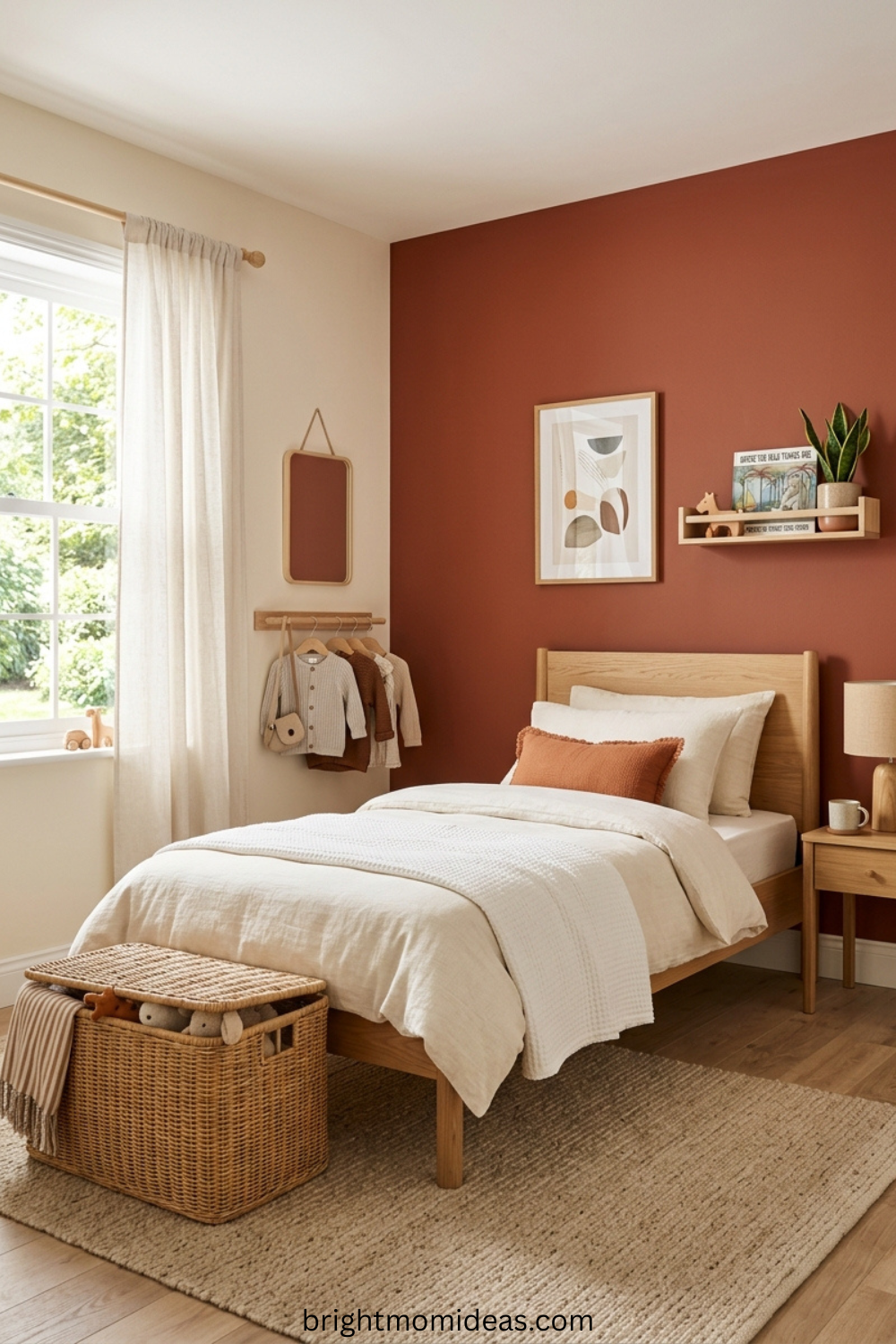
Burnt orange is for the child who has a big personality. It’s deeper and moodier than bright orange, with an earthy richness that adds real character to a space. When you balance it with cream, the result is surprisingly cozy and sophisticated — not loud at all.
The key is restraint. Don’t paint all four walls burnt orange. Instead, use it on a single feature wall and let cream do the rest. This approach gives you that gorgeous warmth and personality without making the room feel heavy or overwhelming.
How to style it:
- One burnt orange feature wall behind the bed or reading nook
- Cream walls on the remaining three sides
- Light wooden furniture — the natural grain pairs beautifully with orange
- Cream bedding with burnt orange cushion accents
- Woven baskets and rattan decor for texture
- Warm white fairy lights to enhance the orange’s richness at night
Best for: Creative and adventurous kids, gender-neutral rooms, and children aged 5 and up.
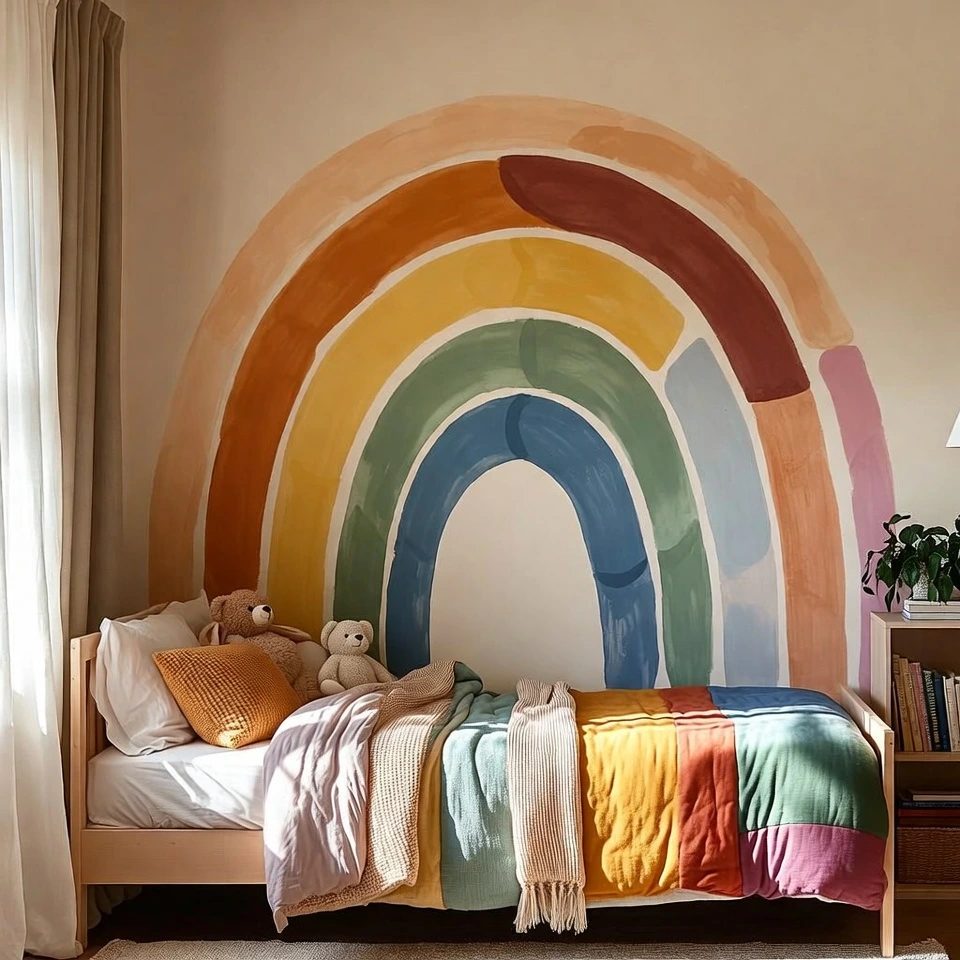
7. Warm Rainbow — Playful Without Being Loud
A rainbow theme doesn’t have to mean bright, saturated primary colors. A warm rainbow palette uses muted, earthy versions of each hue — dusty orange, soft mustard, warm blush, sage green, and cream. The result is playful and joyful without being chaotic.
This is a wonderful palette for children who love color and creativity. It stimulates imagination while still feeling harmonious and easy to live with.
How to style it:
- Use warm white or cream as your base wall color
- Paint a soft muted rainbow mural above the bed or on one wall
- Choose rainbow-toned bedding in dusty, muted shades rather than bright primaries
- Add colorful bookends, toy storage, and wall art in warm tones
- Keep furniture neutral — white or natural wood
Best for: Toddlers and kids aged 3–8 who love color and storytelling.
8. Warm Neutral Minimalist — Pinterest-Perfect and Peaceful
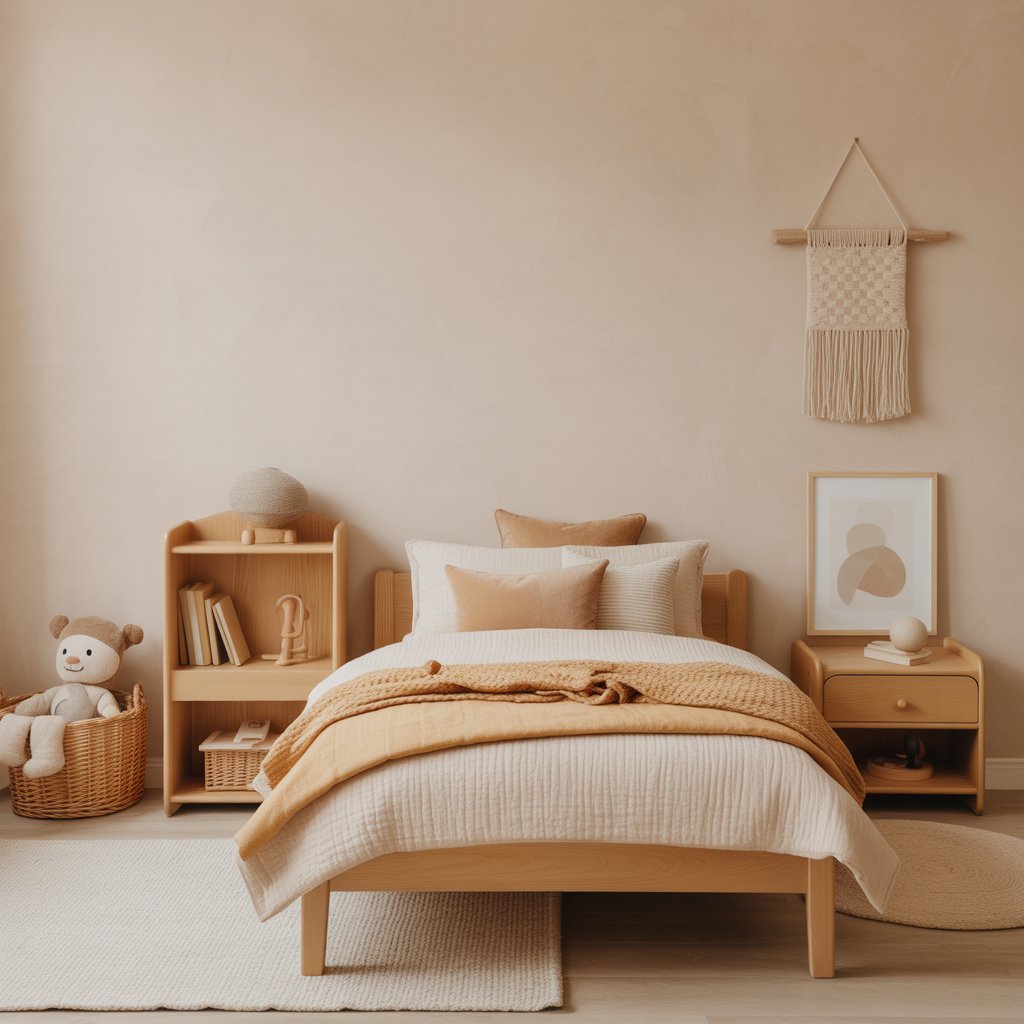
If you love those perfectly curated, aesthetic kids rooms you see all over Pinterest, this is the palette for you. Warm neutrals — beige, cream, soft sand, light wood tones, and a hint of mustard or peach — create a space that feels effortlessly beautiful and incredibly calm.
The magic of minimalist warm neutrals is in the textures. The palette itself is quiet, so texture is what gives the room personality and depth.
How to style it:
- Warm beige or soft cream walls
- Light wood furniture — keep it simple and clean-lined
- Layer textures: knit blankets, linen cushions, woven rugs, macramé wall hangings
- Add just one warm accent — a mustard yellow cushion or a peach throw
- Keep decor minimal and intentional — less is truly more here
Best for: All ages, especially if you want a room that grows with your child and never feels outdated.
How to Balance Warm Colors Without Overwhelming the Room
One question I hear all the time is: “How do I use warm colors without making the room feel too intense or closed in?” Here’s my simple approach:
Choose One Hero Color
Pick one warm shade as your main color. This is usually best on a single feature wall or through major decor items like bedding and rugs. Everything else supports it.
Use Neutral as Your Base
Cream, beige, or warm white on the majority of walls keeps the room feeling light and airy. Neutrals give warm accents room to breathe.
Bring in Natural Materials
Wood, rattan, linen, cotton, and jute naturally enhance warm tones. They add texture and depth without adding more color.
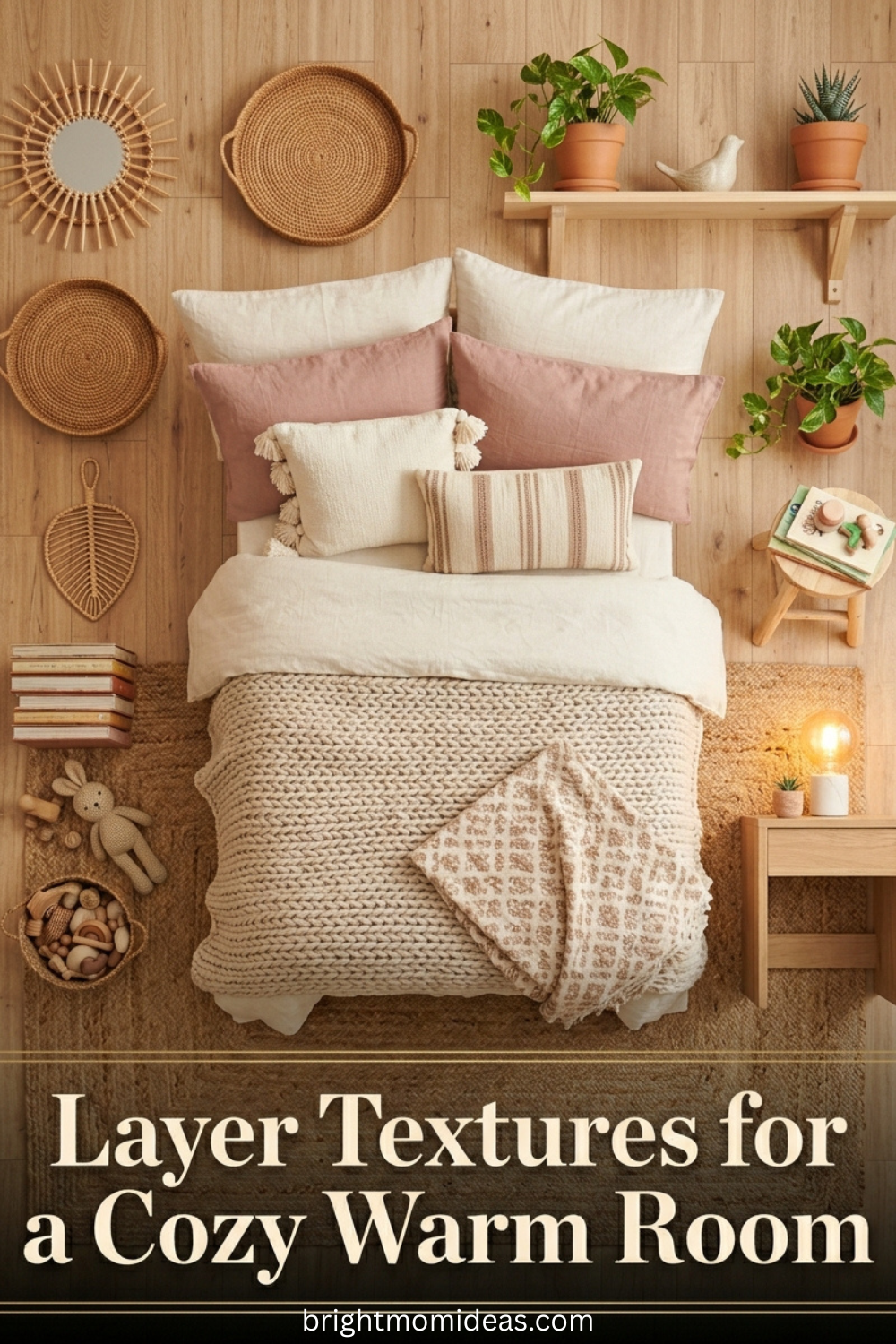
Layer Your Textures
A layered room always feels more intentional and cozy. Mix a soft rug with textured cushions, a knit blanket, and fabric curtains. The layers make the warm palette feel rich rather than flat.
Get Your Lighting Right
Always use warm white light bulbs in a warm-toned room. Cool or daylight bulbs will fight against your palette and make the colors look completely different from what you intended.
Best Warm Colors by Age Group
Nursery (0–2 Years)
Stick to the softest, most gentle warm tones: blush pink, soft peach, warm cream, and pale beige. Babies are sensitive to stimulation, and these shades create a calming, nurturing space perfect for sleep and early development.
Toddlers (3–6 Years)
Toddlers love color and stimulation! Mustard yellow, coral, terracotta, and warm rainbow palettes work beautifully at this age. These shades support play, curiosity, and creativity while still feeling warm and safe.
Older Kids (7–12 Years)
As kids grow, they often develop stronger opinions about their space. Burnt orange, earthy beige, warm neutral minimalist, and coral with gray are all sophisticated enough to feel “grown up” while still maintaining that cozy warmth.
Warm Colors for Small Kids Rooms
If your child’s room is on the smaller side, don’t be afraid of warm colors — just be strategic about which ones you choose.
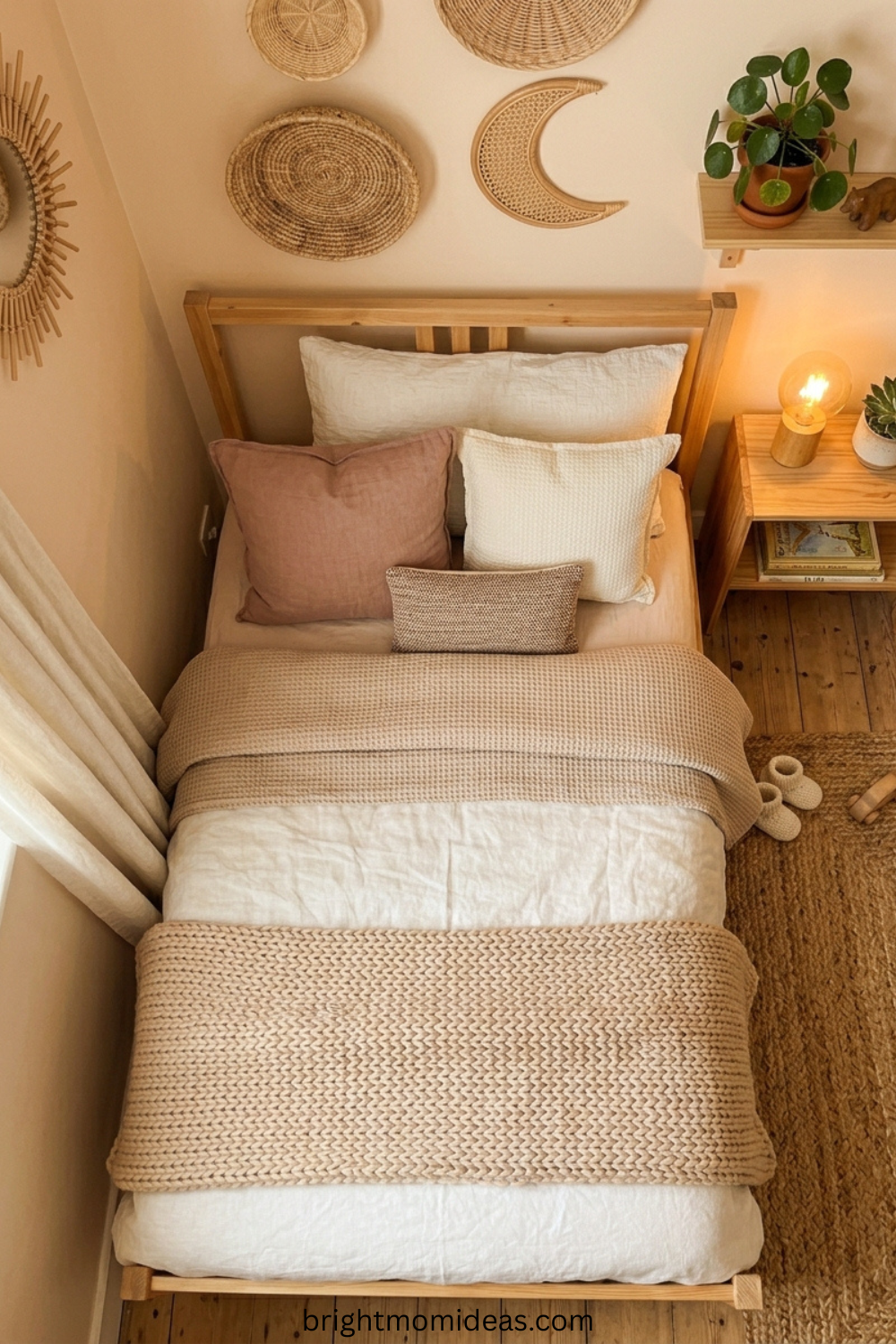
- Choose light warm tones: soft peach, blush, and warm cream open up a space rather than closing it in
- Use warm white on the walls and introduce color through bedding, cushions, and decor
- Keep furniture light — natural wood or white pieces prevent the room from feeling heavy
- Add a large mirror to reflect light and make the space feel more open
- Avoid painting all four walls in a deep warm shade like terracotta or burnt orange in a small room
Light warm tones are genuinely magical in small spaces. They make a room feel like a cozy cocoon rather than a cramped box.
Frequently Asked Questions
What are the best warm colors for a kids room?
The best warm colors for a kids room include soft peach, mustard yellow, terracotta, blush pink, coral, burnt orange, and warm cream. These shades create a cozy, cheerful, and nurturing environment perfect for children of all ages.
Are warm colors good for a child’s bedroom?
Yes! Warm colors like peach, blush, and mustard promote happiness, creativity, and a sense of safety. Softer warm tones are especially good for nurseries and toddler rooms as they create a calming and comforting atmosphere without overstimulating young minds.
What warm color palette is best for a small kids room?
For small kids rooms, light warm shades work best — think soft peach, warm white, or blush pink. These shades open up the space visually. Avoid dark warm tones like deep terracotta on all four walls as they can make a small room feel smaller and more enclosed.
Can I use terracotta in a kids bedroom?
Absolutely! Terracotta is a trendy and beautiful choice for kids rooms. Use it on a single accent wall and pair it with beige, cream, and light wood furniture to keep the space feeling warm and balanced rather than heavy or overwhelming.
What colors work with mustard yellow in a kids room?
Mustard yellow pairs beautifully with warm white, beige, cream, soft gray, and natural wood tones. You can also add touches of blush or terracotta as accent colors for a layered, Pinterest-worthy look that feels curated and intentional.
How do I balance warm colors without making the room feel overwhelming?
The key is to choose one main warm color and use neutral shades — like cream, beige, or warm white — as your base. Add warm accents through bedding, cushions, rugs, and decor rather than painting all walls in bold tones. Natural materials like wood and rattan also help balance the palette beautifully.
What is the best warm color palette for a nursery?
For nurseries, the gentlest warm tones work best: blush pink, soft peach, warm cream, and pale beige. These shades are soothing and promote restful sleep while keeping the space feeling warm and welcoming for both baby and parents.
Final Thoughts
Warm colors have this incredible ability to transform a kids room from just a bedroom into a real haven — a space where your child feels safe, happy, and at home. Whether you fall in love with the softness of peach and cream, the cheerfulness of mustard yellow, or the earthy richness of terracotta, there’s a warm palette here for every child and every style.
The most important thing is to trust your instincts. You know your child better than any design guide ever could. Choose colors that make both of you happy, balance them with natural neutrals and textures, and don’t be afraid to start small with accessories before committing to a full paint job.
If you’re looking for more inspiration, check out these cute and colorful kids bedroom ideas and small kids room ideas for even more creative ways to design a space your child will absolutely love.
Happy decorating, mama! 🧡
Affiliate Disclosure: This post contains affiliate links. As an Amazon Associate, I earn from qualifying purchases at no extra cost to you. I only recommend products I genuinely love and believe will add value to your home. Thank you for supporting Bright Mom Ideas — it helps me keep creating free content for you! 🧡

[…] much decor in a small kids’ room adds visual clutter and makes the space feel chaotic. A simple, light design actually makes the […]
[…] a kids’ bedroom is one of the most fun things a mom gets to do — but when the room is tiny, it can also feel like […]
[…] most successful whimsical bedroom color palettes use two or three colors maximum. One dominant color — usually a soft neutral like warm white, […]