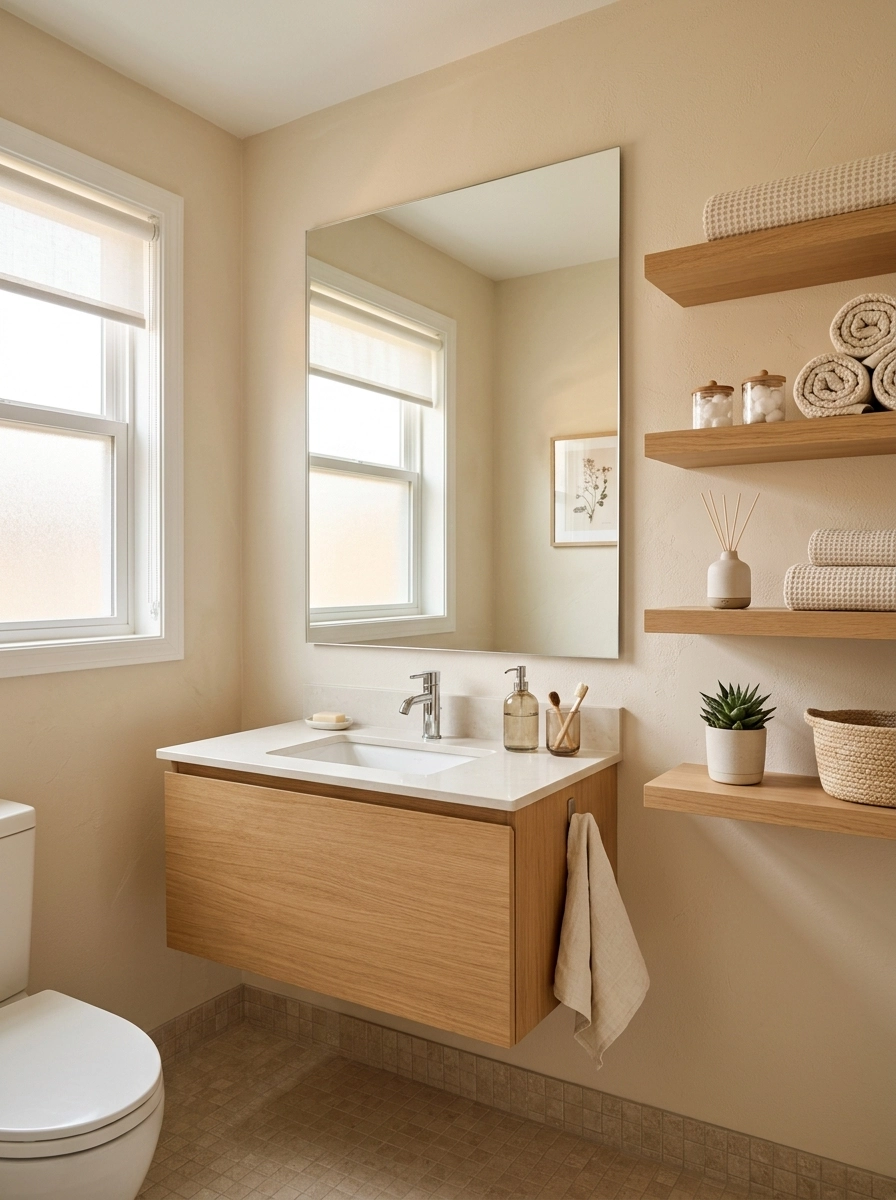

How to design a bathroom that makes every single morning feel like the beginning of something good — and every evening feel like a genuine reward.
Table of Contents
- Why Your Bathroom Deserves More Than You Are Currently Giving It
- What Makes a Bathroom Feel Like a Spa
- The Spa Bathroom Color Palette
- 15 Spa Bathroom Looks That Actually Work
- Spa Bathroom Ideas on a Budget
- Small Bathroom Spa Ideas
- FAQ Section
Most mornings look like this.
You stumble into the bathroom half-awake, do everything that needs doing as quickly as possible, and walk out still not entirely sure you are ready to face the day. The bathroom is a room you pass through rather than a room you inhabit. It gets the job done. It serves its function. And it offers almost nothing in the way of comfort, pleasure, or the kind of genuine quiet that a human being needs before the world starts making demands.
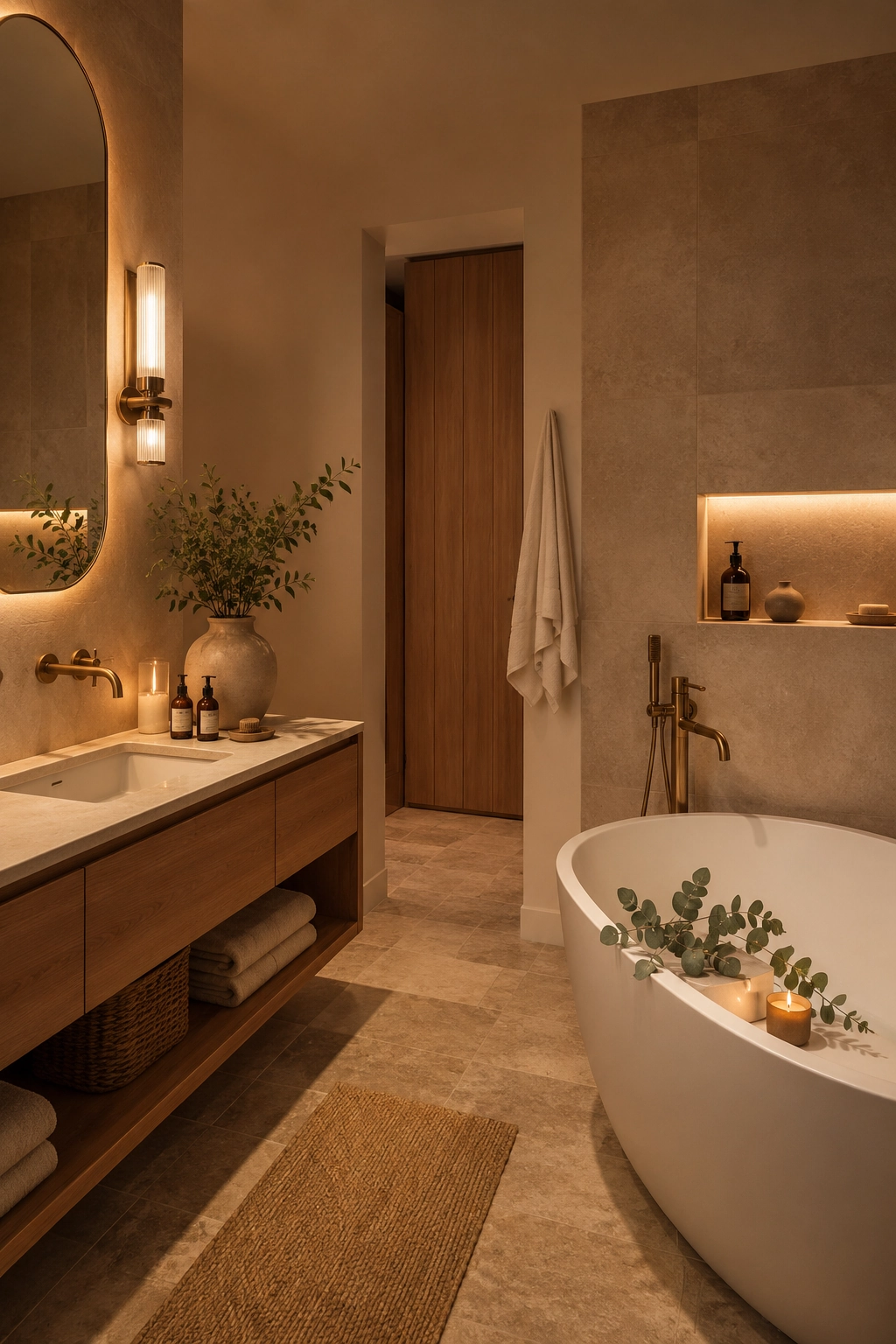
Now imagine a different version of the same morning. The bathroom is warm. The lighting is soft rather than fluorescent-bright. There is a candle somewhere. The towel waiting for you is thick and warm. The products on the vanity are arranged rather than scattered. The room smells faintly of eucalyptus or cedarwood or something clean and grounding. And the ten minutes you spend in there feel like ten minutes that belong to you rather than ten minutes you are spending just to be presentable for everyone else.
That second bathroom is not further away than most people think. It does not require a full renovation or a design budget that most real families do not have. It requires a clear understanding of what actually makes a bathroom feel like a spa — and then a series of intentional decisions about how to get there.
This guide covers all of it.
Why Your Bathroom Deserves More Than You Are Currently Giving It
The numbers on this are genuinely striking. Searches for spa-inspired bathrooms increased by 22% and searches for wellness features rose by 33% according to Zillow’s Home Trends Report. People are not just window shopping for these spaces. They are actively seeking them out because something has shifted in the collective understanding of what a home is actually for.
A home used to be primarily a functional shelter. Now it is expected to be a restorative environment — a place that actively contributes to your wellbeing rather than simply housing you while you exist. Now more than ever, intentional living with a side of luxury is at the forefront of homeowners’ minds.
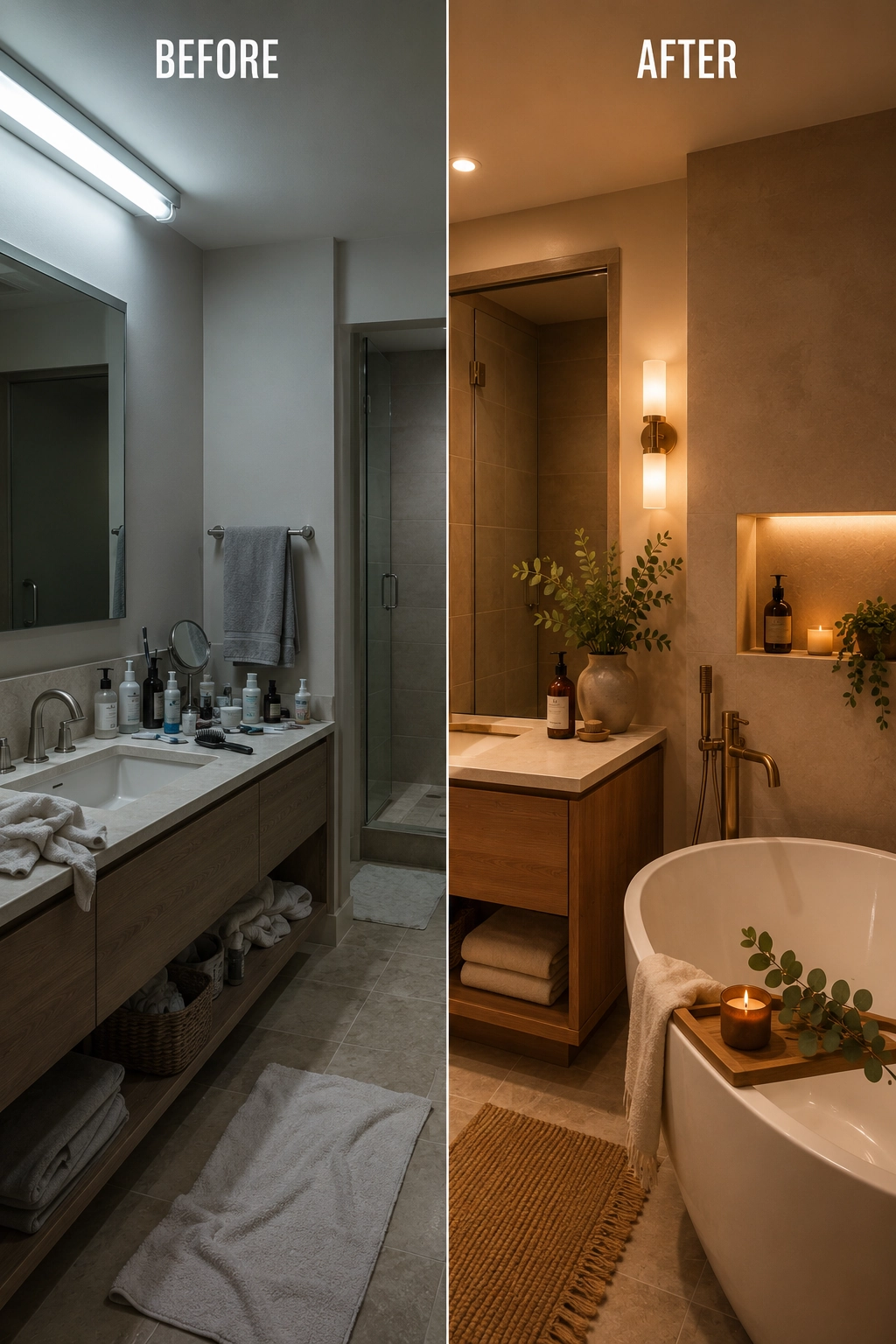
The bathroom is where this shift matters most because the bathroom is the room most tightly connected to the rituals that begin and end each day. Morning and evening routines have genuine power over mood, energy, and the quality of rest. A bathroom that supports those routines rather than just tolerating them does something measurable for your daily life. Not dramatically. Not in a way that is easy to quantify. But consistently, cumulatively, and in the small moments that add up to everything.
The most significant shift in 2026 is the total rejection of clinical aesthetics. The era of the all-white, high-contrast house-flip bathroom is officially over. We are seeing the rise of organic modernism and quiet luxury, where the bathroom is treated as a furnished living environment.
That language — furnished living environment — is exactly the mindset shift that produces a spa bathroom rather than just a decorated one. You are not just choosing tiles and fixtures. You are designing a room that you live in in the same way you live in your bedroom or your living room. With the same attention to atmosphere, comfort, and the specific way the room makes you feel.
What Makes a Bathroom Feel Like a Spa
Before specific ideas, this framework is worth understanding clearly because it guides every decision that follows.
A genuine spa bathroom has three qualities working simultaneously. The first is sensory warmth — the room engages your senses in a positive way through warm lighting, soft textures, pleasant scent, and materials that feel good to touch. The second is visual calm — the room has enough organization and enough restraint that there is no visual noise competing for your attention when you are trying to be at rest. The third is functional intention — every element in the room was chosen because it serves your specific self-care routine rather than because it filled a gap or matched something else.
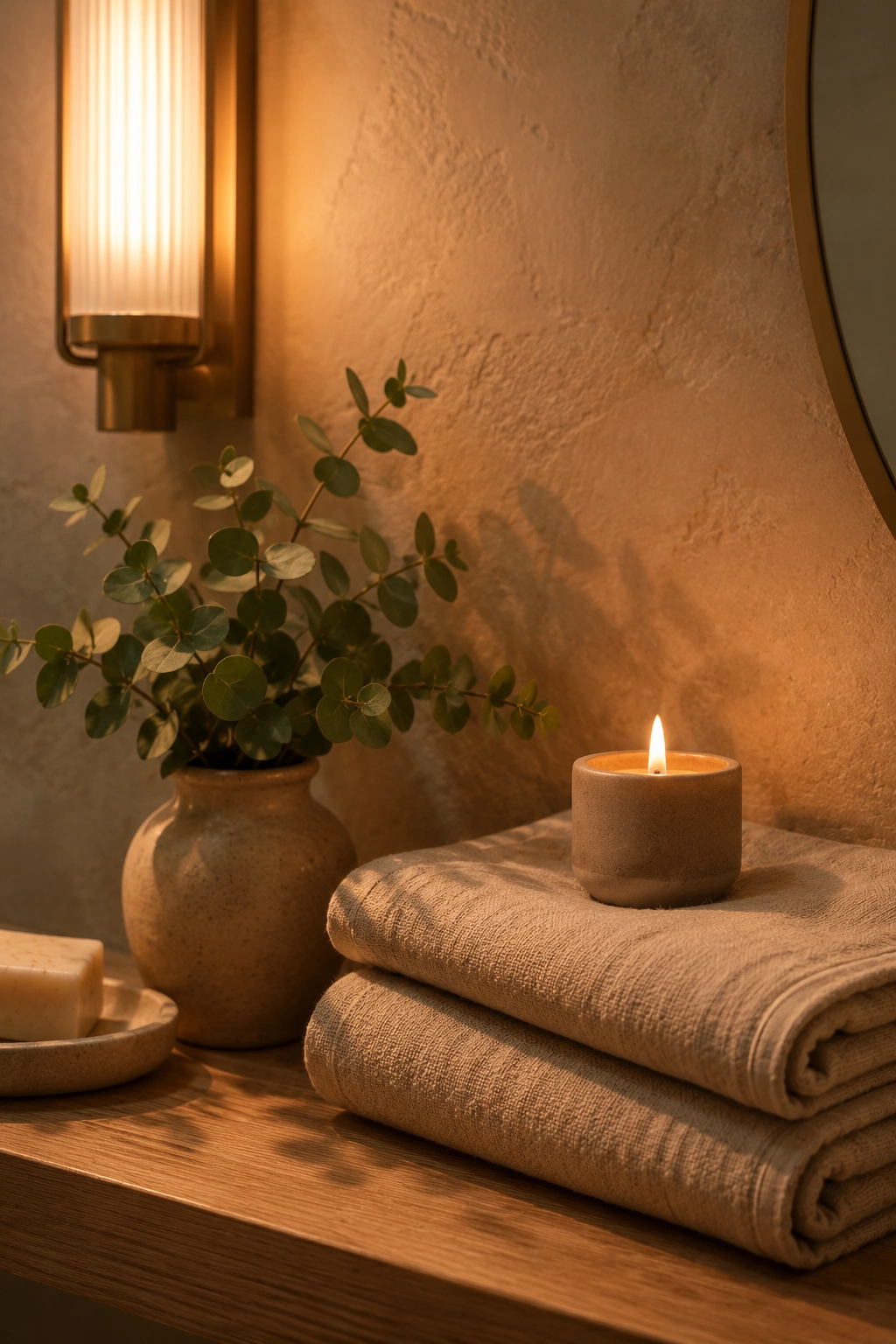
Soft lighting, natural materials, and soothing color palettes are leading the trend, creating spaces that feel peaceful, grounded, and effortlessly luxurious.
These three qualities — sensory warmth, visual calm, and functional intention — are the lens through which every one of the 15 spa bathroom looks below should be understood. Some are about materials and some are about lighting. Some are about organization. All of them are ultimately about creating one or more of these three qualities in a bathroom that currently has fewer of them than it deserves.
The Spa Bathroom Color Palette
Color sets the emotional tone of any room before a single other element registers. In a spa bathroom, the color palette is doing the work of creating calm before you have turned on the shower or lit a candle.
The colors that consistently produce spa-like bathroom atmospheres are warm neutrals — warm white, soft cream, warm greige, and stone. These are not exciting colors. That is precisely the point. They create a visual quiet that allows the room to feel like a respite from the saturated stimulation of everything outside it.
Warm stone tones — travertine, warm beige, pale terracotta — are among the most popular spa bathroom palette choices in 2026 because they reference natural materials and create immediate warmth without requiring actual stone surfaces. A warm greige wall with a cream vanity and warm wood accents creates the same emotional response as a room lined with expensive travertine — because the color is doing most of the work.
Deep earthy tones — warm charcoal, deep sage green, warm slate — create the moodier and more dramatic version of the spa bathroom that has been gaining significant traction. A bathroom with deep warm sage green walls, warm brass fixtures, natural wood shelving, and warm layered lighting feels like the most atmospheric and genuinely restorative space imaginable. The darkness of the walls creates the same enveloping quality as the dimly lit relaxation rooms in high-end spas — which is exactly the point.
15 Spa Bathroom Looks That Actually Work
1. The Warm Stone and Wood Sanctuary
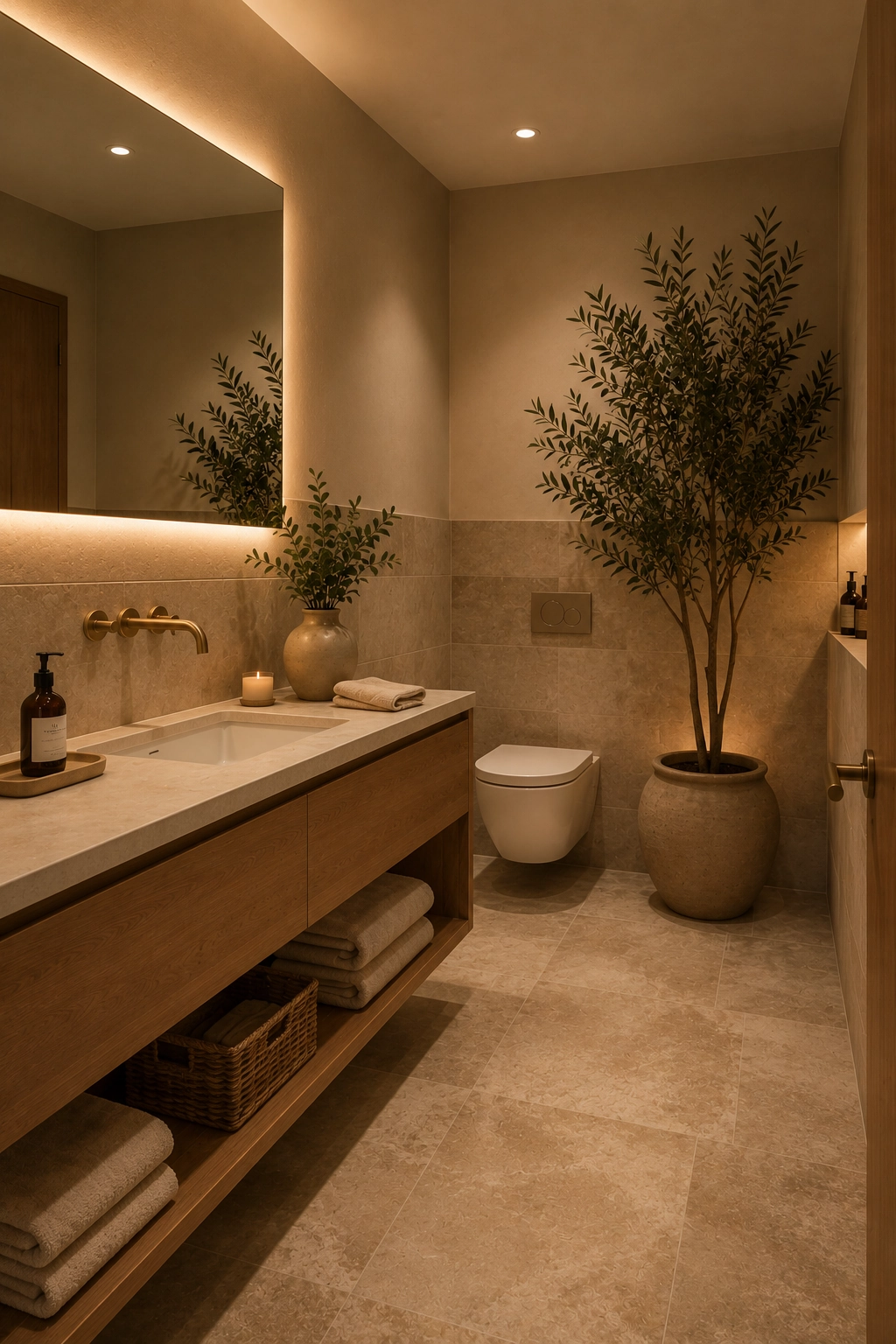
This is the spa bathroom that shows up most consistently in the images that stop you mid-scroll on Pinterest — and it earns that attention.
Warm stone tile on the floors and lower walls in a matte or honed finish — not polished, never polished in a spa bathroom because polish creates glare and the spa aesthetic is built on matte warmth. Natural wood floating vanity below a simple rectangular mirror with integrated lighting. Warm wood open shelving on one wall holding folded towels and a small collection of carefully chosen products. Brushed brass fixtures throughout. A single large plant in the corner. And warm layered lighting that makes every surface glow rather than shine.
Warm wooden finishes, seamless showers, and even wet rooms are set to make time spent in the bathroom feel restful and restorative. This look captures all of those elements without requiring a full structural renovation. The key is the finish quality — matte stone, warm wood, brushed metal — because every surface in a spa bathroom should absorb light rather than reflect it harshly.
2. The All-White Linen and Marble Look
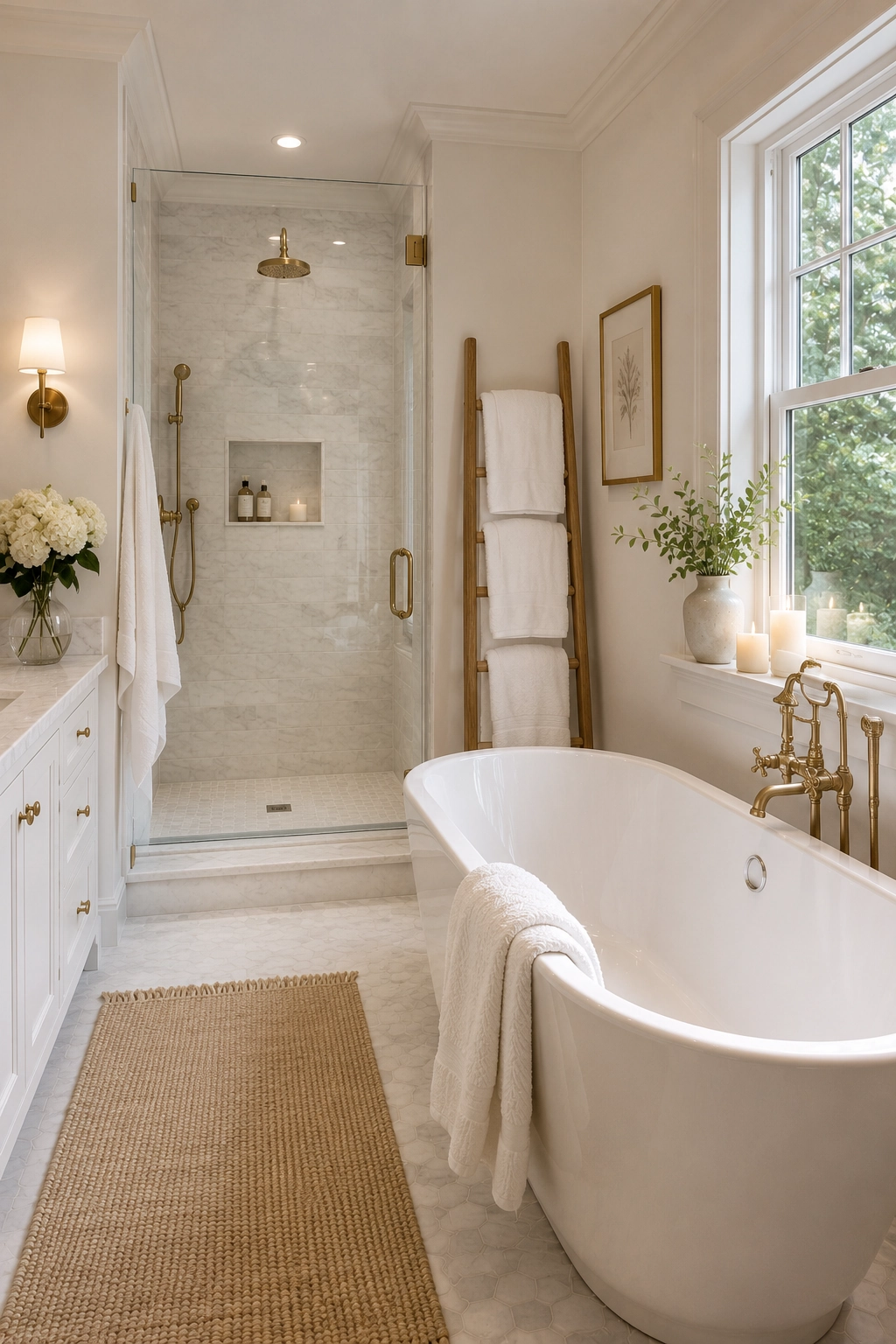
This is the most classic of the spa bathroom looks and the one that ages most gracefully — partly because it is built on quality of material rather than trend of style.
Soft white marble — honed rather than polished — on the shower surround and vanity countertop. A freestanding soaking tub in glossy white positioned under a window or beside a large mirror. White walls in a warm tone — not a cool bright white but something closer to linen or parchment. Thick white cotton towels folded on a simple ladder towel rail. A white ceramic diffuser on the vanity with a clean eucalyptus or white tea scent. White candles in simple vessels on the tub ledge.
The warmth in this look comes entirely from material quality and texture rather than color — which is why the specific white matters so much. A cool stark white with blue undertones in this bathroom will feel clinical. A warm cream white with yellow undertones will feel genuinely luxurious. The marble should have movement — veining and variation — rather than being flat and uniform. And the towels should be thick enough that wrapping yourself in them feels like part of the ritual rather than just the ending of it.
3. The Deep Sage Green Retreat
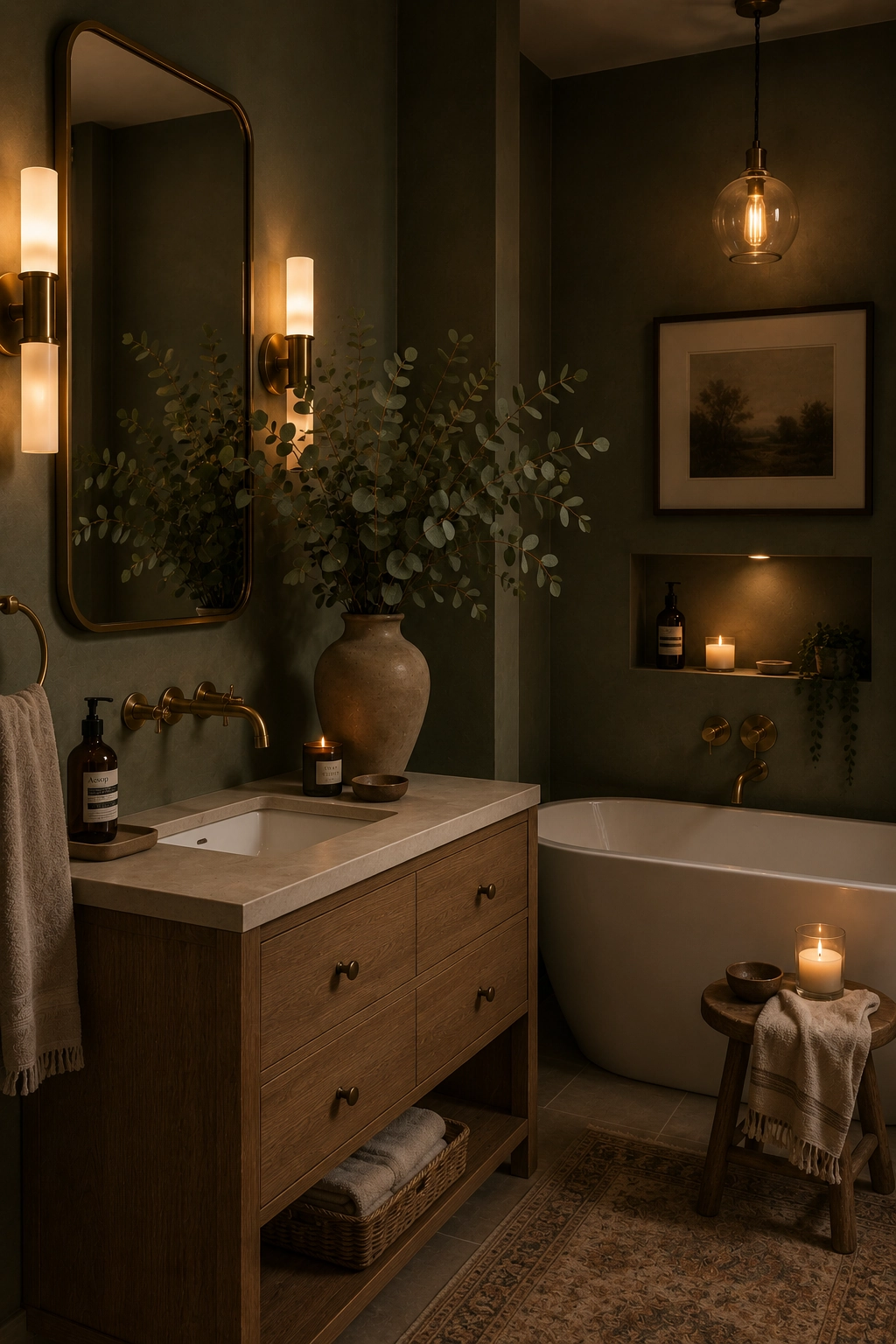
Few spa bathroom looks are currently performing better on Pinterest than the deep sage green bathroom — and spending any time in one makes the reason obvious.
Deep muted sage green on all four walls creates an enveloping atmospheric quality that pale neutral bathrooms simply cannot achieve. The darkness of the color makes the warm brass fixtures appear to glow. The natural wood vanity and shelving feel richer beside the green. And the warm lighting transforms the whole room into something that genuinely feels like a private spa room in a high-end wellness hotel.
This is the look for someone who has always played it safe with bathroom color and is ready to stop. It requires more commitment than a neutral palette but rewards that commitment with a bathroom experience that is genuinely different from what you have had before.
Pair deep sage walls with warm brass hardware, a natural wood floating vanity, white or cream towels, a large eucalyptus arrangement in a simple ceramic vase, and warm amber lighting from multiple sources. The result is a bathroom that feels like stepping out of your regular life for twenty minutes every time you use it.
4. The Japanese Soaking Tub Experience
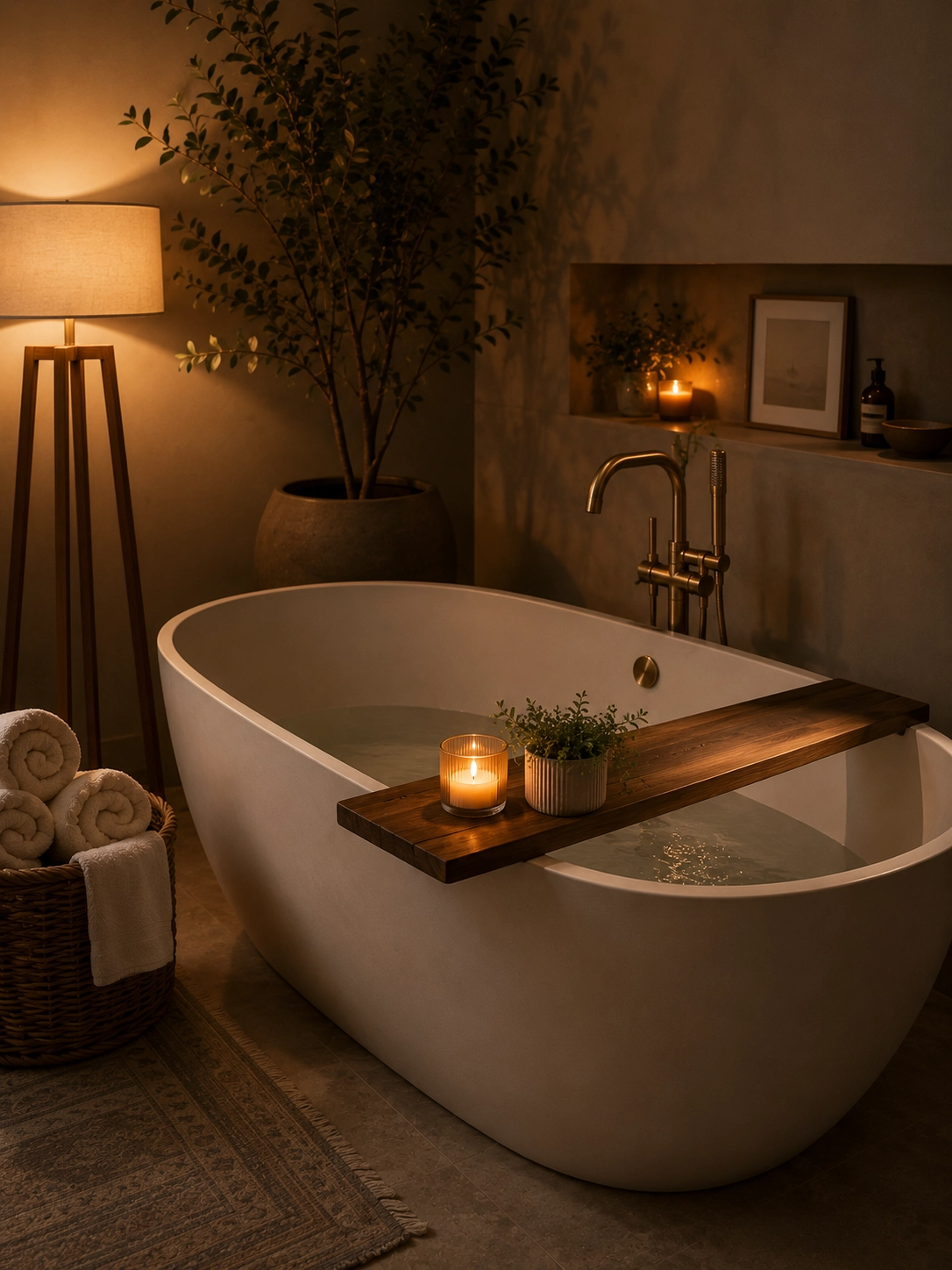
The soaking tub is having a significant cultural moment right now and it makes complete sense when you understand the philosophy behind it.
Interior designer Mikel Welch noted that homeowners want ritual and restoration, and the bathtub is returning as a sculptural centerpiece, rather than an optional feature.
A Japanese soaking tub — deeper than a standard tub and designed specifically for immersion rather than lying flat — creates a bathing experience that is genuinely restorative in a way that a quick shower cannot replicate. The hot water immersion relaxes muscles, slows breathing, reduces cortisol, and signals to the nervous system in unmistakable terms that the day is over and rest has begun.
You do not need to install an actual Japanese soaking tub to capture the philosophy of this spa look. A deep freestanding tub — even a standard oval or slipper shape — positioned thoughtfully in the bathroom with tub-side elements that make it inviting creates the same intention. A teak or bamboo tub tray across the width holding a candle, a book, and a small plant. A warm floor lamp beside the tub rather than relying on overhead lighting. A basket of rolled towels within reach. These elements collectively create a bathing experience that feels genuinely different from the functional bath that most bathrooms offer.
5. The Rainfall Shower Transformation
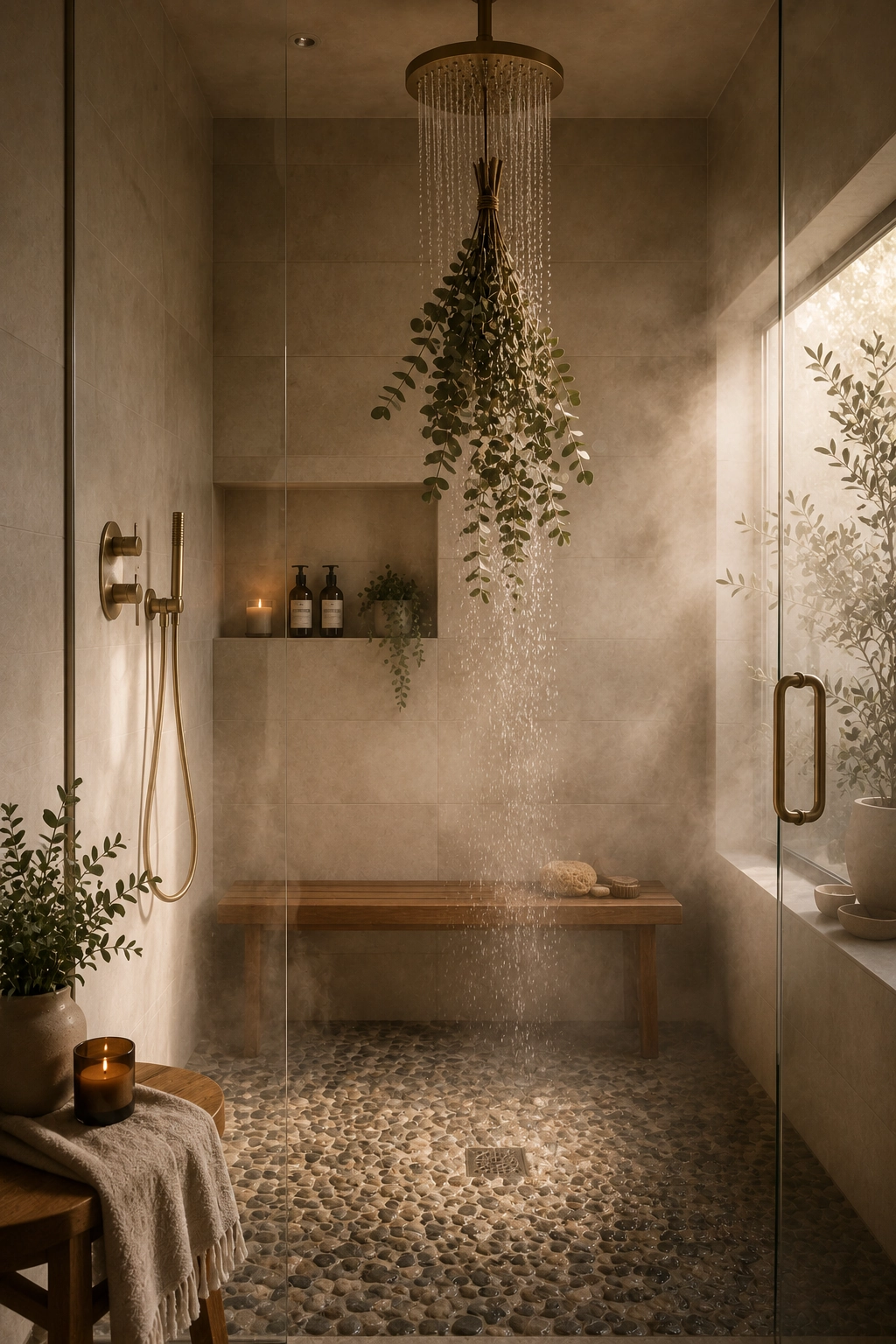
Special upgrades such as building a steam room or adding a shower bench or rainfall shower head are making more bathrooms feel like in-home spas and personal retreats.
A rainfall shower head is one of the highest-impact single upgrades available to any bathroom renovation or refresh. The difference between a standard shower head and a large rainfall head is not subtle — it is the difference between rinsing off and being inside an experience. The water falls from above at a wide gentle spread that covers the entire body simultaneously, and there is something about that sensation — something about being covered rather than targeted by the water — that feels unmistakably restorative.
Large format rainfall heads — eight inches diameter minimum, twelve or sixteen for maximum effect — install on most existing shower arms with no plumbing changes required. This is one of the most affordable spa bathroom upgrades on this list relative to its impact, and it is one of the changes that people most consistently describe as transformative.
Pair the rainfall head with a simple pebble stone floor in the shower, a teak shower bench if space allows, a eucalyptus bundle hanging from the shower head for natural aromatherapy that activates in the steam, and a set of quality shower products in decanted matching bottles on a simple shelf or caddy. The shower becomes a ritual rather than a necessity.
6. The Warm Lighting Overhaul
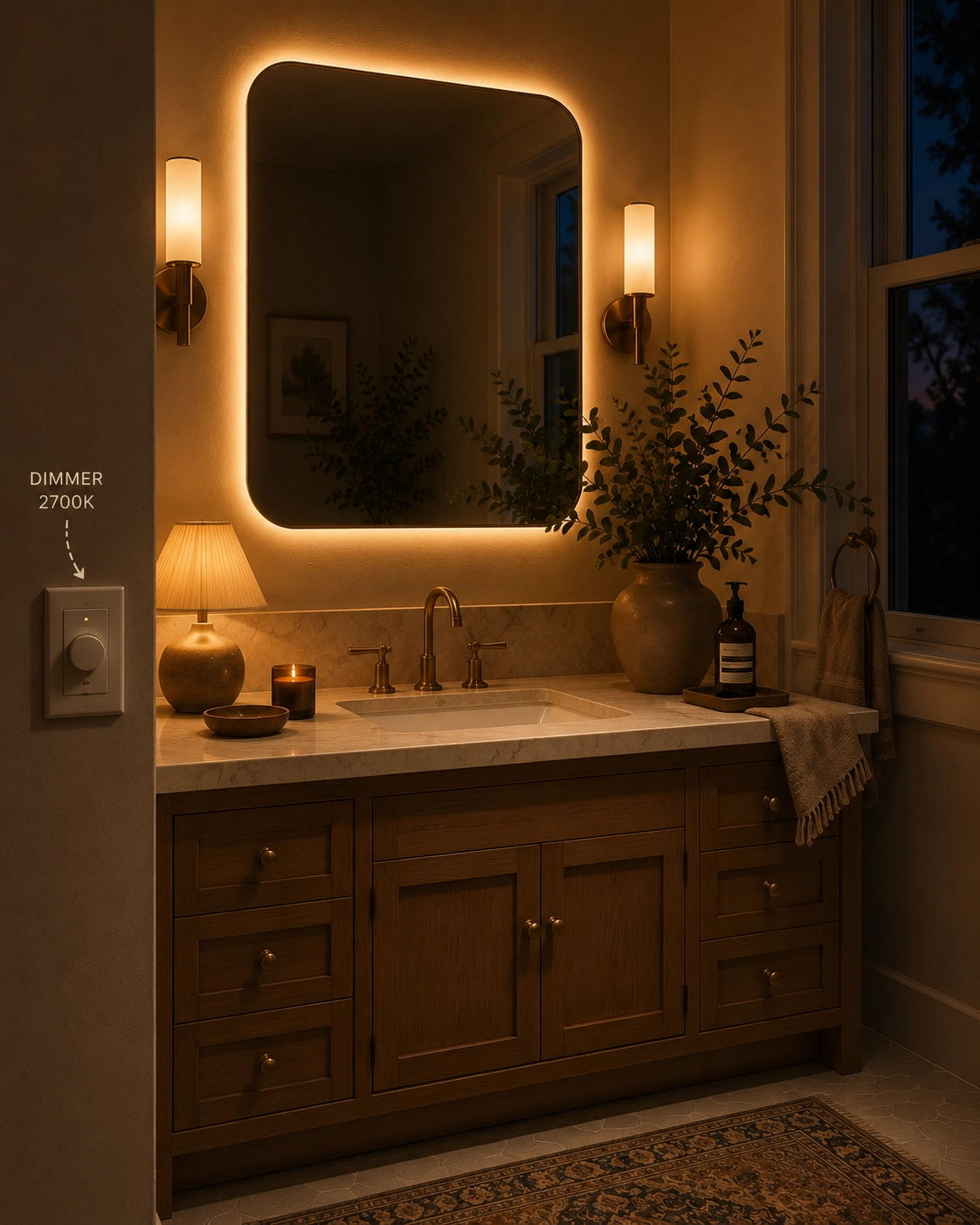
This is the spa bathroom upgrade that most people do last when it should be the one they do first.
Most residential bathrooms are lit with bright overhead fixtures designed for maximum visibility rather than atmosphere. This kind of lighting is useful for applying makeup and spotting details but deeply hostile to the feeling of relaxation. It is the same lighting used in supermarkets and hospital waiting rooms — which tells you everything you need to know about the emotional association it creates.
Mood lighting in showers is one of the emerging self-care bathroom trends of 2026 — the power of perfect lighting to set the mood and bring a lovely bit of ambiance is being recognized even in the most unexpected spaces.
The warm lighting overhaul for a spa bathroom works in three layers. First, replace every overhead bulb with warm white 2700K bulbs — this single change costs almost nothing and immediately shifts the atmosphere of the bathroom. Second, add a dimmable option — a dimmer switch on the overhead light allows you to drop the bathroom to candlelight levels in the evening when visibility matters less and atmosphere matters more. Third, add supplementary warm light sources — a small lamp on the vanity, candles on the tub ledge or window sill, an LED mirror with warm integrated lighting for makeup and skincare without the harsh overhead.
These three layers together create a bathroom that looks and feels completely different after 6pm than it does at 7am — and that transition is itself a spa quality. The evening bathroom feels like a sanctuary because the lighting tells your nervous system clearly and immediately that the work part of the day is finished.
7. The Natural Material Bathroom
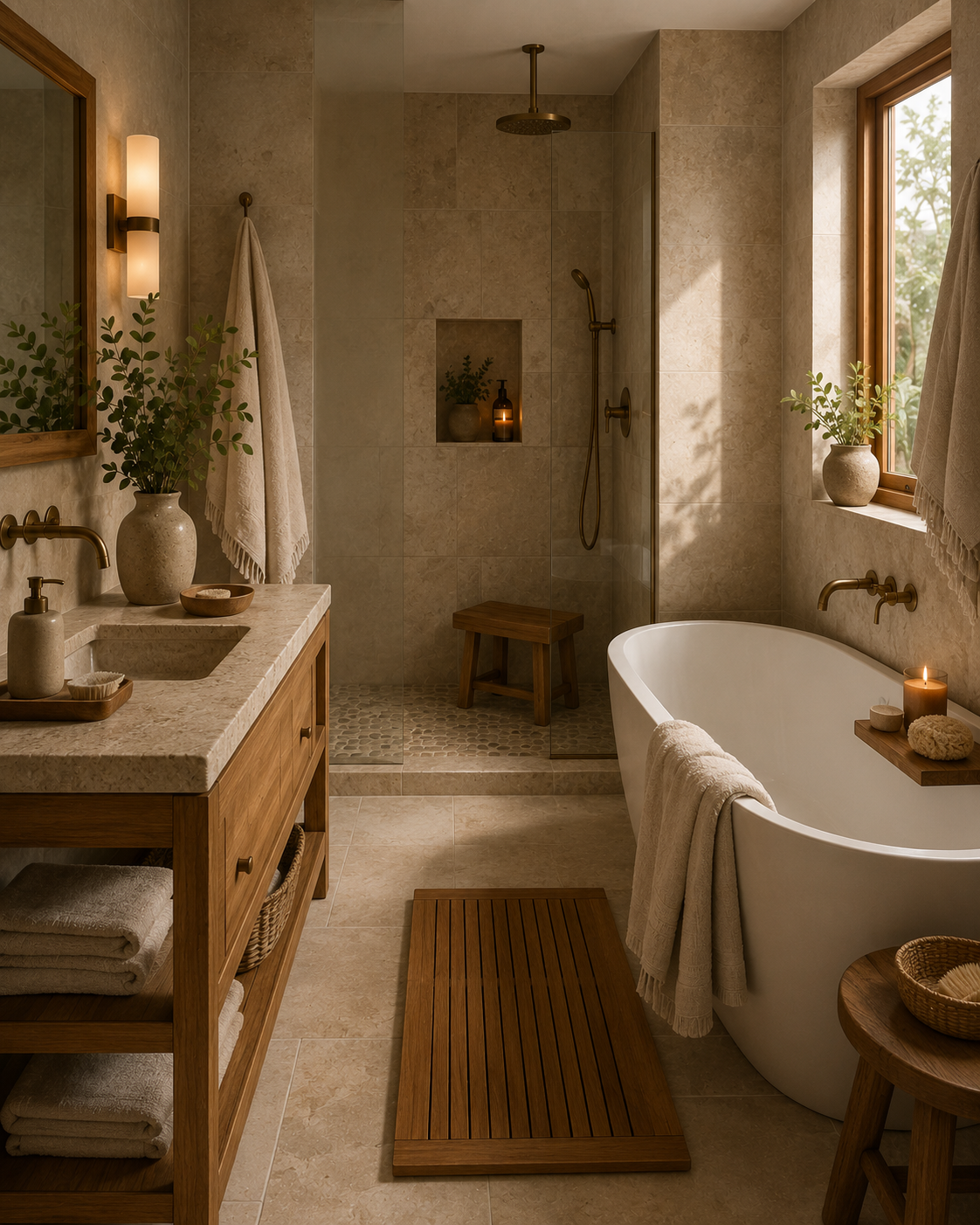
The 2026 bathroom design philosophy showcases minimal opulence — a blend of clean architectural lines with rich tactile materials.
The natural material spa bathroom is built on a simple principle — every surface that can be a natural material should be. Stone tile instead of ceramic. Teak or bamboo accessories instead of plastic. Linen or cotton towels instead of polyester blends. Ceramic soap dispensers instead of plastic pump bottles. A wooden bath mat instead of a synthetic one. Natural cotton bath sheets instead of standard towels.
None of these individual changes is expensive or complicated. But together they create a bathroom environment that registers as warm, organic, and considered in a way that synthetic materials simply cannot achieve regardless of their quality. Natural materials carry an inherent warmth — they come from somewhere, they have texture and variation, they age in ways that become more beautiful rather than less — and a bathroom filled with them communicates something about the value you place on the daily rituals that happen there.
Add to this a few living plants — a small pothos on the window sill, a larger plant in a terracotta pot in the corner, or a eucalyptus bundle in a ceramic vase — and the natural material bathroom achieves a connection to the living world that makes it feel genuinely restorative rather than just aesthetically pleasing.
8. The Decluttered Vanity Transformation
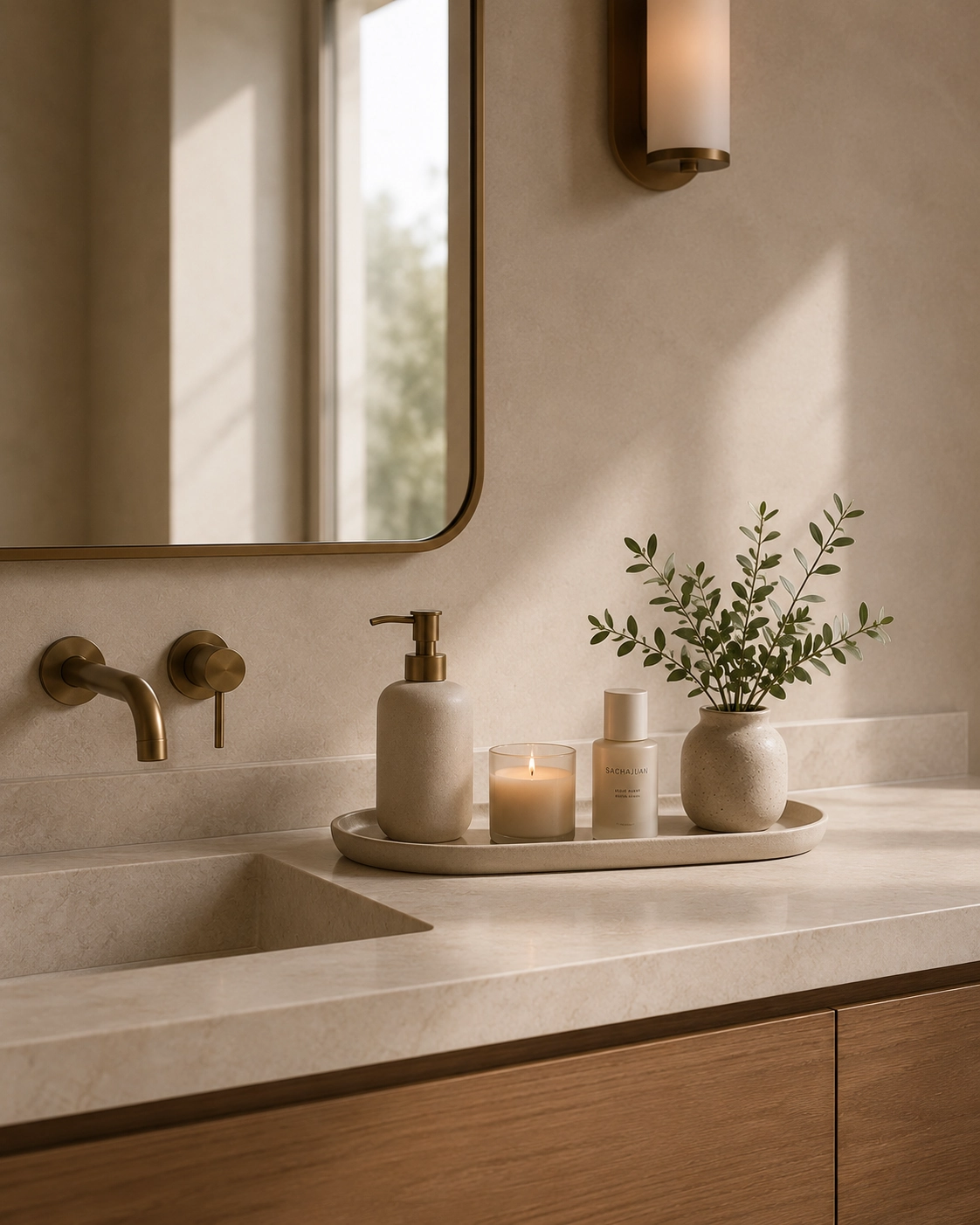
You cannot feel calm in a cluttered space. This is not a design opinion — it is a neurological fact. Visual clutter activates the stress response in the brain because it represents unfinished business, unmade decisions, and disorder. A bathroom vanity covered in products, tools, and miscellaneous objects creates low-level stress every time you look at it, even when you are not consciously registering the clutter.
The decluttered vanity transformation is the spa bathroom upgrade that costs the least money and requires the most discipline — and it delivers results that are immediate and genuinely dramatic.
Start by removing absolutely everything from the vanity surface. Everything. Then put back only what you use every single day and genuinely love the look of. For most people that is three to five items — a soap dispenser, one or two skincare products, a small plant or candle, and perhaps one tray to contain the arrangement. Everything else goes in a drawer, a cabinet, or out of the bathroom entirely.
The resulting vanity surface looks like a spa because spa vanities are not storage surfaces. They are display surfaces for the things that make the ritual feel intentional. Your vanity should communicate the same thing — that this is a surface you thought about, a surface that holds things you chose, a surface that tells anyone who sees it that the person who uses this bathroom takes their daily ritual seriously.
9. The Towel Warmer Experience
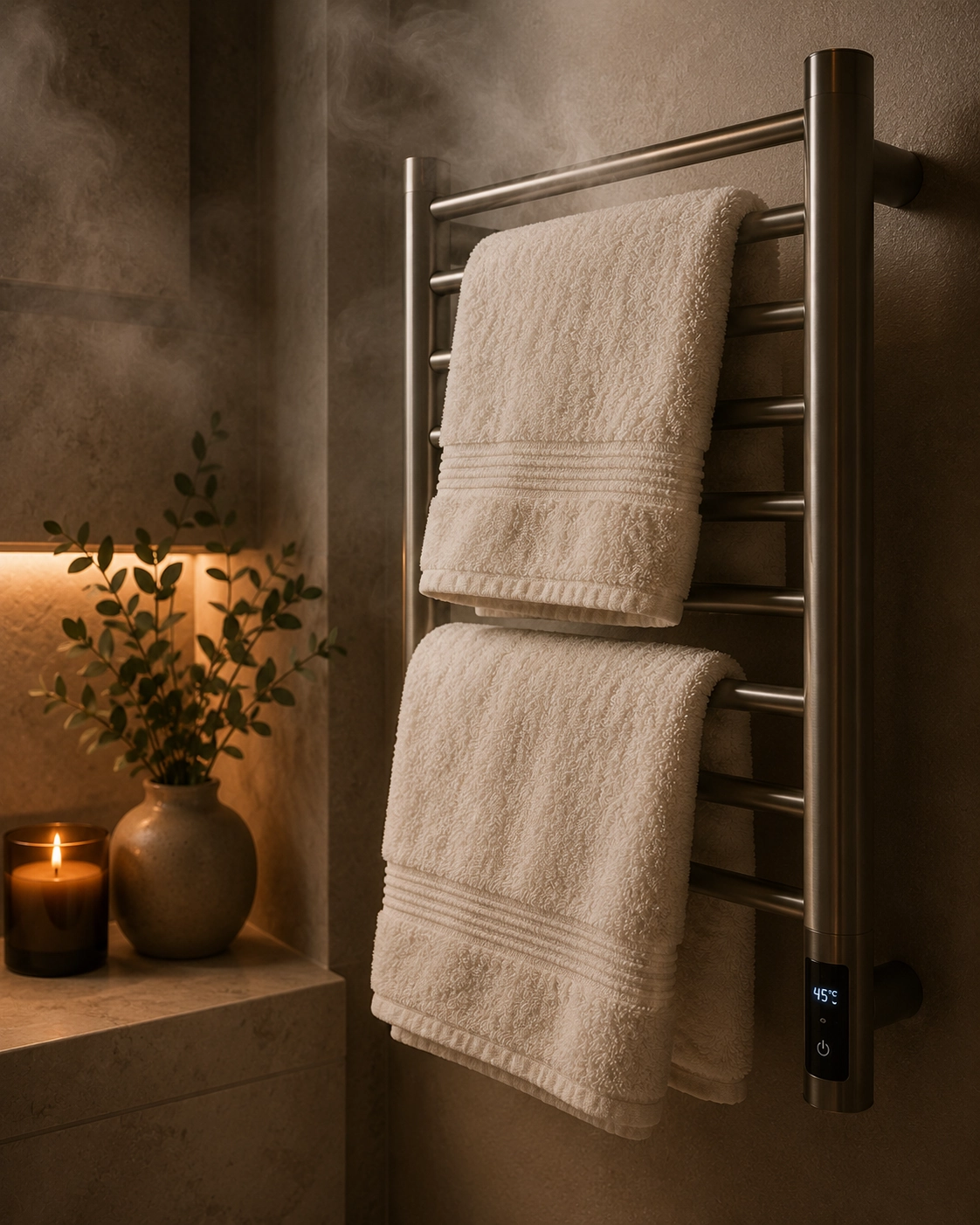
A warm towel is one of those spa details that sounds minor until you experience it consistently and then cannot imagine living without it.
Towel warmers offer the luxury of a warm towel every time you step out of the bath or shower.
Freestanding towel warmers plug into a standard outlet and heat to a gentle warmth that makes stepping out of a shower on a cold morning a completely different experience from what most of us currently have. The warmth of the towel signals comfort immediately and physically — the body relaxes in response to the warmth in the same way it relaxes in a warm bath.
Wall-mounted electric towel rails are the more permanent version of the same upgrade and more commonly seen in high-end spa bathrooms. They heat the towels continuously and also add gentle radiant warmth to the bathroom itself in the cooler months. For a bathroom that is used twice daily by two people, this upgrade pays its comfort dividend multiple times every single day.
10. The Steam Shower Setup
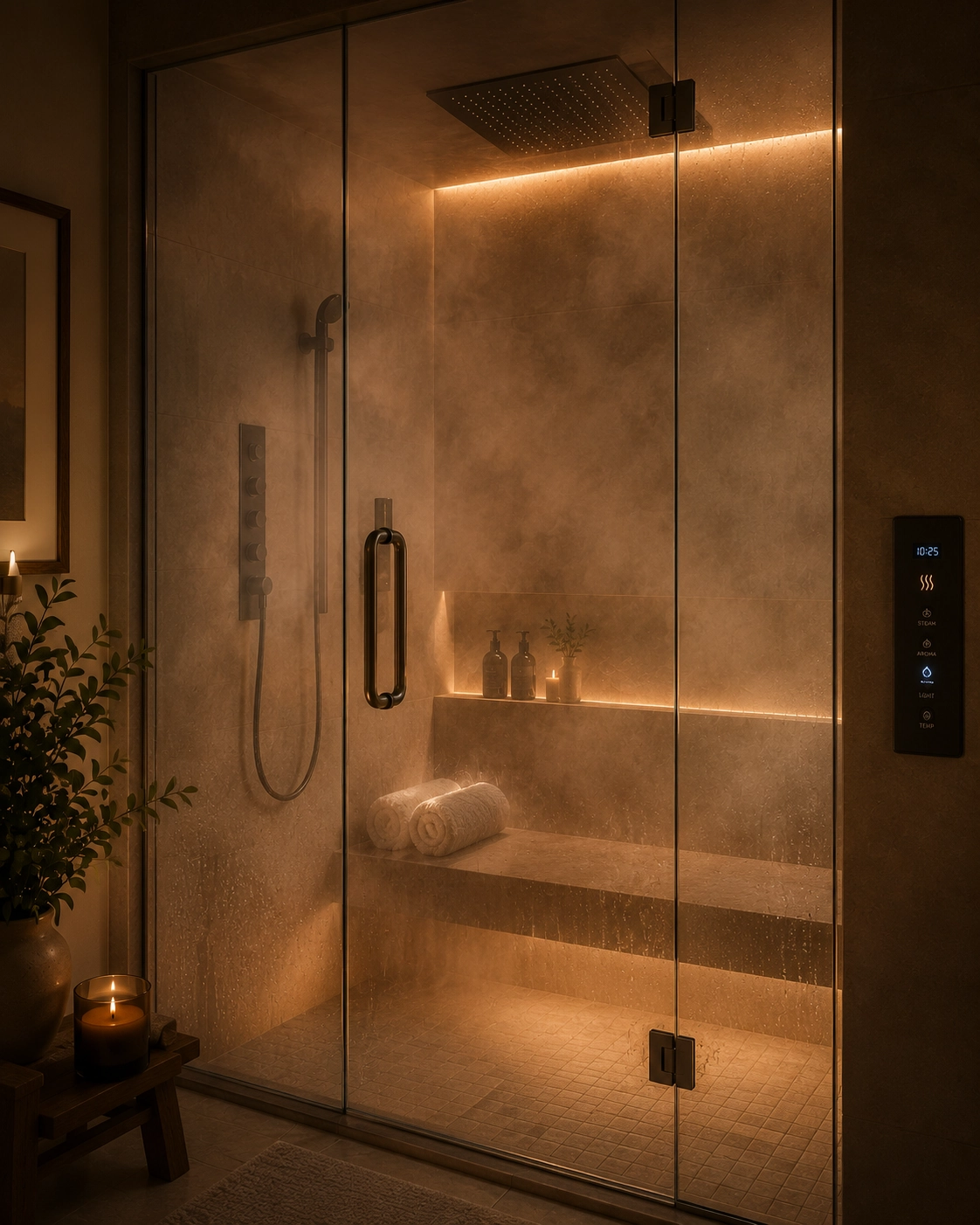
Enclosed steam rooms are quickly becoming a hallmark of purposeful self-care environments. Fully enclosed showers with steam generators, aromatherapy diffusers, and heated benches are being built into home bathrooms.
A full steam shower installation is a significant investment — but it is worth understanding what it delivers before dismissing it as too ambitious. A steam shower at home eliminates the need for a gym membership or spa subscription for steam access. It is available every day of the year at whatever time suits your schedule. And the health benefits of regular steam exposure — respiratory support, skin hydration, muscle relaxation, and significant stress reduction — are well documented.
For those not ready for a full steam installation, a steam shower tablet dissolved in the shower floor before you step in creates a simplified version of the same experience. These tablets release essential oils in the heat of the shower water, creating a brief aromatic steam environment that triggers the same sensory relaxation response. It is not the same as a true steam room but it costs a few dollars rather than a few thousand and it works.
11. The Aromatherapy Bathroom
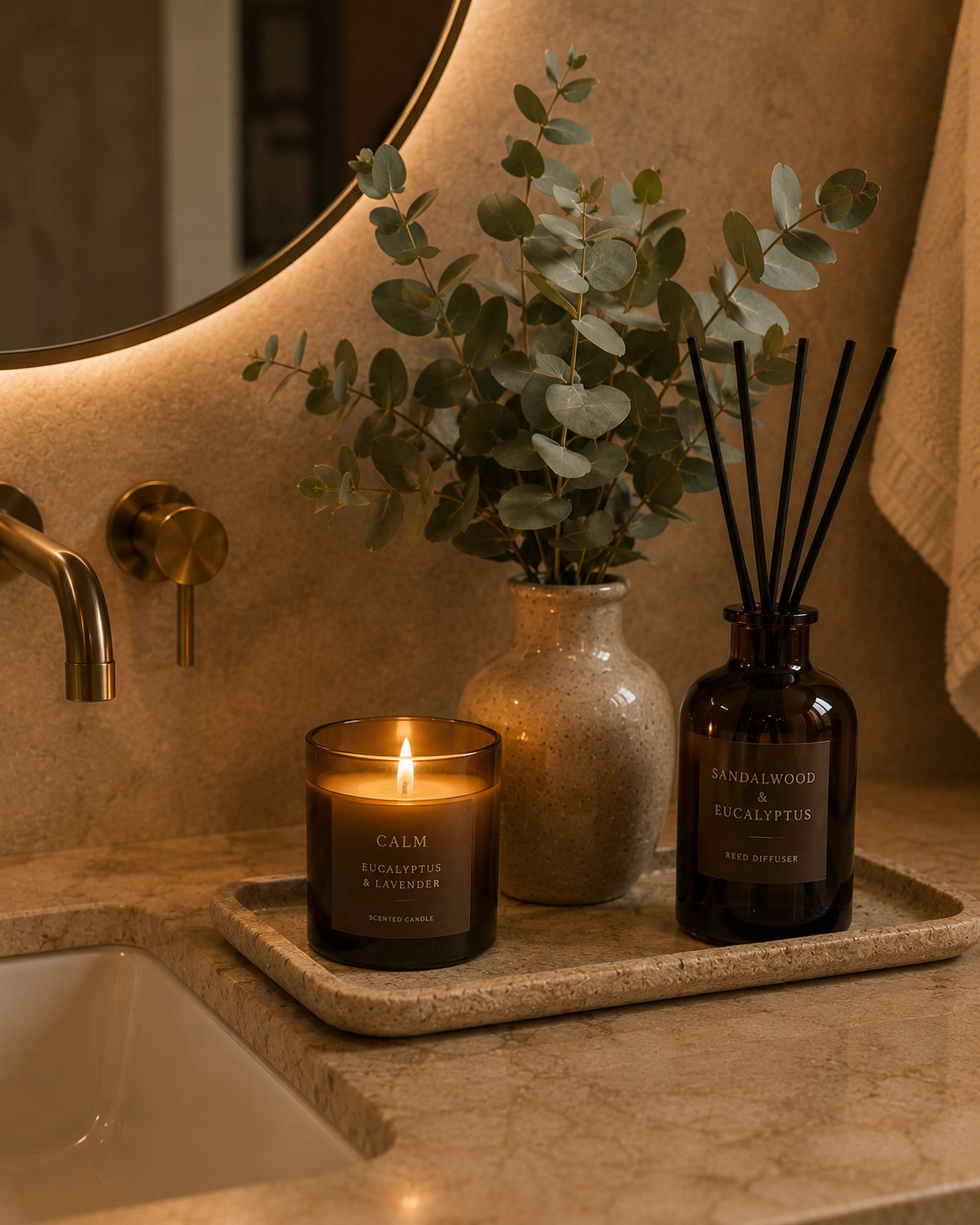
Scent is the fastest of all the senses to access the brain’s emotional centers. A specific smell can create a mood shift in seconds — before you have consciously processed anything about the room you have entered.
This is why aromatherapy is such a central element of any genuine spa experience, and why it belongs in a spa-inspired home bathroom. The right scent in a bathroom creates a relaxation response before the shower is even on.
Eucalyptus is the classic spa scent and for good reason — it is simultaneously refreshing and calming, it supports respiratory function, and it works beautifully as a fresh plant arrangement in the shower where the steam releases its oils naturally. Lavender is the sleep-associated scent that works particularly well in an evening bathroom routine. Cedarwood and sandalwood create a warmer earthier spa atmosphere. Peppermint is the invigorating morning option.
A reed diffuser on the vanity, a candle on the tub ledge, a eucalyptus bundle on the shower head, a few drops of essential oil on the shower floor before you step in — any one of these creates the scent dimension that most bathrooms are missing and that spa bathrooms always include.
12. The Spa Product Display
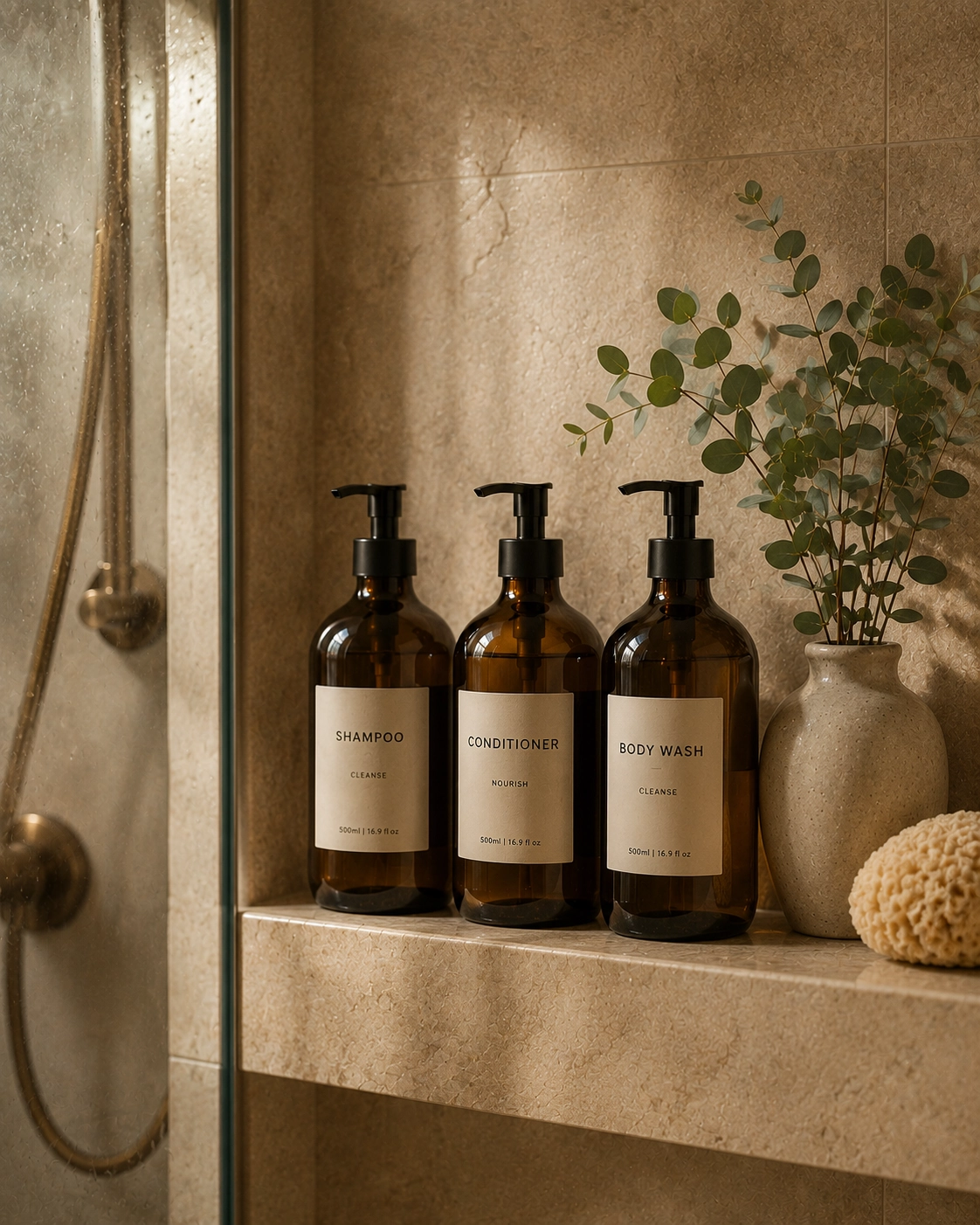
How your bathroom products are displayed is as important as what those products are — because the organization and presentation of your skincare, haircare, and body care routine is what determines whether the routine feels like a chore or a ritual.
Glass decanting bottles — simple clear or amber glass vessels with pump tops — filled with your shampoo, conditioner, and body wash turn the product shelves in a shower from a collection of mismatched commercial packaging into a clean organized display that feels intentional and beautiful. On the vanity, a simple marble or ceramic tray containing your three or four essential skincare products turns the skincare routine into something that begins with a visual moment of pleasure before it even starts.
A small wooden or bamboo shelf beside the tub at tub height — holding a candle, a glass of water, and one small plant — creates a tub-side experience that makes the bath feel genuinely ritualistic. These are not expensive additions. They are thoughtful ones — and in a spa bathroom, thoughtfulness is exactly what creates the atmosphere that expensive renovations try to buy.
13. The Organic Modernism Bathroom
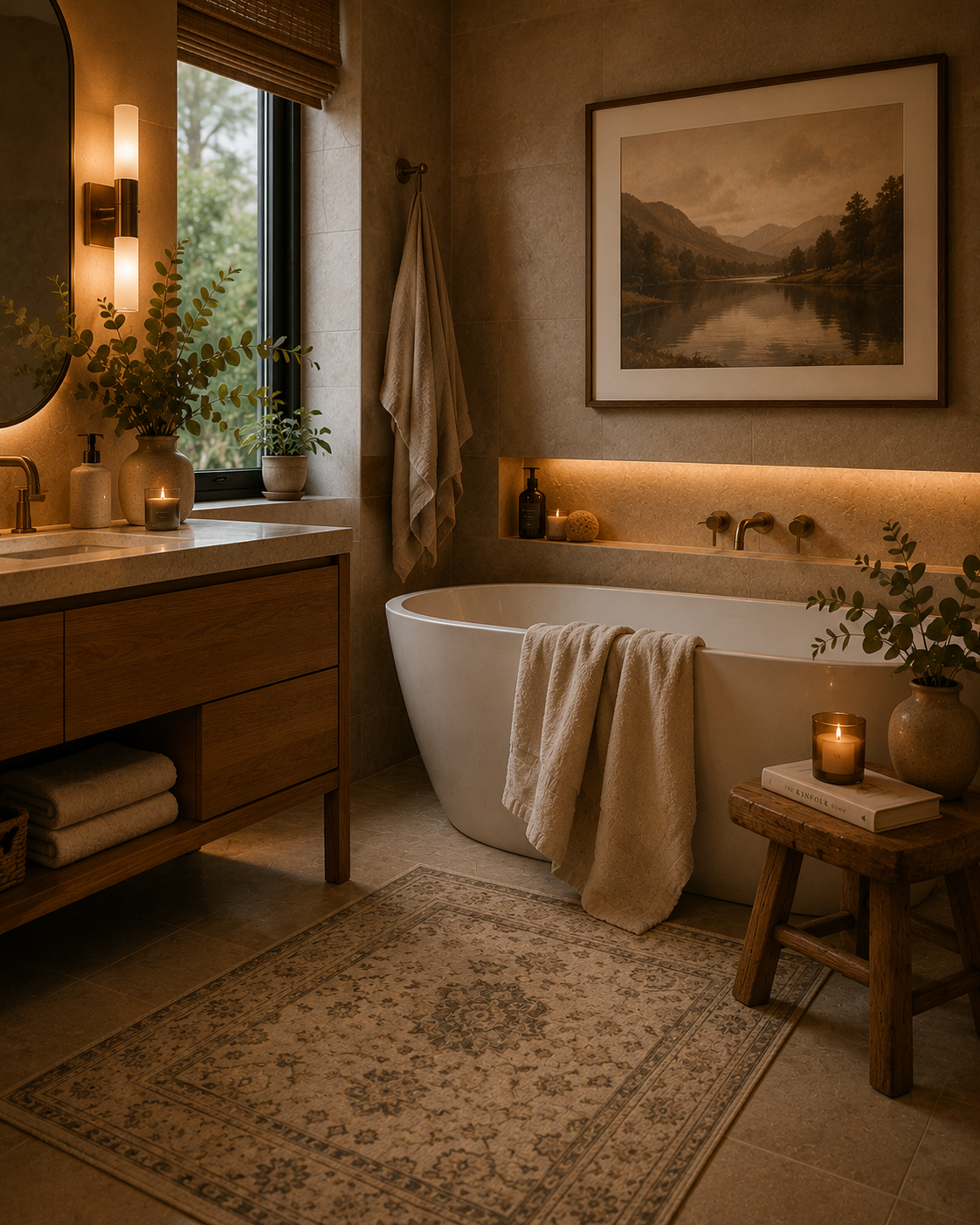
The bathroom of 2026 incorporates artwork, architectural wall accents, and moisture-resistant decorative rugs that make the room feel like an extension of the home’s primary living quarters.
This idea — that the bathroom should feel like a continuation of the home rather than a separate functional zone — produces one of the most genuinely beautiful spa bathroom looks available. A framed piece of art on the bathroom wall. A moisture-resistant decorative rug on the bathroom floor in a warm tone. A ceramic object on the vanity that serves no practical function but is genuinely beautiful. A wooden stool beside the tub that holds a book and a candle and nothing else.
These are things you would find in any other room in a well-designed home. Bringing them into the bathroom says clearly that this room deserves the same level of care and consideration as any other — and that daily acts of cleansing and grooming deserve to happen in an environment that takes them seriously.
14. The Outdoor Connection Bathroom
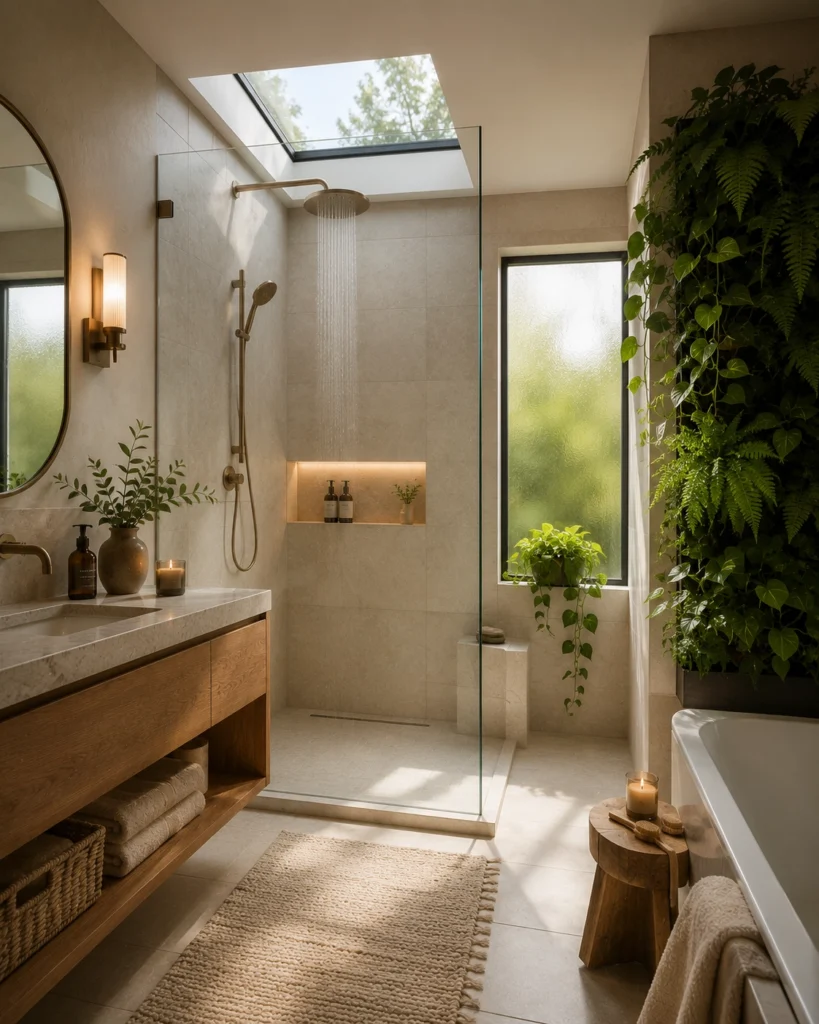
Natural light and views of greenery are among the most powerful calming inputs available to the human nervous system. A bathroom that connects to the outdoors — whether through a frosted glass window that lets in natural light without sacrificing privacy, a skylight directly above the shower, or a small internal garden wall with moisture-tolerant plants — creates a restorative quality that is difficult to achieve through any other design element.
Even in a bathroom with no windows, a living plant wall — a section of wall covered with moisture-tolerant plants like ferns, pothos, or air plants — creates a living green element that connects the room to the natural world. Combined with natural material surfaces and warm lighting, this green wall creates a bathroom that feels genuinely organic and alive in a way that most residential bathrooms do not.
15. The Complete Sensory Ritual Bathroom
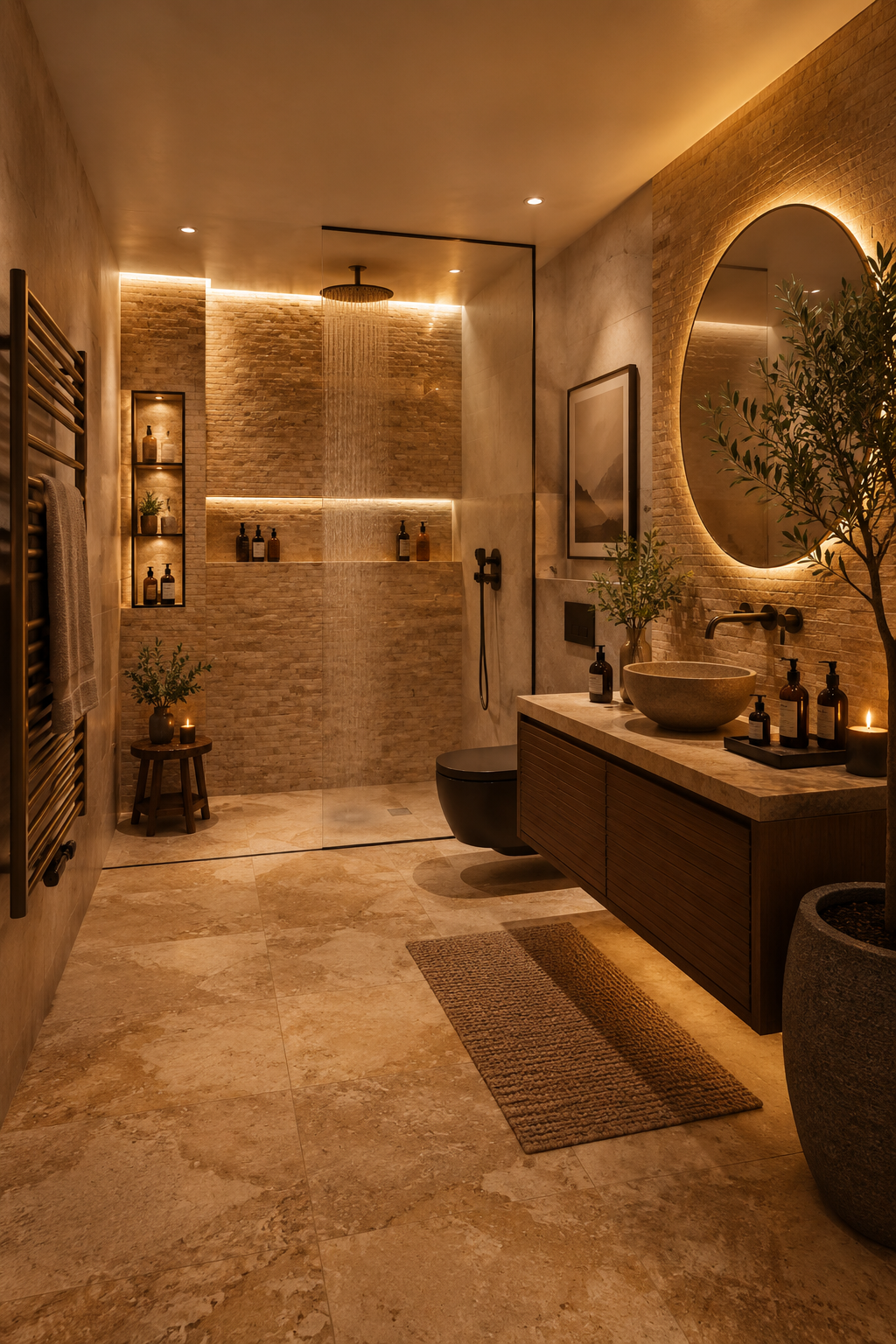
This final look is the culmination of every principle in this guide — the bathroom that has been designed not for a single sense but for all of them simultaneously.
Warm stone or wood tile underfoot that feels pleasant to walk on, especially with a heated floor beneath. Warm amber lighting from multiple sources at different heights. A eucalyptus or lavender scent from a diffuser or a natural plant arrangement. Thick warm towels waiting on a heated rail. A rainfall shower head overhead. Products decanted into beautiful matching vessels. A tray on the vanity holding only what is used and loved. A piece of art on the wall. A plant in the corner.
None of these individual elements is remarkable on its own. Together they create a bathroom that engages every sense in a positive and calming direction simultaneously — and that is what a spa actually does. It does not do one impressive thing very dramatically. It does many thoughtful things at once, in a way that collectively creates an environment your body and mind recognize immediately as safe, warm, and worth being present in.
That is the spa bathroom. And it is more achievable than most people think.
Spa Bathroom Ideas on a Budget
The ten most impactful spa bathroom upgrades that cost the least — in approximate order of cost versus impact.
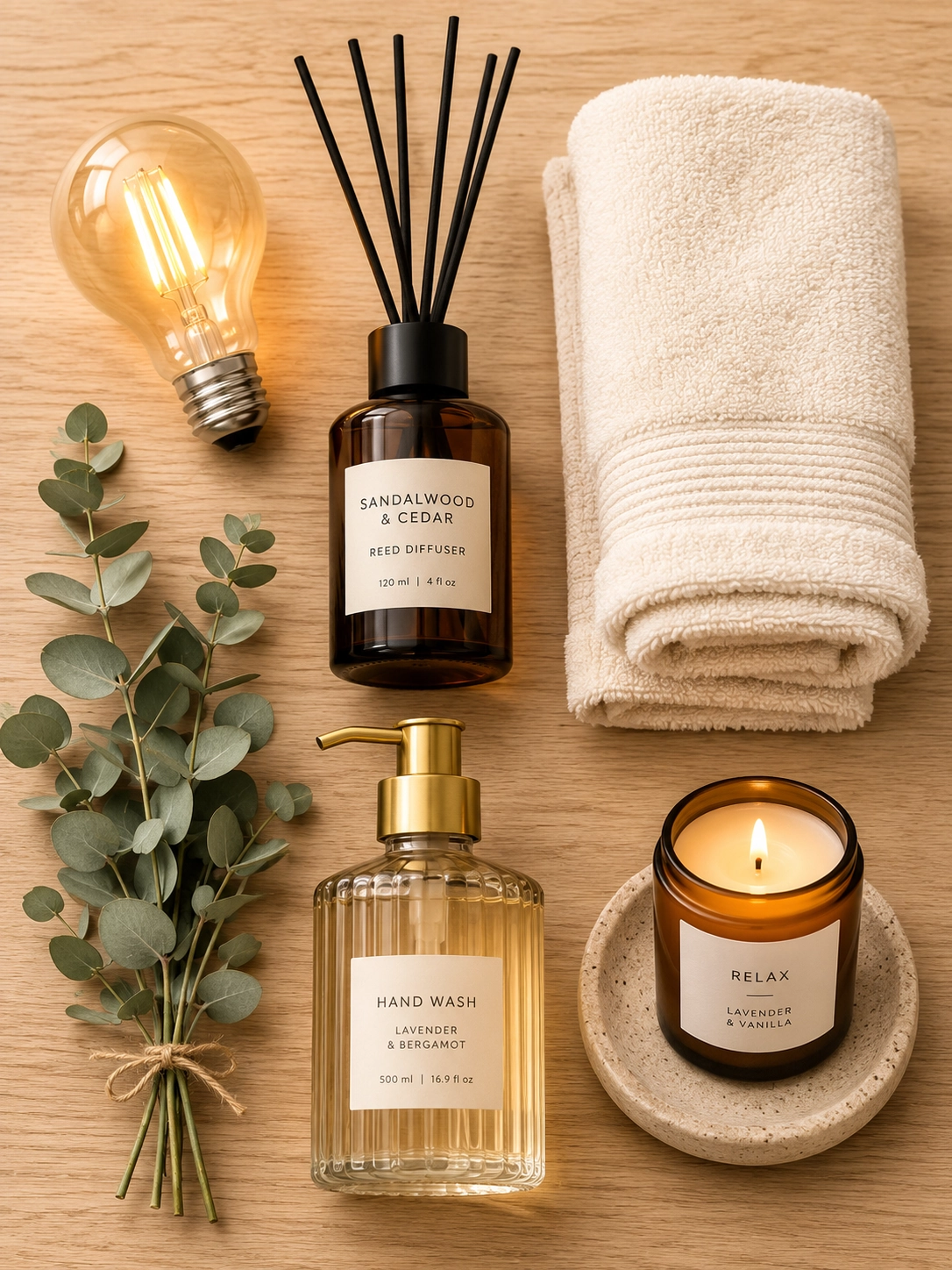
Replace your bulbs. Warm white 2700K bulbs in every fixture. The most impactful change per dollar spent on this entire list. Cost is under ten dollars. Impact is immediate and dramatic.
Declutter the vanity. Costs nothing except the discipline to put things away. Impact is significant — a clear vanity surface makes every bathroom feel more like a spa and less like a storage space.
Add a reed diffuser. A quality reed diffuser in a clean spa scent — eucalyptus, white tea, cedarwood — costs fifteen to thirty dollars and transforms the sensory experience of the bathroom immediately.
Upgrade your towels. Thick high-quality cotton towels in warm white or cream. A set of four costs thirty to sixty dollars and makes every shower or bath feel more luxurious.
Add a eucalyptus bundle to your shower head. Fresh or dried eucalyptus tied with twine and hung from the shower head releases aromatherapy oils in the steam. Costs under ten dollars. Lasts two to three weeks.
Get a simple tray for the vanity. A marble or ceramic tray containing your three essential products creates organization that reads as intentional design. Costs ten to thirty dollars.
Add one plant. A small pothos, fern, or snake plant in a simple ceramic pot. Costs five to twenty dollars and adds life to the bathroom in both the literal and atmospheric sense.
Switch to decanted product bottles. Glass or ceramic decanting bottles for shower products. Costs fifteen to thirty dollars for a set. Transforms the shower shelf from commercial clutter to considered display.
Add a candle. A single quality soy candle in a clean spa scent on the tub ledge or windowsill. Costs ten to twenty-five dollars. Changes the evening bathroom experience completely.
Install a dimmer switch. Allows you to drop overhead lighting to atmospheric levels for evening bathing. Costs ten to twenty dollars plus thirty minutes of installation time and produces an entirely different bathroom in the evening hours.
Small Bathroom Spa Ideas
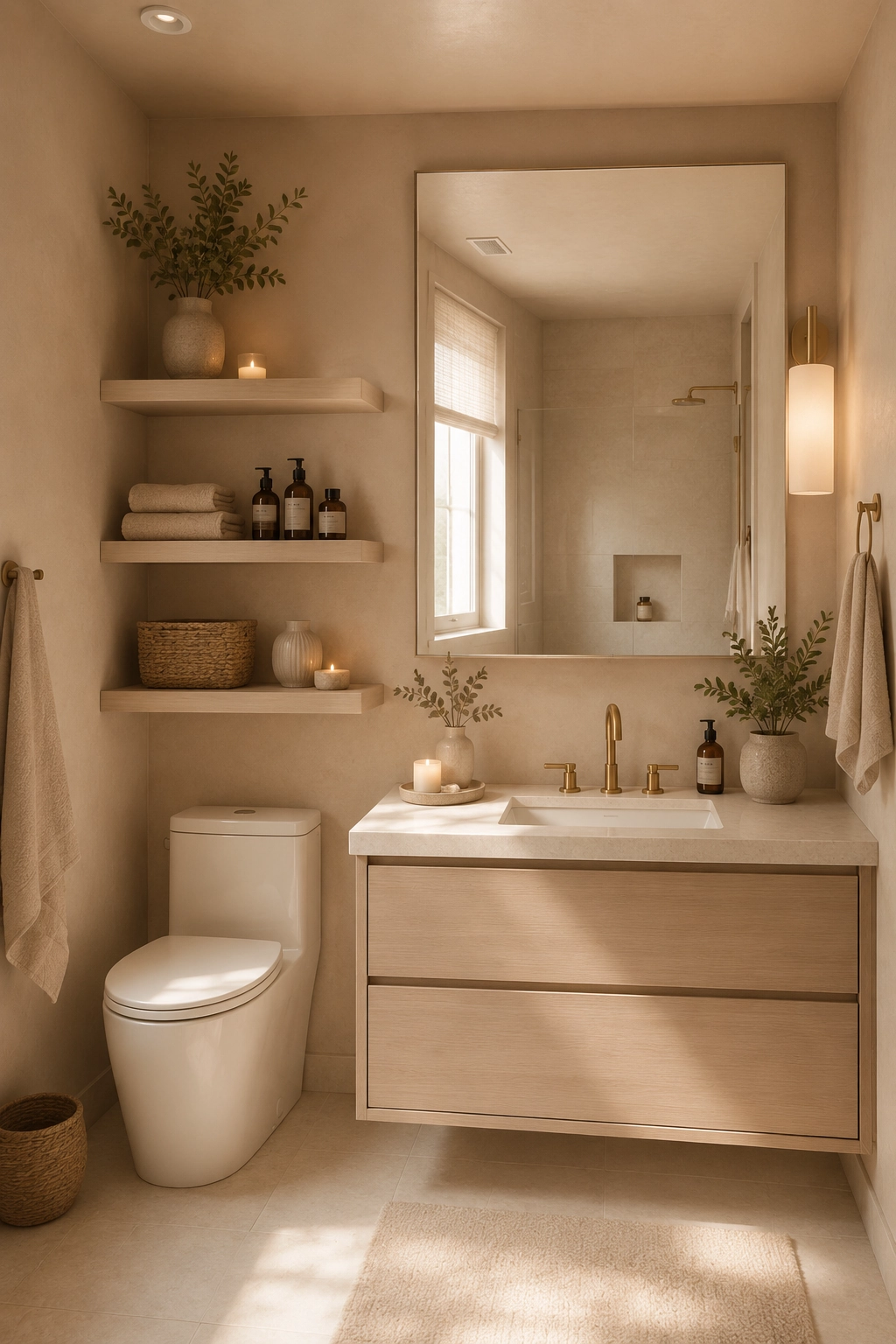
A small bathroom can be a spa bathroom. The size of the room is far less important than the quality of the decisions made within it — and in some ways a small bathroom is easier to transform into a spa because less space means every single element has more impact.
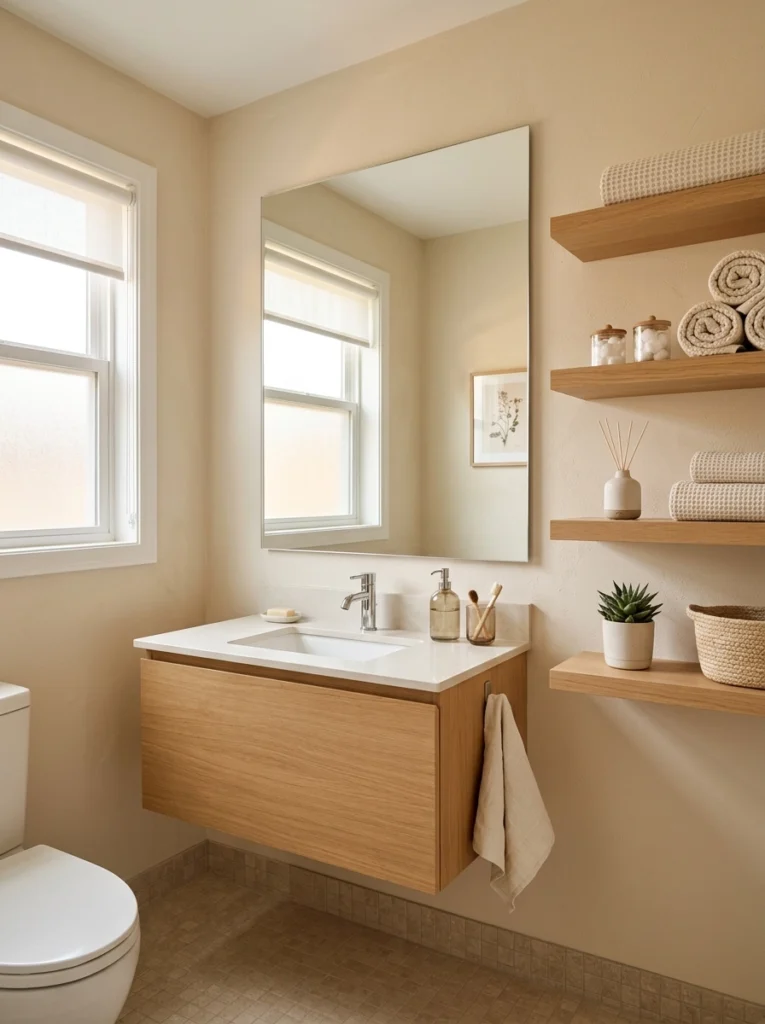
Go vertical with storage. Floating shelves above the toilet, recessed shelving inside the shower, a tall narrow cabinet beside the vanity — vertical storage keeps the floor and surfaces clear which is essential for creating the visual calm of a spa in a small space.
Use a large mirror. A mirror that takes up most of the wall above the vanity reflects light and makes a small bathroom feel significantly larger while also performing the practical function of a bathroom mirror. An LED mirror with warm integrated lighting solves both the lighting and the mirror in a single installation.
Choose one color and stay in it. A small bathroom with too many colors feels busy and compressed. A small bathroom in a single warm neutral — warm white, soft cream, warm greige — feels calm and surprisingly generous.
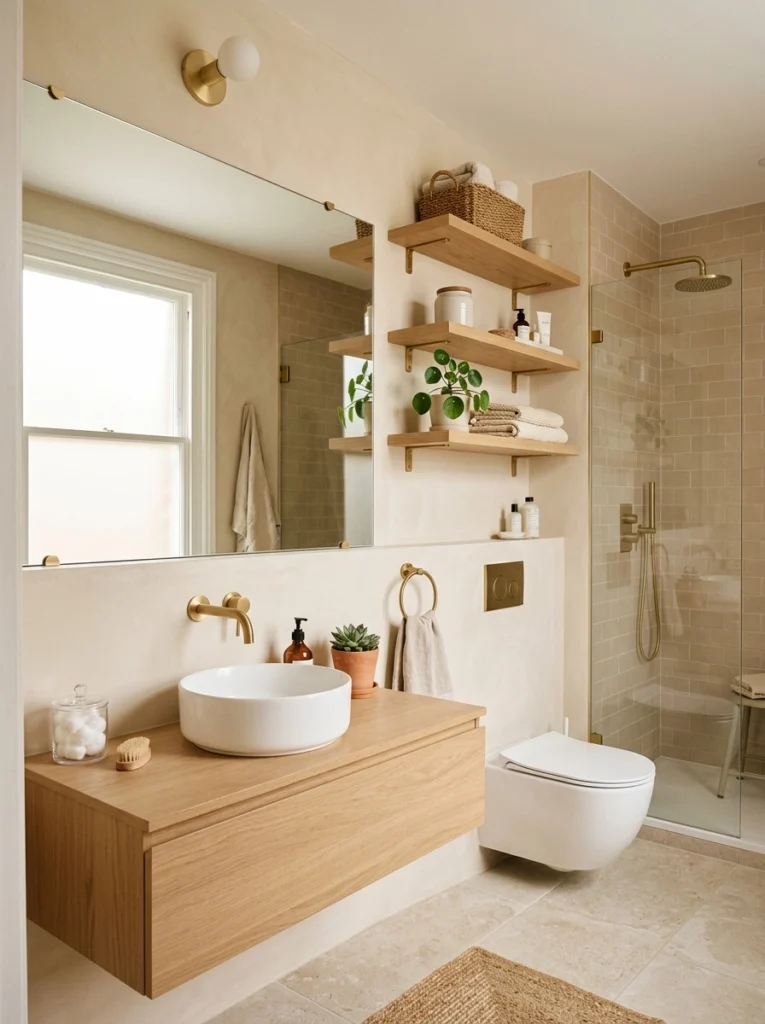
Add scent aggressively. In a small bathroom, a reed diffuser or a candle makes a disproportionate impact because the scent fills the small space completely rather than needing to work across a larger area. A small bathroom that smells like a spa creates the spa experience through scent even when the visual elements are still works in progress.
FAQ Section
What makes a bathroom feel like a spa?
A bathroom feels like a spa when it creates warmth and calm through three simultaneous qualities. First, sensory warmth — the room feels good to be in through warm lighting, pleasant scent, soft textures, and materials that feel quality and natural. Second, visual calm — the surfaces are organized and uncluttered, the color palette is quiet and warm, and there is nothing competing for your attention when you are trying to be at rest. Third, functional intention — every element was chosen to support your specific self-care routine rather than being there by default or necessity. Any bathroom that achieves all three of these qualities simultaneously will feel like a spa regardless of its size, budget, or age.
How do I make my bathroom look like a spa without renovating?
The most impactful non-renovation spa bathroom upgrades are replacing bulbs with warm 2700K versions, decluttering the vanity surface, adding a reed diffuser in a clean spa scent, upgrading to thick quality towels, hanging a eucalyptus bundle from the shower head, switching to decanted glass product bottles in the shower, adding one plant, and installing a dimmer switch on the overhead light. These eight changes together cost well under two hundred dollars and create a bathroom that feels dramatically different from what most people currently have. None of them require a plumber, a contractor, or any permanent changes to the space.
What colors are best for a spa bathroom?
Warm neutrals consistently produce the most spa-like bathroom atmospheres — warm white, soft cream, warm greige, and stone tones create visual calm while avoiding the coldness that cool neutrals can create. Deep earthy tones — warm sage green, warm charcoal, deep terracotta — create a moodier and more dramatic spa atmosphere that works particularly well in bathrooms with good lighting. The colors to avoid in a spa bathroom are cool grays with blue undertones and stark bright white, both of which create a clinical atmosphere that works against the relaxation you are trying to achieve.
What plants are best for a spa bathroom?
Eucalyptus, pothos, ferns, air plants, and peace lilies are the most consistently successful bathroom plants. Eucalyptus releases aromatherapy oils in the steam of a hot shower — either as a bundle hung from the shower head or as a cut arrangement in a vase of water. Pothos and ferns thrive in the humidity of a bathroom environment and require minimal care. Air plants need no soil and can be displayed in simple ceramic or glass vessels on the vanity or windowsill. Peace lilies tolerate low light which makes them suitable for bathrooms without windows. In general, plants with a strong natural scent or an ability to thrive in humidity are the best candidates for a spa bathroom.
How do I create a spa bathroom on a small budget?
The three highest-impact lowest-cost spa bathroom upgrades are replacing light bulbs with warm 2700K versions, decluttering the vanity surface, and adding a reed diffuser in a quality spa scent. Together these three changes cost under fifty dollars and create immediate and significant atmospheric improvement. The next tier of budget-friendly upgrades — upgraded towels, a shower eucalyptus bundle, a decanting bottle set, one plant, and a single quality candle — adds another fifty to one hundred dollars and produces a bathroom that most people would genuinely describe as spa-like. A full spa bathroom transformation through accessories and small upgrades is achievable for under three hundred dollars when the changes are made thoughtfully and in the right order.
Is a freestanding tub necessary for a spa bathroom?
A freestanding tub is beautiful and creates a significant visual statement in a spa bathroom but it is absolutely not necessary for the space to feel like a spa. Many of the most genuinely restful spa bathroom experiences happen in showers rather than baths — a rainfall shower head, a eucalyptus bundle, quality shower products in decanted bottles, and warm steam is a complete spa experience in its own right. The elements that most determine whether a bathroom feels like a spa are the lighting, the scent, the material quality, and the organizational calm of the surfaces — none of which require a freestanding tub to achieve.
Save this post to your Pinterest bathroom boards and share it with someone whose bathroom deserves to be more than functional. 📌
Disclosure: This post may contain affiliate links. If you purchase through links on this site I may earn a small commission at no extra cost to you. Thank you for supporting brightmomideas.com.

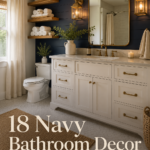
[…] navy walls, natural wood floating shelves look extraordinary. The warm grain of oak or pine against the deep blue of the wall creates a […]