
Table of Contents
- Why Picking the Right Kitchen Sink Actually Matters
- Types of Kitchen Sinks (Installation Styles)
- Best Kitchen Sink Materials (Pros and Cons)
- Single Bowl vs. Double Bowl: Which Should You Choose?
- What Size Kitchen Sink Do You Need?
- Kitchen Sink Trends for 2026
- How Much Does a Kitchen Sink Cost?
- Mistakes to Avoid When Choosing a Kitchen Sink
- Frequently Asked Questions
- Bottom Line
I didn’t think picking a kitchen sink could take three separate weekends of research until it actually did. It sounds like the easiest decision in a kitchen remodel, right up until you realize there are half a dozen materials, at least five installation styles, and an entire debate about single bowl versus double bowl that nobody warns you about.
So if you’re standing in a showroom right now feeling a little overwhelmed, this guide is for you. We’re covering every type of kitchen sink, the materials worth your money, sizing basics, current trends, and the mistakes people make so you don’t have to repeat them.
Why Picking the Right Kitchen Sink Actually Matters
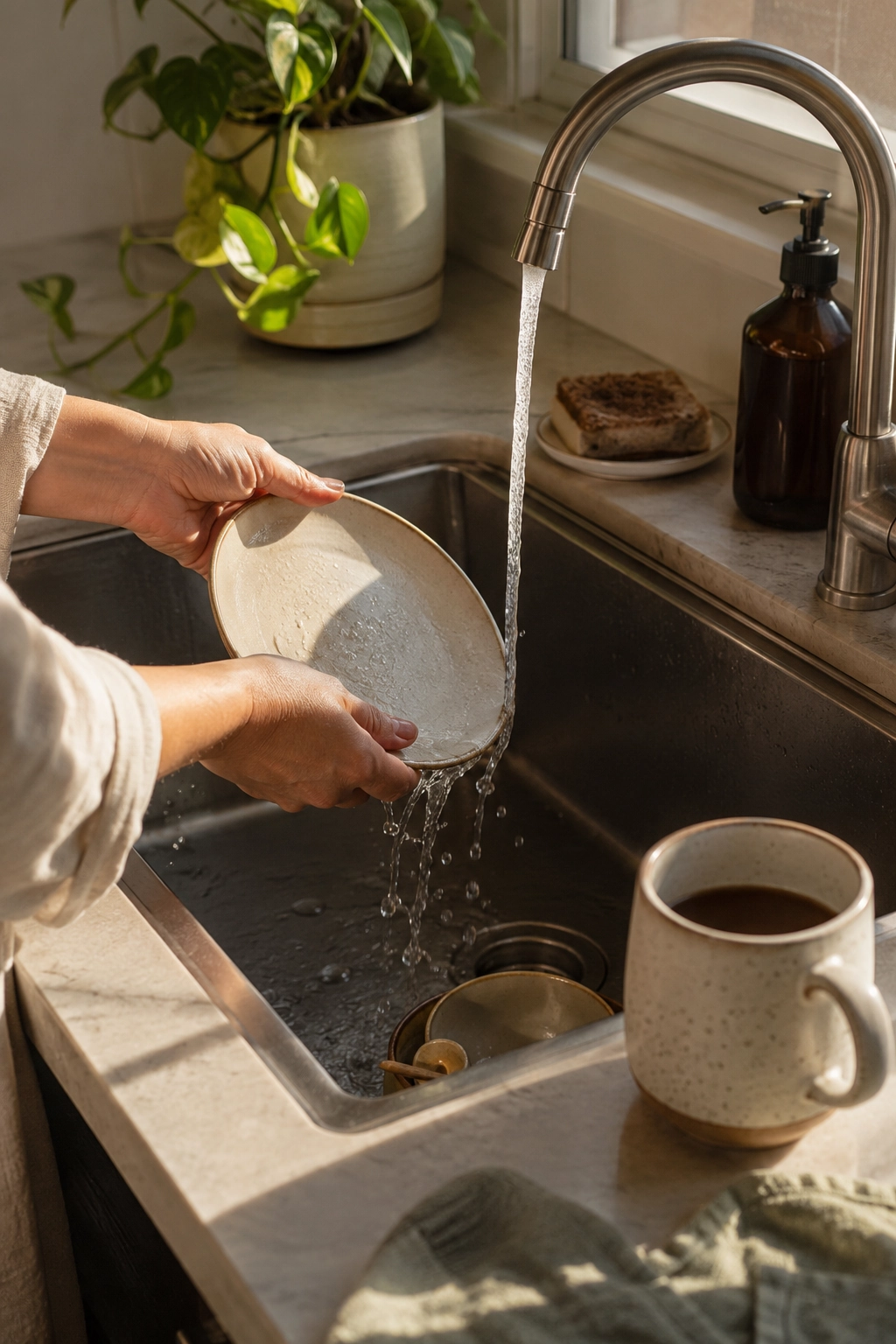
Here’s the thing nobody tells you: your sink probably gets used more than almost anything else in your kitchen. Every dish, every pot, every rinsed vegetable passes through it multiple times a day. A sink that’s too small, too shallow, or made from the wrong material for your habits turns into a daily annoyance fast.
On top of that, this fixture has become a genuine design statement. Scroll through any kitchen renovation board on Pinterest and you’ll notice the sink is rarely hidden away anymore. Between farmhouse styles, black finishes, and workstation setups, it’s often the centerpiece of the whole layout.
Types of Kitchen Sinks (Installation Styles)
Before you even think about material or color, you’ll need to decide how the sink actually sits in your counter. This is usually the first fork in the road.
Undermount Kitchen Sink
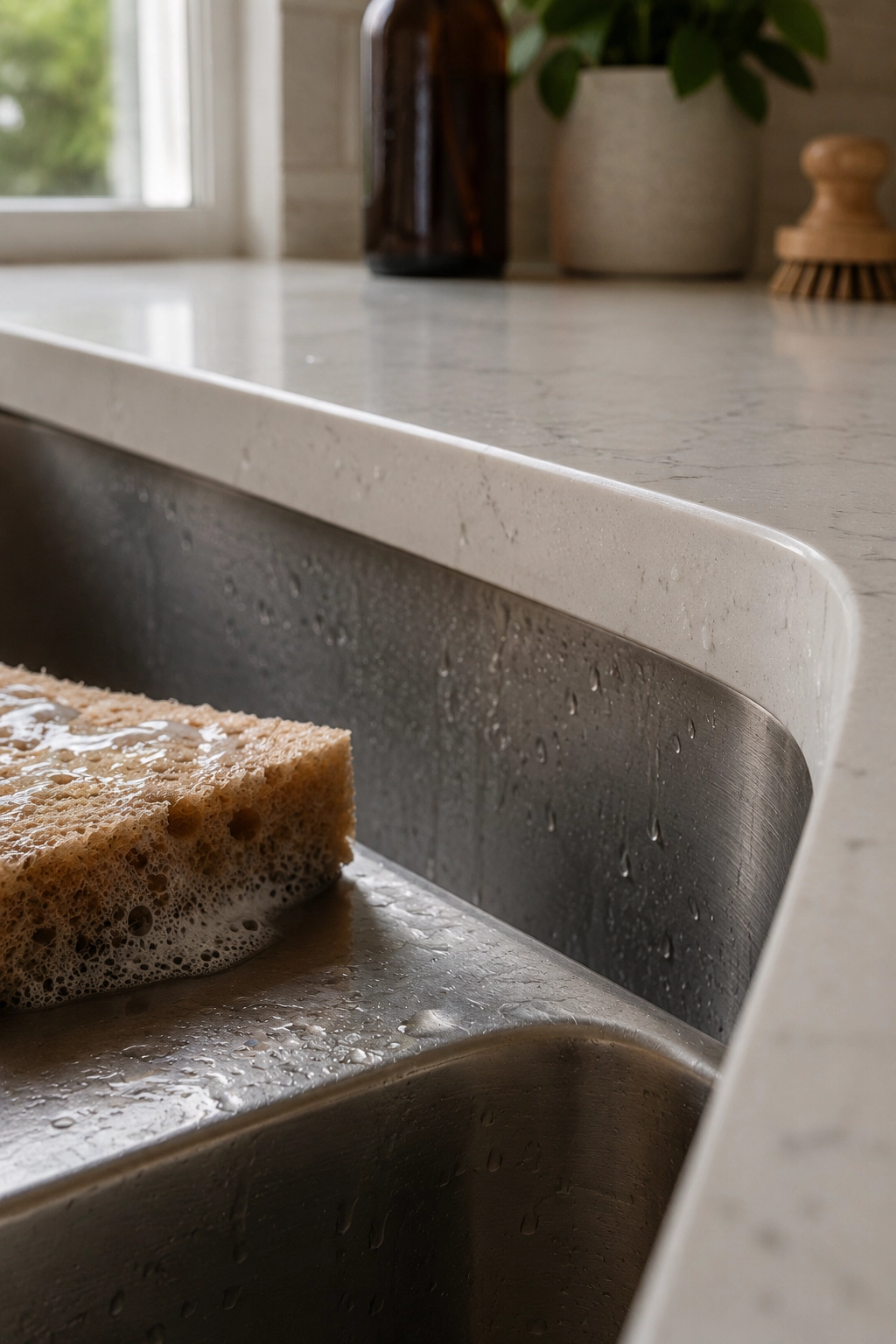
This style mounts underneath the counter, so there’s no lip catching crumbs or water. It creates a clean, seamless look and makes wiping counters directly into the basin easy. The trade-off is that it generally requires a solid surface counter like quartz or granite, and it costs a bit more to install.
Drop-In (Top-Mount) Kitchen Sink
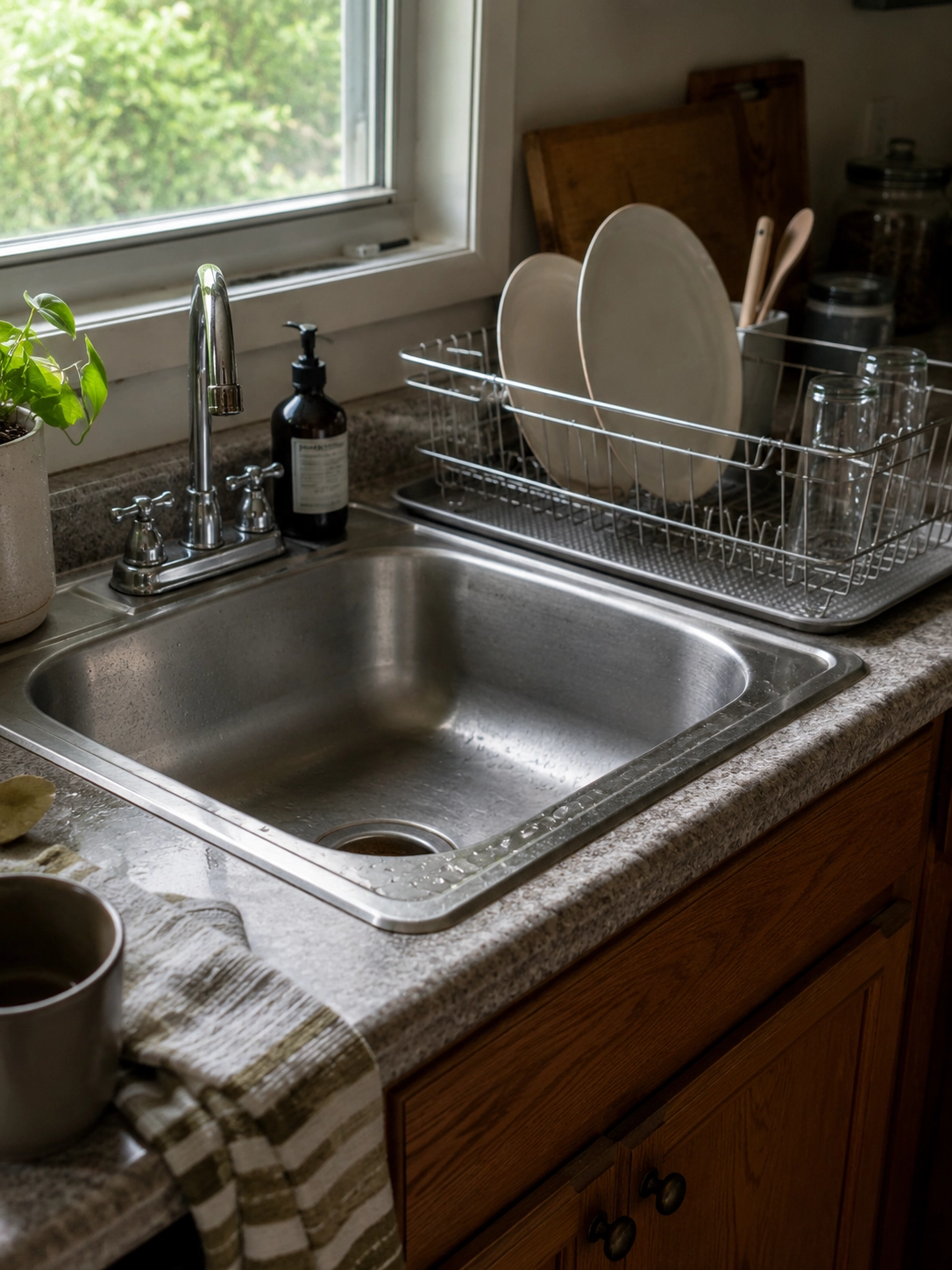
This is the classic style you’ll recognize from most standard kitchens. The sink drops into a cutout and its edge rests on top of the counter. It’s budget-friendly and works with almost any countertop material, though the visible rim does collect grime over time.
Farmhouse / Apron-Front Kitchen Sink
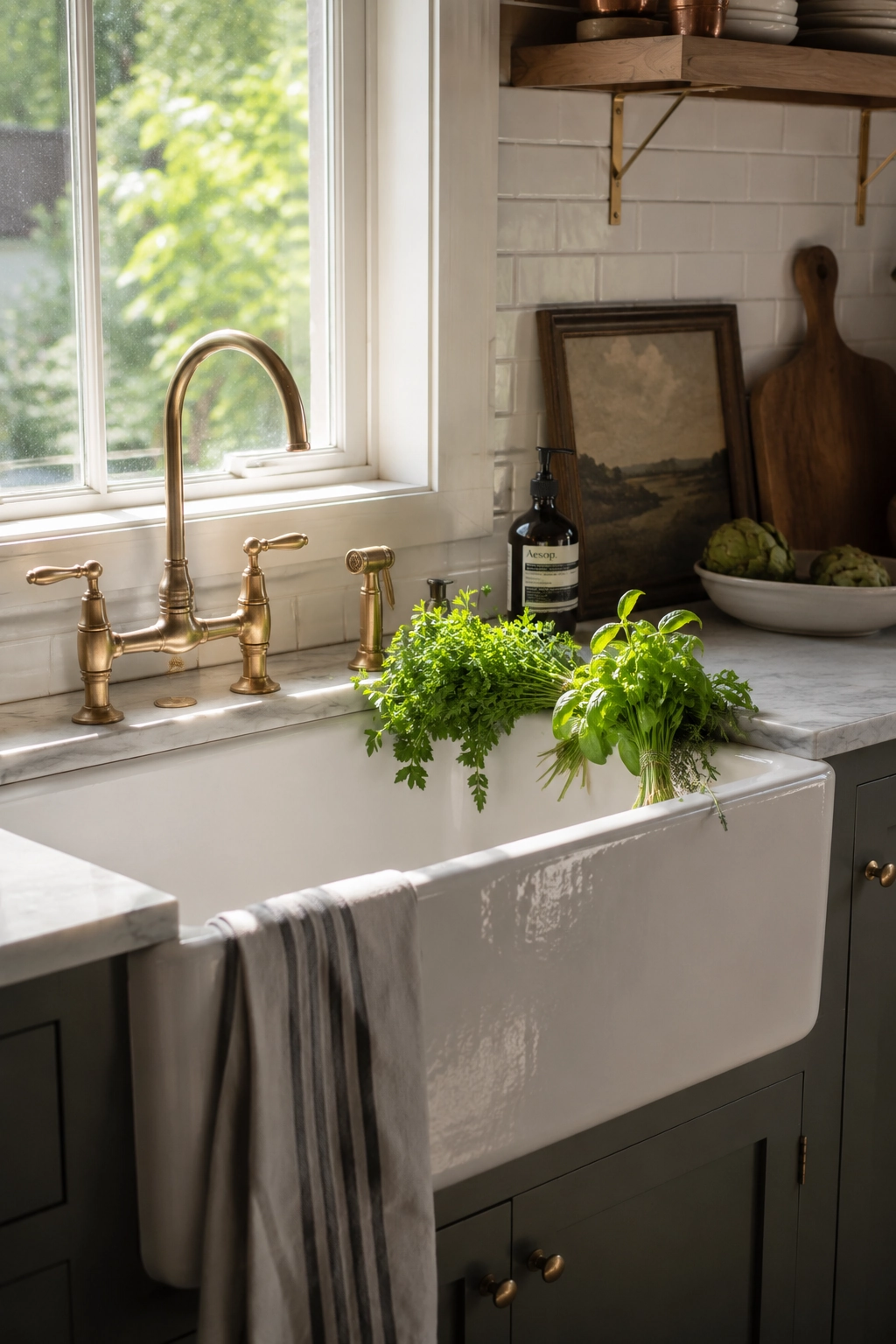
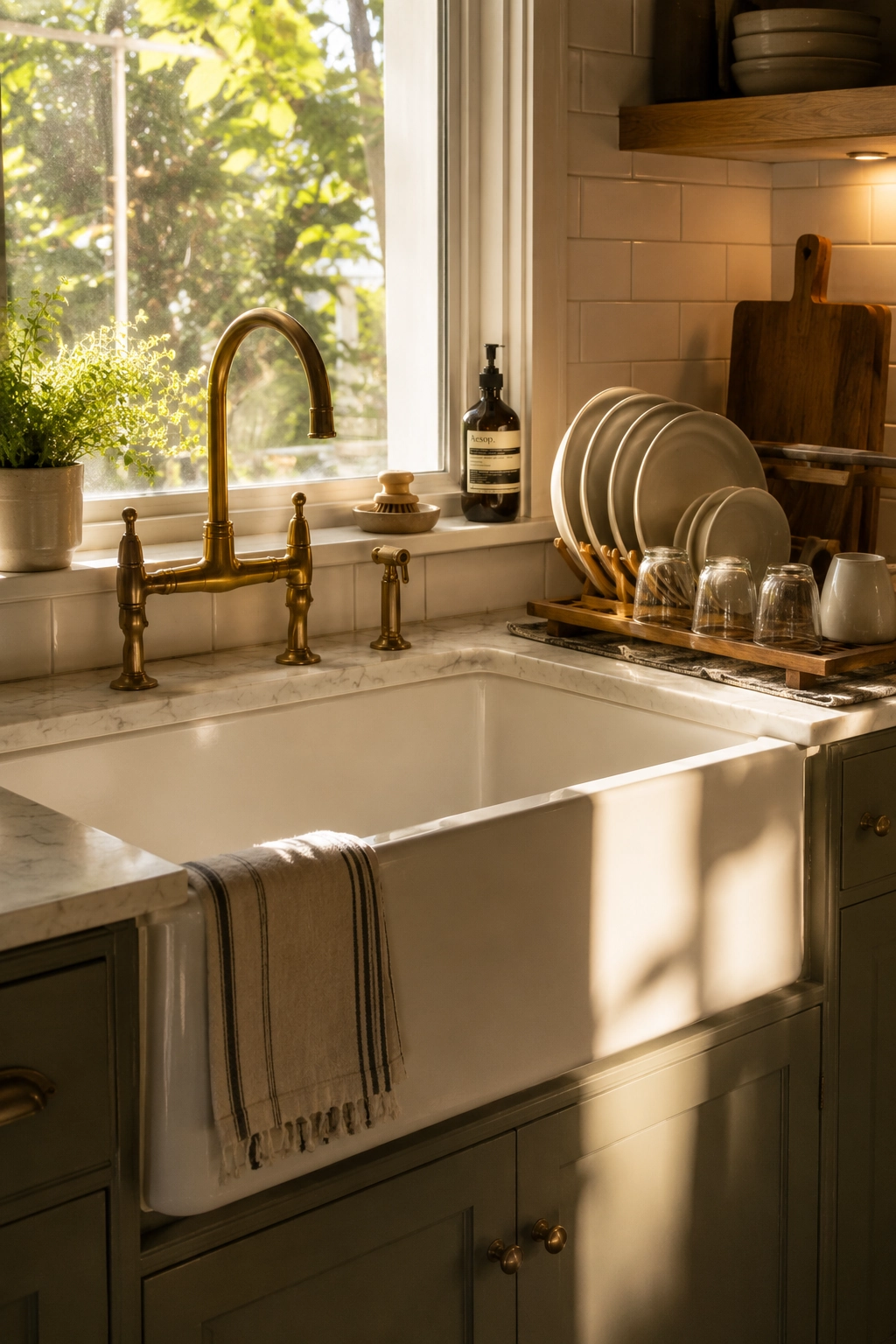
This is the one all over Pinterest right now. The front panel of the sink extends past the cabinet face instead of hiding behind it, giving a farmhouse or cottage-style kitchen an instant focal point. It’s deep, spacious, and honestly gorgeous, but it does require specific cabinetry to fit properly.
Workstation Kitchen Sink
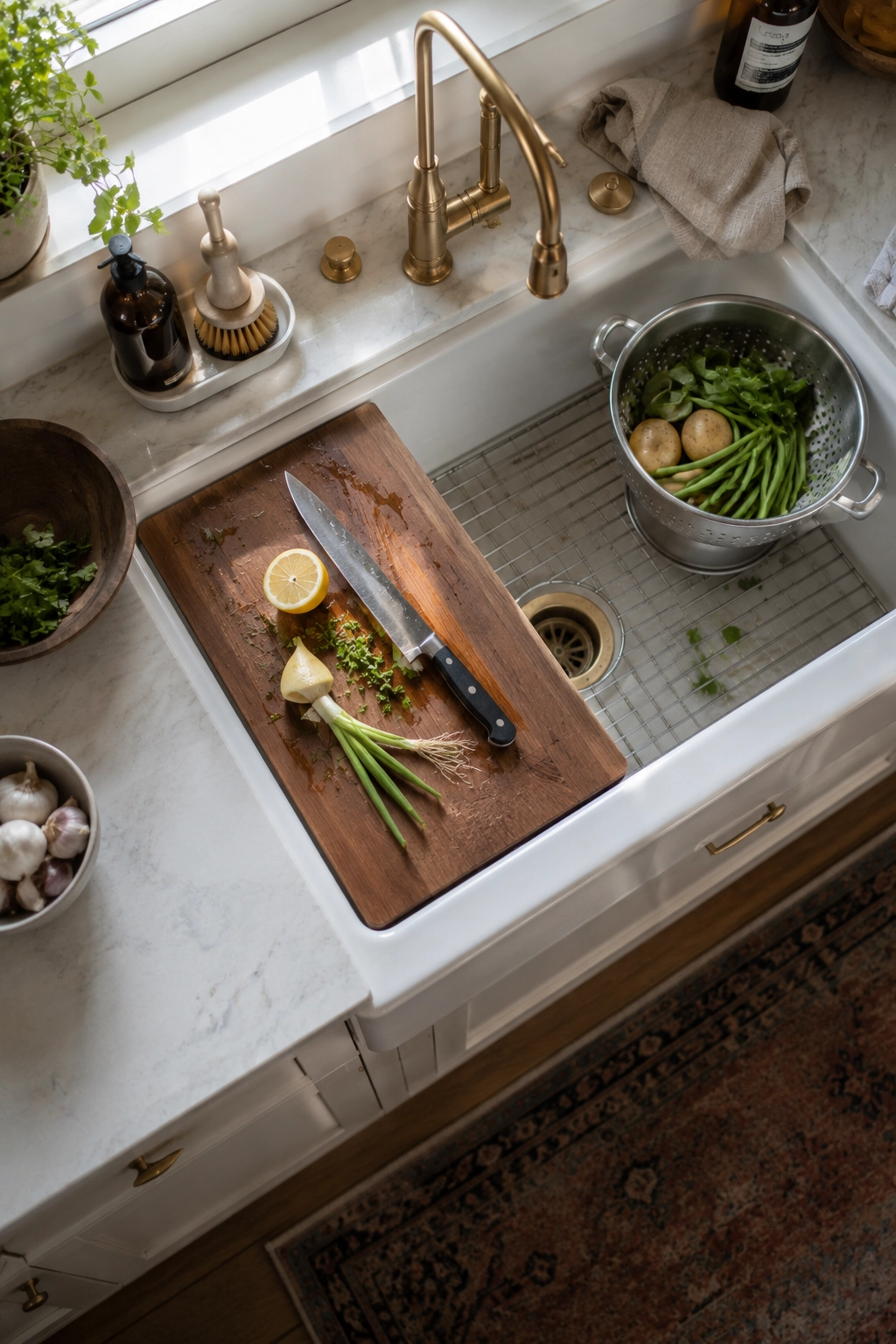
A newer favorite, this style comes with built-in ledges for cutting boards, colanders, and drying racks that sit right over the basin. It basically turns your sink into a mini prep station, which is a genuinely useful upgrade if your counter space is limited.
Corner Kitchen Sink
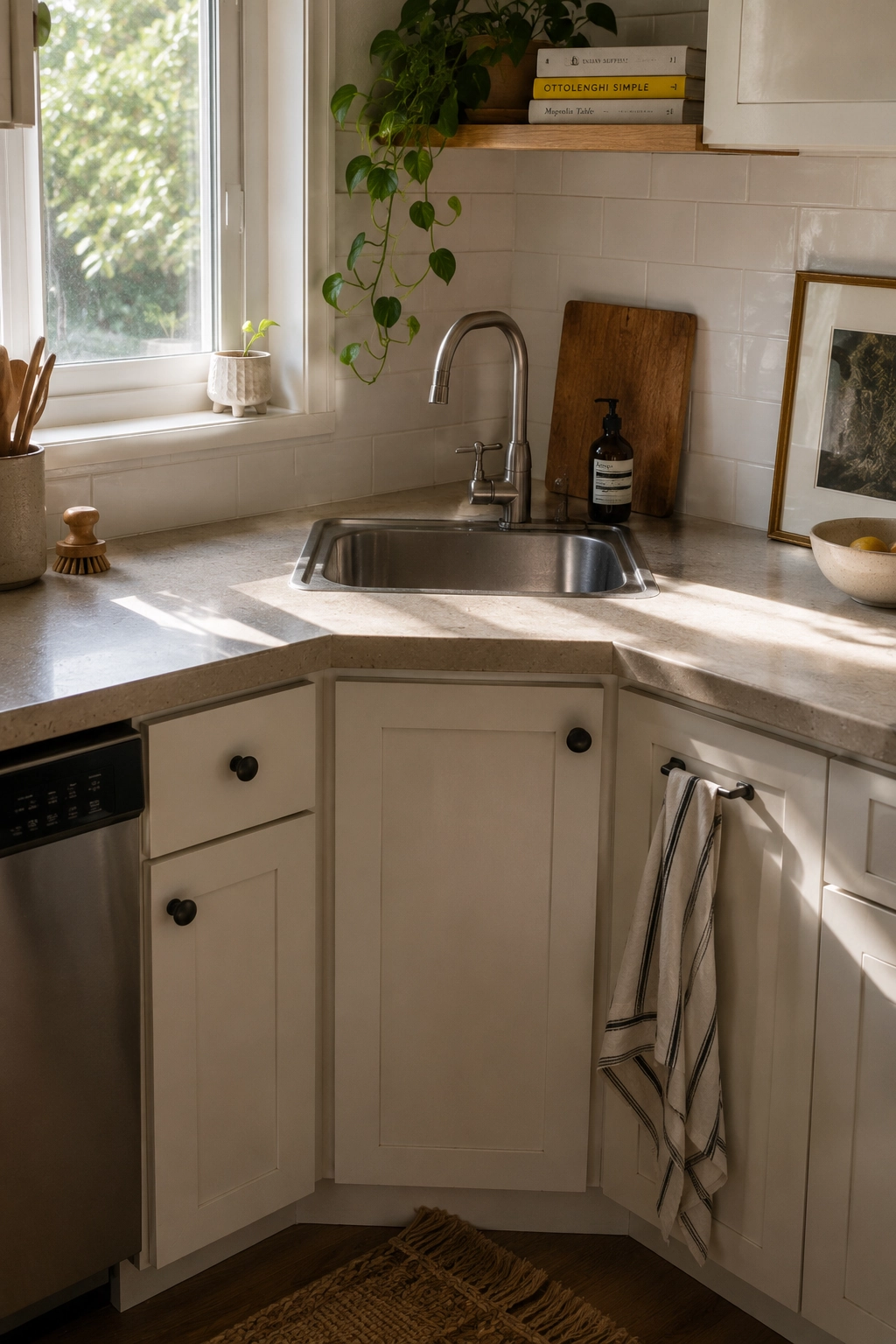
Less common, but a smart pick for smaller or awkwardly shaped kitchens. Tucking the sink into a corner frees up a surprising amount of usable counter space along the rest of the layout.
Best Kitchen Sink Materials (Pros and Cons)
Once you’ve picked a style, material is the next big decision, and it affects everything from durability to noise level.
Stainless Steel
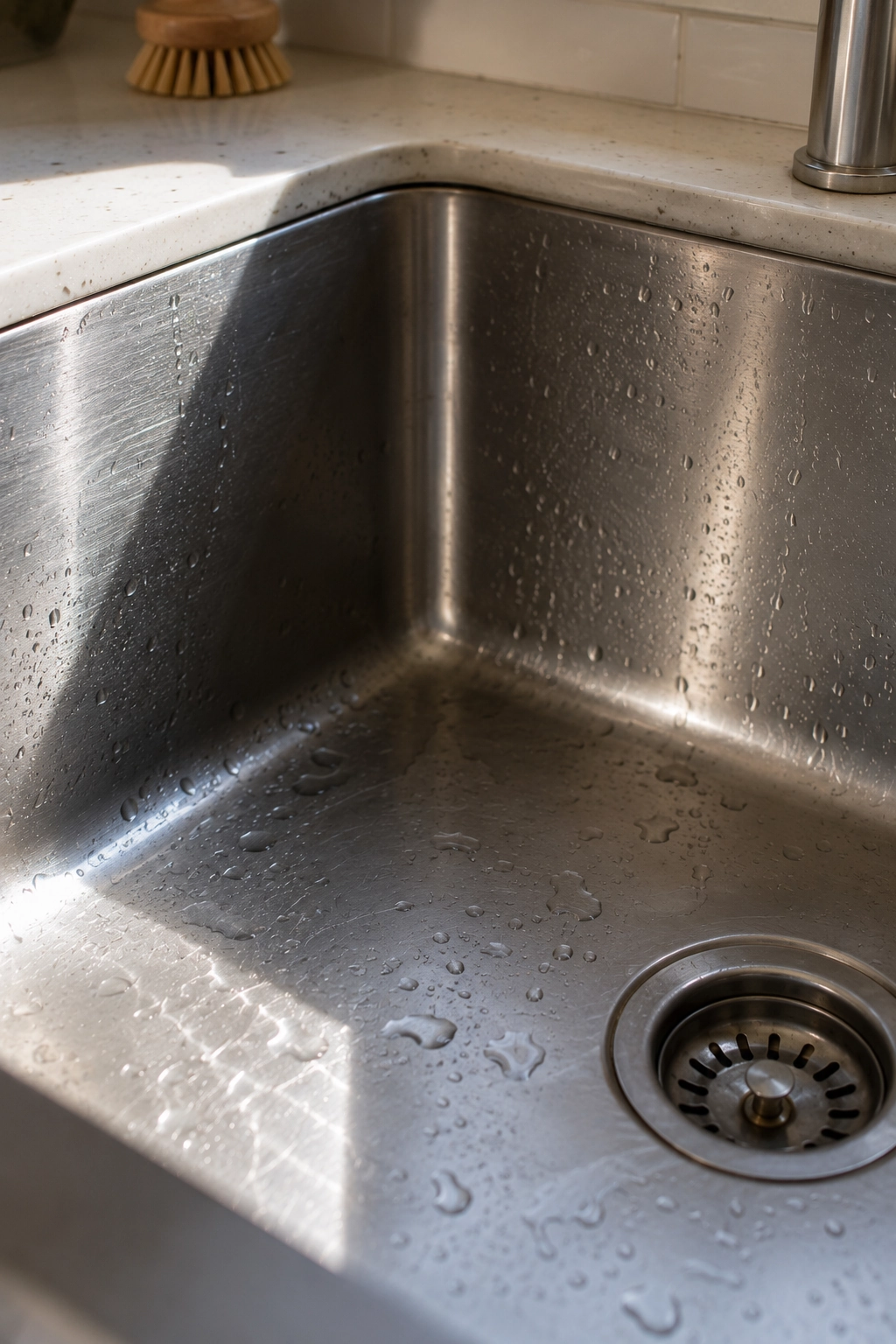
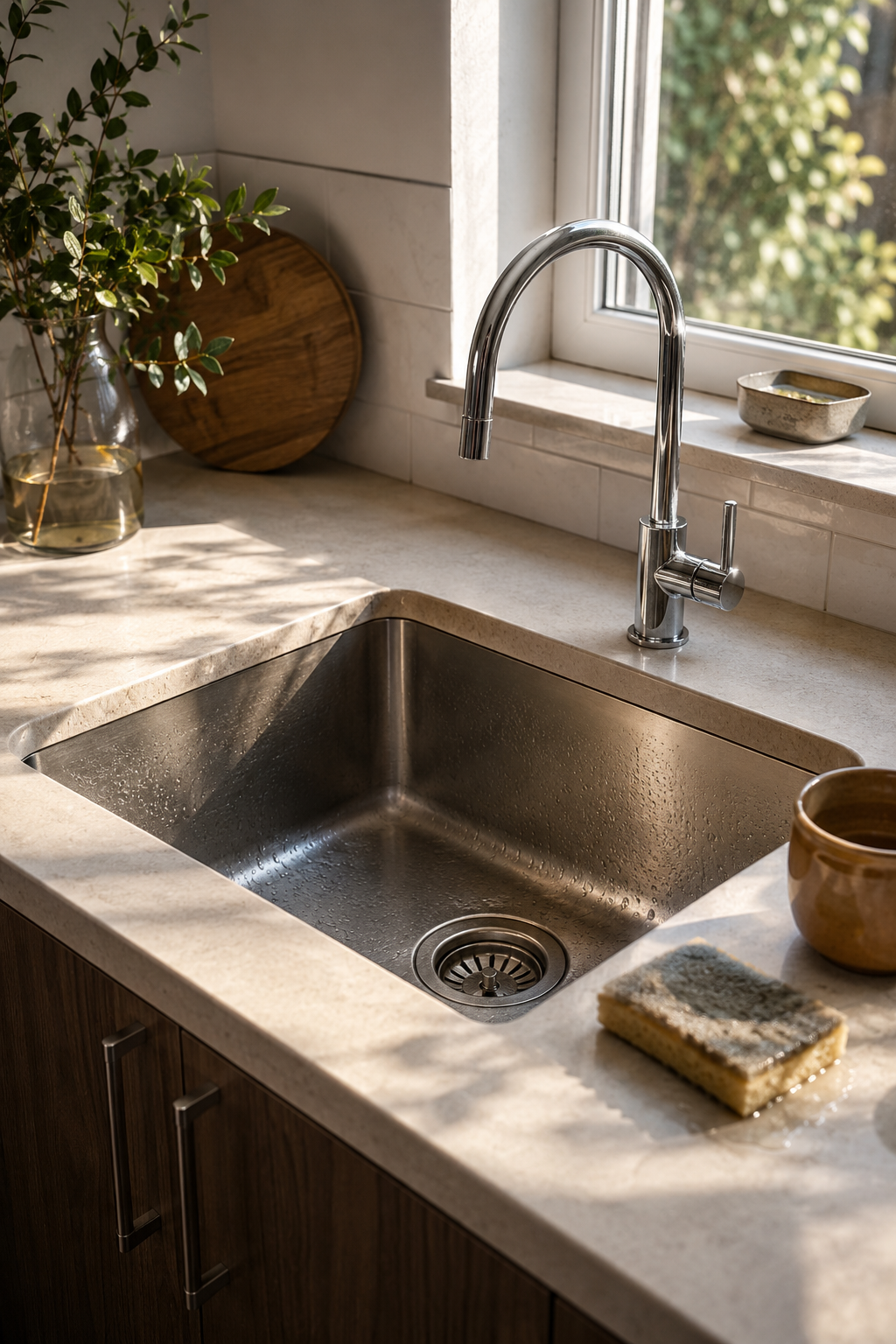
Still the most popular choice in the US, and for good reason. It’s affordable, resists stains, and holds up to heat and heavy use. The downside is that it can scratch over time and tends to be noisier when water hits it, unless it has a sound-dampening coating underneath.
Granite Composite
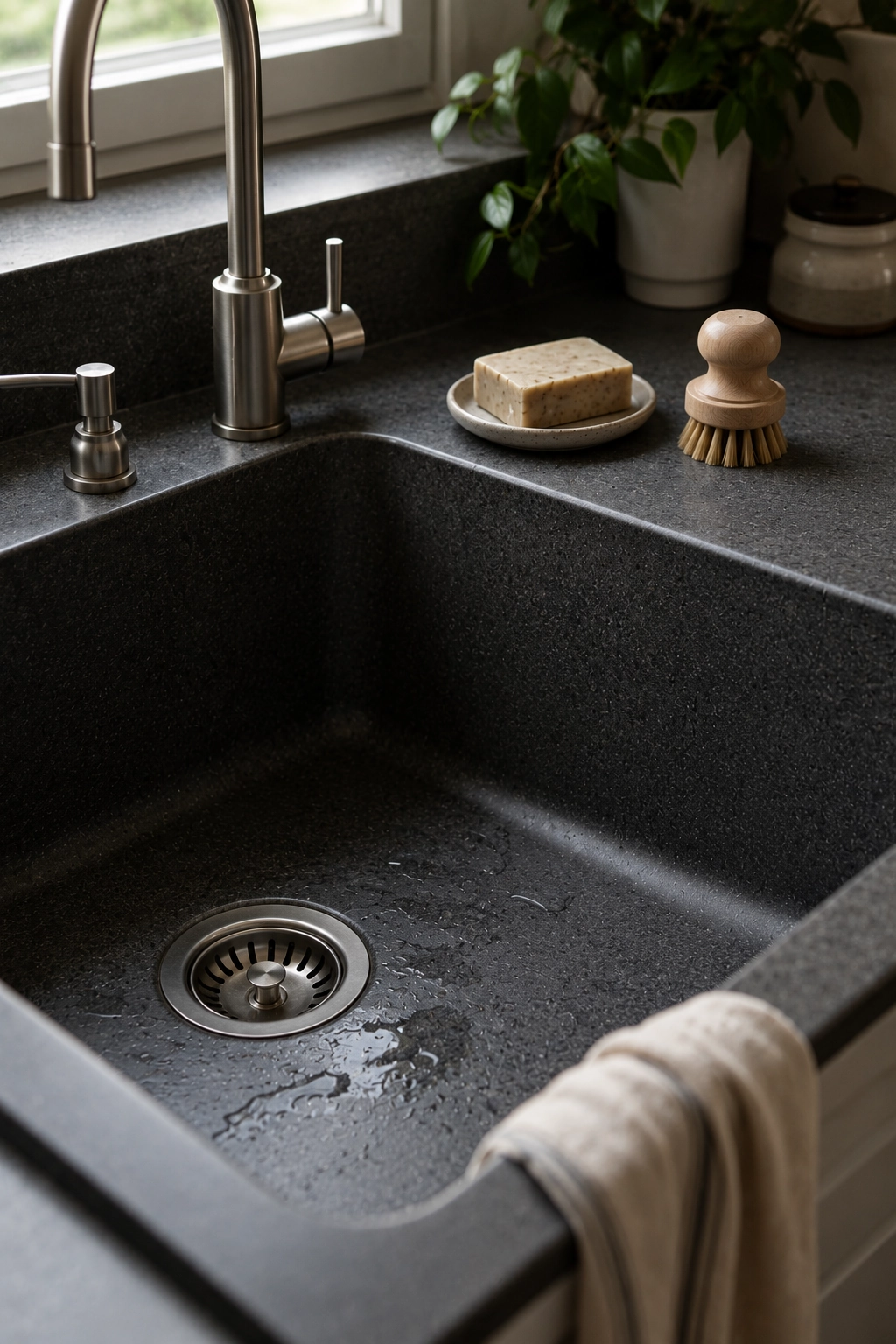
A blend of quartz and acrylic resin, this material is extremely scratch and heat resistant, and it comes in colors beyond plain steel, including trendy black and charcoal tones. It costs more upfront but tends to last for decades.
Fireclay
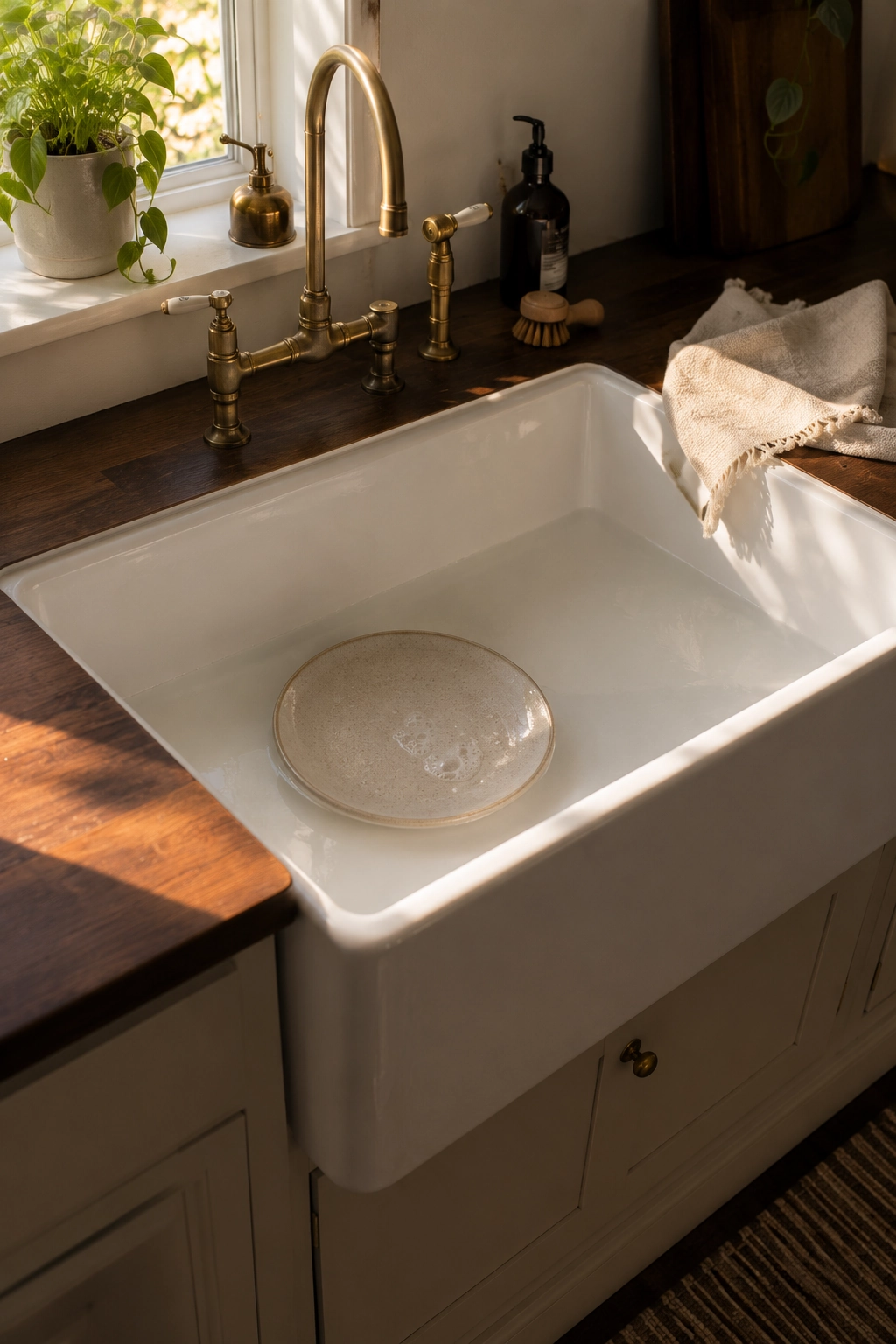
Fireclay sinks are the classic choice behind most farmhouse-style setups. They’re glossy, incredibly durable, and easy to clean, though they’re heavy enough that your cabinets need reinforcement to support one.
Copper
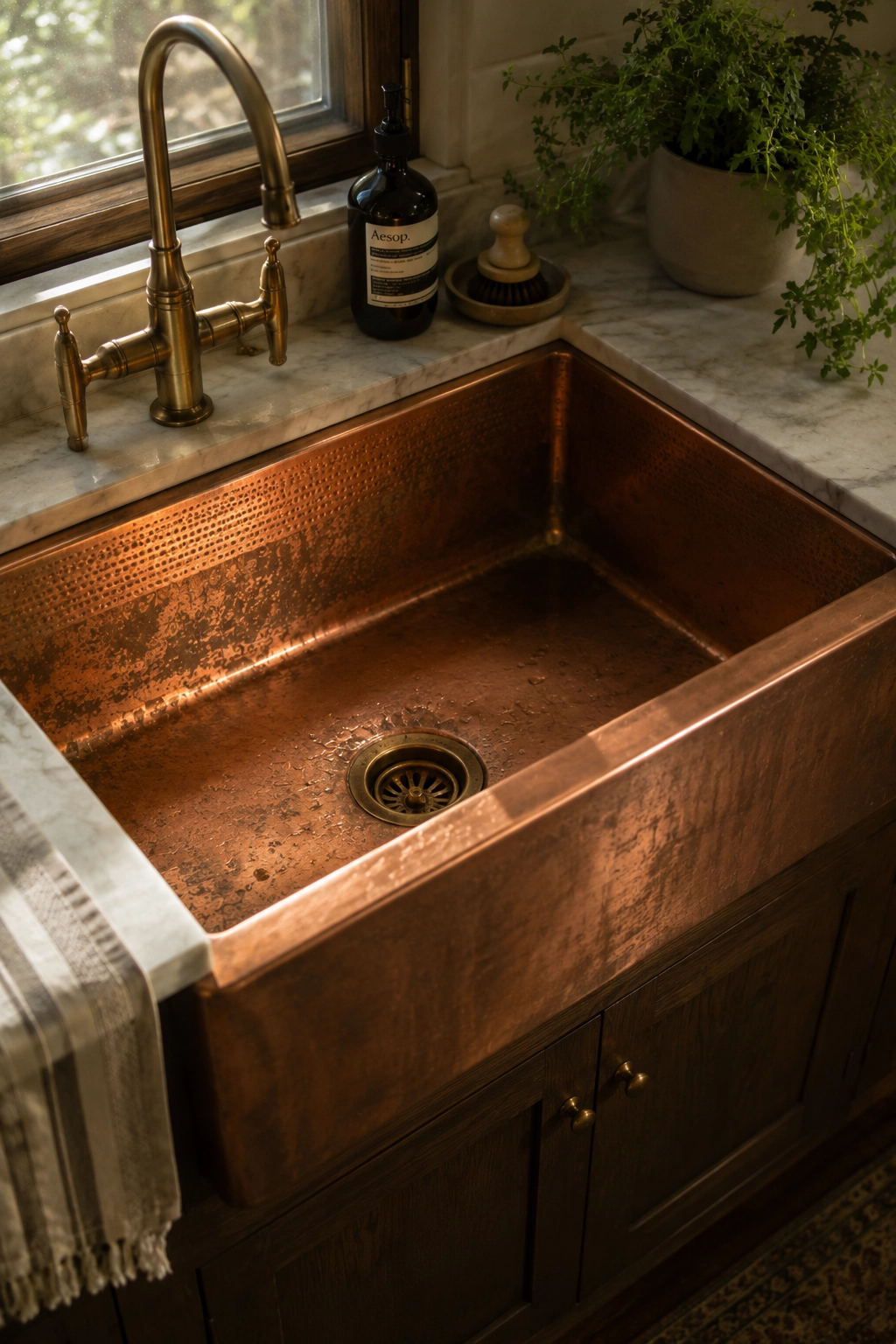
Copper brings warmth and a naturally antimicrobial surface, plus it develops a rich patina over time that a lot of people genuinely love. It’s higher maintenance than steel, though, and needs occasional polishing to keep that glow.
Cast Iron / Enamel
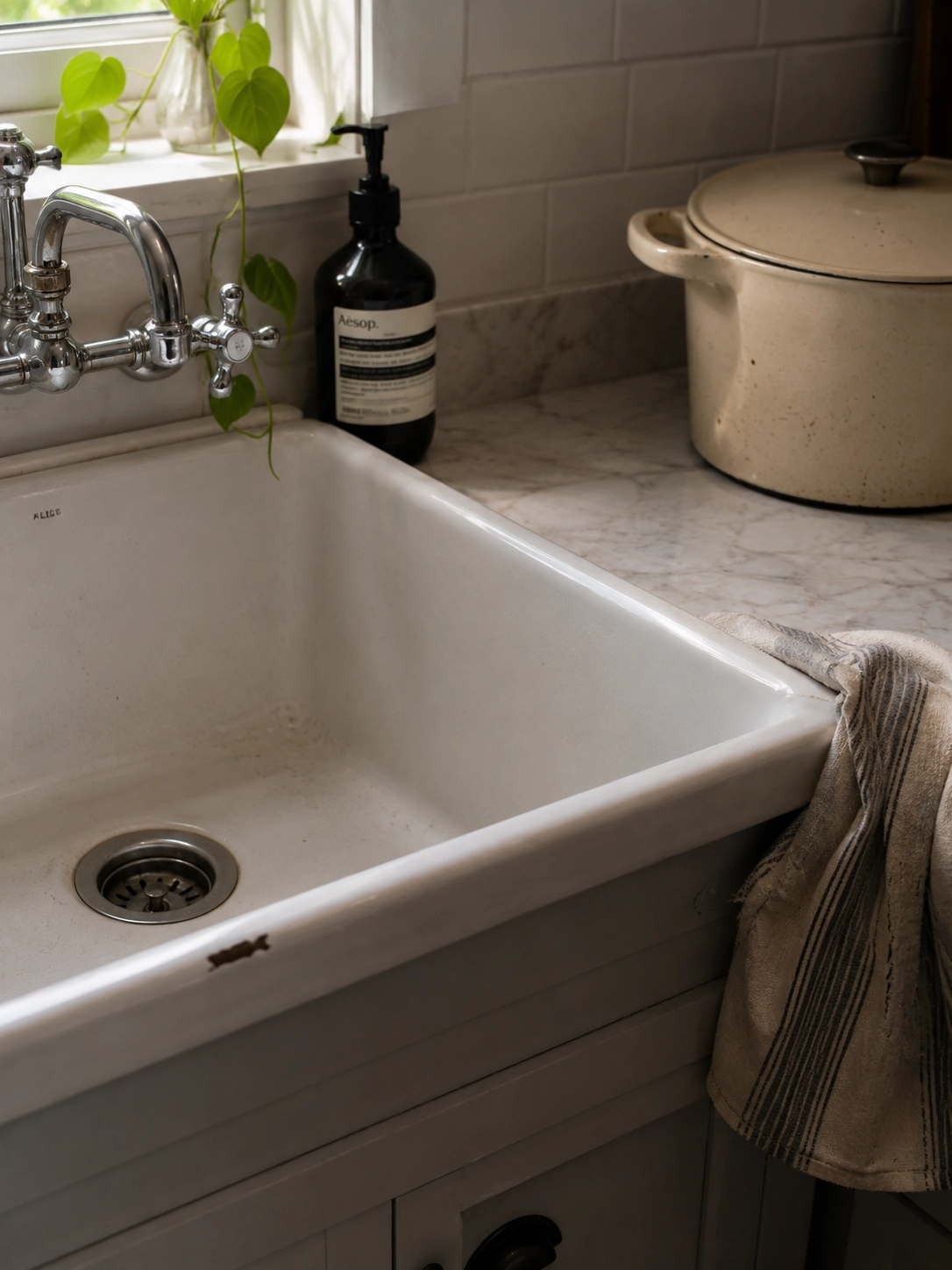
These sinks have a smooth, glossy enamel coating over a cast iron base, giving them a classic look with real durability. The coating can chip if you’re rough with heavy cookware, so it’s worth being a little gentler day to day.
Single Bowl vs. Double Bowl: Which Should You Choose?
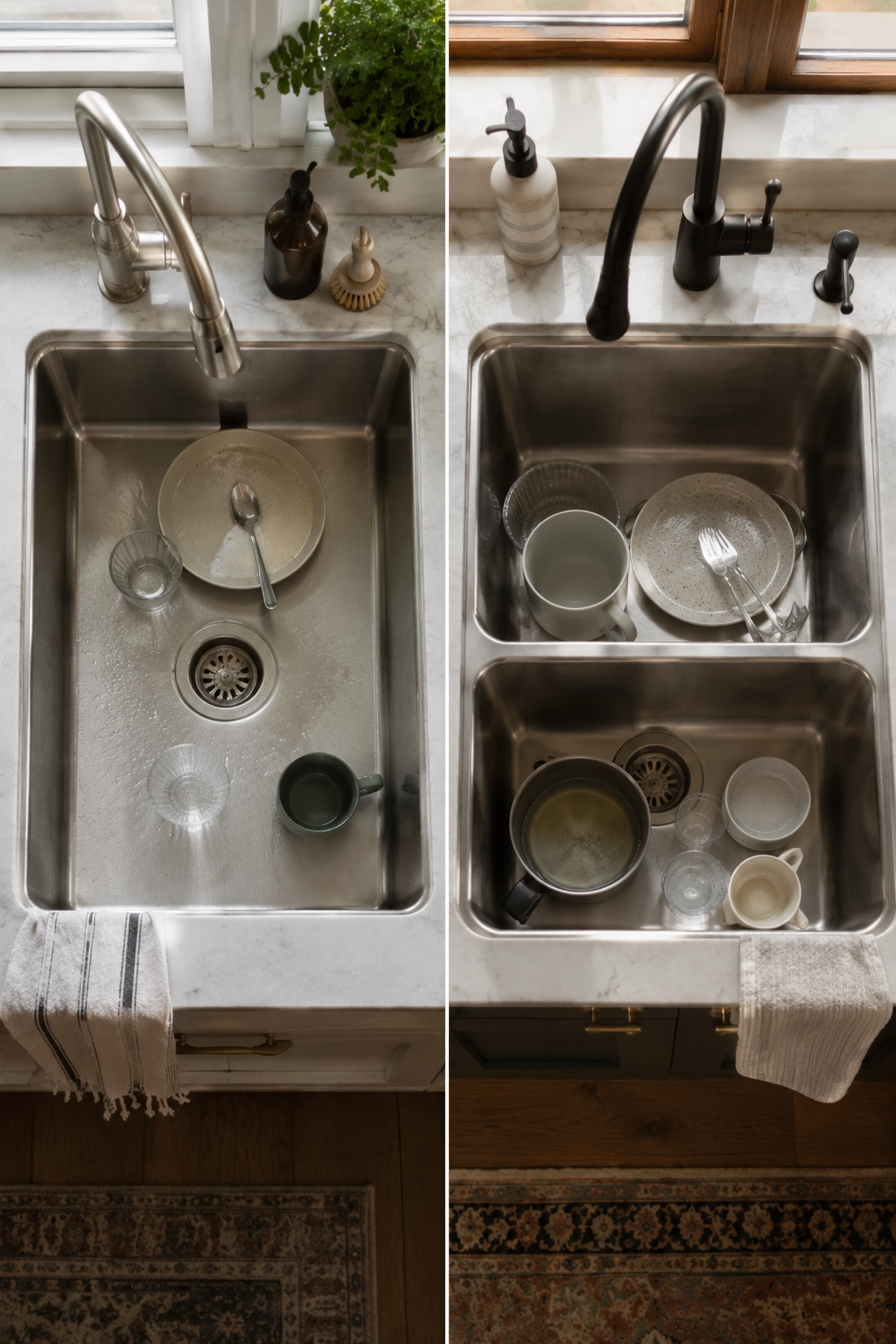
This debate comes up in nearly every kitchen renovation. A single, large basin is ideal if you regularly wash oversized pots and baking sheets, since there’s no divider getting in the way. A double bowl, on the other hand, is great for separating tasks, like soaking dishes on one side while rinsing produce on the other.
Honestly, there’s no universally correct answer here. It really comes down to how you actually cook and clean up, not which one looks better in photos.
What Size Kitchen Sink Do You Need?
Standard sinks typically range from 22 to 33 inches wide, with 30 to 33 inches being the sweet spot for most US kitchens today. If you regularly host, cook large meals, or just hate cramped dish duty, sizing up is almost always worth it. Smaller kitchens or secondary prep sinks can comfortably go as small as 15 to 18 inches.
Kitchen Sink Trends for 2026
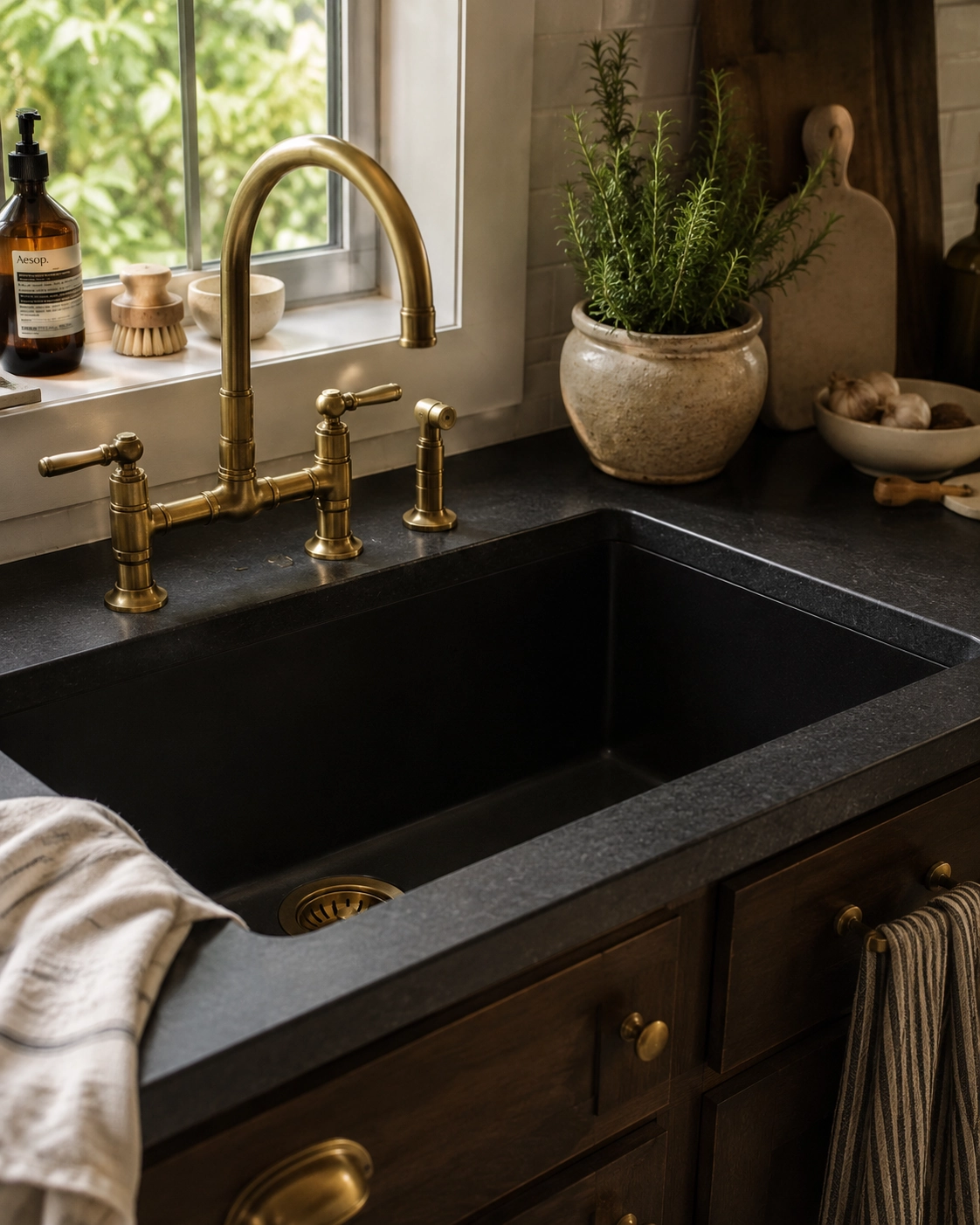
Black and matte finishes have taken over a huge share of kitchen sink searches on Pinterest lately, replacing the all-stainless-steel look that dominated for years. Workstation-style sinks with built-in accessories are also having a moment, especially in smaller kitchens where every inch of counter space counts.
Farmhouse styles remain incredibly popular too, especially paired with brass or matte black faucets for contrast. If you want a kitchen sink that photographs well and functions just as nicely, these three directions are where most 2026 renovations are heading.
How Much Does a Kitchen Sink Cost?
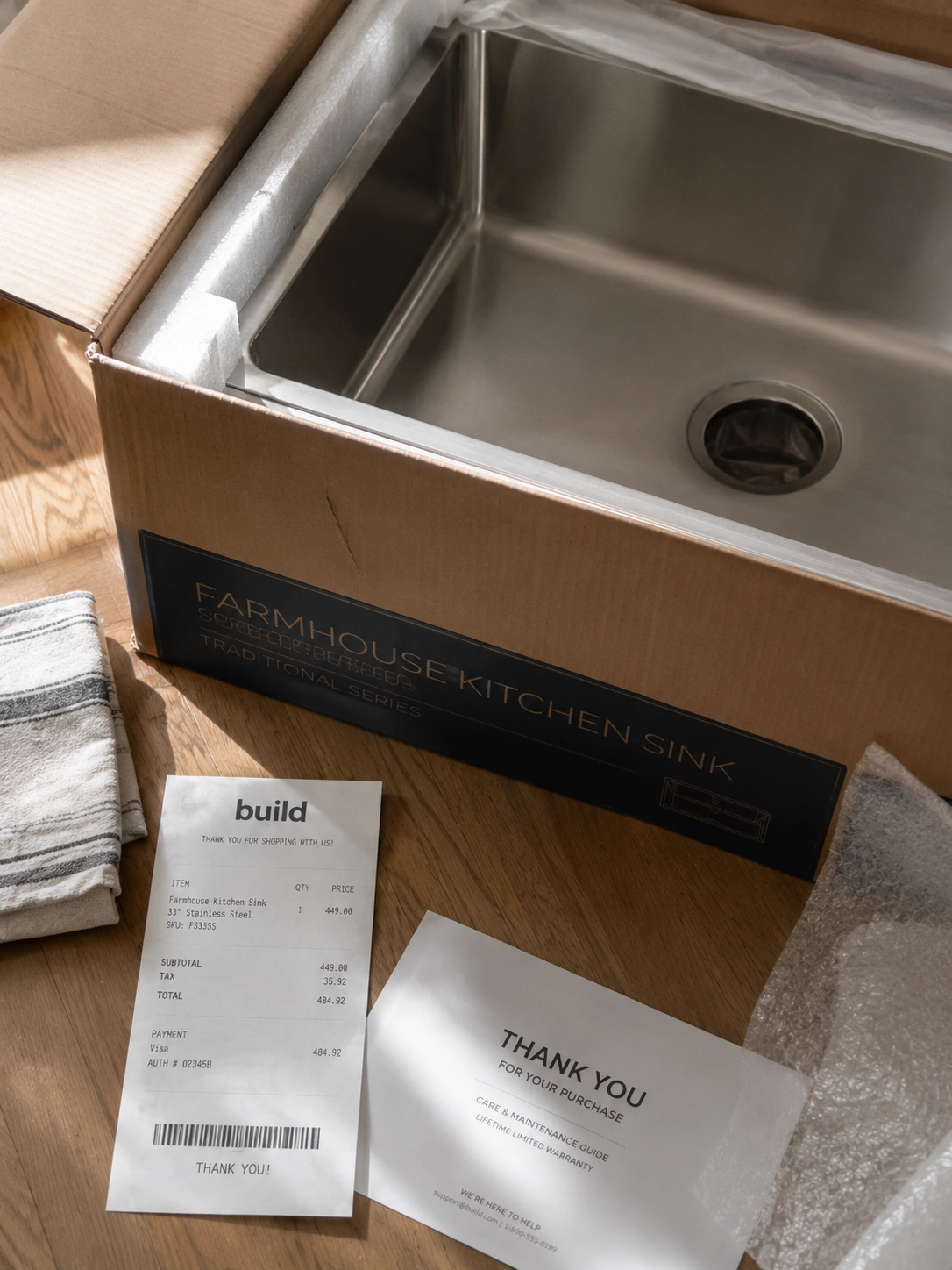
Prices vary quite a bit depending on style and material. A basic stainless steel drop-in sink can run anywhere from $100 to $300. Granite composite and fireclay options typically land between $300 and $700. Farmhouse and workstation sinks tend to sit higher, often $400 to $1,200, especially once you factor in the cabinetry adjustments a farmhouse style usually needs.
Mistakes to Avoid When Choosing a Kitchen Sink
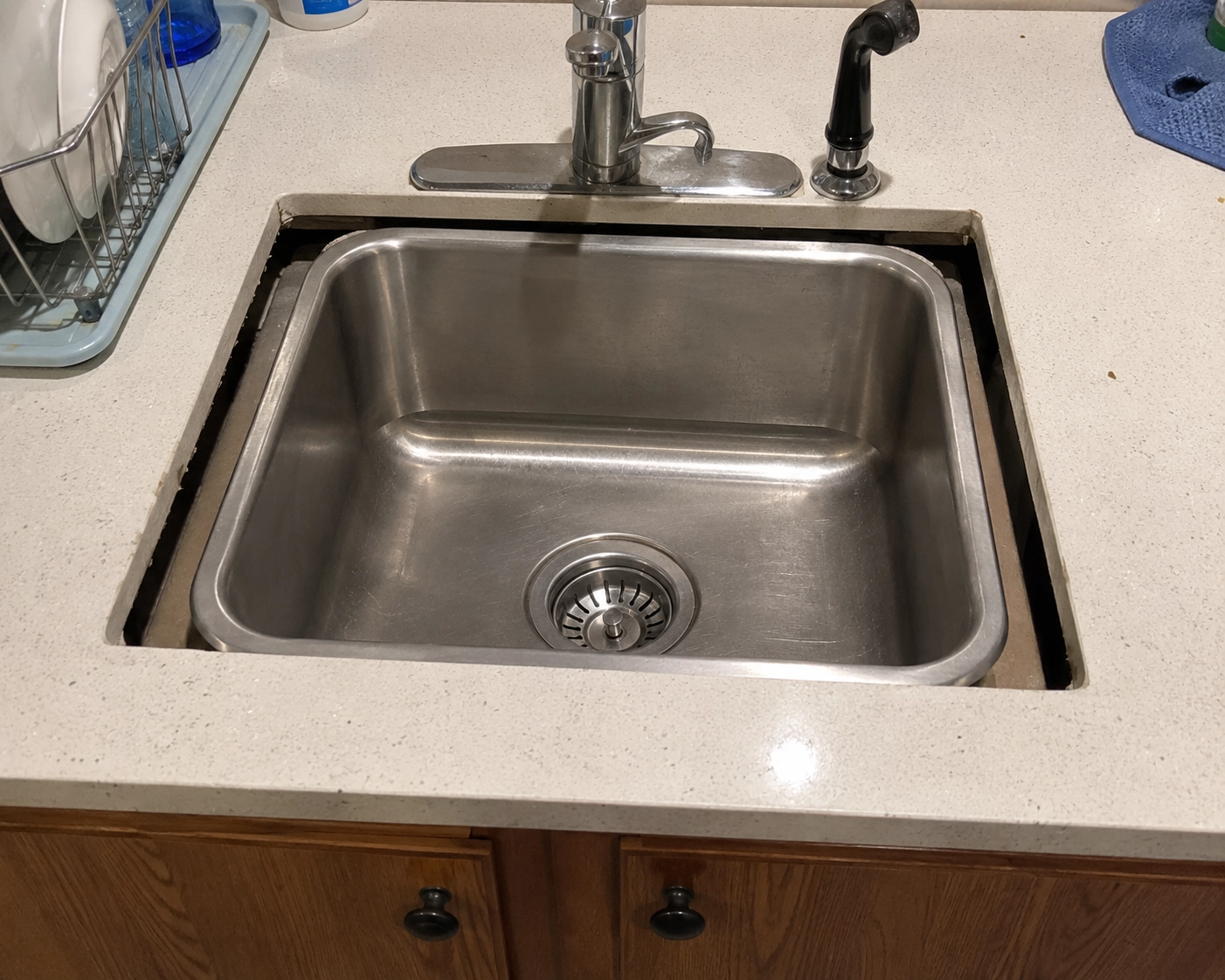
The most common mistake is picking a sink based purely on looks without checking whether your cabinets and countertop can actually support it. Farmhouse and fireclay sinks especially need specific cabinet configurations, and skipping that check leads to expensive surprises during installation.
Another one worth mentioning: going too small to save money upfront. A cramped, shallow sink is something you’ll notice every single day, while the extra cost of sizing up is usually a one-time expense you forget about fast.
Frequently Asked Questions
What is the most durable kitchen sink material?
Granite composite and fireclay are generally considered the most durable, since both resist scratches, stains, and heat extremely well over years of daily use.
Is a farmhouse kitchen sink worth the extra cost?
For most people, yes. It offers more usable basin space and a strong visual focal point, though it’s worth confirming your cabinets can support the apron-front style before committing.
What size kitchen sink is best for a small kitchen?
Anywhere from 22 to 25 inches usually works well for smaller kitchens, keeping the sink functional without overwhelming limited counter space.
Are black kitchen sinks hard to maintain?
Not really, as long as they’re granite composite or a similarly coated material. They do show water spots more than lighter colors, so a quick wipe-down after use helps keep them looking sharp.
Single bowl or double bowl kitchen sink: which is better?
It depends on how you cook. Single bowls handle large pots and trays better, while double bowls make it easier to separate tasks like soaking and rinsing at the same time.
How long does a kitchen sink typically last?
Stainless steel and granite composite sinks often last 15 to 30 years with normal care, while fireclay and cast iron can last even longer if the enamel coating stays intact.
Bottom Line
A kitchen sink might seem like a small detail in the bigger picture of a renovation, but it’s one you’ll interact with dozens of times a day for years to come. Take the time to match the style and material to how you actually cook and clean, not just what looks best in a showroom, and it’ll be one decision you never have to think twice about again.
Save this post to your Pinterest kitchen boards and share it with someone who is ready to transform their small kitchen.