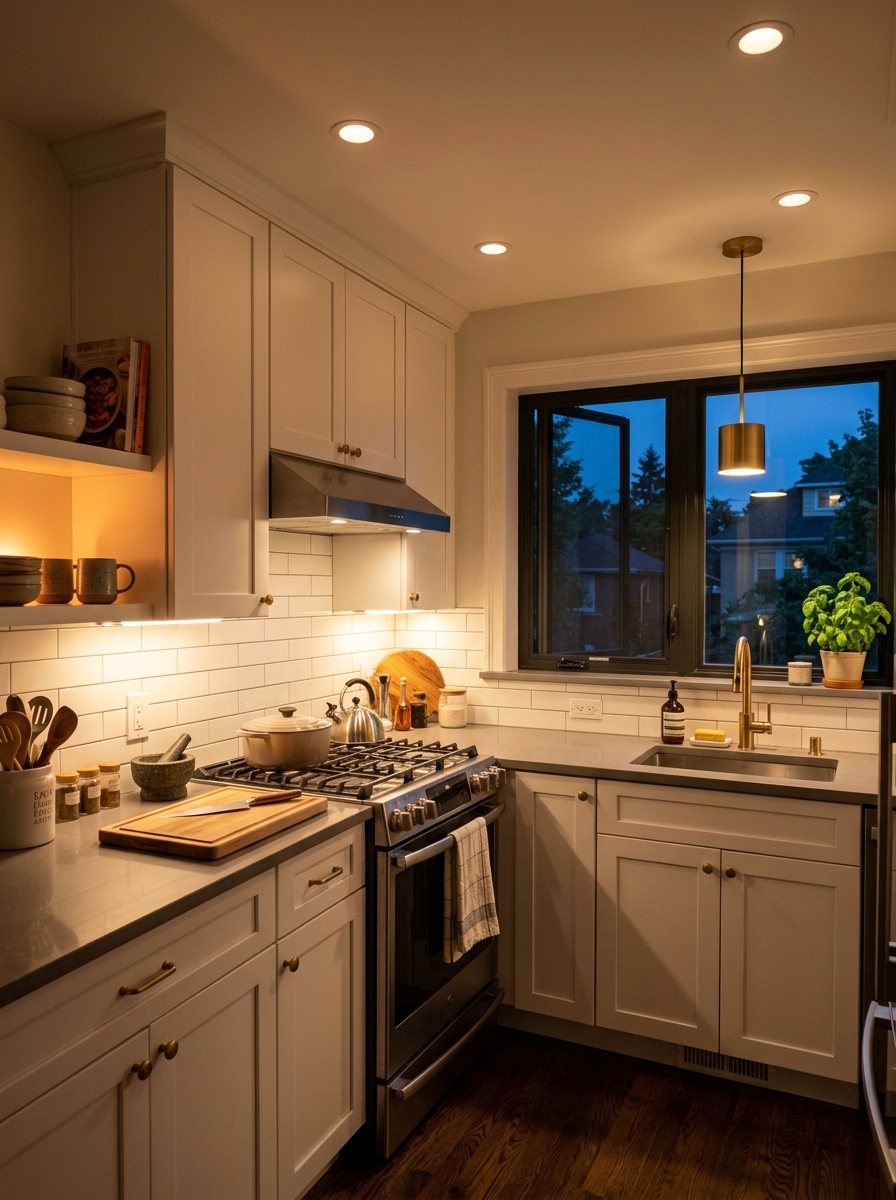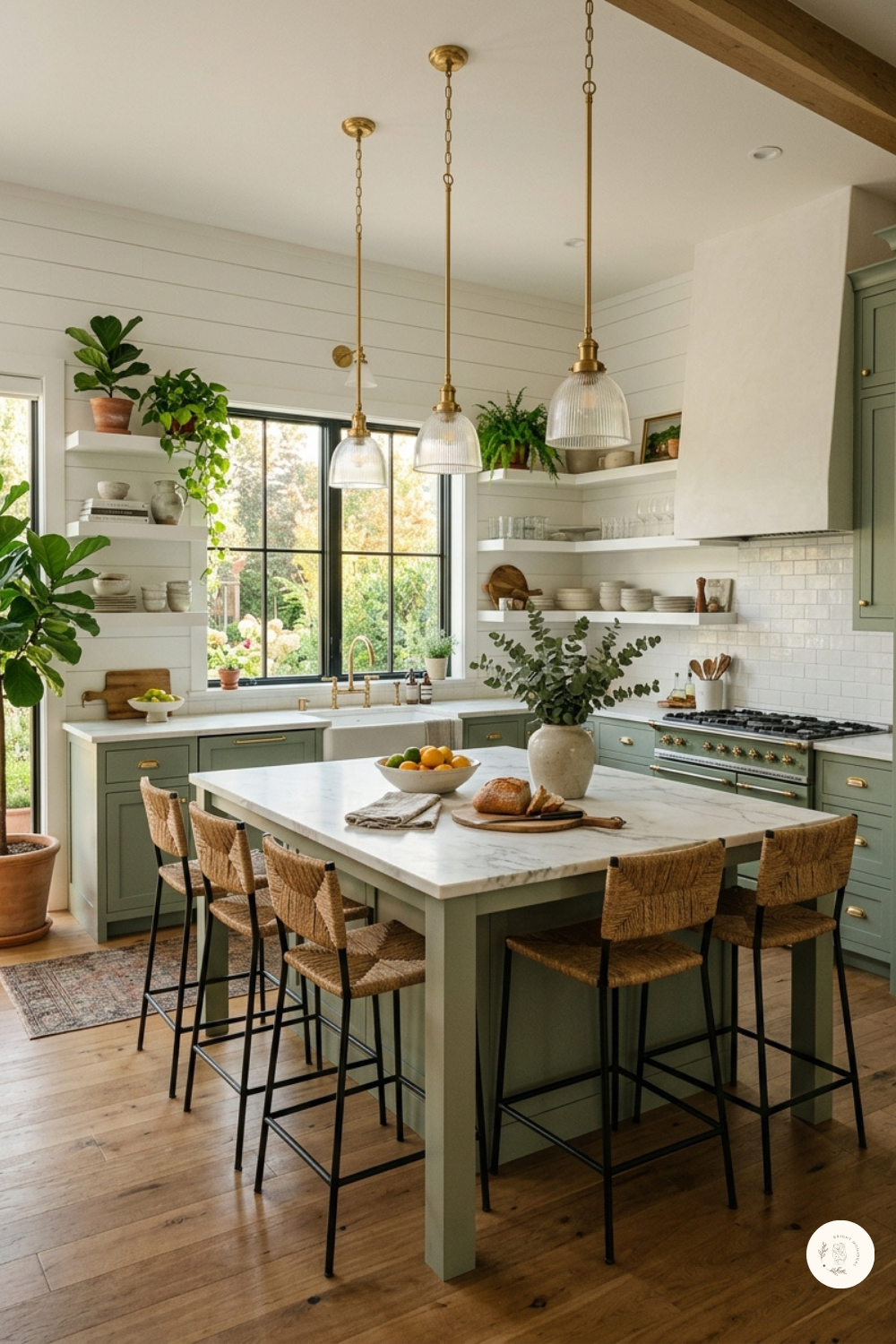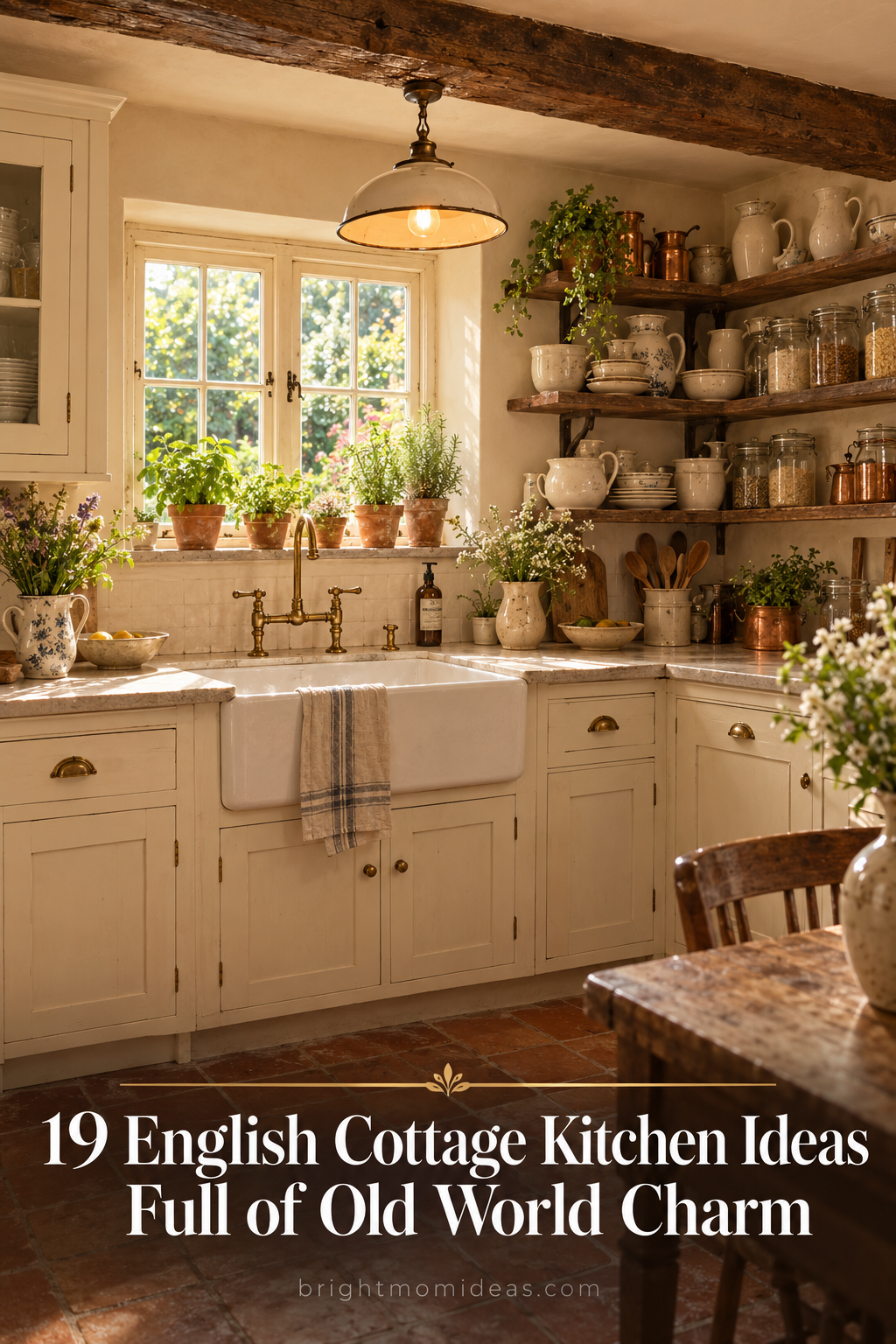
Japandi Kitchen Decor Ideas That Actually Work

Japandi kitchen

Japandi Kitchens That Quietly Fix What Most Modern Kitchens Get Wrong

Discover how Japandi kitchen design brings calm, warmth, and genuine functionality to the most used room in your home.


Most modern kitchens are designed to impress.

Glossy white cabinets that show every fingerprint. Sleek surfaces that echo every sound. Open shelving that looks flawless in a staged photo and becomes a source of daily stress the moment you actually live with it.

Japandi kitchen

If your kitchen has ever felt more like a showroom than a place where you actually want to spend time — you are not alone. And a Japandi kitchen might be exactly the quiet correction you have been looking for without knowing it had a name.

Japandi kitchen design is a hybrid of Japanese minimalism and Scandinavian warmth. It solves almost every complaint people have about modern kitchens without making a dramatic statement about it. It simply works — and it works beautifully.

If you are in the US and redesigning your kitchen or just looking for Japandi kitchen ideas you can layer in gradually, this guide will walk you through everything you need to know about why this style gets it so quietly, consistently right.


What a Japandi Kitchen Actually Is — and Why It Feels So Different

Before diving into specific Japandi kitchen ideas, it helps to understand what makes this style fundamentally different from the modern kitchens that have dominated American homes for the past decade.

Japandi kitchen design is built on two philosophical ideas working in harmony.

Japandi kitchen

From Japanese design, it borrows the concept of wabi-sabi — the beauty of imperfection, natural materials, and quiet functionality. From Scandinavian design, it takes the principle of hygge — coziness, warmth, and the belief that everyday spaces should bring genuine comfort.

The result is a Japandi kitchen aesthetic that prioritizes function without sacrificing beauty, and warmth without sacrificing simplicity. And it brings the outside in through natural materials like wood, stone, linen, and clay.

That combination is precisely what most modern kitchens forget to include.


The Specific Problems Most Modern Kitchens Have — and How Japandi Kitchen Design Quietly Solves Them

Problem 1 — Modern Kitchens Are Visually Exhausting

Walk into most modern kitchens and your eyes do not know where to land. Open shelves full of mismatched dishes. A backsplash with bold patterns. Gleaming hardware in three different finishes. Appliances sitting out on every counter. It is a lot to process.

A Japandi kitchen solves this by creating visual rest. Every element is intentional. The color palette stays cohesive. Hardware is minimal and consistent. Countertops stay clear. The result is a kitchen that feels genuinely calm to stand in — which is something you do not realize you need until you experience it.

Problem 2 — All-White Modern Kitchens Feel Cold

The all-white kitchen had its moment. But many American homeowners have started to realize that white cabinets and white countertops and white subway tile create a kitchen that feels more like a hospital corridor than a home.

Japandi kitchen

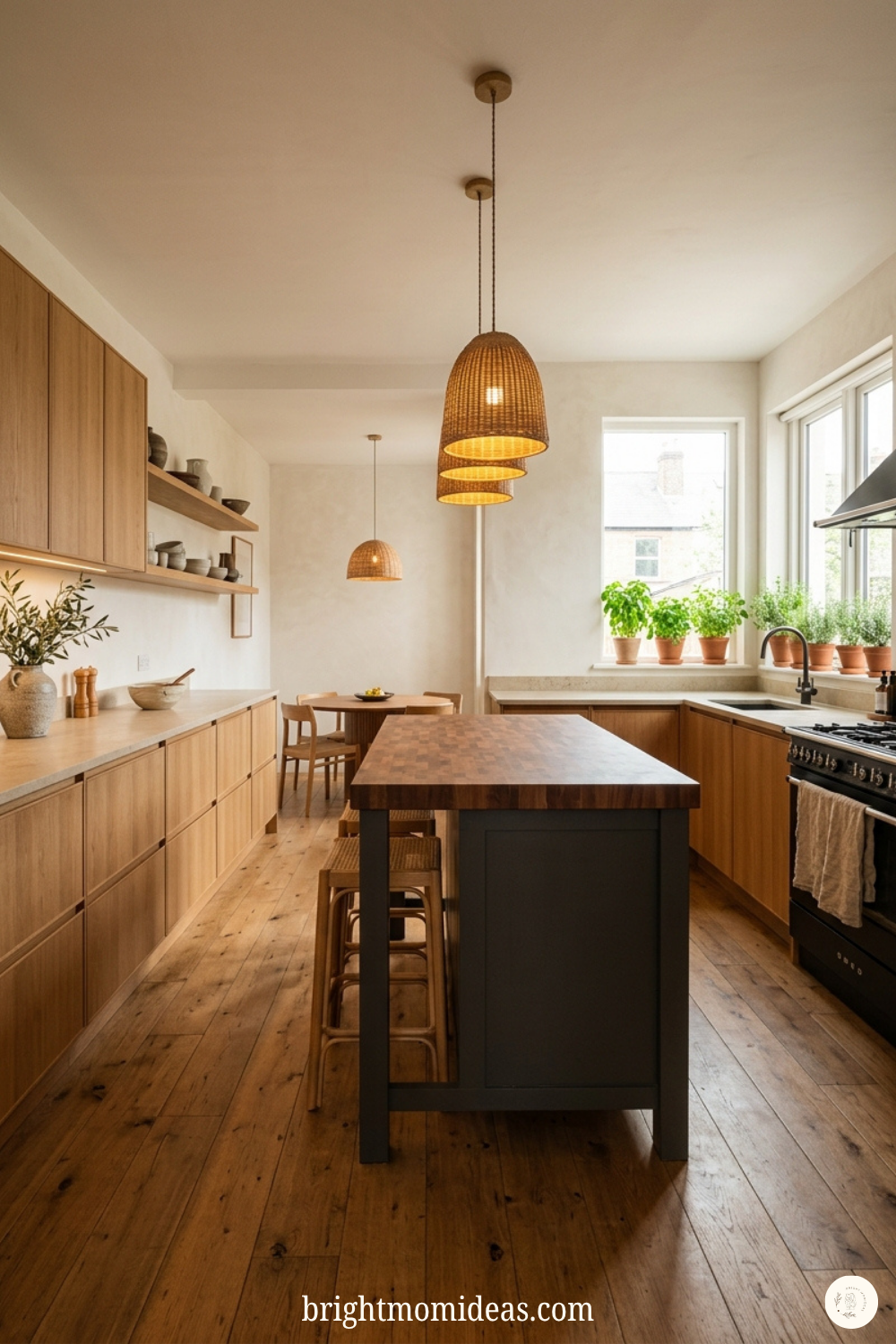
Japandi kitchen decor fixes this with warmth built into the materials themselves. Warm-toned wood for cabinet fronts. Matte stone countertops in warm beige or pale gray. Handmade ceramic vessels in creamy organic tones. Linen dish towels draped casually on an oven handle. None of these elements are loud — but together they make the kitchen feel genuinely lived-in and welcoming.

Problem 3 — Modern Kitchens Prioritize Looks Over Function

Open shelving became a design staple in modern American kitchens because it photographs beautifully. But the reality of living with open shelves is that they require constant maintenance, accumulate grease and dust, and create the low-level mental stress of always needing to look organized.

A Japandi style kitchen leans into closed or semi-closed storage — clean-faced cabinetry with integrated handles or simple push-to-open mechanisms. What you do not see does not create clutter anxiety. And the few items that are displayed — a simple ceramic pitcher, a wooden cutting board leaned against the backsplash — are chosen because they are genuinely beautiful. Not because they fill space.

Problem 4 — Modern Kitchens Chase Trends

How many kitchens have you seen that looked cutting-edge in 2015 and now feel slightly dated? Waterfall island edges. Stark matte black everything. Rose gold hardware. These moments come and go quickly.

A modern Japandi kitchen sidesteps trends almost by design. Because it draws from two cultures with centuries-long traditions of understated functional beauty, the aesthetic does not depend on what is popular right now. Natural wood does not go out of style. Warm stone does not go out of style. Clean lines and intentional simplicity do not go out of style. A Japandi kitchen built today will feel right in twenty years.

Problem 5 — Modern Kitchens Ignore Natural Materials

One of the biggest emotional complaints people have about modern kitchens is that they feel disconnected from anything natural. Engineered quartz, high-gloss lacquer, stainless steel — these materials are durable and photogenic. But they do not have the organic warmth that makes a room feel human.

Japandi kitchen ideas almost always include natural wood grain that shows its character, matte stone surfaces with visible movement, handmade pottery with slight irregularities, and plants tucked into corners or on windowsills. These elements are not decorative additions. They are the foundation of why a Japandi kitchen aesthetic feels so good to spend time in.

How to Start Creating Your Own Japandi Kitchen — Without a Full Renovation

Here is the honest truth about Japandi kitchen ideas that most design guides will not tell you. You do not need to gut your kitchen to get there.

If a full renovation is not in the cards right now, you can shift your kitchen significantly toward the Japandi aesthetic with a few deliberate changes.

Start with the countertops. Clear them. Put away everything that does not get used daily. What remains should be things you genuinely love the look of — a wooden cutting board, a simple ceramic oil bottle, a small plant in a clay pot.

Next, look at your cabinet hardware. Swapping out mismatched knobs for simple warm-toned bar pulls in brushed brass or matte black makes an enormous difference for a small investment.

Then address color. If your walls are a stark bright white, a single coat of warm off-white, soft sage, or warm greige will completely change the temperature of the room.

Over time, swap out plastic containers for wooden or ceramic ones. Replace a bright overhead fixture with a warmer-toned pendant in rattan or washi paper. Add a linen runner to the counter near the sink.

None of these changes are expensive. None of them require a contractor. But together they move your kitchen toward the quiet grounded calm that defines a genuine Japandi kitchen.

Japandi Kitchen Colors and Materials That American Homeowners Are Falling in Love With

If you are looking for Japandi kitchen ideas specifically around color and material, here is a palette that works beautifully in US homes across different light conditions and architectural styles.

Wall and Cabinet Colors

For walls and upper cabinets, these are the tones that work most consistently in a Japandi kitchen:

Warm whites like Benjamin Moore White Dove feel soft and inviting without going cold. Soft greiges like Sherwin-Williams Accessible Beige add warmth without committing to a bold color. Dusty sage greens bring nature into the room in the most understated, beautiful way.

For lower cabinets or an island, richer tones anchor the room beautifully. Warm charcoal, deep terracotta brown, and forest green all work without making the kitchen feel dark or heavy.

Countertops

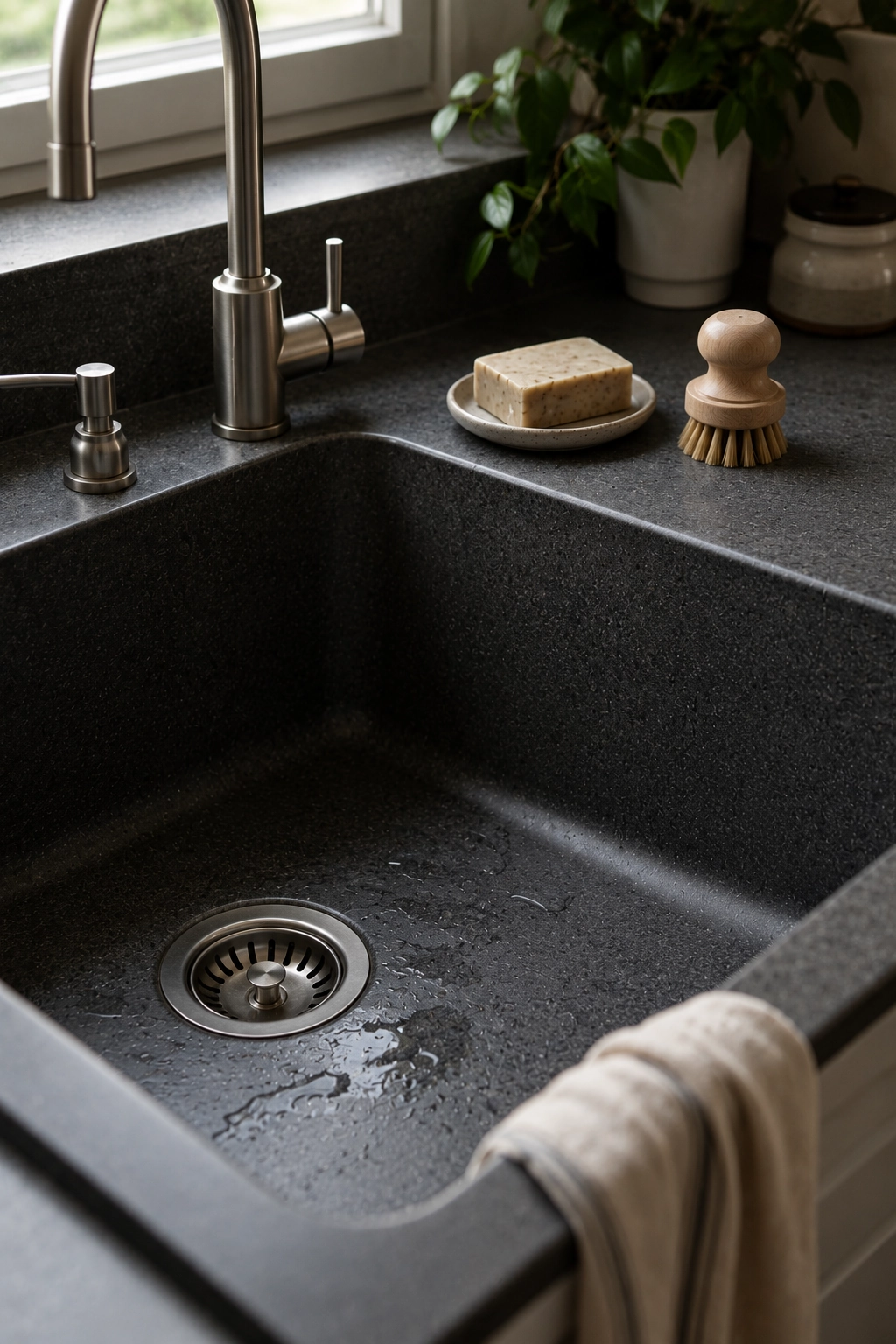
Honed marble or matte quartzite in warm beige tones is the dream Japandi kitchen decor choice. The matte finish is essential — high-gloss surfaces are the opposite of everything a Japandi kitchen stands for.

More budget-friendly options include butcher block for warmth and texture, or matte laminate in stone-look finishes that have improved dramatically in recent years.

Flooring

Wide plank wood in a warm medium tone grounds the room and adds the natural warmth that is central to the Japandi kitchen aesthetic. Large format matte tile in a warm gray or sand color works equally well — particularly in kitchens that see heavy daily use where wood requires more maintenance.

The consistent thread through all of these choices is warmth and matte finish. Japandi kitchens are almost entirely devoid of high-gloss surfaces — and that single decision changes the entire feeling of the room more than any other.

The Japandi Kitchen Details That Make the Biggest Difference

Once the foundation is right — the colors, the materials, the clean surfaces — it is the smaller details that take a Japandi kitchen from nice to genuinely beautiful.

Ceramics and pottery. Replace uniform matching sets with handmade or handmade-feeling pieces in earthy tones. A simple ceramic bowl sitting on the counter, a clay pot holding a small herb plant, a matte ceramic mug hanging on a hook — these objects bring the wabi-sabi quality that makes a Japandi kitchen feel alive rather than styled.

Textiles. A linen dish towel draped on an oven handle. A simple woven placemat on the counter near the coffee maker. These small textile moments add texture and warmth that no hard surface can replicate.

Plants. A small potted plant on the windowsill. A trailing plant on an open shelf. Even a single stem in a simple ceramic vase on the counter. Plants are not optional in a Japandi kitchen — they are essential. They bring life, color, and the outside world into a space that could otherwise feel too controlled.

Lighting. Swap a bright overhead fixture for a warm pendant in rattan or natural paper. Add under-cabinet lighting in a warm tone. The lighting in a Japandi kitchen should feel like late afternoon sunlight rather than a retail display.

Why a Japandi Kitchen Might Be the Most Honest Design Decision You Make for Your Home

There is something deeply satisfying about a kitchen that does not try too hard.

A Japandi kitchen is not designed to get compliments at a dinner party — although it will. It is not designed to photograph well for Instagram — although it absolutely does. It is designed to make the daily act of cooking, cleaning, and gathering feel genuinely pleasant rather than visually draining.

That is the fix that most modern kitchens miss. And it is the thing that Japandi kitchen design gets quietly, consistently right.

Whether you are planning a full kitchen renovation or just looking for Japandi kitchen ideas you can start implementing this weekend, the principles are the same.

Simplify. Warm up the materials. Choose natural over synthetic wherever you can. Hide the clutter. Display only what you truly love.

Do those things consistently and you will have a Japandi kitchen that feels like the most thoughtful room in your home. Because it will be.

Save this post to your Pinterest kitchen boards and come back to it whenever you are ready to make your next kitchen change. 📌


Disclosure: This post contains affiliate links. If you purchase through these links I may earn a small commission at no extra cost to you. Thank you for supporting this blog.

Luxury Kitchen Design Ideas That Make Cooking Feel Like an Experience

Luxury Kitchen Design Ideas That Make Cooking Feel Like an Experience

Everything you need to know about luxury kitchens — from contemporary design trends to finding the right kitchen designer for your home.


There is a particular kind of kitchen that stops you in your tracks.

You walk in and something about it just feels different. The materials are richer. The light is warmer. The surfaces are more considered. Even the hardware feels substantial in your hand. Everything about the space communicates that someone thought carefully about every single detail — and the result is a kitchen that feels less like a room and more like an experience.

That is what luxury kitchen design achieves at its best. And while some of it requires a serious budget and a good contractor, a surprising amount of it comes down to material choices, design decisions, and finishing details that are more achievable than most people realize.


What Makes a Kitchen Feel Truly Luxurious

Before we get into specific ideas, it helps to understand what luxury in a kitchen actually means. Because it is not just about expensive appliances or marble countertops — though those things certainly help.

A truly luxurious kitchen feels considered. Every element relates to every other element. The hardware ties into the lighting fixtures. The cabinet color complements the countertop material. The flooring flows naturally into the adjacent room. Nothing feels random or afterthought-ish.

It also feels calm. Luxury kitchens almost universally have generous storage that keeps surfaces clear, excellent lighting that eliminates harsh shadows, and a layout that makes movement through the space feel intuitive and effortless.

And it feels personal. The best luxury kitchens feel like they were designed for a specific person in a specific home — not like a showroom display that could belong to anyone.


Cabinetry — Where Luxury Is Won or Lost

In any kitchen, cabinets cover more surface area than any other single element. They set the tone for the entire room. And in a luxury kitchen, the cabinetry is where you will see the clearest difference between a high-end result and an average one.

Shaker cabinets in a deep painted tone — navy, forest green, warm charcoal, or rich burgundy — immediately read as elevated and considered. The simple clean lines of a shaker door work beautifully with both traditional and contemporary hardware, and a deep color gives them a sense of depth and richness that plain white cabinets simply cannot achieve.

Flat-front cabinets in a natural wood veneer are the choice of truly contemporary luxury kitchen design. The grain of the wood visible across seamless flat doors, floor to ceiling, with integrated handles rather than visible hardware — this look is what you see in the most sophisticated European kitchen designs and it is increasingly popular in high-end US homes.

Two-tone cabinetry — darker lowers and lighter uppers — adds visual sophistication and prevents the heaviness that can come with using a single deep tone throughout. The contrast between a rich forest green lower cabinet and a warm cream upper cabinet is one of the most beautiful kitchen combinations in interior design right now.

Whatever style you choose, invest in soft-close hinges and drawer mechanisms. This single detail separates a luxury kitchen from one that merely looks like one. The way a cabinet door or drawer closes — silently, smoothly, with complete control — communicates quality in a way that nothing visible quite can.


Countertops — The Material That Defines the Room

In a luxury kitchen, the countertop is a design statement. It is the material your eye goes to first and the surface your hands touch most. Choosing the right one changes everything.

Natural stone is the gold standard of luxury kitchen countertops. Marble — particularly white Carrara marble with its delicate grey veining — has an elegance that no other material fully replicates. It is a genuinely beautiful surface to cook on and to look at every day. The practical concern is maintenance — marble stains and etches more readily than engineered stone. Many designers recommend marble for kitchens where it will be treated with care, and quartz for kitchens that see heavy daily use.

LIKILIKI Green Marble Contact Paper

Check Price on Amazon

Quartzite is the material that is converting marble lovers across the US right now. It has the natural beauty and veining of marble but the hardness and durability of granite. White quartzite with dramatic grey and gold veining is one of the most pinned countertop materials of 2026.

Honed or leathered stone finishes — rather than polished — are increasingly popular in luxury kitchens. A honed marble countertop has a matte, soft surface that feels more tactile and more artisanal than a highly polished one. A leathered granite has a subtly textured surface that hides fingerprints and everyday marks far better than a polished finish.

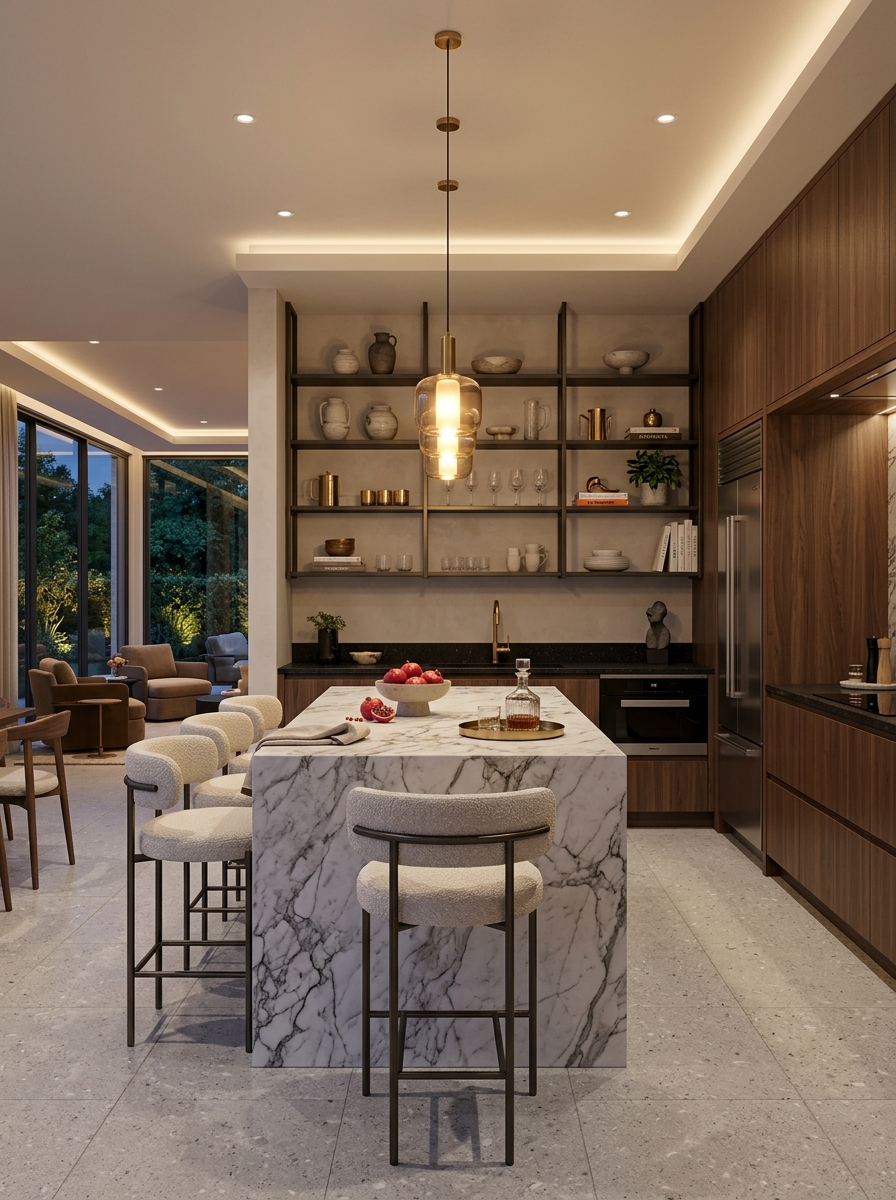
Waterfall countertops — where the stone continues down the side of the island to the floor — are one of the most dramatic luxury kitchen design features available. The uninterrupted flow of stone from horizontal to vertical creates a sculptural quality that looks stunning in every kitchen style from traditional to ultra-modern.

Hode Marble Sticky Back Plastic

Check Price on Amazon


Kitchen Island — The Heart of a Luxury Kitchen

A well-designed kitchen island is perhaps the single element most associated with luxury kitchen design. It provides additional prep space, seating, storage, and — when designed thoughtfully — becomes the most beautiful focal point in the entire room.

The most luxurious islands are those that feel like pieces of furniture rather than built-in cabinetry. A large island in a contrasting color or material to the perimeter cabinets, with a waterfall stone countertop, pendant lighting above, and beautifully upholstered stools — this combination reads as genuinely high-end in every kitchen style.

Integrated appliances within the island — a second sink, a wine fridge, a warming drawer — add function and demonstrate the kind of thoughtful planning that defines luxury design. These are not things you add as an afterthought. They are built into the design from the beginning.

The seating at a luxury kitchen island matters as much as the island itself. Upholstered counter stools in a quality fabric — linen, velvet, or performance leather — with well-proportioned backs and a finish that ties into the kitchen hardware create a cohesive, considered look that elevates the entire space.

HOME Bar Stools

Check Price on Amazon


Lighting — The Element That Transforms Everything

Luxury kitchens are never lit by a single overhead light. They use multiple layers of light that work together to create an atmosphere that is both functional and genuinely beautiful.

Pendant lights above the island are the most important lighting decision in a luxury kitchen. A pair or trio of pendants in a quality material — hand-blown glass, brushed brass, aged bronze, or artisan ceramic — add visual interest at eye level and frame the island as the focal point it deserves to be.

Recessed lighting in the ceiling provides the general ambient light. In a luxury kitchen, recessed lights are on a dimmer — always. The ability to lower the overhead light in the evening while the pendant lights glow and the under-cabinet lights illuminate the countertops creates a warmth and intimacy that flat overhead lighting can never achieve.

Under-cabinet lighting is non-negotiable in a luxury kitchen. LED strip lights mounted beneath upper cabinets illuminate the countertop with a warm, even light that makes cooking genuinely more pleasant and the kitchen more beautiful in the evening hours.

Statement lighting in unexpected places — a small chandelier above a breakfast nook, a pair of wall sconces flanking a kitchen window, a sculptural lamp on an open shelf — adds personality and demonstrates the kind of attention to detail that defines a truly designed space.

COZZY Vintage Ceiling Pendant Light

Check Price on Amazon


Hardware — The Jewelry of a Luxury Kitchen

Hardware is to a kitchen what jewelry is to an outfit. It is small. It is relatively inexpensive compared to everything else. And it makes an enormous difference.

The hardware trend dominating luxury kitchen design in 2026 is unlacquered brass. Unlike polished brass which maintains a uniform shine, unlacquered brass develops a natural patina over time — darkening in some areas, brightening in others — that gives it an aged, artisanal quality that feels genuinely luxurious and completely unique to your kitchen.

Architectural hardware — long bar pulls on lower cabinets and drawers, simple knobs on upper cabinets — creates a clean, contemporary look. Decorative hardware — fluted pulls, ceramic knobs, hand-forged iron handles — adds a more traditional and artisanal quality.

Whatever style you choose, be consistent. Use the same finish throughout — on cabinet pulls, drawer knobs, faucet, pot filler if you have one, and appliance handles. That consistency is what makes a kitchen feel designed rather than assembled.


Flooring — The Foundation of the Whole Room

In a luxury kitchen, the floor does not just need to be functional. It needs to be beautiful.

Large format stone or porcelain tiles in a warm neutral tone — 24 by 24 inch or larger — create a seamless, expansive look that feels genuinely high-end. The fewer grout lines, the more luxurious the floor reads.

Wide plank hardwood floors extending from the kitchen into the adjacent living or dining area create a sense of flow and continuity that makes both spaces feel larger and more connected. Hardwood in a kitchen requires proper sealing and maintenance but the warmth and beauty it brings is unmatched by any other flooring material.

Heated floors — while they require professional installation — are one of those luxury details that once you have experienced, you cannot imagine living without. Stepping onto a warm stone floor on a cold morning is a genuinely small luxury that improves daily life in a very real way.


The Finishing Details That Separate Good From Great

A luxury kitchen is defined as much by what you do not see as what you do. Hidden power outlets that retract into the countertop. Cable management that keeps every surface wire-free. Integrated appliances behind matching cabinet panels that make the refrigerator and dishwasher disappear into the design.

A pot filler mounted above the range is one of those features that is both genuinely practical and unmistakably luxury. Filling a large pasta pot at the stove rather than carrying it from the sink is a small daily convenience that adds up significantly over time.

Open shelving in a luxury kitchen is not about saving money on upper cabinets. It is about displaying beautiful things — quality ceramics, artisan pottery, cookbooks with beautiful spines, a few carefully chosen plants — in a way that makes the kitchen feel personal and alive.

A built-in coffee station — a dedicated corner of the kitchen designed specifically around your coffee setup, with its own small sink, storage for beans and equipment, and a proper surface — is one of the most saved luxury kitchen ideas on Pinterest right now and one that improves daily life in a measurable way.

Kitchen Design Companies — What to Look for and What to Avoid

Beyond individual designers, kitchen design companies offer a more comprehensive service that can be valuable for larger or more complex renovations.

What Kitchen Design Companies Offer

Full service kitchen design companies typically offer an end-to-end service — initial consultation and concept development, detailed space planning and 3D visualizations, material and product selection, supplier coordination, and project management through to completion.

The advantage of working with a design company over an individual designer is capacity. A company has more resources, more established supplier relationships, and more project management infrastructure. For very large or complex luxury kitchen projects, this can be genuinely valuable.

Questions to Ask Before Hiring a Kitchen Design Company

How many projects are they managing simultaneously?

A design company stretched across too many projects at once may not give your kitchen the attention it deserves.

Who specifically will be designing your kitchen?

In some companies, the principal designer whose work you admired handles the initial consultation but hands off the actual design work to junior staff. Clarify this before signing anything.

What does their fee structure look like?

Some kitchen design companies charge a flat design fee. Others work on a percentage of the total project cost. Others charge hourly. Understanding this clearly upfront avoids unpleasant surprises later.

Do they have established relationships with the suppliers and contractors they recommend? Companies that work consistently with the same tradespeople tend to produce smoother, better-managed projects than those who bring in new contractors for each job.


Luxury Kitchen — The Investment Worth Making

A luxury kitchen is consistently cited as one of the home renovations with the strongest return on investment — both in terms of resale value and in terms of daily quality of life.

But beyond the financial case, there is a simpler one. You are in your kitchen every single morning and every single evening. It is where you make coffee before the day starts and where you wind down with a glass of wine after it ends. It is where your family gathers, where meals are made, and where some of the most ordinary and most meaningful moments of daily life happen.

A kitchen that is beautiful, calm, and considered makes all of those moments better. Not dramatically. Not in a way that is easy to articulate. But in the small, cumulative way that good design always improves life — quietly, consistently, and every single day.

Save this post to your Pinterest kitchen boards and share it with someone planning a kitchen renovation. 📌


Disclosure: This post contains affiliate links. If you purchase through these links I may earn a small commission at no extra cost to you. Thank you for supporting this blog.

Tiny Kitchen Design Ideas 2025 — Small Space, Big Style

Struggling with a tiny kitchen? Discover the best small kitchen design ideas for 2025 — smart storage, clever layouts, color tricks, and budget-friendly upgrades that make your small kitchen feel bigger and work better.


Living with a tiny kitchen is something millions of Americans deal with every single day. Whether you’re in a city apartment, a starter home, or a cozy cottage, a small kitchen does not have to mean a frustrating kitchen. In fact, some of the most beautiful, functional, and personality-packed kitchens in the country happen to be the smallest ones.

The secret? Smart design choices that work with your space instead of fighting against it. This guide is packed with real, practical tiny kitchen design ideas that will transform how you cook, entertain, and feel in your kitchen every day. Let’s get into it.

 Why Small Kitchens Actually Have an Advantage

Before we dive into the ideas, let’s flip the script for a second. Tiny kitchens are not a problem to be solved — they’re a design challenge to be embraced. Everything is within arm’s reach. Cleanup is faster. And when you design a small kitchen well, it honestly looks more intentional and curated than a large, cluttered one.

The key is to focus on three things: maximizing storage, improving flow, and using visual tricks to make the space feel larger. Once you nail those three, your tiny kitchen starts to feel like the coziest, most efficient little workspace you’ve ever had.

Go Vertical — Use Every Inch of Wall Space

The biggest mistake people make in tiny kitchens is forgetting to look up. Your walls and upper areas are prime real estate that most people completely ignore.

Install open shelves above your countertops to store dishes, glasses, and cookbooks. Add a pegboard on one wall for hanging pots, pans, utensils, and even small spice jars. Magnetic knife strips free up an entire drawer. Floating shelves in corners that would otherwise go unused can hold your coffee station, oils, or decorative pieces.

When you start thinking vertically, you suddenly realize your tiny kitchen has far more storage than you thought.

Design Tip : Paint your shelves the same color as your walls for a seamless, airy look that doesn’t feel cluttered.

Choose Light Colors to Open Up the Space

Color has a massive impact on how large or small a kitchen feels. Dark colors absorb light and make walls feel closer. Light, airy colors reflect light and push the walls outward visually.

For tiny kitchens, white, soft cream, pale gray, and warm off-white are the most popular choices — and for good reason. They make the space feel clean, bright, and significantly larger than it actually is.

If you want a little personality, try a two-tone approach: keep upper cabinets white and paint lower cabinets in a soft sage green, dusty blue, or warm blush. This adds visual interest without making the space feel heavy.

Maximize Counter Space With Smart Swaps

Counter space is like gold in a tiny kitchen. Every inch matters. Here are some simple swaps that instantly give you more room to work:

  • Over-sink cutting boards sit right on top of your sink and double your prep area instantly.
  • Fold-down wall tables attach to the wall and fold flat when not in use — perfect for a tiny eat-in kitchen.
  • Rolling kitchen carts can act as an island, extra storage, or a bar cart that tucks away when you need more walking room.
  • Nesting bowls and stackable containers take up a fraction of the cabinet space of regular sets.

The goal is to have clear countertops as your baseline. When surfaces are clear, the kitchen always feels bigger and more breathable.

Rolling Kitchen Cart

Check Price on Amazon

Ditch the Upper Cabinets on One Wall

This one sounds counterintuitive, but hear it out. Removing upper cabinets from one wall and replacing them with open shelves — or leaving the wall completely open — creates an immediate sense of airiness and visual space.

When every wall is loaded with closed cabinetry, tiny kitchens can feel cave-like. Opening up one wall breaks that feeling completely. Pair this with a large window if possible, or add pendant lighting to draw the eye upward.

You can still store everything you need — just be more intentional about what goes where.

Use Mirrors and Reflective Surfaces Strategically

Mirrors are not just for bathrooms. A mirrored backsplash in a tiny kitchen bounces light around the room and literally doubles the visual depth of the space. It sounds dramatic, but the effect is genuinely stunning.

If a full mirrored backsplash feels too bold, try glass subway tiles, glossy white ceramic tiles, or even a metallic backsplash in brushed gold or stainless steel. Any reflective surface will do the same job — amplifying light and making your small kitchen feel more expansive.

High-gloss cabinet fronts work the same magic. They catch light, reflect it back, and give a tiny kitchen a sleek, modern, almost luxurious feel.

Bamboo Cutting Board for Kitchen

Check Price on Amazon

Invest in Multi-Functional Appliances

In a tiny kitchen, every appliance needs to earn its spot. If something only does one job, reconsider whether it belongs.

A quality air fryer that also toasts, bakes, and dehydrates can replace your toaster oven entirely. An Instant Pot does the work of a slow cooker, pressure cooker, and rice cooker all in one. A single good chef’s knife is more valuable than a full knife block taking up counter space.

The same logic applies to cookware. A cast iron skillet can go from stovetop to oven to table. A good nonstick pan handles most everyday cooking. You don’t need 20 pots — you need the right 5.

Instant Pot

Check Price on Amazon

Make Storage Beautiful With Open Shelving

One of the biggest tiny kitchen design trends right now — especially on Pinterest — is the “organized open shelf aesthetic.” Instead of hiding everything behind cabinet doors, you display your everyday items in a way that’s both functional and beautiful.

Think: matching glass jars for dry goods, a consistent set of white dishes stacked neatly, a small plant or two, and a row of cookbooks. When everything is curated and organized, open shelves look like a design feature, not a storage solution.

This trend is especially popular in bohemian, farmhouse, and minimalist kitchen styles — all of which are huge right now in American home design.

Floating Shelves

Check Price on Amazon

 Lighting Makes or Breaks a Tiny Kitchen

Poor lighting in a small kitchen makes it feel dark, cramped, and depressing. Good lighting completely transforms it.

Layer your lighting: overhead task lighting for functionality, under-cabinet strip lights for countertop visibility, and a small statement pendant over your sink or island for warmth and personality.

LED strip lights under cabinets are inexpensive, easy to install, and make a night-and-day difference in how usable and inviting your kitchen feels after dark.

Quick win: Replace any single harsh overhead bulb with warm-toned (2700K–3000K) bulbs. The difference in ambiance is immediate.

Keep a Consistent Style Throughout

The fastest way to make a tiny kitchen feel chaotic is to mix too many different styles, materials, and colors. Consistency creates calm, and calm feels spacious.

Pick one style — farmhouse, modern minimalist, boho, Scandinavian, or cottage — and stick to it. Use no more than two or three colors. Choose one hardware finish for all your cabinet pulls and faucet.

When everything coheres visually, your eye travels smoothly through the space instead of jumping around, and the whole kitchen feels larger and more intentional.

A Little Personality Goes a Long Way

Finally — don’t be afraid to add personality to your tiny kitchen. A bold color on a single accent wall. Peel-and-stick tile on the backsplash. A vintage rug in front of the sink. A small herb garden on the windowsill.

These details cost very little but they make your kitchen feel lived-in, warm, and uniquely yours. And that’s the whole point of a home kitchen, isn’t it?

Final Thoughts:

Your Tiny Kitchen, Your Rules

A small kitchen is not a limitation — it’s an invitation to be creative and intentional with every design decision you make. Whether you’re renting and can’t knock down walls or you’re a homeowner planning a full renovation, these tiny kitchen design ideas work at every budget and every skill level.

Start with one change. Clear the counters. Add a shelf. Repaint the cabinets. Then watch how your perspective — and your kitchen — starts to shift.

The best tiny kitchens aren’t bigger kitchens in disguise. They’re small kitchens that have been fully, beautifully loved.

Best Kitchen Color Palettes for 2026 Trends That Will Make You Fall in Love With Your Kitchen

The right paint color can completely transform your kitchen — here is everything you need to choose the perfect one.


There is something about a freshly painted kitchen that just feels like a fresh start. You walk in on a Monday morning, the light hits the walls just right, and suddenly making coffee feels less like a chore and more like a ritual. That is what the right kitchen color can do.

But choosing a kitchen paint color is genuinely one of the hardest decorating decisions most people face. There are hundreds of options, everyone has an opinion, and the stakes feel high because kitchens are expensive to redo if you get it wrong.

This guide is going to make that decision a whole lot easier. Whether you are looking for bold kitchen colors that make a statement, soft and warm tones that feel cozy and inviting, or a complete kitchen color palette that ties everything together beautifully — you will find exactly what you need here.


Why Kitchen Color Matters More Than You Think

Most people think about kitchen color as an afterthought. They pick a neutral, slap it on the walls, and move on. And then they wonder why their kitchen never quite feels the way they imagined it would.

Here is the thing. Your kitchen is probably the most used room in your home. Kitchen is where your family gathers every single morning. It is where conversations happen over coffee and homework gets done at the counter. The color of that space affects how everyone in your home feels — every single day.

The right kitchen wall color makes the space feel larger, warmer, more energizing, or more calming depending on what your family needs. It frames your cabinets, reflects your lighting, and sets the tone for your entire home. Getting it right is genuinely worth the time and thought.


Kitchen Trends 2026 — What Colors Are Dominating Right Now

Before we get into specific color recommendations, it helps to know what direction kitchen design is heading in 2026. Because the best kitchen color choice is one that feels current and timeless at the same time.

The biggest kitchen trend of 2026 is warmth. After years of cool grey and stark white dominating kitchen design, the pendulum has swung firmly back toward warm, earthy, and deeply personal tones. Homeowners across the US are moving away from the clinical look and toward kitchens that feel genuinely lived in and loved.

Warm whites with yellow undertones are replacing cool whites with grey undertones. Terracotta and clay tones are showing up on kitchen islands and lower cabinets. Deep moody greens are having a massive moment in both full kitchen applications and as accent colors. And warm wood tones combined with creamy painted surfaces are the combination everyone is obsessed with right now.

kitchen color trend

The other major 2026 kitchen trend is two-tone color schemes. Upper cabinets in one color, lower cabinets in another. Walls in a warm neutral, island in a contrasting deep tone. This approach adds so much visual interest and depth to a kitchen without requiring a full renovation.


The Best Kitchen Colors for 2026 — Room by Room Breakdown

Warm White — The Timeless Foundation

Warm white is still the most popular kitchen color in the US — and for good reason. But not all whites are created equal. The whites dominating kitchen design in 2026 have warm, creamy undertones that feel soft and inviting rather than bright and sterile.

The best warm whites for kitchens right now are Benjamin Moore White Dove, Sherwin Williams Alabaster, and Behr Soft Focus. These shades work beautifully in both small and large kitchens, reflect light without feeling harsh, and pair perfectly with warm wood tones, brass hardware, and natural stone countertops.

If your kitchen gets good natural light, any of these will look stunning. If your kitchen is darker, lean toward Benjamin Moore White Dove which has the warmest undertones of the three and will make the space feel brighter and more inviting.


Sage Green — The Color Everyone Is Talking About

If there is one kitchen color that defines 2026, it is sage green. This muted, earthy green has been building momentum for the past two years and it has now fully arrived as the dominant kitchen color trend across the US.

What makes sage green so universally loved is how it sits perfectly between warm and cool. It has enough green to feel fresh and nature-inspired but enough grey and brown undertones to feel sophisticated and grounded. It works with almost every countertop material and hardware finish.

Sage green on lower kitchen cabinets with warm white uppers is the combination showing up on every design board and Pinterest page right now. It adds color and personality without being overwhelming.

The best sage green kitchen paint colors right now include Sherwin Williams Clary Sage, Benjamin Moore Mohegan Sage, and Behr Dusty Miller. Each one has slightly different undertones so it is worth getting samples of all three before committing.


Warm Terracotta and Clay

Terracotta is the boldest of the major 2026 kitchen color trends — and the most rewarding when done right. This warm, earthy reddish-orange tone brings an incredible amount of energy and warmth to a kitchen without feeling loud or aggressive.

Terracotta works best as an accent color rather than an all-over application in most kitchens. Think a terracotta kitchen island against white or cream walls and cabinets. Or terracotta lower cabinets with warm white uppers and a natural wood countertop. The contrast is stunning and photographs beautifully.


For a more subtle take on this trend, clay tones — the softer, more muted cousins of terracotta — work beautifully as an all-over kitchen wall color. They warm up the space without dominating it.

Benjamin Moore Earthly Cinnamon, Sherwin Williams Cavern Clay, and Behr Terra Cotta are all beautiful options worth exploring.


Deep Forest Green — The Moody Kitchen Moment

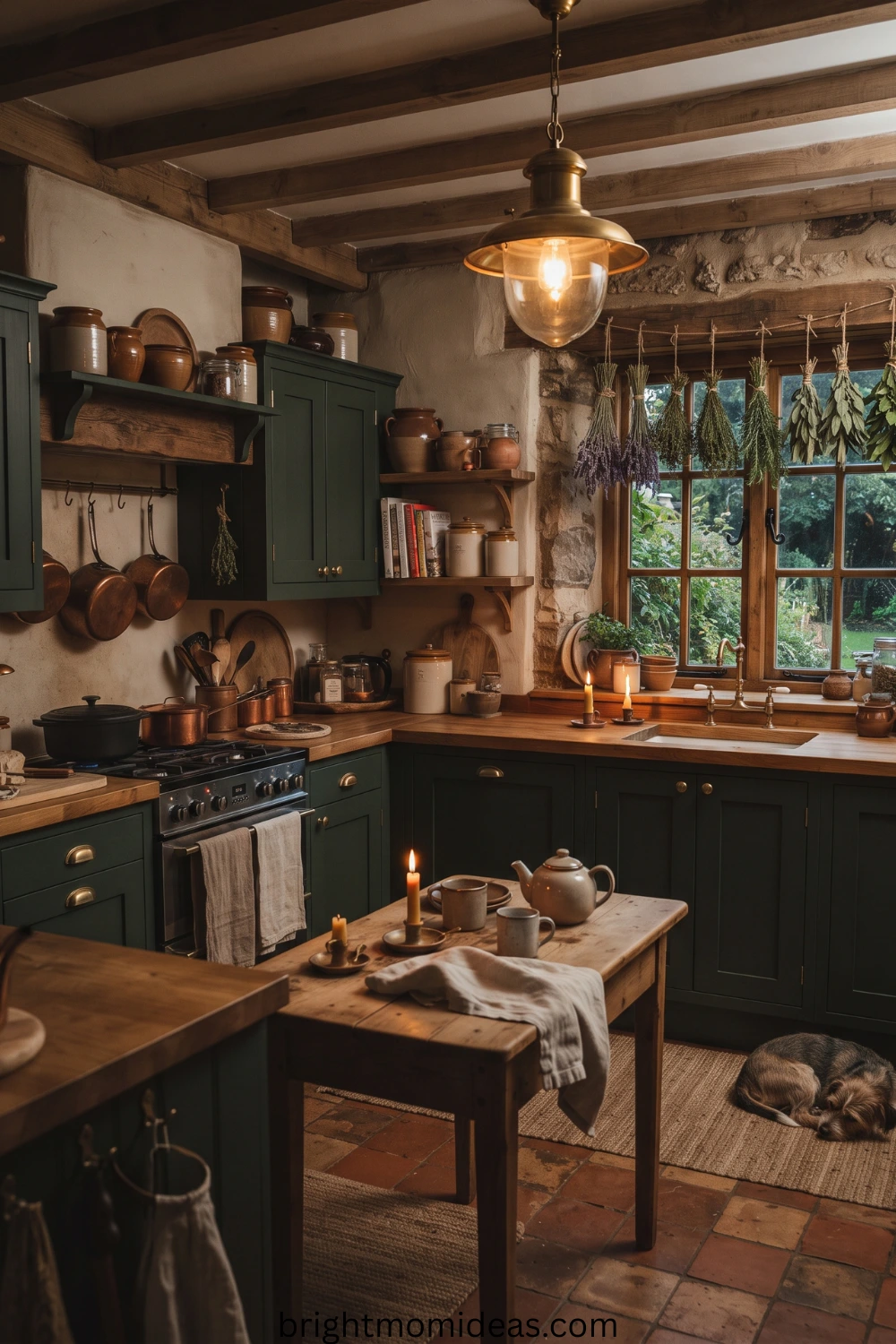
Deep forest green kitchens are having an absolute moment in 2026 and they are not slowing down. There is something about a dark, rich green kitchen that feels both sophisticated and completely timeless. It photographs beautifully, it makes white marble and brass hardware look incredible, and it gives a kitchen a sense of depth and drama that no other color really achieves.

This trend works best in kitchens with good natural light or strong artificial lighting. Dark colors absorb light so you need to compensate with great lighting to prevent the space from feeling too closed in.

Deep Forest Green Kitchen

The best deep green kitchen colors right now include Farrow and Ball Torreon, Benjamin Moore Hunter Green, and Sherwin Williams Cascades. If you are nervous about going all-in with dark green cabinets, start with the kitchen island in a deep green and keep the surrounding cabinets in a warm white or cream. The contrast is absolutely stunning.


Navy Blue — Classic, Bold, and Always Beautiful

Navy blue kitchens have been a firm favorite for several years now and they are absolutely holding their place in 2026 kitchen trends. This is one of those rare kitchen colors that manages to feel both bold and classic at the same time. It works in traditional kitchens, modern farmhouse kitchens, and contemporary spaces equally well.

Navy works brilliantly on kitchen islands and lower cabinets. It pairs beautifully with white marble countertops, brass or gold hardware, and warm wood open shelving. The contrast between deep navy and bright white is one of the most striking kitchen color combinations you can create.

Navy Blue Kitchen

Sherwin Williams Naval, Benjamin Moore Hale Navy, and Behr Commodore are the three most recommended navy blues for kitchens. All three have slightly different undertones — Naval leans slightly purple, Hale Navy is a pure navy, and Commodore has more grey in it — so sample them in your specific kitchen light before deciding.


Kitchen Color Palette Ideas — Complete Combinations That Work

Choosing individual colors is one thing. Pulling together a complete kitchen color palette that works harmoniously is another. Here are five complete kitchen color palette ideas that are all over Pinterest right now and all work beautifully in real homes.

Palette 1 — Warm and Natural

This is the most popular kitchen color palette in the US right now. It feels warm, organic, and effortlessly inviting.

Kitchen Color Palette 1 — Warm and Natural

Upper cabinets in warm white — Benjamin Moore White Dove. Lower cabinets in sage green — Sherwin Williams Clary Sage. Walls in a warm off-white — Sherwin Williams Accessible Beige. Countertops in warm white quartz or butcher block wood. Hardware in brushed brass or antique bronze. Open shelving in natural oak.

This palette photographs beautifully, works in any size kitchen, and never goes out of style.


Palette 2 — Modern Moody

For the homeowner who wants a kitchen with real drama and sophistication.

Cabinets in deep forest green — Benjamin Moore Hunter Green. Walls in a warm dark cream — Sherwin Williams Antique White. Countertops in white or grey marble. Hardware in polished brass. Backsplash in white subway tile with dark grout. Pendant lights in black metal with warm bulbs.

Kitchen Color Palette 2 — Modern Mood

This palette is bold but balanced. The warm cream walls and brass hardware stop the dark green from feeling too heavy.


Palette 3 — Soft and Feminine

For a kitchen that feels light, airy, and beautifully personal.

Cabinets in a soft creamy white — Sherwin Williams Alabaster. Walls in the palest blush pink — Benjamin Moore Pale Blush. Countertops in white marble with delicate veining. Hardware in brushed gold. Backsplash in white zellige tile. Open shelving in white painted wood with trailing plants.

Kitchen Color Palette 3 — Soft and Feminine

This palette works especially well in smaller kitchens where you want to keep things light and bright while still adding warmth and personality.


Palette 4 — Bold and Earthy

For the homeowner who is not afraid of color and wants a kitchen that feels completely unique.

Lower cabinets in terracotta — Sherwin Williams Cavern Clay. Upper cabinets in warm white — Benjamin Moore White Dove. Walls in warm beige — Behr Pale Straw. Countertops in cream or beige quartz. Hardware in matte black. Backsplash in handmade terracotta or cream tiles. Pendant lights in woven rattan.

Kitchen Color Palette 4 — Bold and Earthy

This palette is one of the most saved kitchen color combinations on Pinterest right now. The warmth and earthiness of the terracotta combined with warm white uppers creates a kitchen that feels genuinely special.


Palette 5 — Classic Navy and White

For a kitchen that needs to look polished and timeless for years to come.

Island in navy blue — Benjamin Moore Hale Navy. Perimeter cabinets in bright white — Benjamin Moore Chantilly Lace. Walls in warm white — Sherwin Williams Alabaster. Countertops in white marble or white quartz. Hardware in polished brass. Backsplash in classic white subway tile. Pendant lights in brass or black metal.

Kitchen Color Palette 5 — Classic Navy and White

This is one of those kitchen color palettes that works in a starter home and a forever home equally well. It is classic, bold, and always beautiful.


Kitchen Wall Color Ideas — When You Are Not Ready to Paint Cabinets

Not everyone is ready to paint their kitchen cabinets — and that is completely fine. Kitchen wall color alone can make an enormous difference to how a kitchen looks and feels. Here are the best kitchen wall color ideas for 2026 that work with almost any cabinet color.

If your cabinets are white or off-white, your kitchen wall color has the most options. Warm sage green walls make white cabinets look crisp and fresh. Warm terracotta or clay walls make them feel cozy and earthy. A deep moody blue-green wall creates a dramatic backdrop that makes white cabinets pop.

If your cabinets are wood-toned, lean toward warm neutrals on the walls. Creamy whites, warm beiges, and soft taupes all work beautifully with natural wood. Avoid cool greys which can make wood tones look orange and dated.

If your cabinets are already a color — say, a grey or a blue — keep your walls neutral. A warm white or soft cream is almost always the right choice for walls when your cabinets are already doing the heavy lifting.

Affiliate Products:

👉 Paint Color Sample Pack Neutral Tones — Shop Here

👉 Professional Paint Roller and Tray Set — Shop Here


How to Test Kitchen Colors Before You Commit

This is the step most people skip — and it is the most important one. Paint looks completely different on a wall than it does on a small chip or a screen. Always test your colors before painting the whole kitchen.

Kitchen Wall Color Ideas

Buy sample pots of your top two or three choices. Paint large swatches — at least 12 by 12 inches — directly on your kitchen wall. Look at them at different times of day. Morning light, midday light, and evening artificial light can all make the same color look dramatically different.

Live with your swatches for at least two or three days before making a final decision. The color you think you love at 10am might look completely different at 7pm under your kitchen lighting. This two dollar investment in sample pots saves hundreds of dollars in repainting mistakes.

Affiliate Products:

👉 Peel and Stick Paint Sample Sheets — No Mess Testing — Shop Here


Practical Tips for Painting Your Kitchen

Once you have chosen your perfect kitchen color, here are the most important things to know before you start painting.

Always use kitchen-specific paint or a paint with a semi-gloss or satin finish. Kitchens generate steam, grease, and moisture — a flat finish paint will not hold up and will be almost impossible to clean. Semi-gloss and satin finishes are both wipeable and durable.

Prime your walls and cabinets before painting. This is especially important if you are painting over a dark color or painting bare wood cabinets. A good primer makes the final color more accurate and dramatically improves durability.

For cabinet painting, use a small foam roller for flat surfaces and a brush for edges and details. This combination gives the smoothest, most professional finish without brush marks.

Two thin coats always look better than one thick coat. Be patient, let each coat dry completely before applying the next, and the result will look far more professional and last much longer.

Affiliate Products:

👉 Stain Blocking Primer for Cabinets — Shop Here

👉 Cabinet Painting Foam Roller Set — Shop Here


Final Thoughts on Kitchen Colors

Choosing the right kitchen color is one of those decisions that feels overwhelming before you make it and completely obvious in hindsight. Once you find the right color for your kitchen — the one that works with your light, your cabinets, your countertops, and your family’s energy — you will wonder why it took you so long to do it.

Kitchen_reveal_sage

Start with the 2026 kitchen color trends as your guide. Warm whites, sage greens, terracottas, deep forest greens, and classic navies are all beautiful places to begin. Build a complete kitchen color palette around your chosen cabinet or wall color. Test your samples in real light before committing. And invest in the right paint quality for a finish that lasts.

Your kitchen deserves to be a space you love walking into every single morning.

Save this post to your Pinterest kitchen boards and share it with someone who is planning a kitchen refresh! 📌


Disclosure: This post contains affiliate links. If you purchase through these links I may earn a small commission at no extra cost to you. Thank you for supporting this blog.