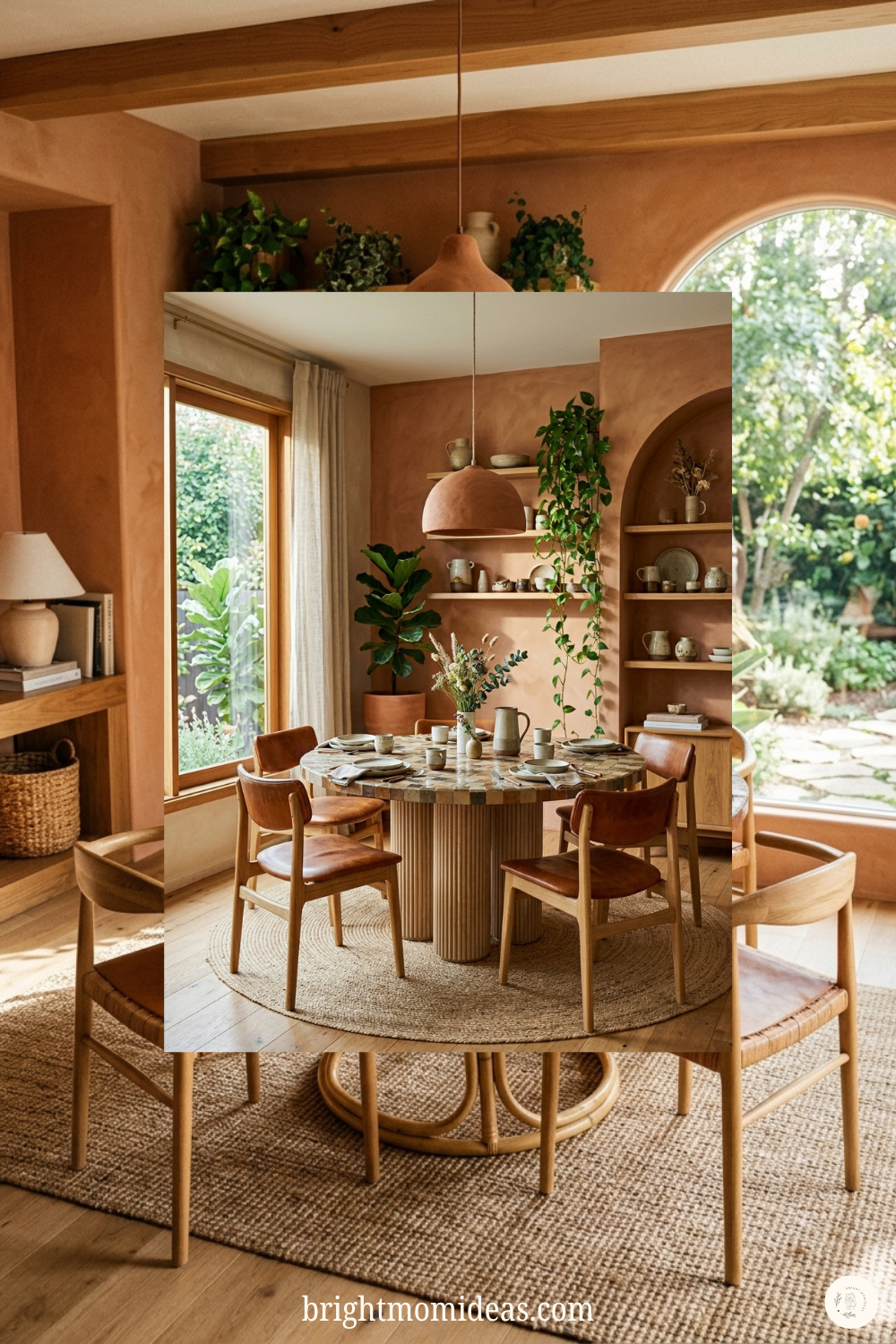

Somewhere along the way, neutral got a reputation it did not deserve. People started treating beige as a placeholder, greige as a cop-out, and warm white as something you choose when you cannot commit to a real color. And honestly, if you have ever walked into a dining room that was technically neutral but felt completely flat and lifeless, you understand exactly how that reputation formed. But here is the thing — neutral is not the problem. The lack of intention behind it is.
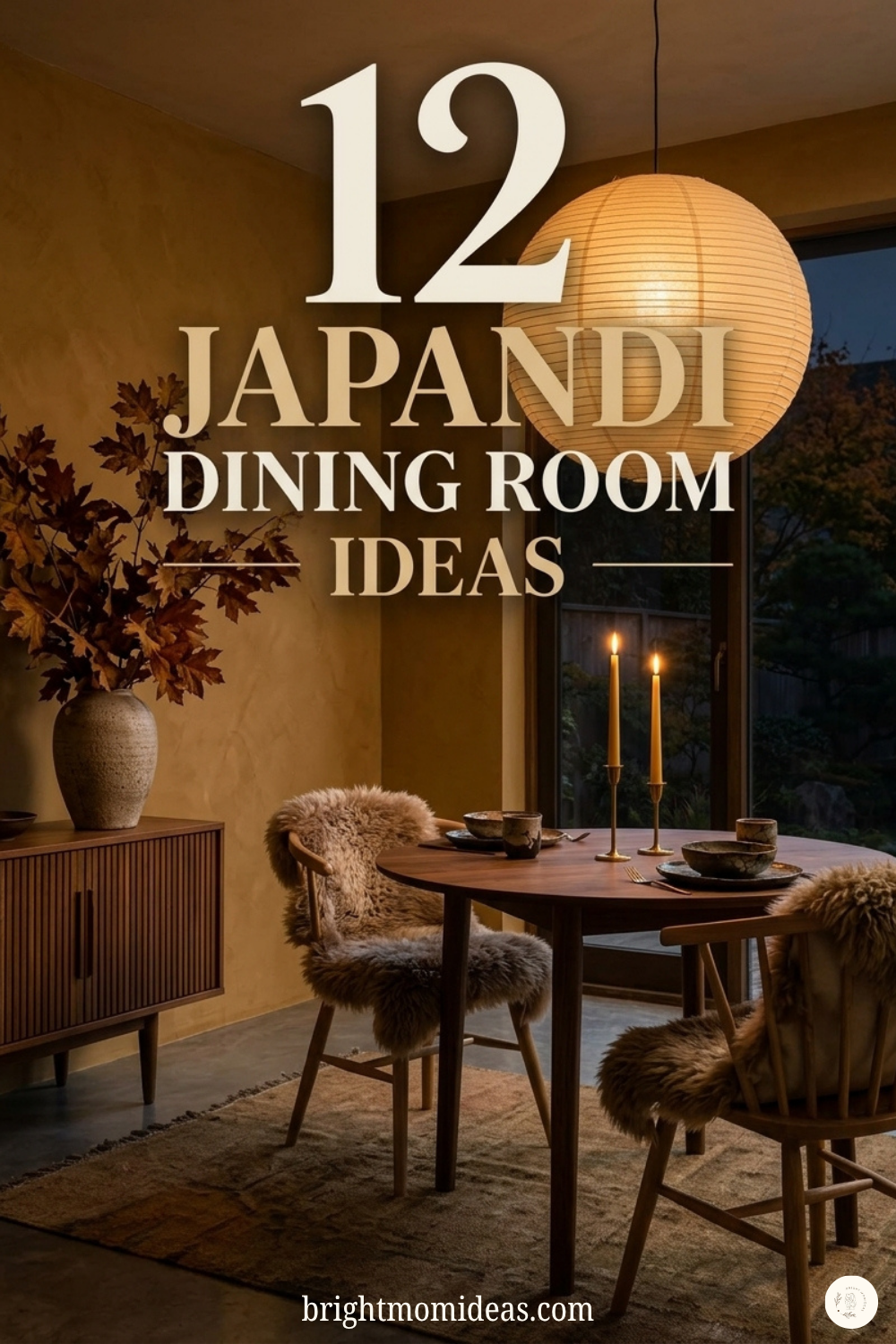
A Japandi dining room does something remarkable with neutral palettes. It takes the same tones that make other rooms feel empty and turns them into something layered, warm, and genuinely alive. It does this through texture, through material, through the very specific way natural light interacts with handmade surfaces. If you have been scrolling through Pinterest looking for Japandi dining room ideas that go beyond just putting a wooden table in a white room, this blog is going to show you exactly how the Japandi dining room aesthetic works — and why it does it so beautifully.
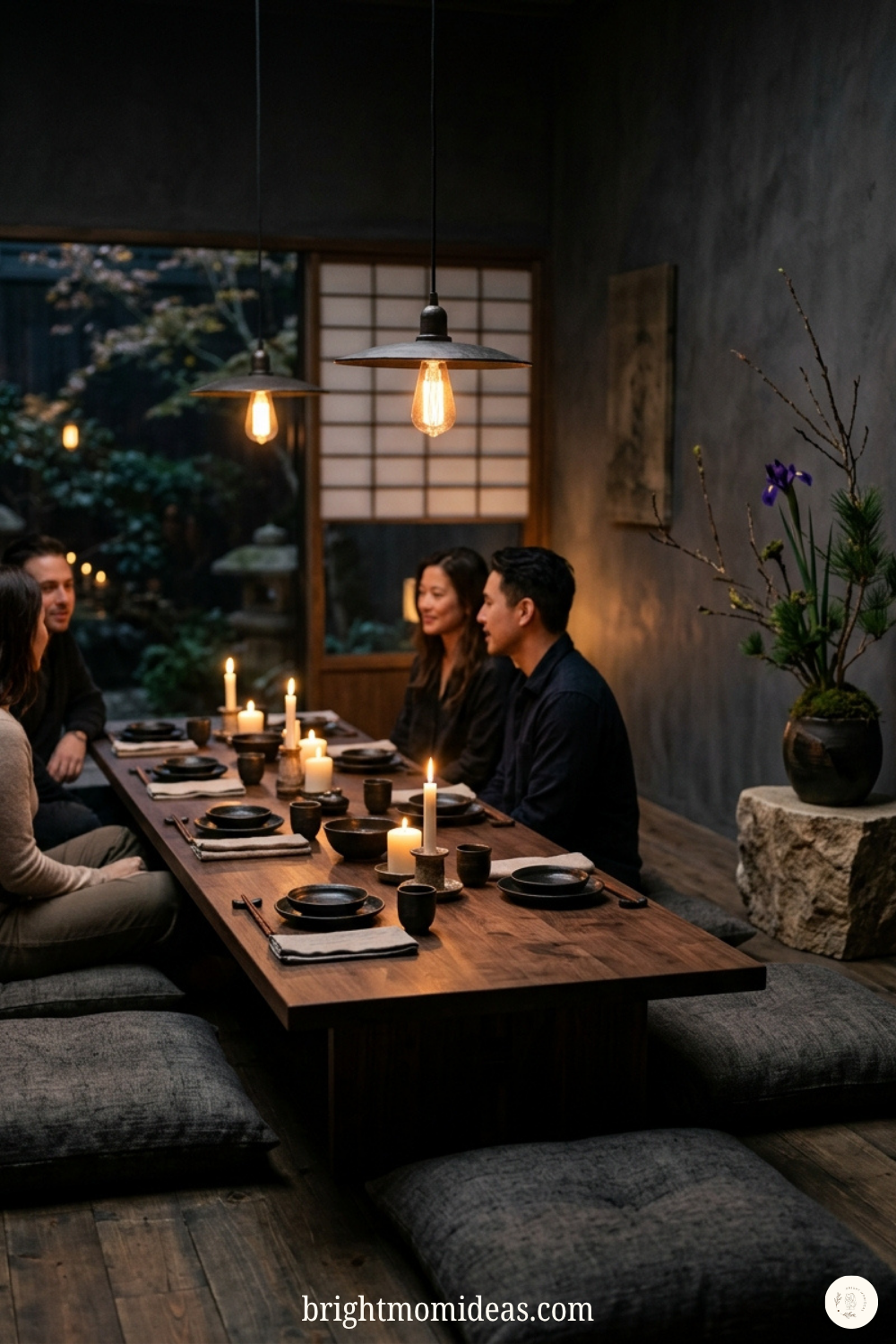
What Japandi Dining Room Design Actually Means Before You Start Decorating
The word Japandi is a blend of Japanese and Scandinavian, but a Japandi dining room is not just a style mashup. It is a philosophy about how a room should feel to the people eating, talking, and gathering inside it. Japanese design contributes the principle of ma — the meaningful use of empty space — alongside the wabi-sabi appreciation for things that are imperfect, aged, and natural. Scandinavian design brings in hygge — the deeply human desire for warmth, comfort, and genuine belonging in everyday spaces.
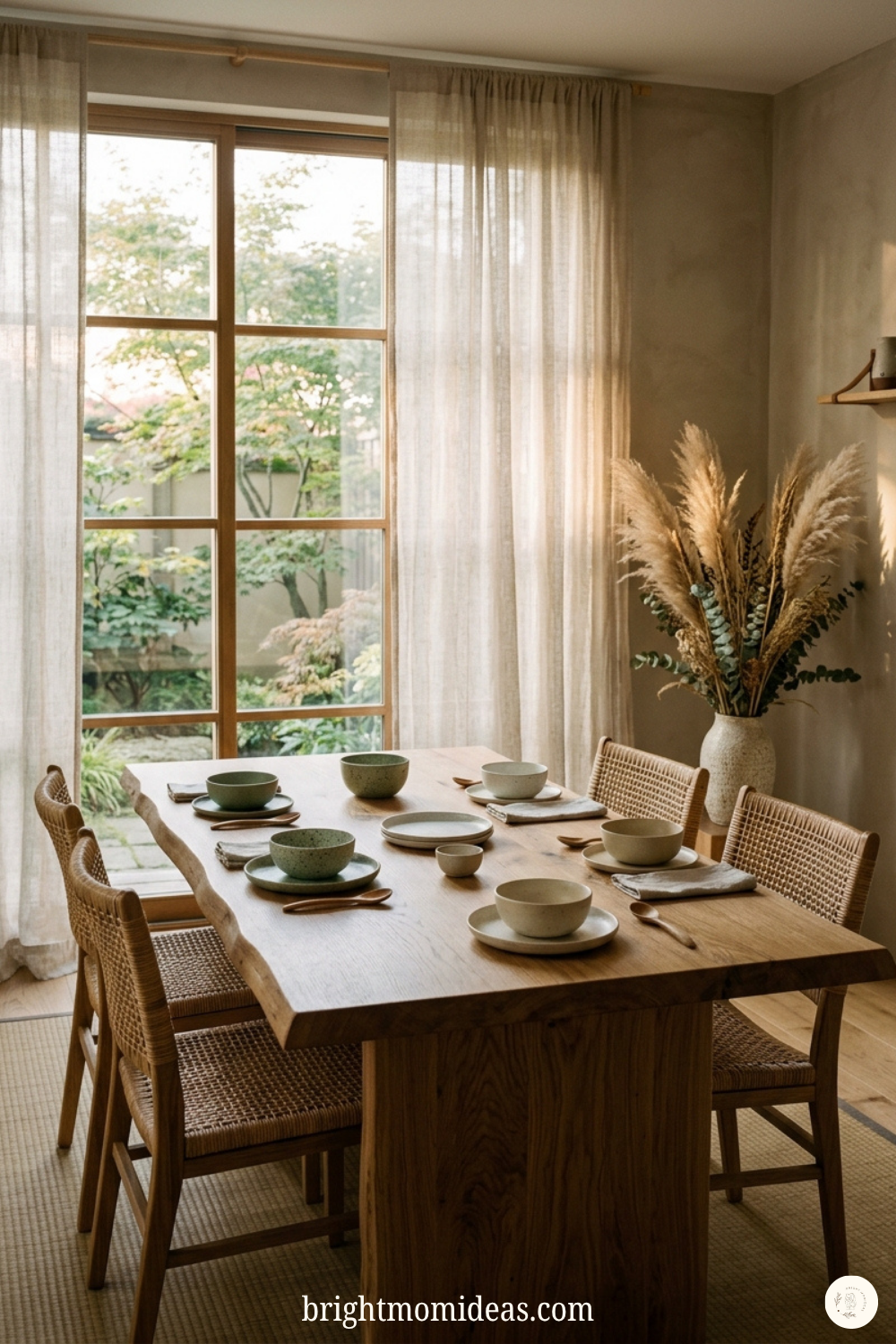
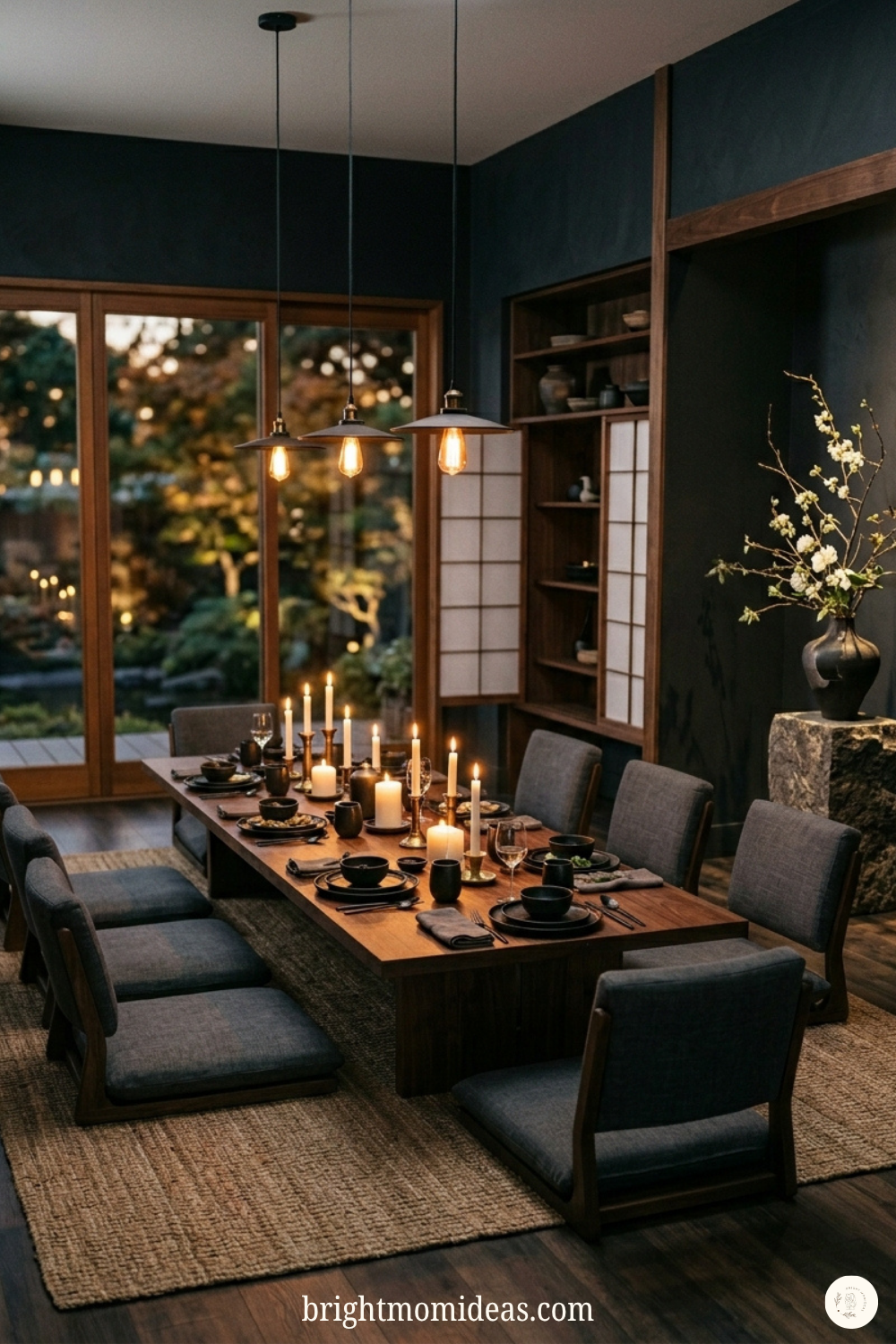
When those two ideas meet in a Japandi dining room, the result is a space that does not try to impress you the moment you walk in. Instead, it does something more powerful. It makes you want to sit down, pour a glass of something cold, and stay for a long time. The neutral palette is not a limitation in this context. It is the canvas that makes every natural material, every handmade texture, and every carefully placed object feel more significant than it would in a busier room.
Why Japandi Dining Room Neutral Palettes Feel Nothing Like Boring Beige
The difference between a flat neutral dining room and a beautiful Japandi neutral palette comes down to one word — warmth. Flat neutrals tend to use cool undertones, the kind of whites and grays that photography looks crisp in but that drain the life out of a room the moment the camera goes away. Japandi neutral palettes lean warm. Creamy whites with a yellow or pink undertone. Warm taupes and oat tones. Soft sand, aged linen, and the particular kind of greige that looks completely different at every hour of the day depending on the quality of light coming through the window.
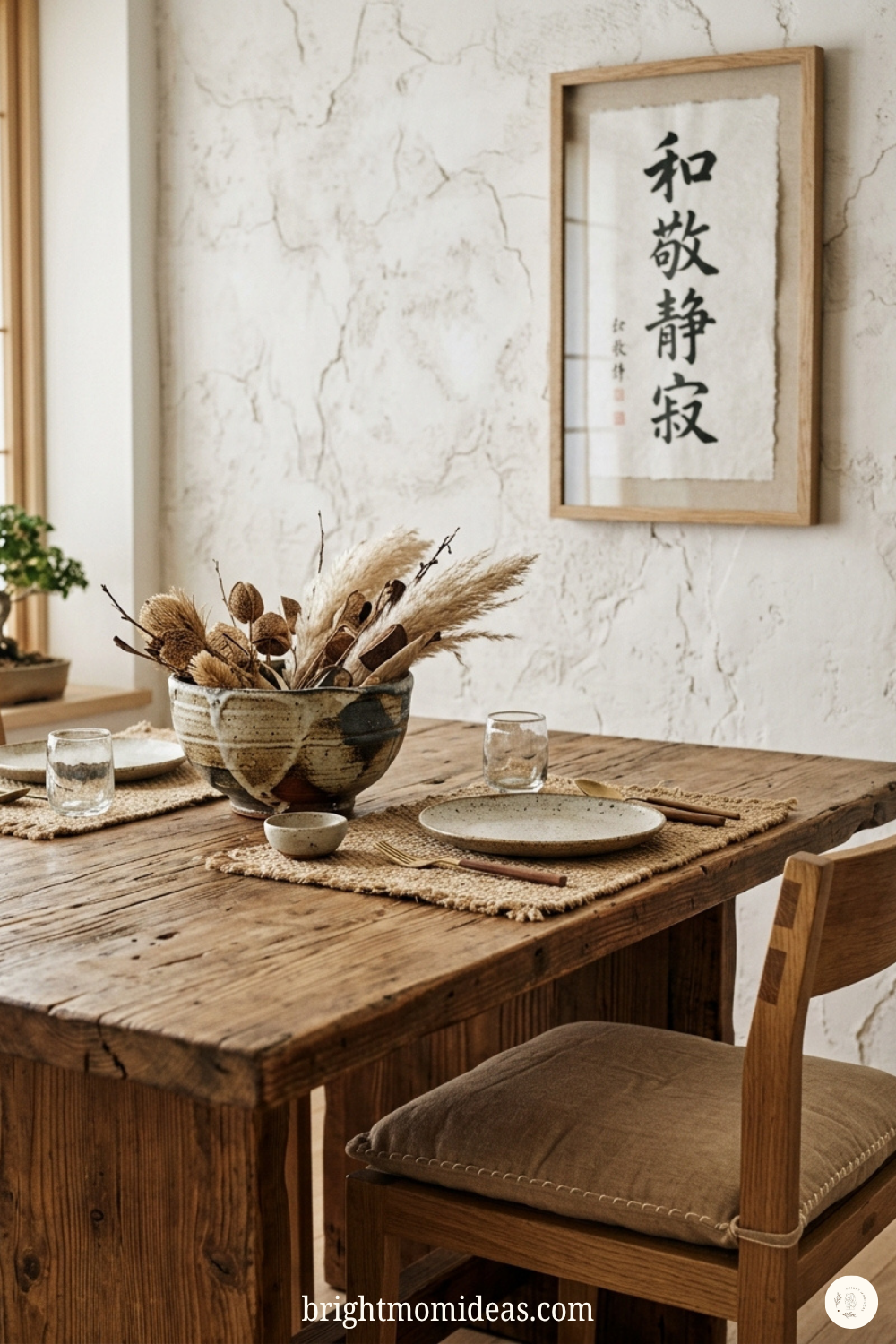
Beyond color temperature, the Japandi dining room aesthetic activates neutral palettes through material contrast. A matte plaster wall next to a smooth oak dining table next to a rough linen seat cushion — these are all technically neutral, but the difference in surface and texture between them creates a visual richness that a single flat color could never achieve on its own. Add in the way candlelight or late afternoon sun plays across a handmade ceramic bowl sitting in the center of the table, and you start to understand why people who have lived with Japandi dining rooms describe them as rooms that seem to change throughout the day. They do. And that is exactly the point.
The Core Elements Of A Japandi Dining Room That Bring Any Neutral Palette To Life
The Japandi Dining Table Is Where The Whole Room Begins And Everything Else Follows
In any Japandi dining room, the table is not just a surface — it is the anchor, the soul, and often the single most beautiful object in the space. The right Japandi dining table tends to sit lower than what most Americans are used to, with clean simple lines and visible wood grain that has not been buried under a thick lacquer finish. Solid oak, walnut, and ash are all ideal choices. The grain should be allowed to breathe. The finish should be matte or oil-rubbed so the wood feels genuinely touchable rather than preserved behind glass.
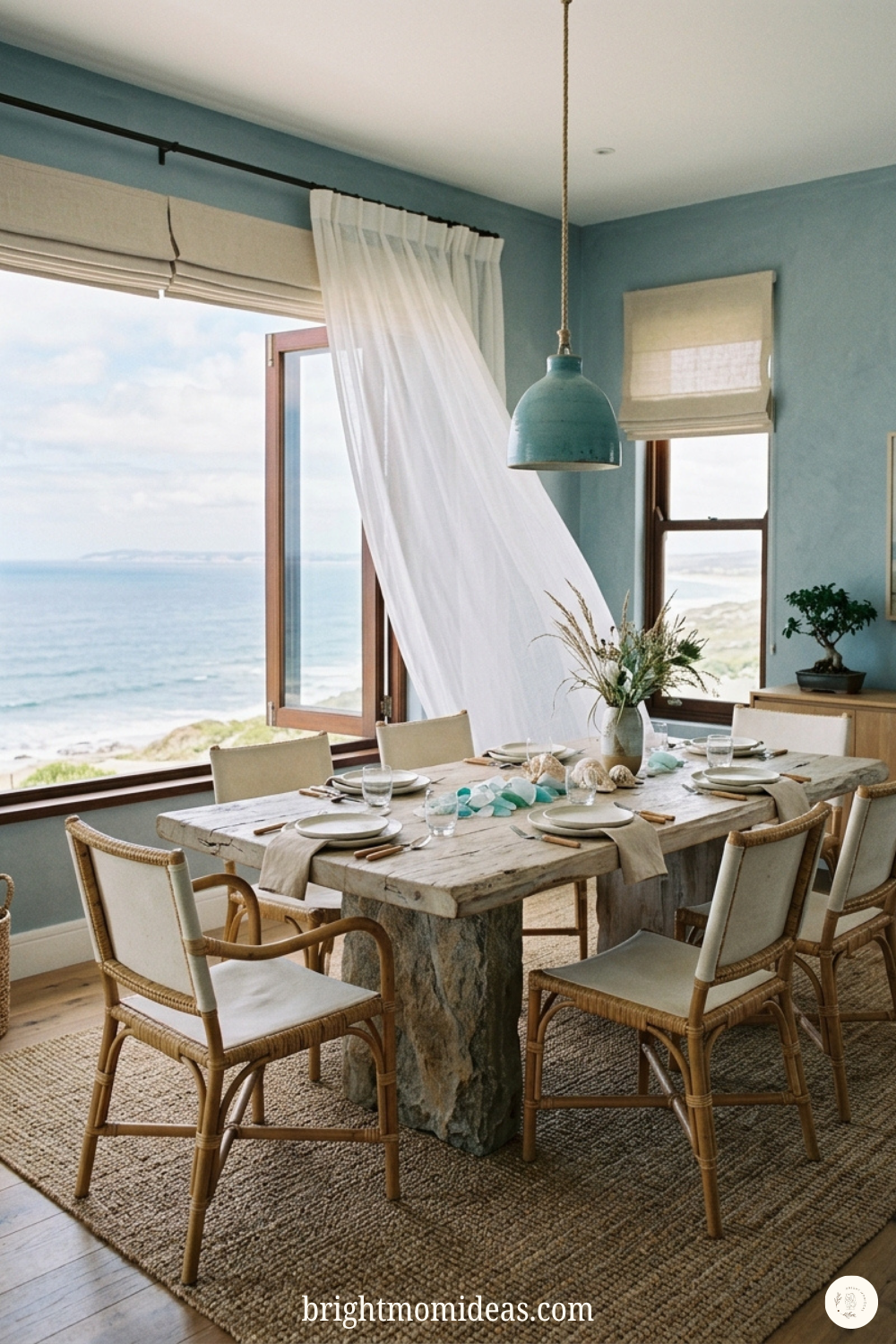
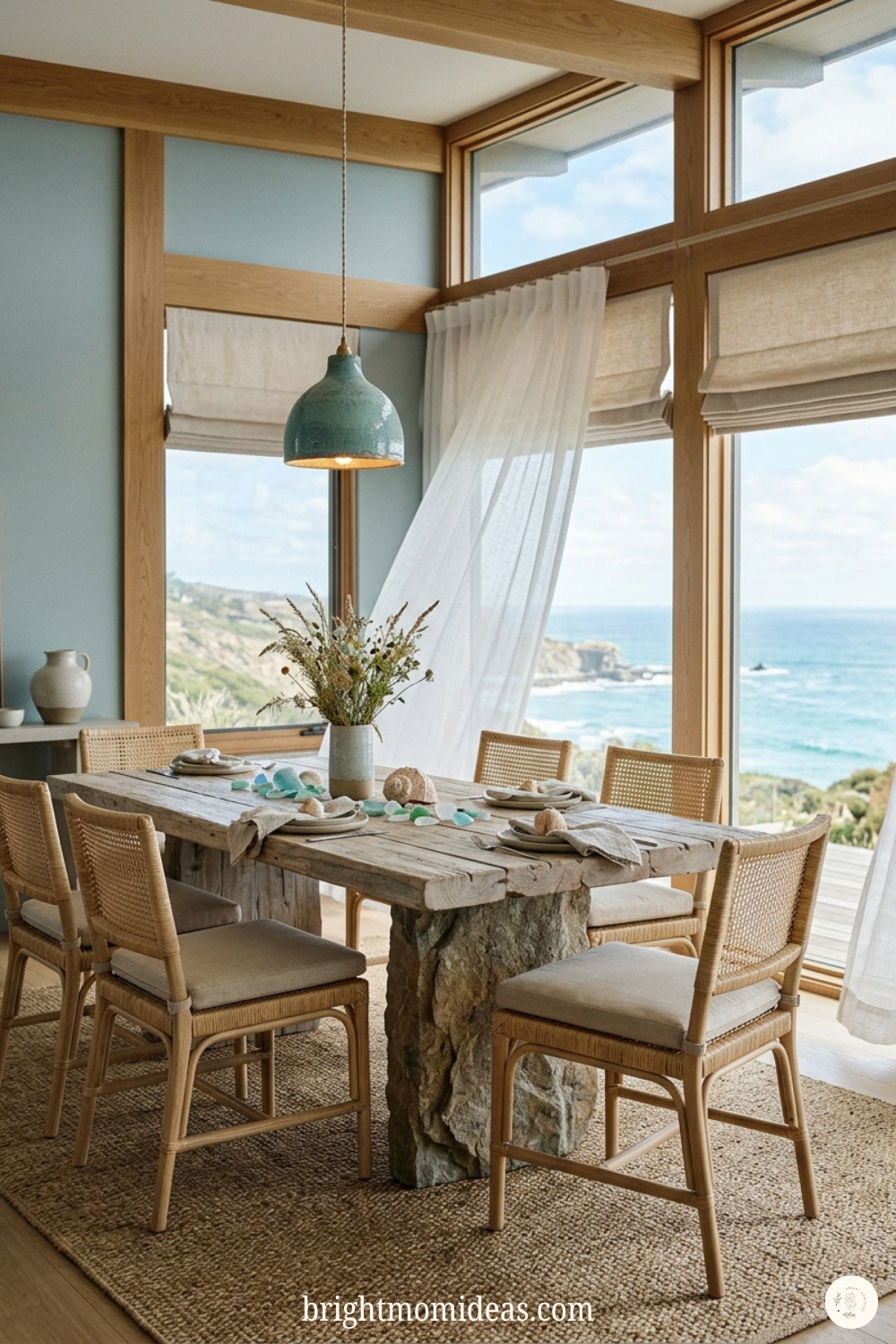 Round tables work beautifully in smaller Japandi dining rooms because they encourage intimate gathered conversation. Rectangular tables work in longer rooms where a simple bench on one side adds an informal warmth that matching chairs alone cannot deliver.
Japandi Dining Room Chairs That Balance Visual Calm With Real Human Comfort
Chair choice can make or break a Japandi dining room aesthetic completely. The goal is seating that feels considered and human without competing with the table or the rest of the room for attention. Solid wood chairs with a slightly curved back in the Japanese mingei folk-craft tradition are ideal. So are simple Scandinavian-influenced dining chairs with a woven seat in natural rush or paper cord.
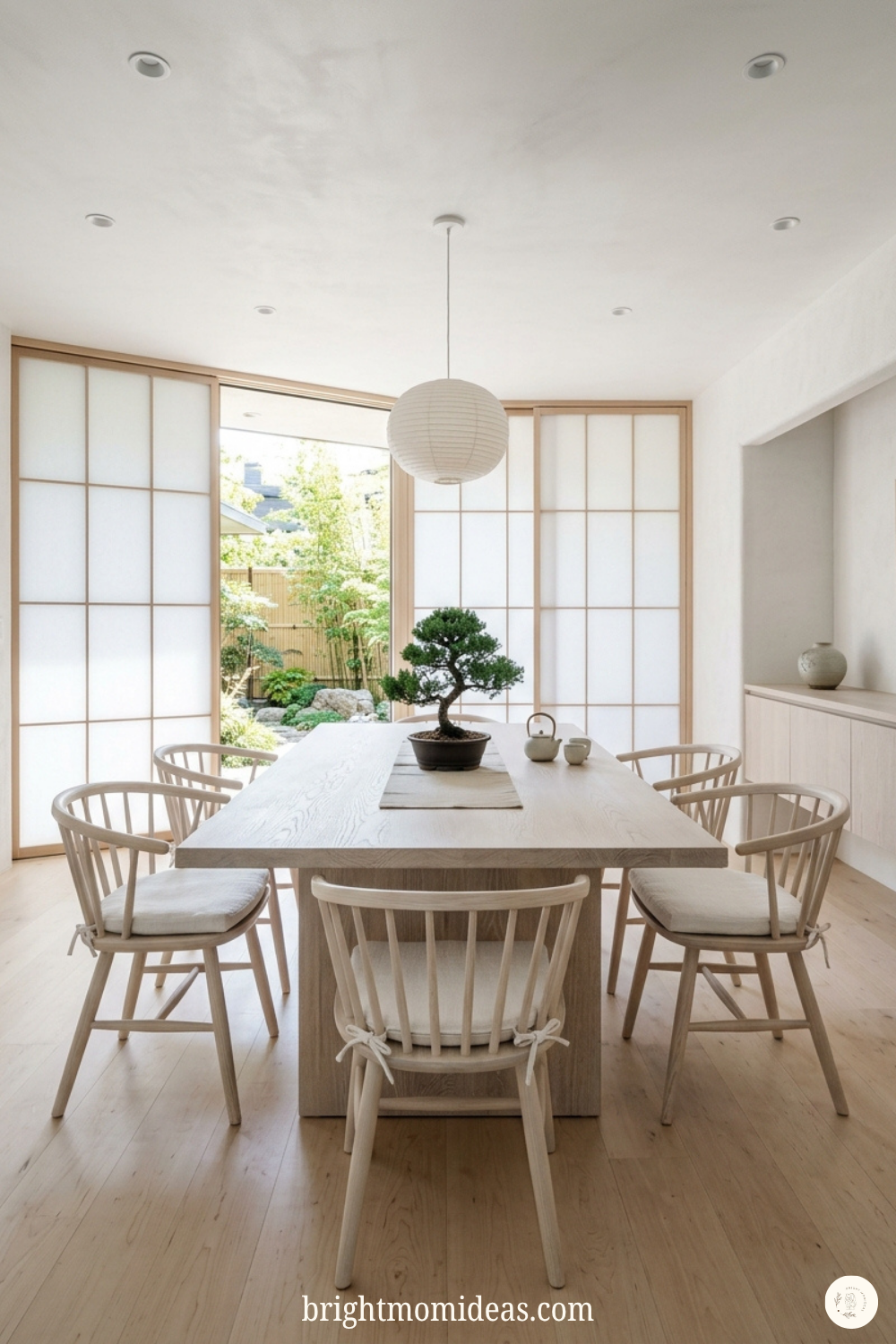
What to avoid is anything too upholstered, too formal, or too visually loud. One of the most effective Japandi dining room ideas for adding dimension without adding noise is mixing — two wooden chairs at the ends of the table and a long bench upholstered in natural linen or boucle along one side. That combination is relaxed, warm, and completely Japandi in spirit.
Japandi Dining Room Lighting That Anchors The Space And Sets The Entire Mood
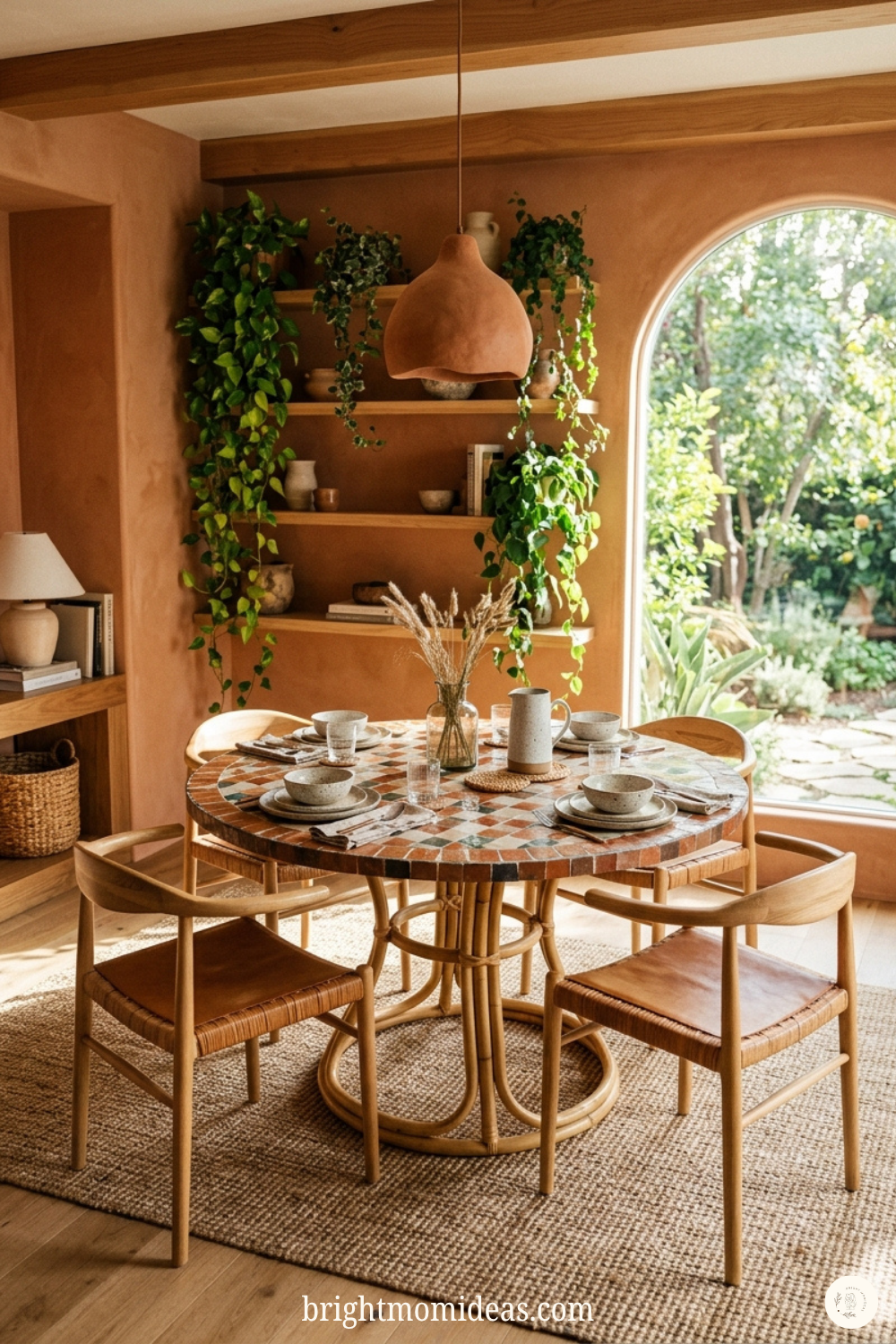
Lighting in a Japandi dining room does two jobs at once. It provides practical light for the table, and it anchors the vertical space above it in a way that makes the whole room feel complete rather than top-heavy or oddly empty overhead. The ideal Japandi dining room pendant hangs lower over the table than most Americans expect — closer to the surface — in a material that feels natural and warm.
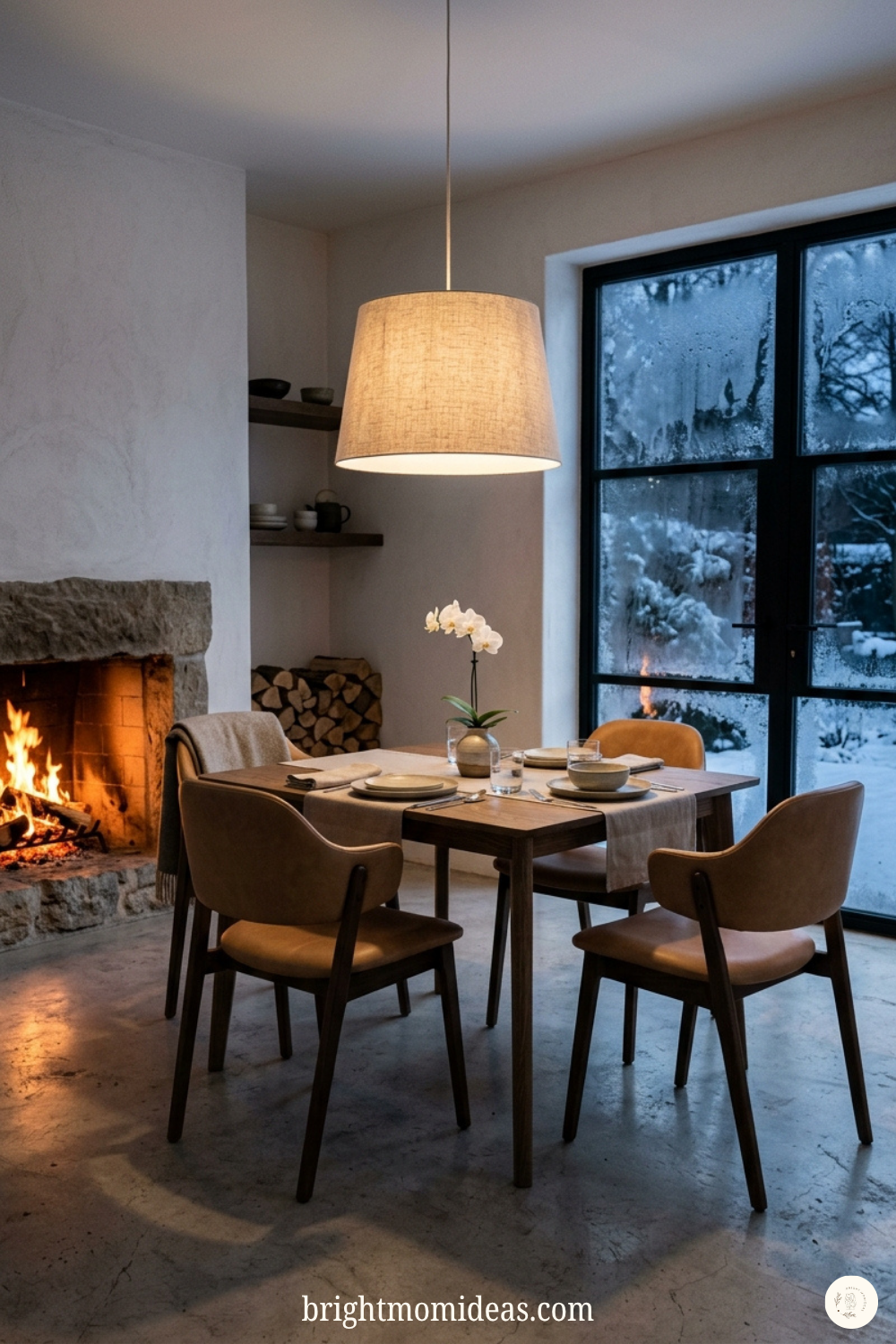
Washi paper pendants that diffuse light into a soft even glow are the classic Japanese-inspired choice. Rattan or bamboo shades with visible weave texture bring in Scandinavian warmth. Matte ceramic pendants in oat or clay tones work beautifully in smaller dining rooms. Whatever you choose, keep the bulb warm — 2700K to 3000K — because cool white light will instantly collapse the warmth that the entire Japandi dining room palette is working hard to create.
Japandi Dining Room Decor Is About What You Put On The Table And Nothing Else
Table styling in a Japandi dining room follows the same principle as the rest of the aesthetic. Intentional, not minimal for minimalism’s sake, but minimal because every object should genuinely earn its place. A simple ceramic bud vase with a single dried stem. A wooden board for bread. A matte clay candle holder with an unscented beeswax taper. A small woven tray holding a salt cellar and a handmade spoon.
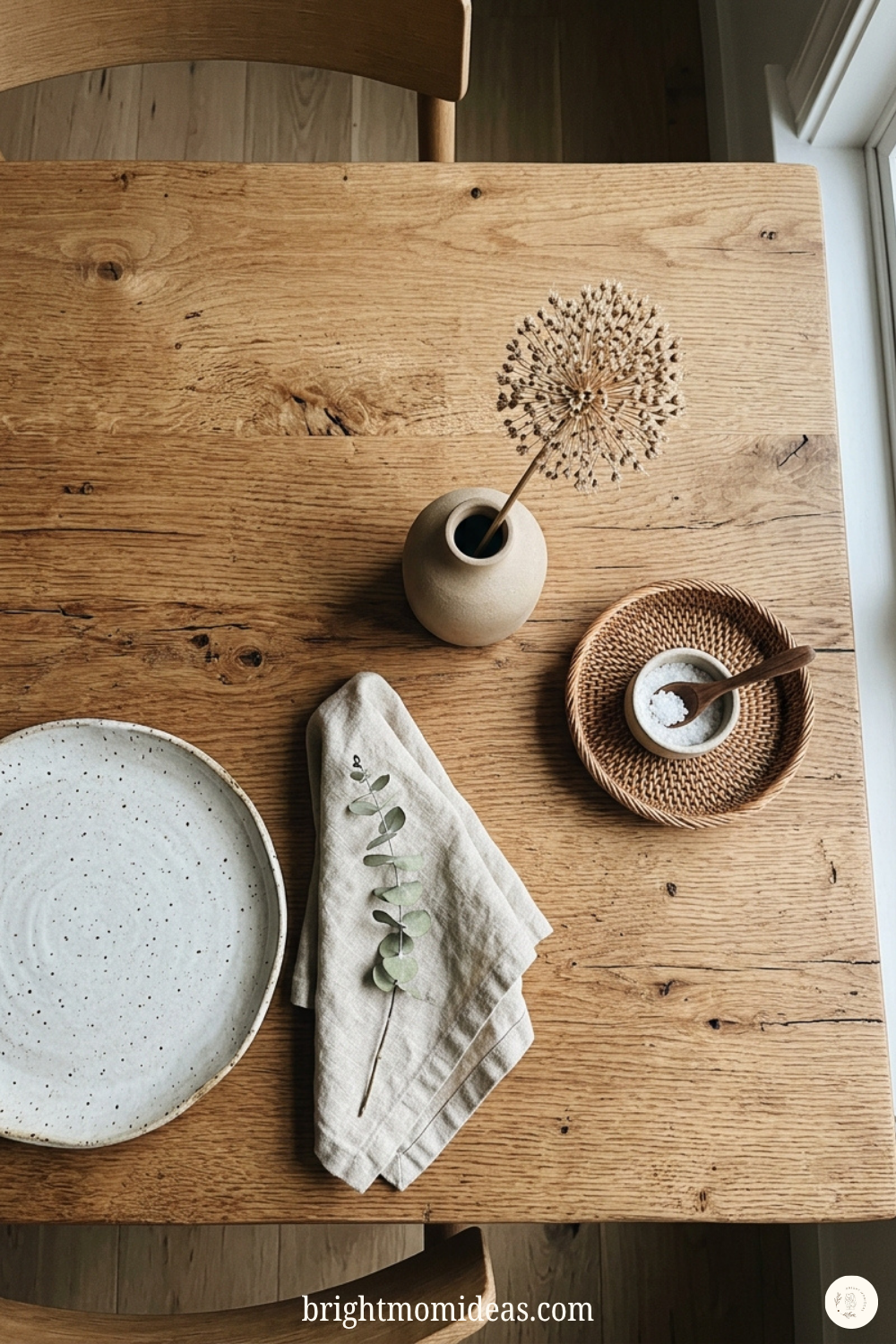
These are not decorations. They are functional objects that happen to be beautiful. That distinction is everything in Japandi dining room decor. The moment something becomes purely decorative with no functional purpose, it starts working against the philosophy rather than for it.
Japandi Dining Room Walls Prove That Neutral Does Not Have To Mean Empty Or Forgotten
One of the most common mistakes people make when creating a Japandi dining room is leaving the walls completely bare in the name of minimalism. But negative space in Japandi dining room design should be intentional, not accidental. A single large-scale piece of simple art — a quiet landscape in muted tones, a piece of Japanese calligraphy, or an abstract print in earthy neutrals — hung on the wall behind the table anchors the room without crowding it.
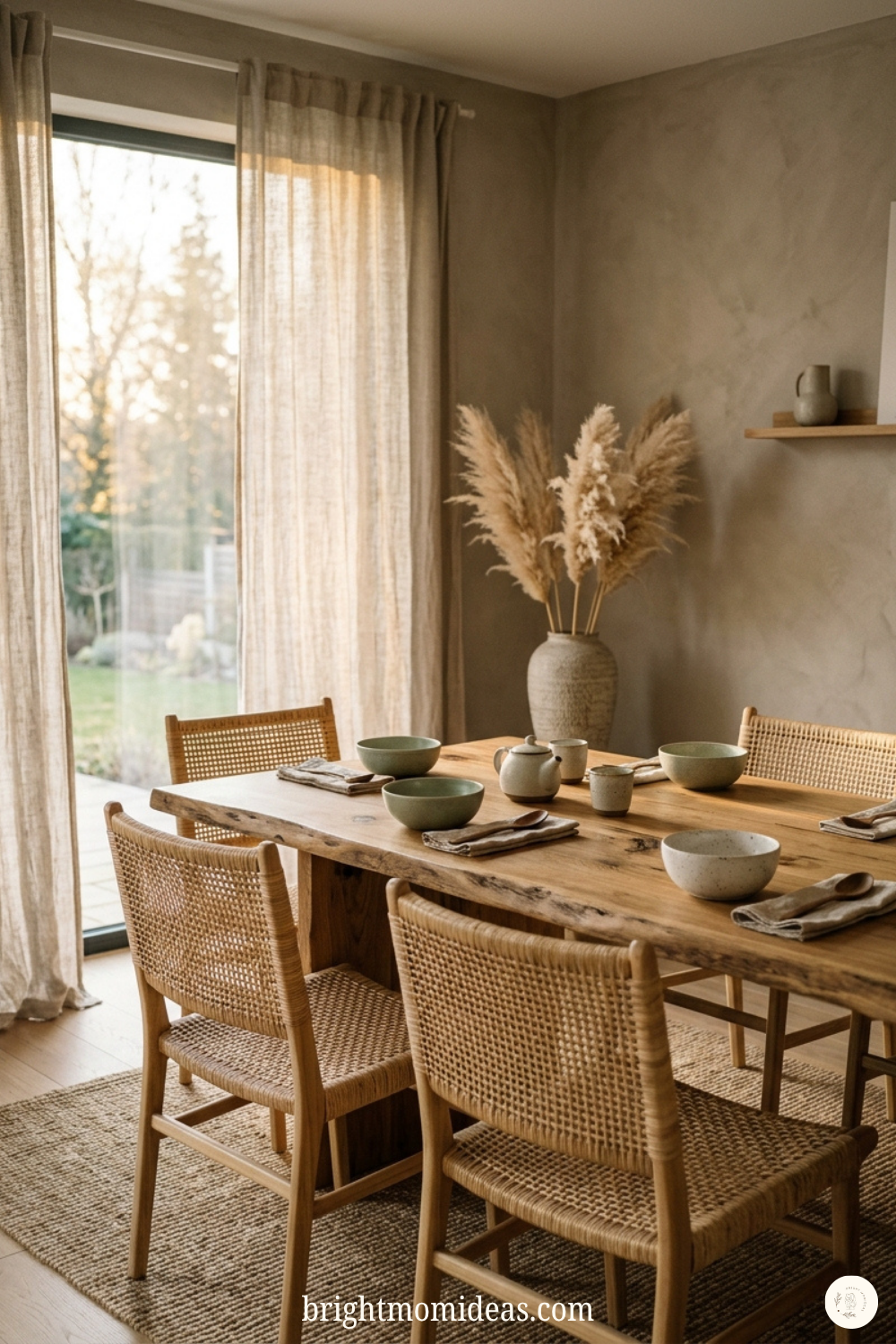
Alternatively, a simple floating shelf in warm wood holding three or four ceramic objects of varying heights creates a functional display that adds life and depth to a wall that would otherwise just recede into the background. The rule is not no art. The rule is one considered thing done with full commitment.
How Plants And Natural Elements Complete The Japandi Dining Room Aesthetic Every Single Day
If lighting is what activates a Japandi dining room in the evening, plants and natural elements are what activate it during the day. A tall slender plant in a matte terracotta pot placed in the corner behind the table — a fiddle leaf fig, a snake plant, or a large olive tree — draws the eye upward and brings an organic verticality to the room that no piece of furniture can replicate on its own.
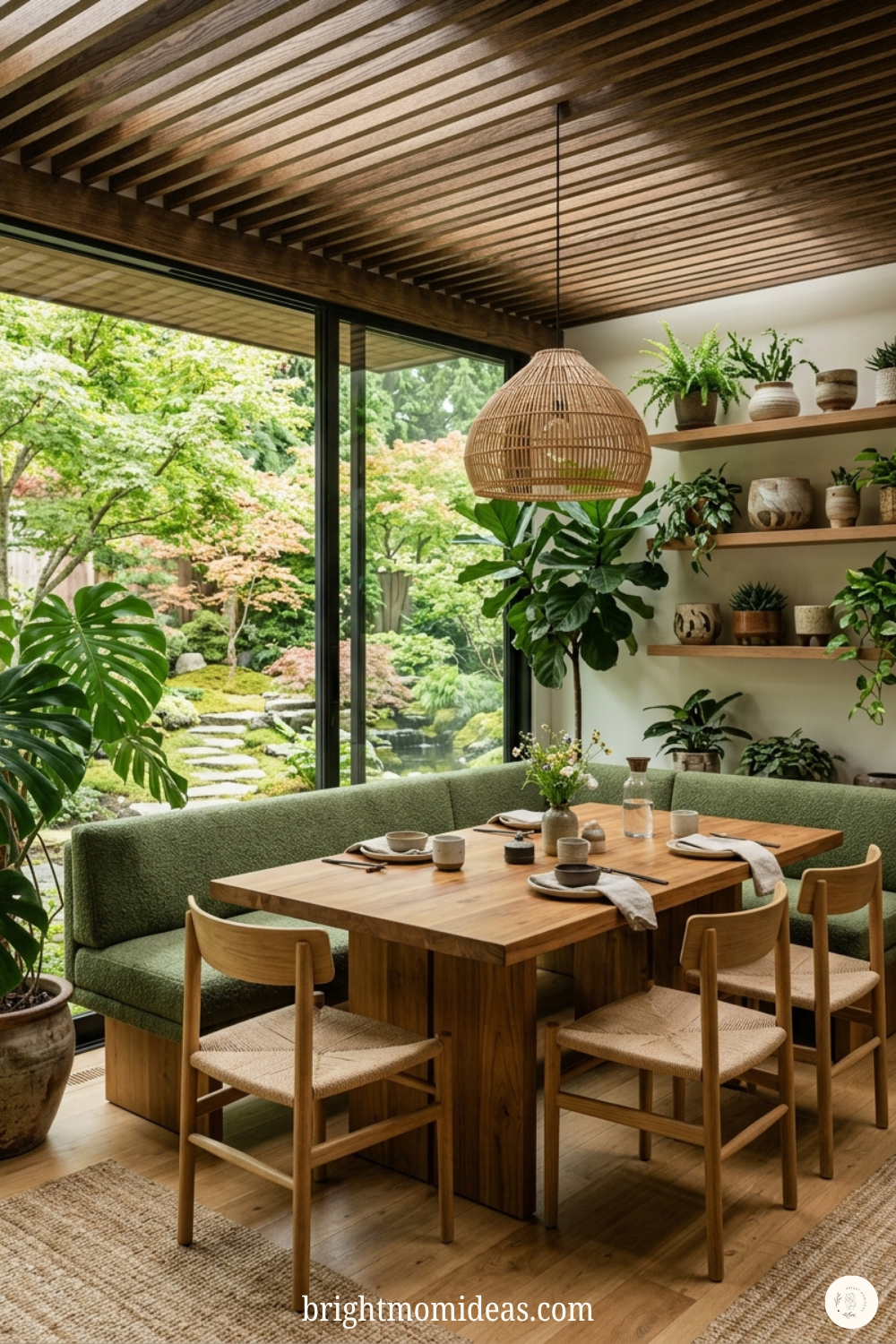
On the table or sideboard, a small cluster of dried botanicals in a simple vase, a wooden fruit bowl with a few actual pieces of fruit, or a sprig of fresh herb in a bud vase all create that living connection to the natural world that sits at the heart of both Japanese and Scandinavian design philosophy. These details matter especially in American homes where dining rooms are often interior spaces with limited natural light. A well-chosen plant does the emotional work that sunlight cannot always do — it reminds you that the room is alive, that it breathes, and that it belongs to someone who pays attention. That feeling is quiet, but it is powerful.
How To Build Your Own Japandi Dining Room In Any USA Home Without Starting From Scratch
The good news about Japandi dining room ideas is that most of them work in the spaces Americans already have. Whether you are in a Manhattan apartment with a tiny dining alcove, a Chicago brownstone with a formal separate dining room, or a new-build open-plan home in suburban Texas, the principles apply the same way everywhere.
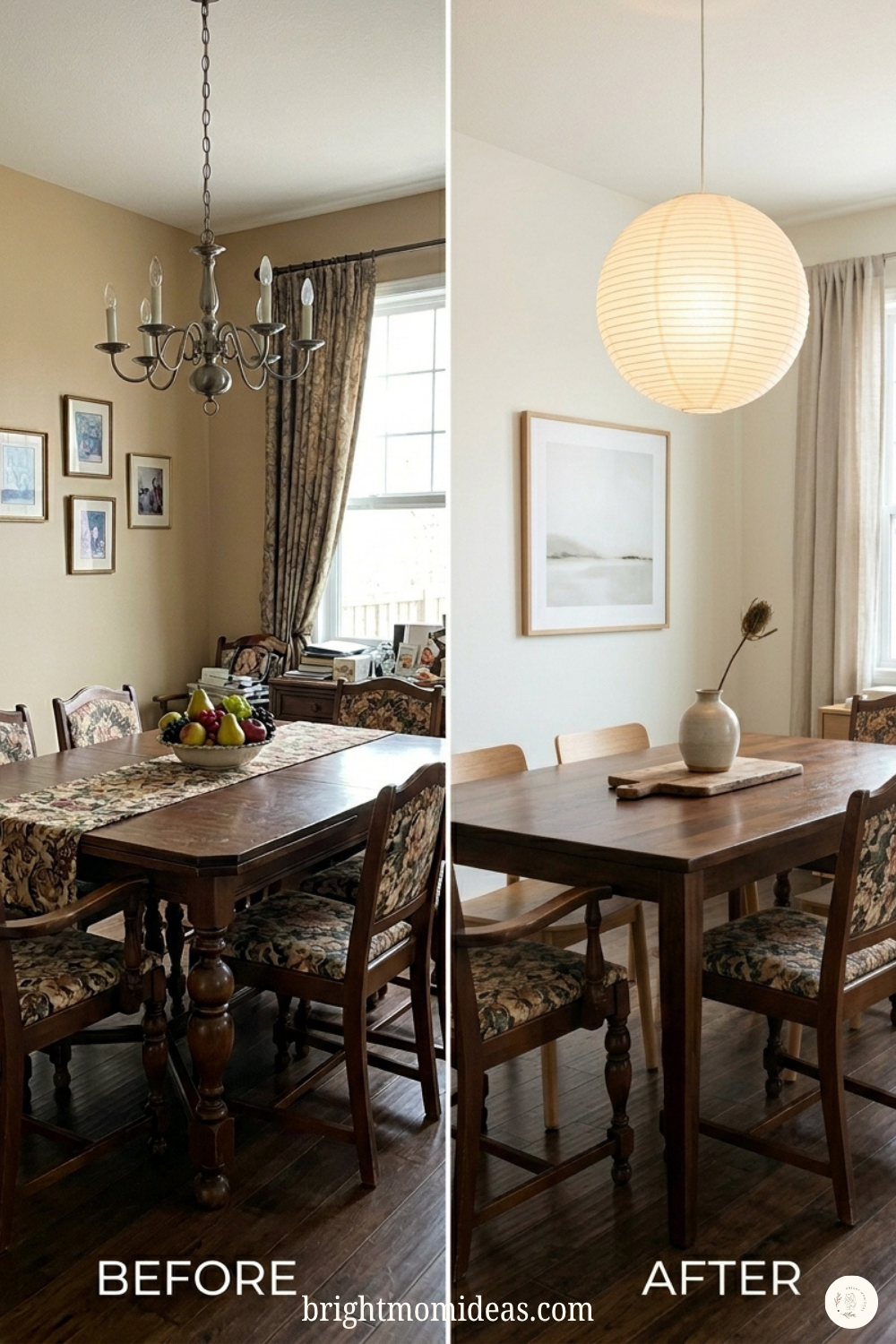
Start with the table. If you already have one in a warm wood tone with reasonably clean lines, you may not need to replace it at all. Strip back everything around it first and see what you are actually working with. From there, evaluate your lighting. Swapping a dated chandelier or builder-grade fixture for a simple washi paper or rattan pendant is one of the most affordable and high-impact changes you can make to any dining room in any budget range.
Next, look at your chairs. You do not need to replace the entire set at once. Replacing two chairs with something more Japandi in character while keeping the rest is a completely valid approach that adds exactly the kind of gentle collected-over-time imperfection that the aesthetic celebrates naturally. Finally, clear the table of everything that does not belong there and replace it with two or three things you genuinely love the look of. A Japandi dining room is built from small honest decisions made consistently over time — not from a single shopping trip.
A Japandi Dining Room Is Not A Style — It Is A Decision About What Actually Matters In Your Home
When you really understand what a Japandi dining room is doing, you realize it is not about a trend or a passing aesthetic moment. It is about editing your space down to the things that genuinely make a meal, a conversation, and a gathered moment feel better than it did before. The neutral palette is there not because it is safe or easy, but because it allows everything else — the grain of the wood, the warmth of the candlelight, the beautiful imperfection of a handmade bowl — to be fully noticed and fully felt.
That is the thing most dining rooms miss. And it is the thing a well-considered Japandi dining room gets quietly, consistently right. Whether you are planning a full room renovation or just looking for Japandi dining room ideas to start implementing this weekend, begin with the most honest question this aesthetic asks of every room: what in this space is here because I love it, and what is here because it just ended up here? Answer that honestly, and you are already most of the way there.
Save this post to your Pinterest Japandi Home Decor boards and share it with a person who is dreaming about transforming his dining room. 
Disclosure: This post contains affiliate links. If you purchase through these links I may earn a small commission at no extra cost to you. Thank you for supporting this blog.

[…] your living room. Not your kitchen. The entryway. That small transitional space between the world outside and the […]