
From minimalist to budget-friendly — find the Japandi bedroom style that actually fits your life.
There is something almost quietly magnetic about a Japandi bedroom. You walk in, and the noise in your head just… stops.
Japandi — the design marriage of Japanese minimalism and Scandinavian hygge — has been trending for years now, and honestly, it shows no sign of slowing down. Why? Because it doesn’t chase trends. It chases peace.
But here is what most people miss: Japandi isn’t one-size-fits-all. A minimalist loft in the city needs a different approach than a cozy rural cottage. A couple’s bedroom has different energy than a tiny studio apartment. That is exactly why we are breaking it down into 6 distinct types of Japandi bedrooms — so you can find the one that actually fits your home, and your life.
1. Japandi Minimalist Bedroom — Where Less Is Truly More
Let’s start with the purest form. The Japandi minimalist bedroom strips everything back to the essentials — and then it strips back a little more.
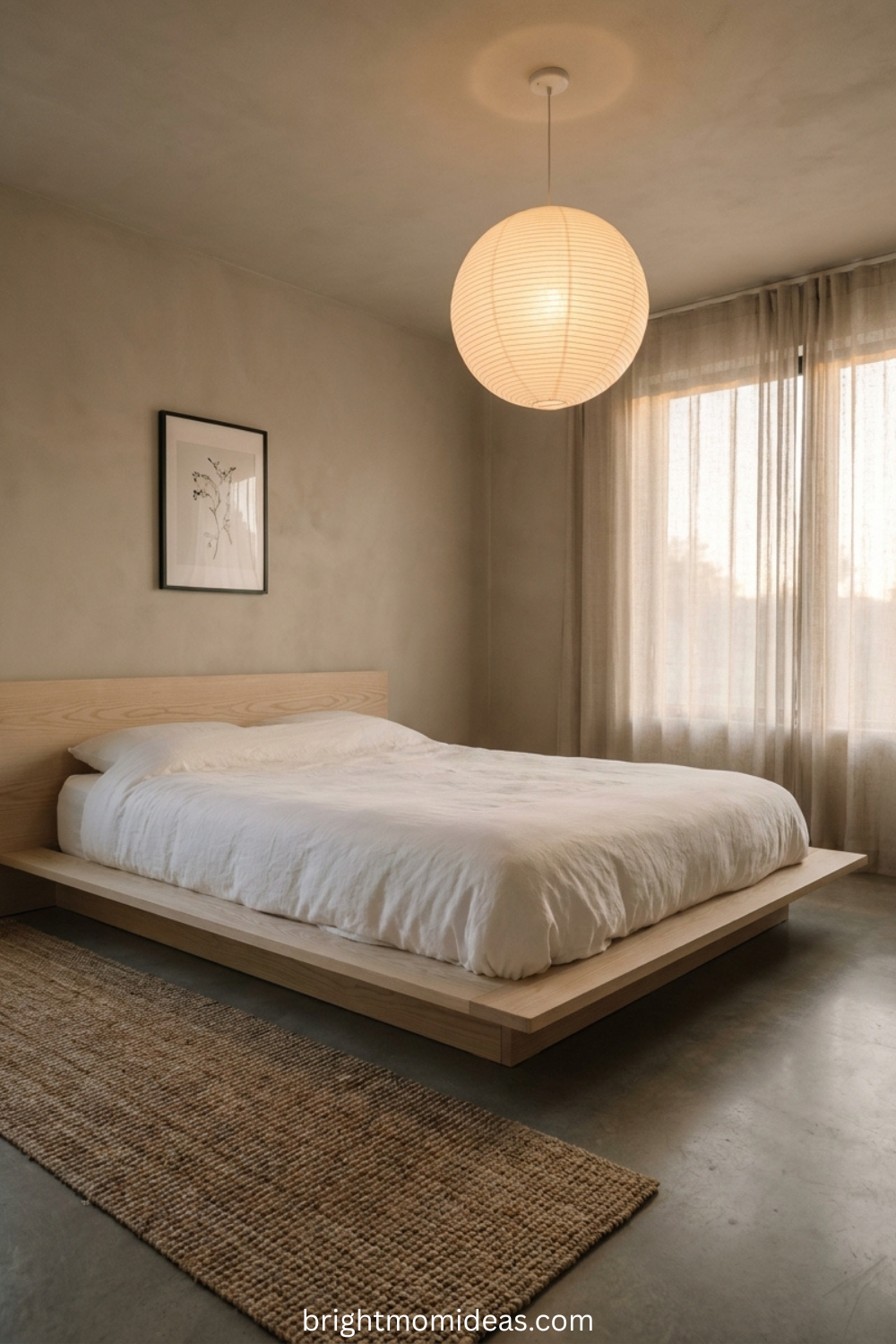
Think: a low platform bed with clean wooden lines, a single pendant light, neutral walls in warm greige or soft white, and maybe one carefully chosen plant. No clutter. No decorative excess. Just breathing room.
The Japanese concept of ma — the beauty of negative space — is front and center here. Empty corners aren’t a problem to solve. They are the design.
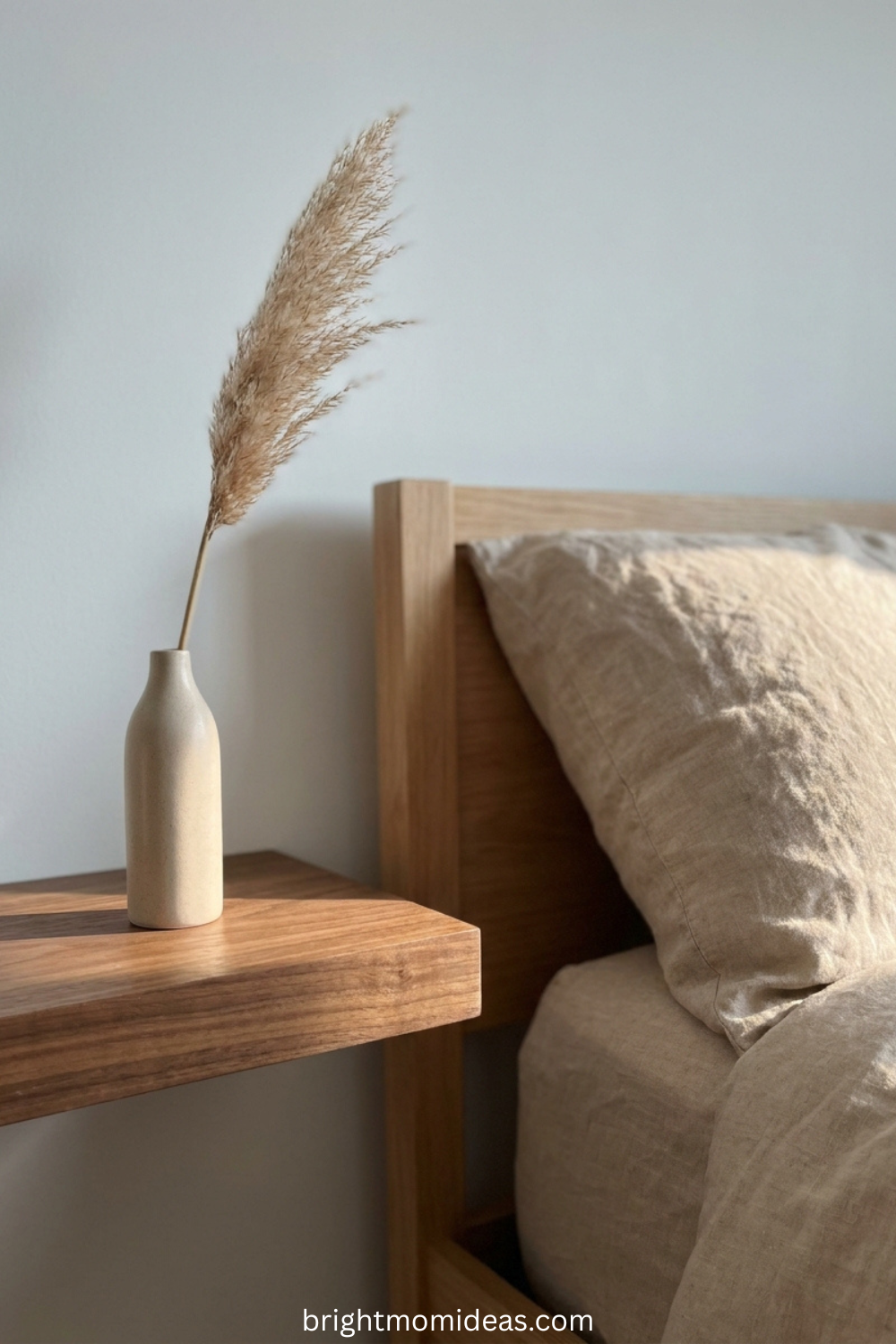
What makes it work:
- A low-profile platform or tatami-inspired bed frame in natural wood
- A monochromatic palette: whites, creams, warm greys, and blacks
- Hidden or built-in storage so clutter has nowhere to live
- One statement lighting piece — nothing more
- Unadorned walls, or a single piece of quiet line art
The minimalist Japandi bedroom works best for people who genuinely want to disconnect. If your bedroom is your sanctuary from a loud world, this is your style.
2. Japandi Cozy Bedroom — Minimalism with a Warm Pulse
Some people look at strict minimalism and feel… cold. They want warmth. They want to actually want to crawl into bed. Enter: the Japandi cozy bedroom.
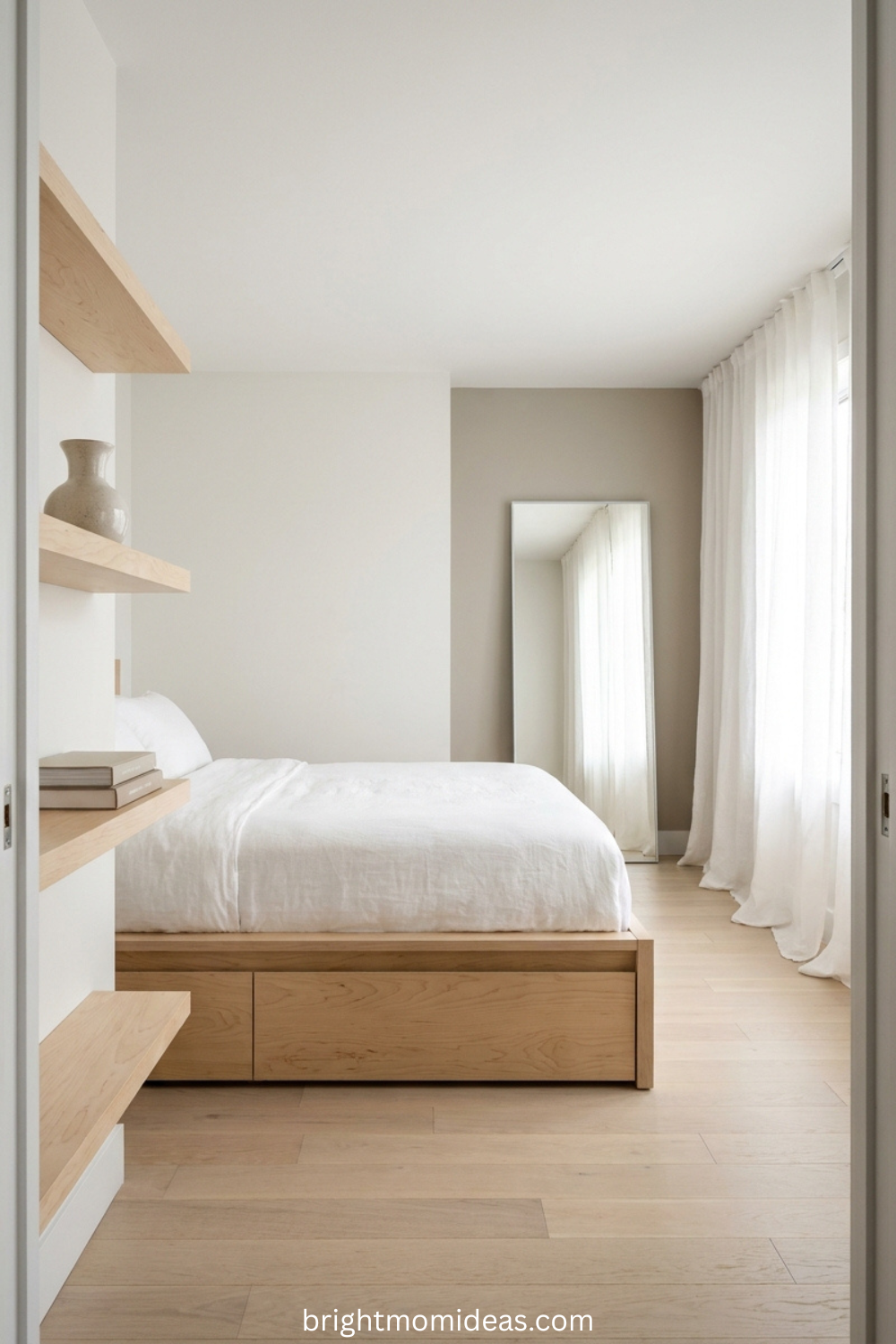
This is where Scandinavian hygge takes the lead. It keeps the clean lines and natural materials of Japandi intact, but layers in texture, softness, and warmth. Think chunky linen throws, a sheepskin rug beside the bed, warm amber lighting, and wood tones that make you think of forest cabins.
Imperfection is welcome here. A slightly wrinkled duvet cover in oatmeal linen isn’t a mess — it’s intentional. Wabi-sabi, the Japanese philosophy of finding beauty in imperfection, makes this style feel lived-in without ever feeling sloppy.
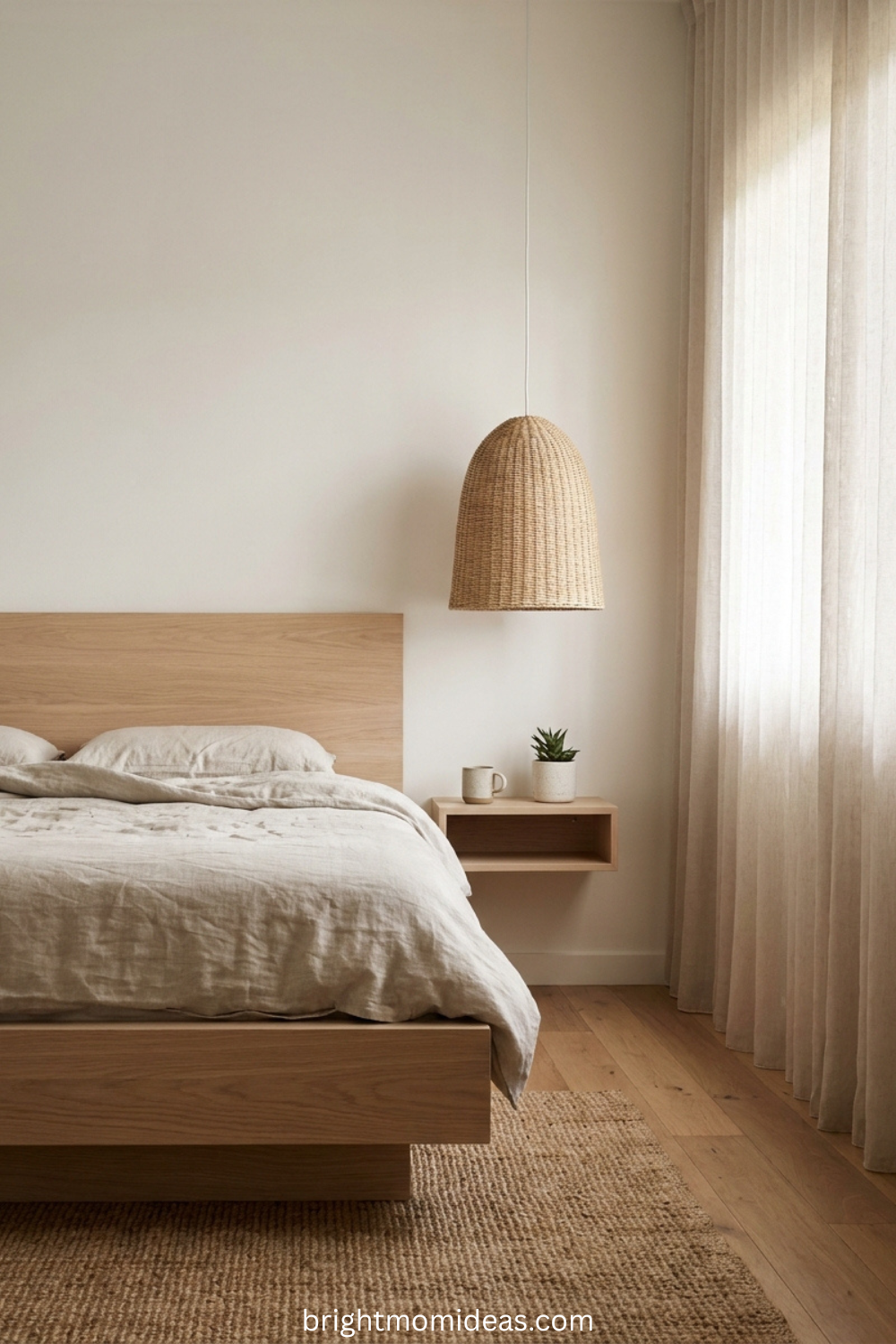
What makes it work:
- Layered textiles: linen, cotton, wool, and natural weaves all at once
- Warm lighting — dimmer switches, paper lanterns, or soft wall sconces
- A small reading nook or floor cushion tucked in a corner
- Natural wood with visible grain and knots — not too polished, not too perfect
- Earthy tones: terracotta, clay, moss green, warm beige
If you want a bedroom that makes you feel like you’re being hugged, the cozy Japandi bedroom is your answer.
3. Japandi Small Bedroom — Making Tight Spaces Feel Expansive
Here is the truth: Japandi was practically made for small bedrooms. Its restraint, its love of multifunctional furniture, and its obsession with negative space are exactly what tiny rooms need.
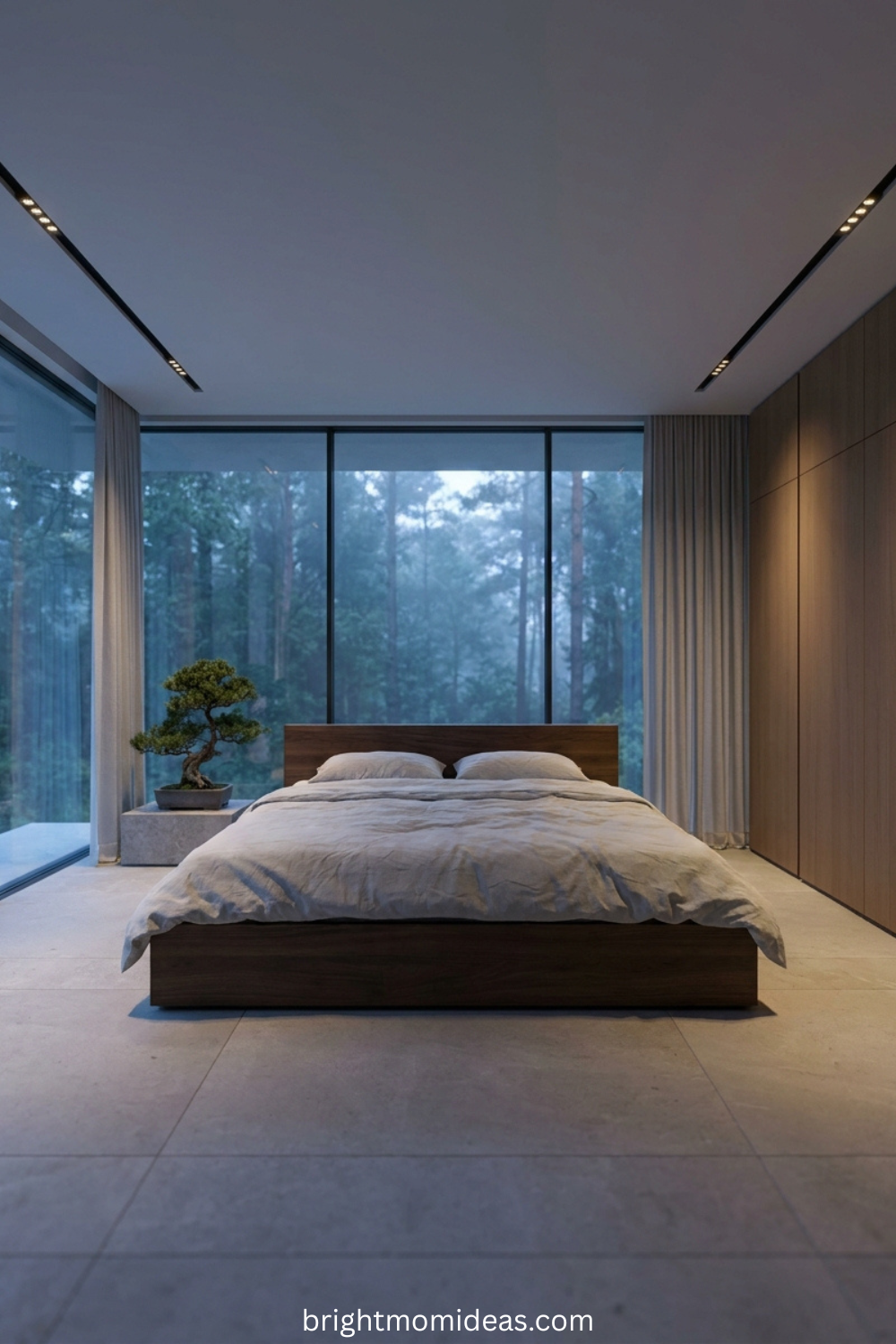
In a small Japandi bedroom, every single piece of furniture earns its spot. A bed with built-in drawer storage. A floating bedside shelf instead of a bulky nightstand. A full-length mirror leaned against the wall to double the visual depth of the room. Nothing decorative that doesn’t also serve a function.
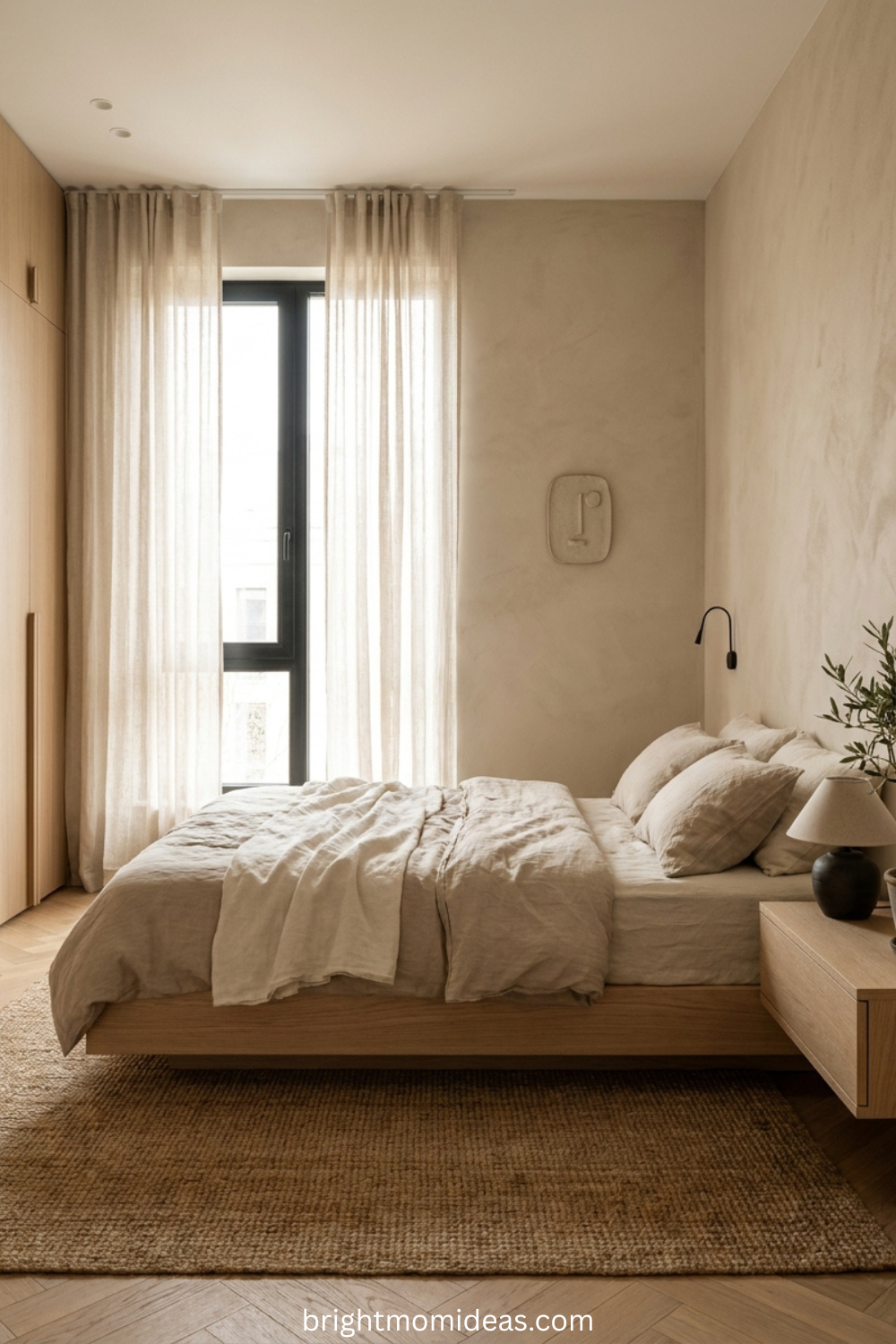
Light is your biggest ally. Keep the palette pale and warm — a soft off-white or light greige on all four walls makes the room breathe. Ditch the heavy curtains. Opt for sheer linen panels that filter light rather than block it.
What makes it work:
- A low bed frame to keep sightlines open and the ceiling feeling higher
- Under-bed storage for seasonal items — always hidden, never visible
- Wall-mounted shelving instead of floor-standing furniture
- Mirrors used strategically to expand visual space
- A limited palette of two or three neutral tones only — no more
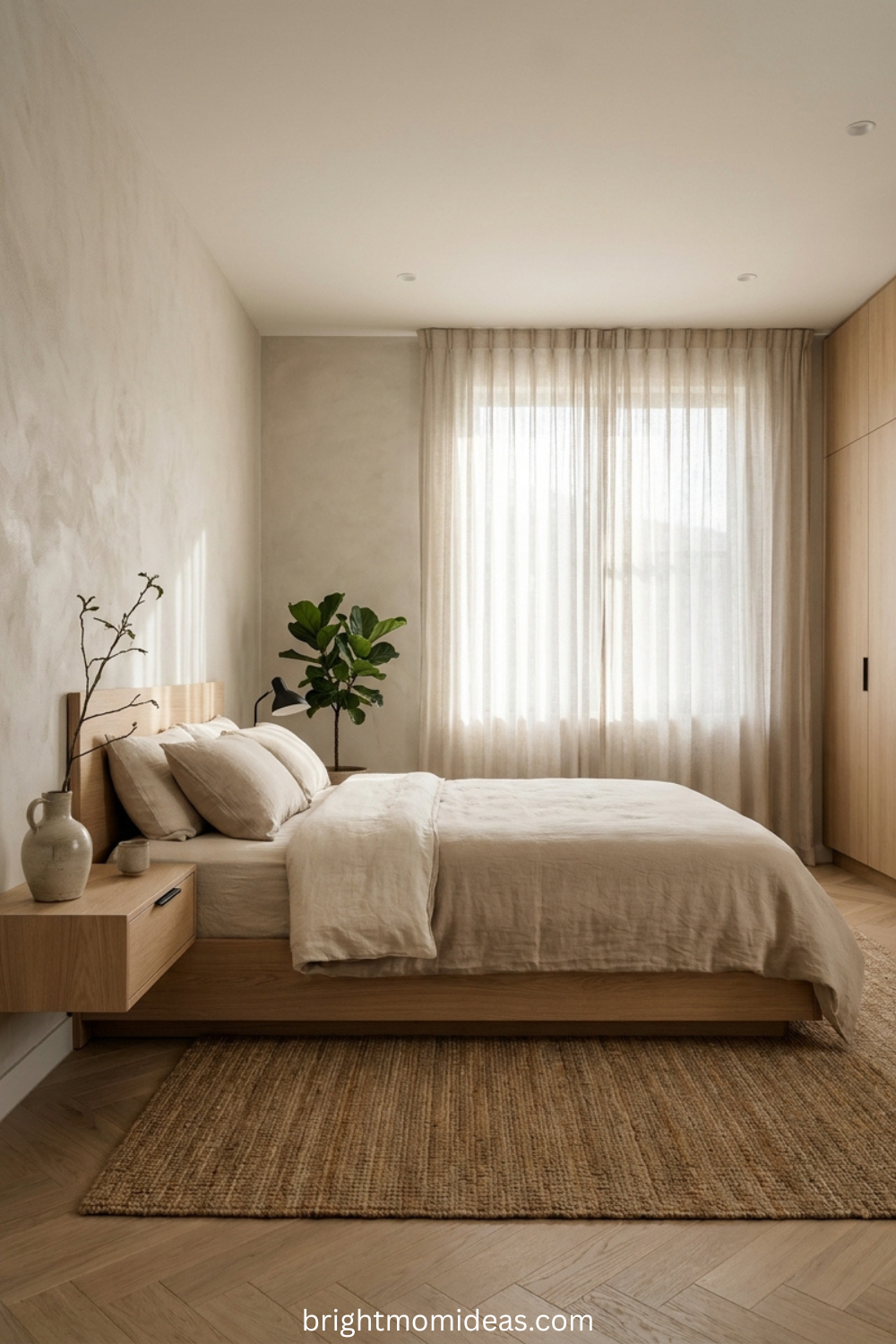
Small rooms don’t have to feel small. A thoughtfully designed Japandi small bedroom can feel more spacious than a poorly decorated large one.
4. Japandi Master Bedroom — Quiet Luxury for Grown-Up Spaces
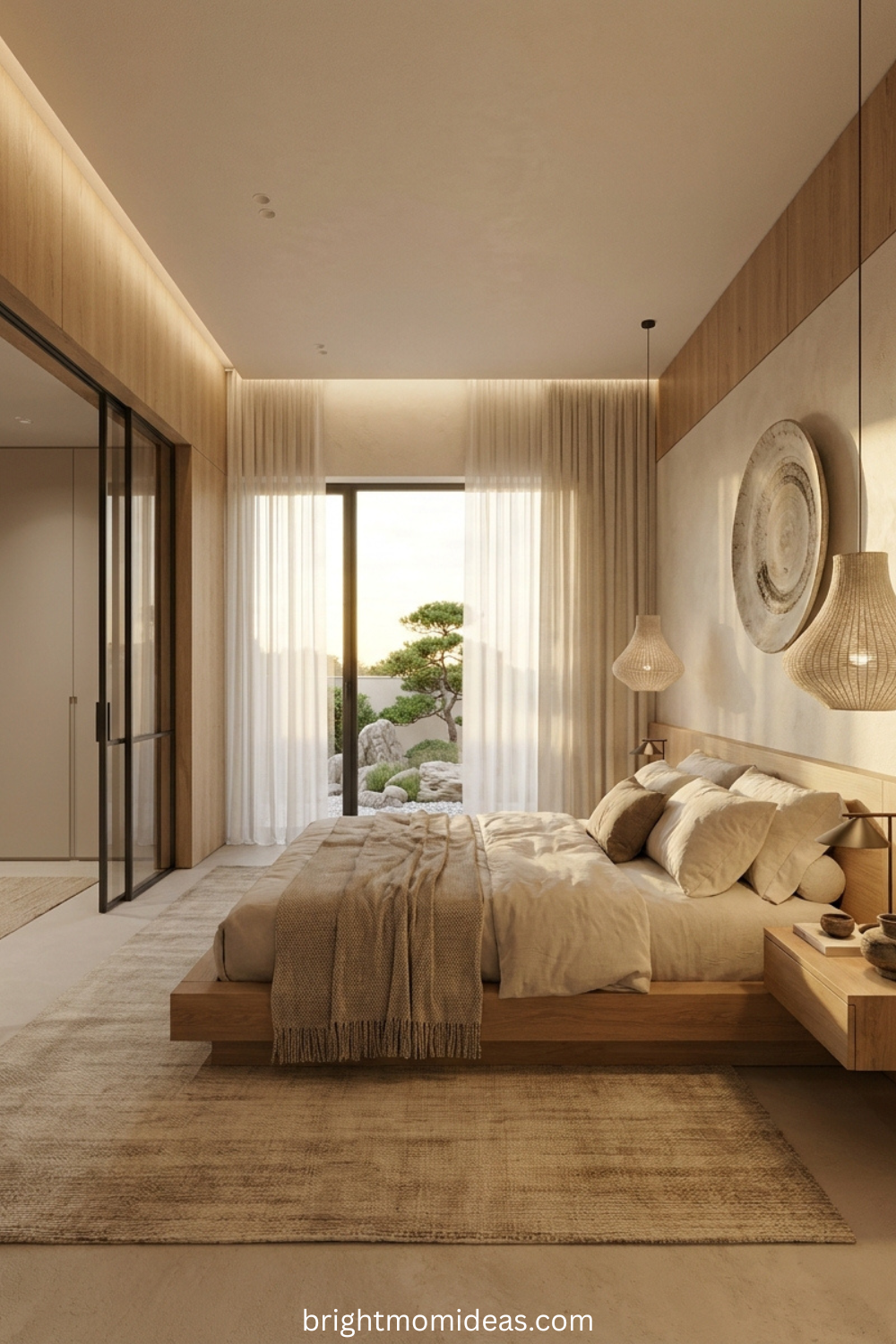
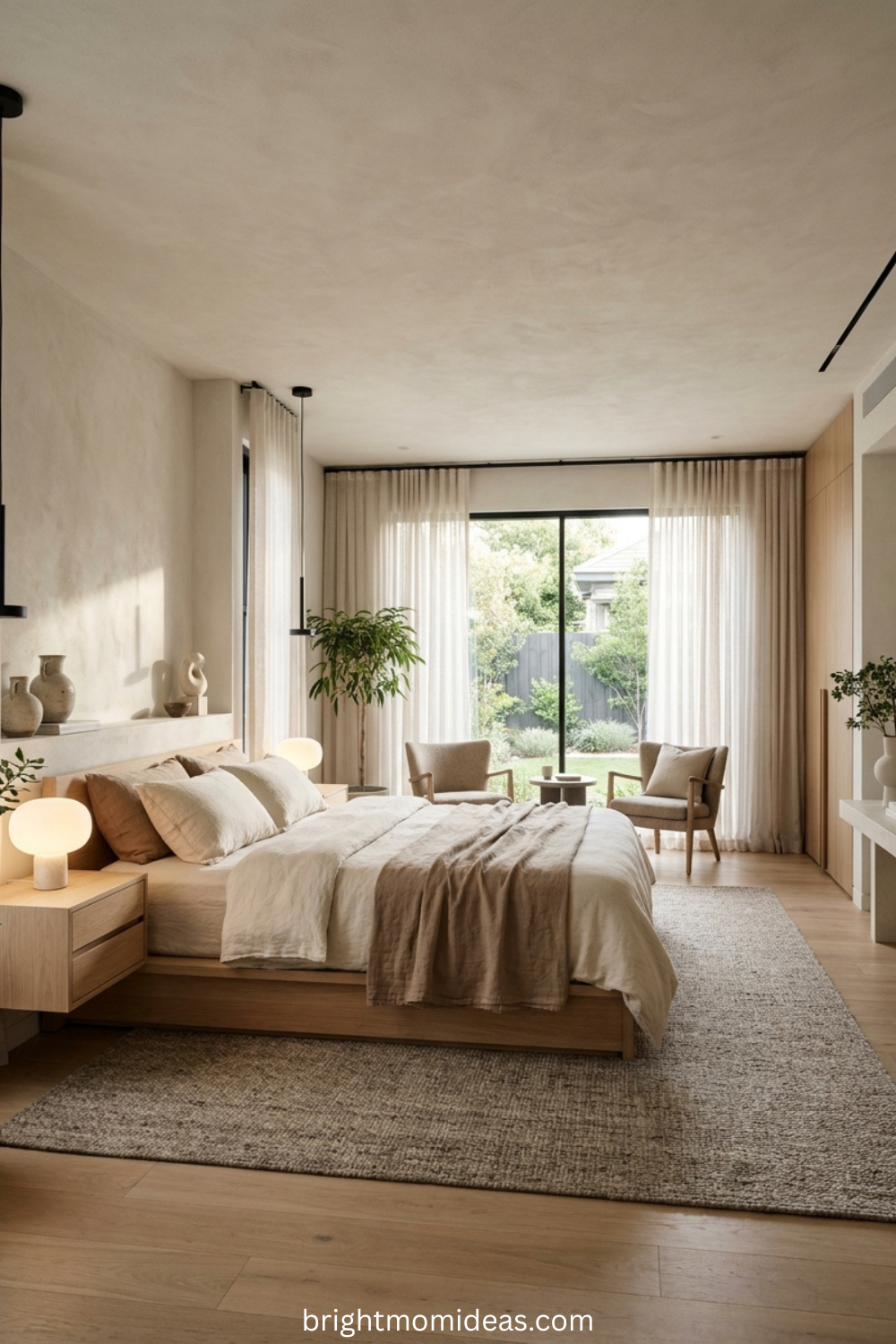
The Japandi master bedroom is where the philosophy fully matures. You have more space, and the goal is to create something that feels genuinely luxurious — but never loud about it.
This is quiet luxury before the trend had a name. Premium natural materials — solid oak, handmade ceramic, linen of actual quality — but no logos, no flash, no excess. The room should feel like something you had to discover, rather than something designed to impress visitors.
A Japandi master bedroom often includes a dedicated dressing area with clean, handleless cabinetry. A large window, ideally floor-to-ceiling, connecting the room to nature outside. A small designated area for morning ritual — a low bench, a meditation corner, or even a single bonsai on a stone tray.
What makes it work:
- Premium natural materials: solid wood, stone, high-thread-count linen
- Thoughtful zoning — sleeping, dressing, and morning ritual areas feel distinct
- Architectural lighting: recessed, integrated, and always dimmable
- A curated collection of two or three meaningful objects — not more
- Wide-plank timber flooring or large-format stone tiles underfoot
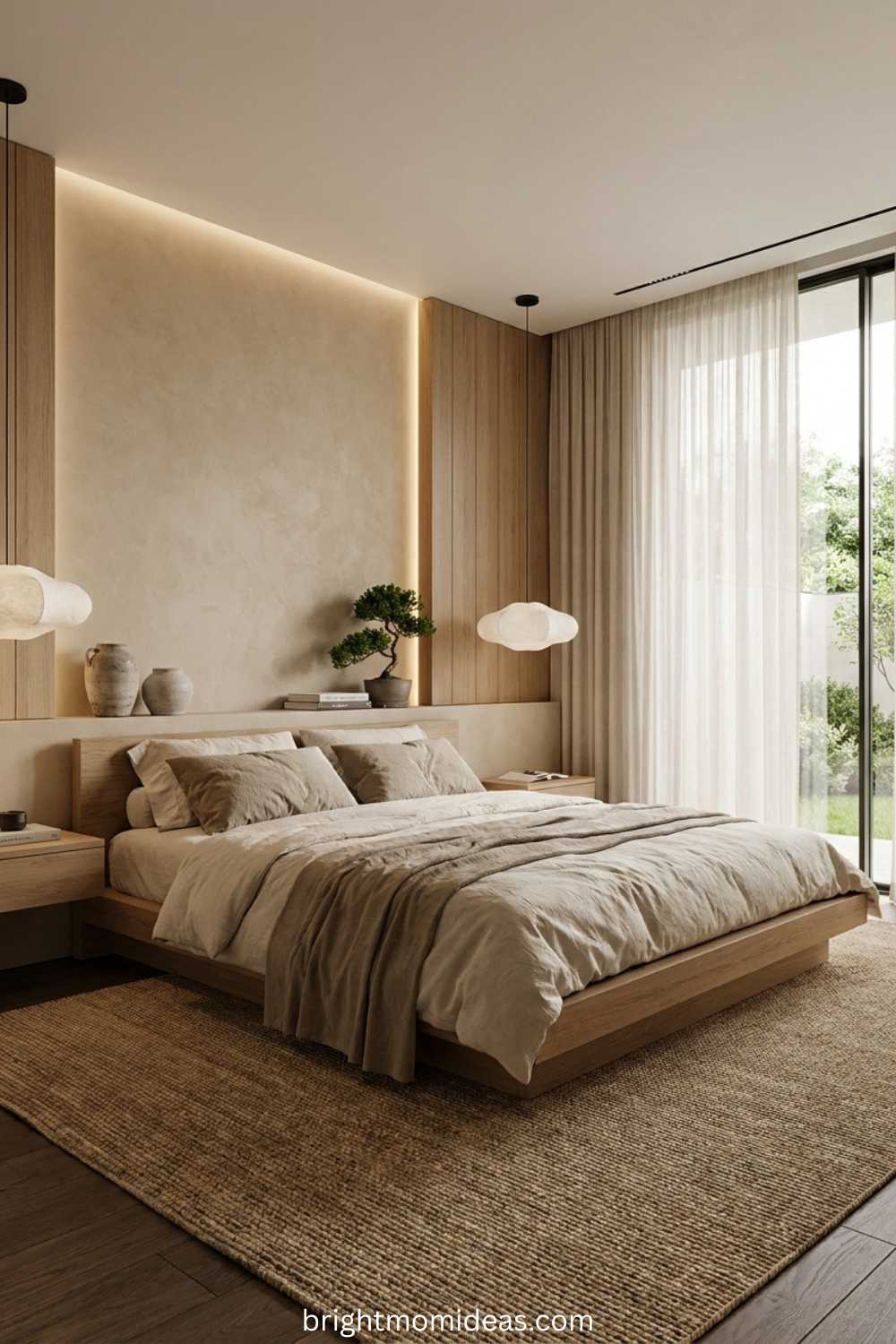
The Japandi master bedroom is not about spending the most money. It is about spending it in the right places — on things that last and things that genuinely matter.
5. Japandi Bedroom for Couples — Shared Space, Shared Stillness
Designing a bedroom for two people requires a kind of diplomatic artistry. Japandi actually makes this easier, because its principles cut through personal taste differences and land on something both people can agree on: calm.
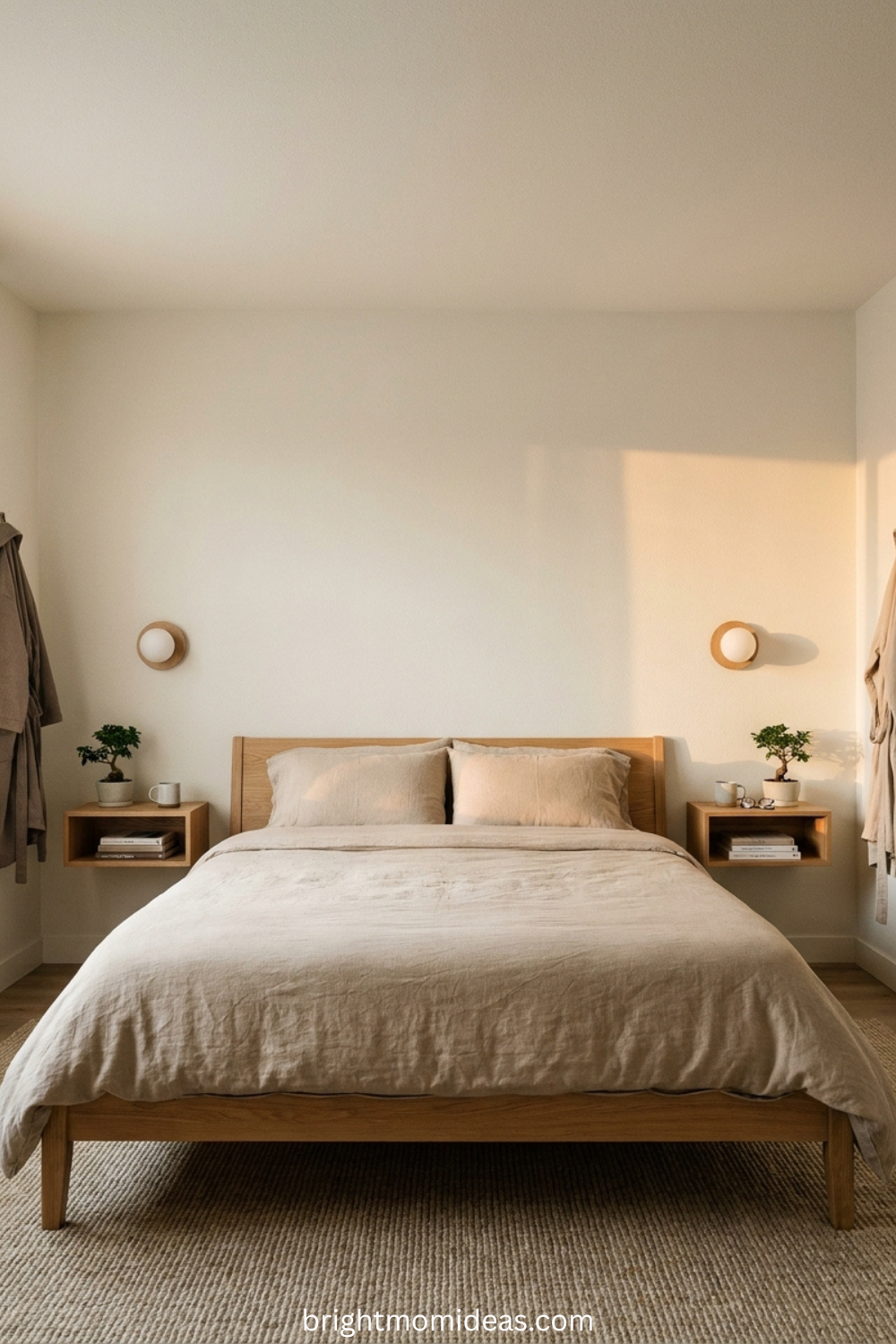
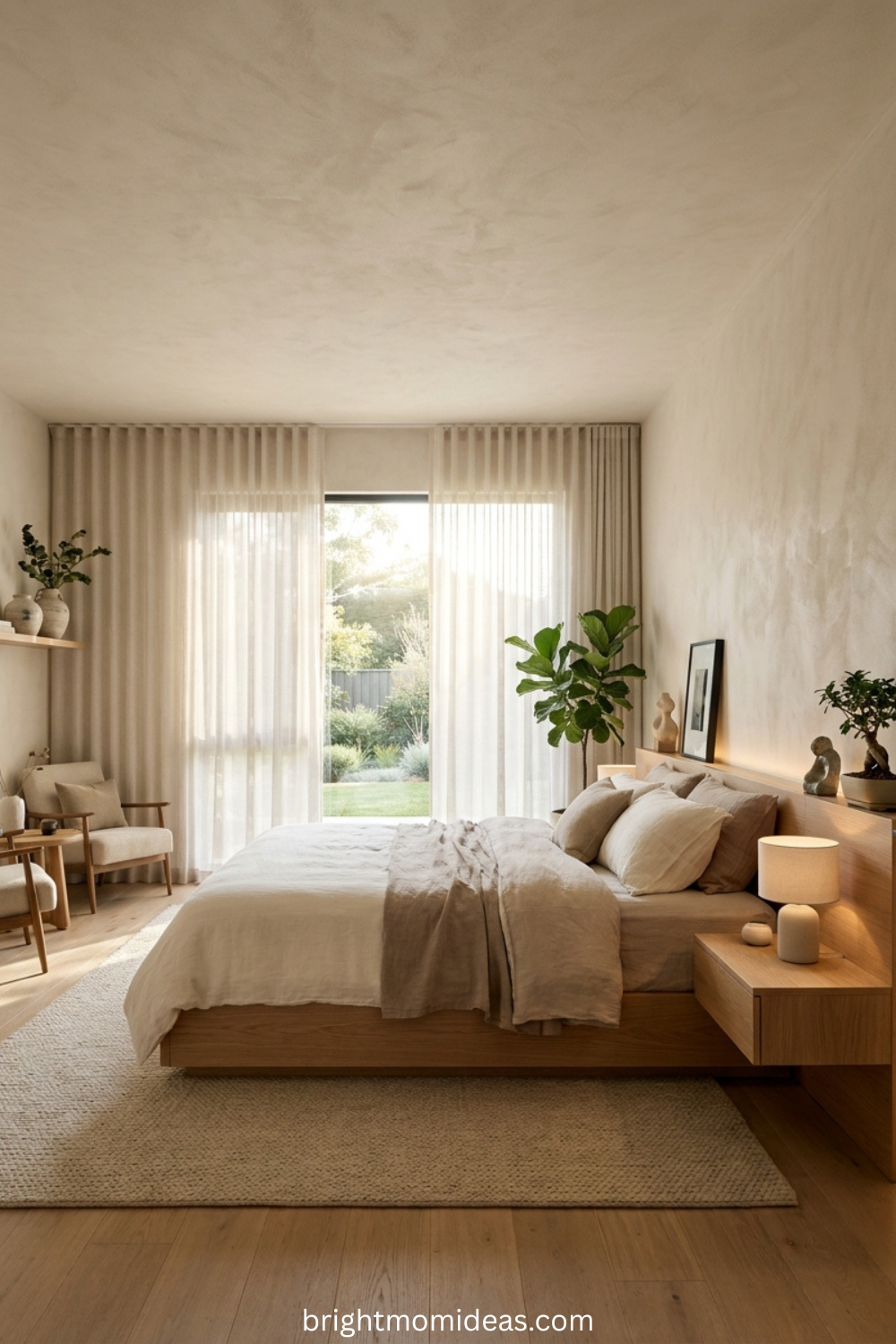
A Japandi bedroom for couples focuses on balance and symmetry — not in a rigid, hotel-lobby way, but in a way that makes both people feel equally at home. Matching bedside setups on either side of the bed. Shared storage that is genuinely accessible to both. Colours and textures that neither overpower the space nor clash with each other.
Don’t forget to include elements that invite connection too. A small lounge corner with two floor cushions. A shared reading light that works for both sides. A diffuser with a calming scent that makes the room feel like home for both of you — not just one of you.
What makes it work:
- Symmetrical bedside setups, but with individual reading lights for each person
- A shared neutral palette with each partner’s subtle personal touch woven in
- Double storage solutions that are genuinely functional for two people
- A tech-free corner that actually encourages real conversation
- Soft, warm lighting that flatters both sides of the bed equally
A couple’s Japandi bedroom doesn’t just look good — it feels like a retreat for two. A room you both genuinely look forward to coming back to at the end of a long day.
6. Japandi Bedroom on a Budget — Proof That Calm Doesn’t Cost a Fortune
Let’s talk about the elephant in the room. Scroll through any Japandi bedroom on Pinterest and you might feel like this aesthetic requires an interior designer, a Japanese woodworker, and a very generous budget.
It doesn’t. Not even close.
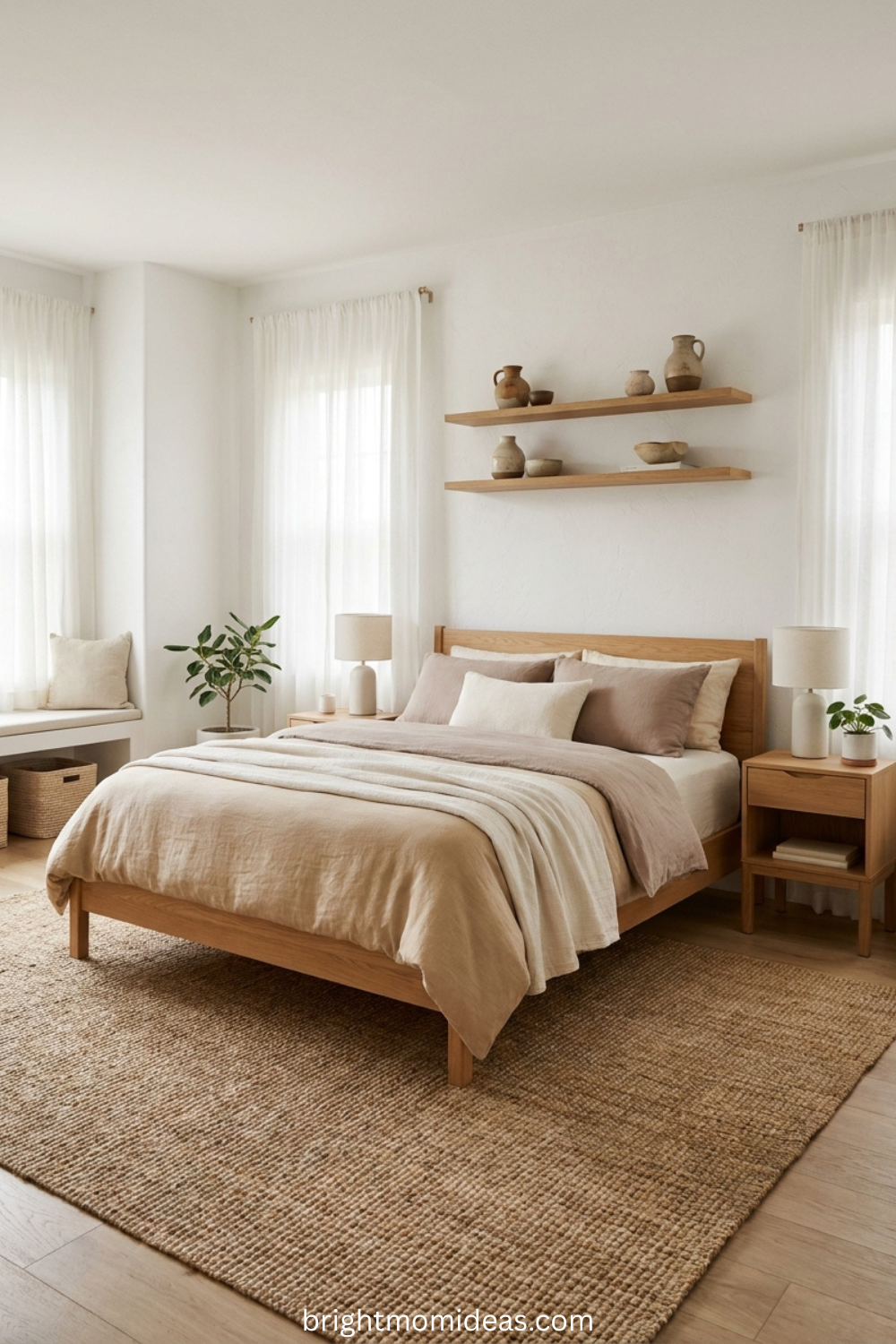
The Japandi bedroom on a budget starts with one counterintuitive move: remove things instead of buying them. Declutter your room completely. Take out anything that doesn’t serve a purpose or bring genuine peace. That single act — which costs nothing — will transform the energy of the space instantly.
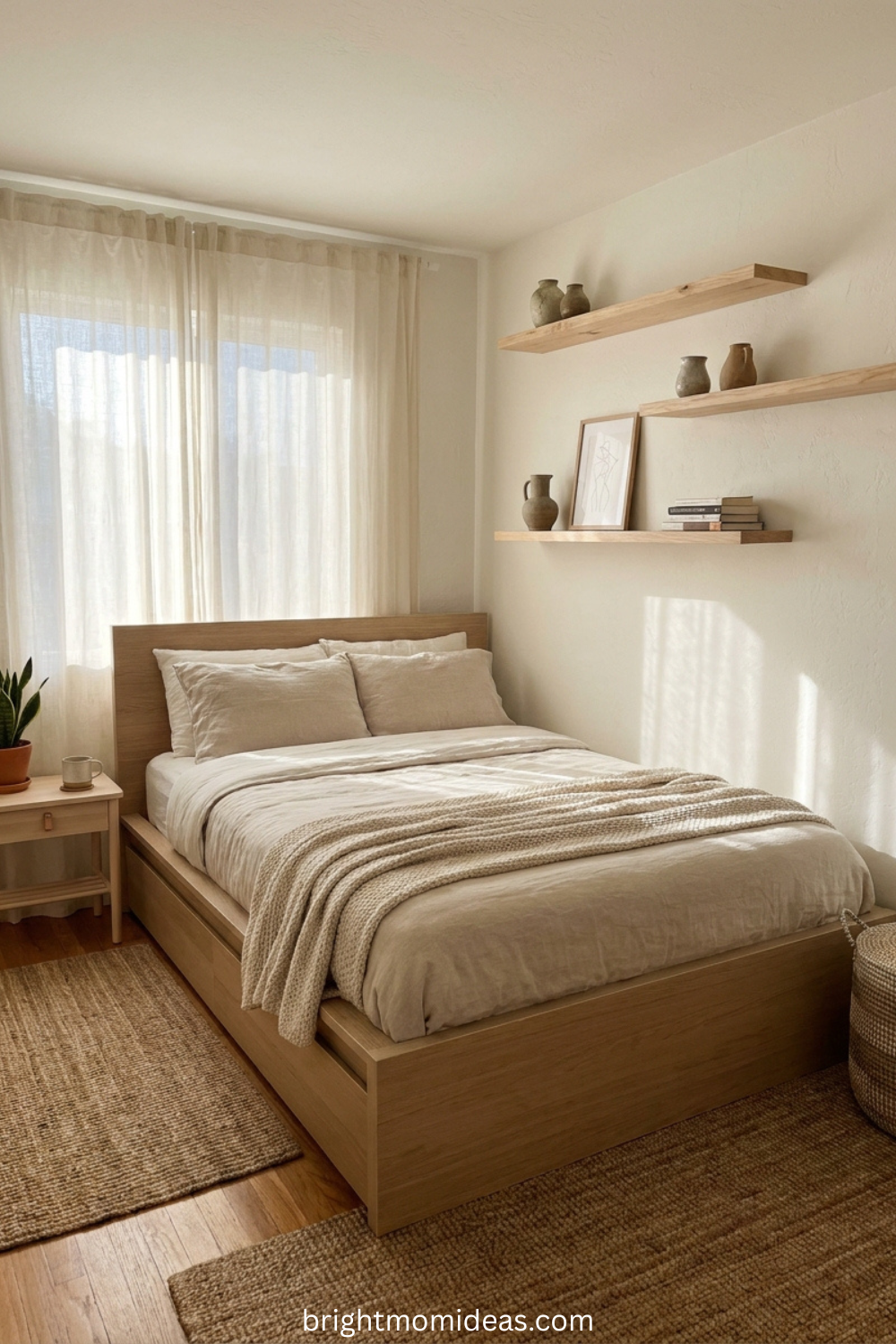
From there, it is about smart, intentional purchases. A can of warm off-white or greige paint is affordable and does more for a room’s atmosphere than almost anything else. Secondhand wooden furniture — especially IKEA pieces with natural wood finishes — nails the Japandi aesthetic at a fraction of the cost. Thrifted ceramic vases. A single indoor plant. Linen-look curtains from a budget retailer. These small choices add up faster than you think.
What makes it work:
- Start by decluttering — this is free, and it is the single most powerful step
- One warm neutral paint colour on all walls (this is where you invest first)
- Secondhand or IKEA wood-finish furniture, lightly sanded if needed
- Affordable linen-textured bedding in neutral tones
- A single plant, a candle, and one simple piece of wall art
Japandi on a budget is a mindset before it is a shopping list. Buy less. Choose better. Let the room breathe.
So — Which Bedroom Is Right for You?
Japandi isn’t a rigid rulebook. It’s a philosophy — one that says your bedroom should serve your wellbeing first and look good second.
If you feel overwhelmed by modern life, lean into the minimalist. If your home needs warmth, explore the cozy. If you are tight on square footage, the small bedroom approach will feel like a revelation. If you want something refined and lasting, go master bedroom. If you share your space, build something both of you can exhale into. And if your budget is tight — start with what you have, remove what you don’t need, and build slowly over time.
Take the Japandi Style Beyond Your Bedroom
Once your bedroom starts feeling like a calm, intentional space, something interesting happens — you walk into the rest of your home and it suddenly feels a little loud, a little cluttered, a little off. That is the Japandi effect. It does not stay contained. If you are ready to carry this same quiet energy through your entire home, we have got you covered.
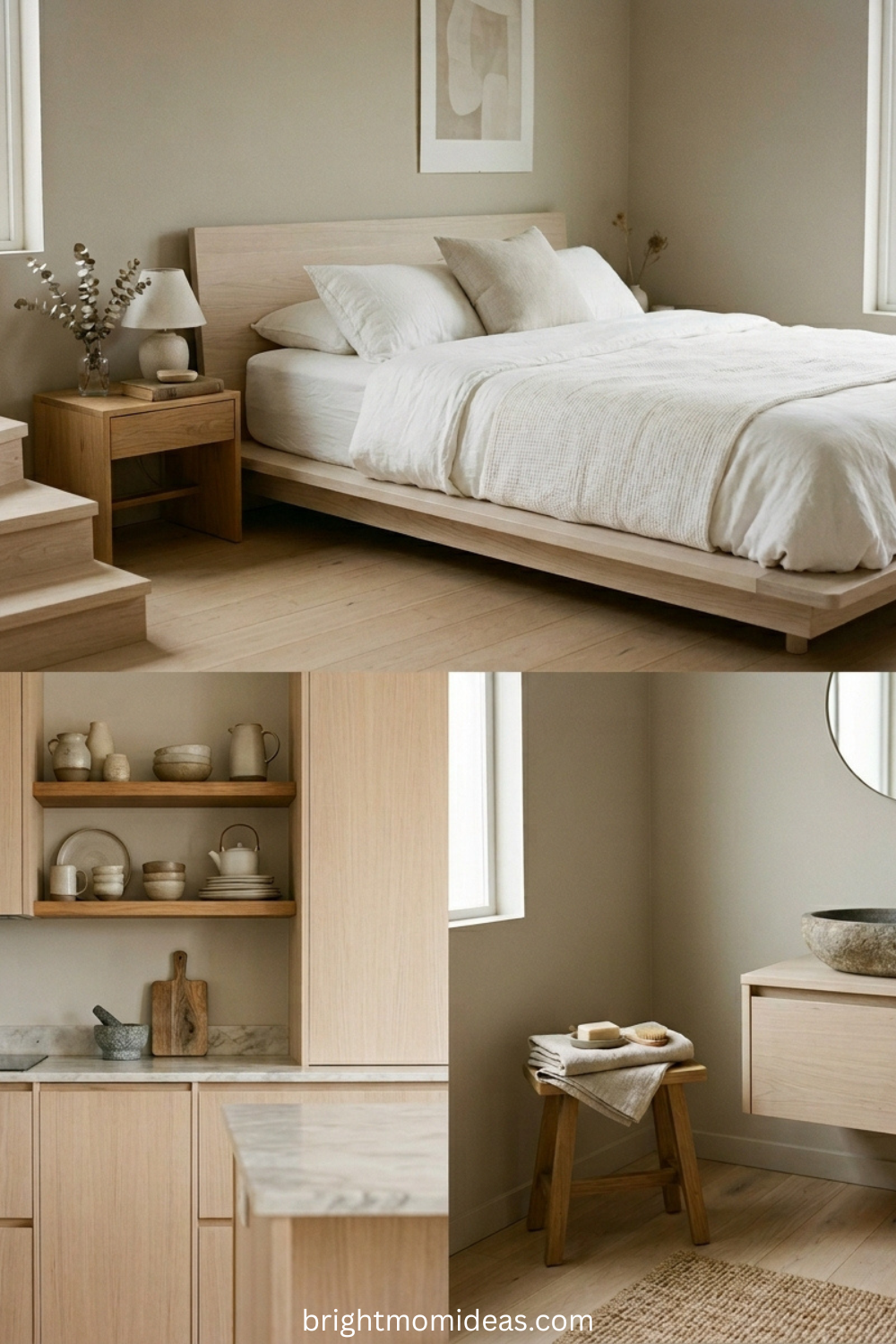
Learn how to bring warmth and simplicity into your Japandi kitchen, where natural wood and clean countertops make cooking feel meditative. Discover how a Japandi entryway sets the tone for your whole home the moment you walk through the door. Step into the calm of a Japandi bathroom, where stone, steam, and stillness come together in the most spa-like way. And if the heart of your home needs a reset, our guide to the Japandi living room will show you exactly how to create a space where everyone exhales the moment they sit down. One philosophy, every room — that is the real power of Japandi.
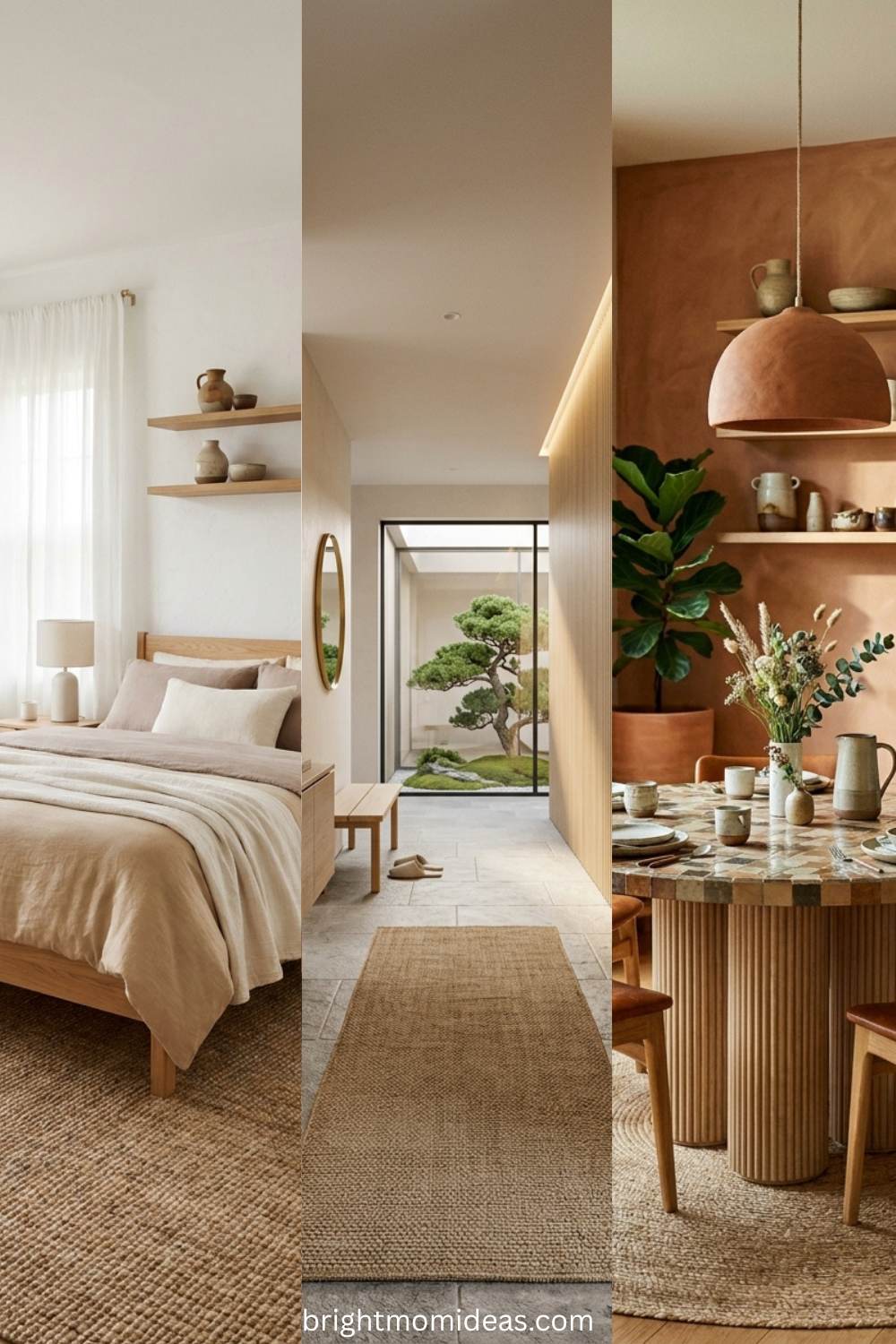
The best Japandi Decor is not the most photographed one. It’s the one that makes you breathe a little deeper every time you walk through the door.
Save this post to your Pinterest Japandi home décor boards and come back to it when you are ready to transform your bedroom. 
Disclosure: This post contains affiliate links. If you purchase through these links I may earn a small commission at no extra cost to you. Thank you for supporting this blog.