
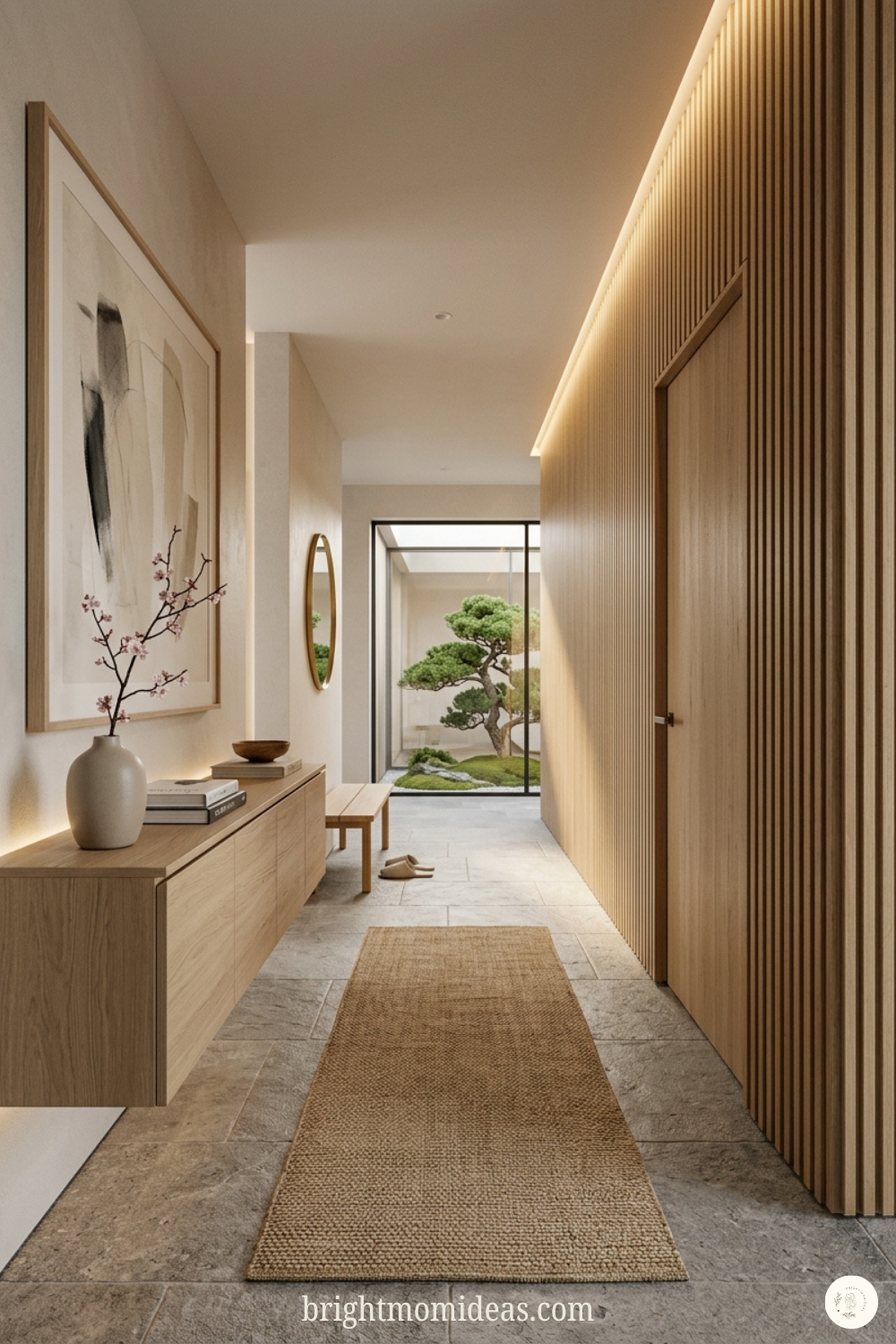
Japandi Entryways That Make Minimalism Feel Warmer, Not Colder
How to design an entryway that greets you with calm, warmth, and genuine intention — every single time you walk through your door.
Your entryway is the first thing you see when you come home.
Not your living room. Not your kitchen. The entryway. That small transitional space between the world outside and the life you have built inside. And most entryways in American homes are either completely ignored — a blank wall, a random chair, a pile of shoes by the door — or over-decorated in a way that feels busy and slightly stressful rather than welcoming.
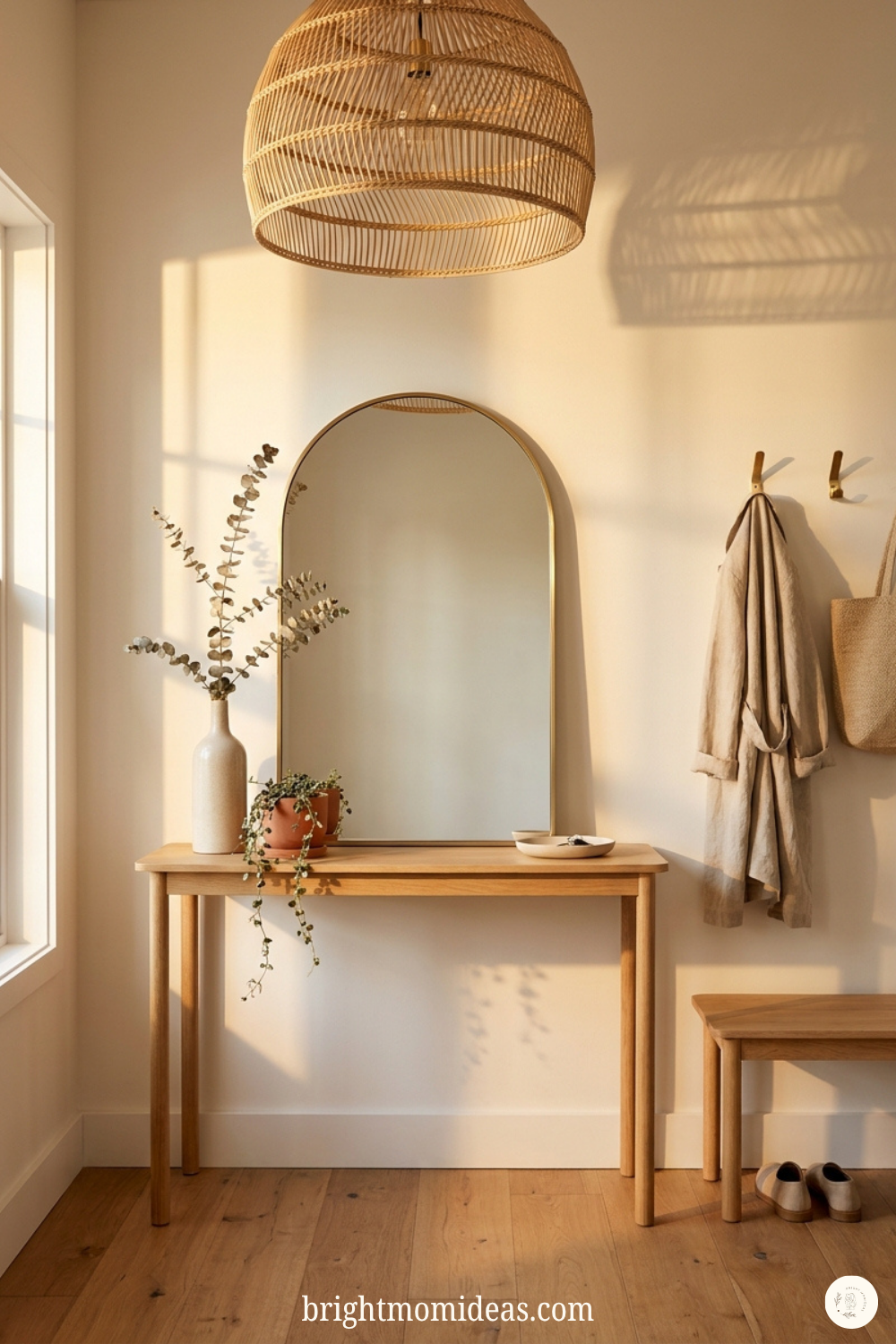
Japandi entryway design fixes both of those problems at the same time.
It gives the space enough to make it feel intentional and beautiful. But it never gives it so much that walking in feels like sensory overload. The result is an entryway that genuinely greets you — warmly, quietly, and every single day.
If you have been drawn to the Japandi aesthetic in other rooms of your home and wondering how to bring it into your entryway, this guide covers everything you need — from the furniture choices and material palette down to the small details that make the whole thing feel considered rather than styled.
Why Most Entryways Get Minimalism Wrong
There is a version of minimalism that feels punishing rather than peaceful. You walk in and the space is so empty and so cold that it communicates nothing except that the person who lives there either ran out of ideas or is making a point about restraint. White walls. A single hook. Maybe a mirror. Nothing warm. Nothing alive. Nothing that says welcome home.
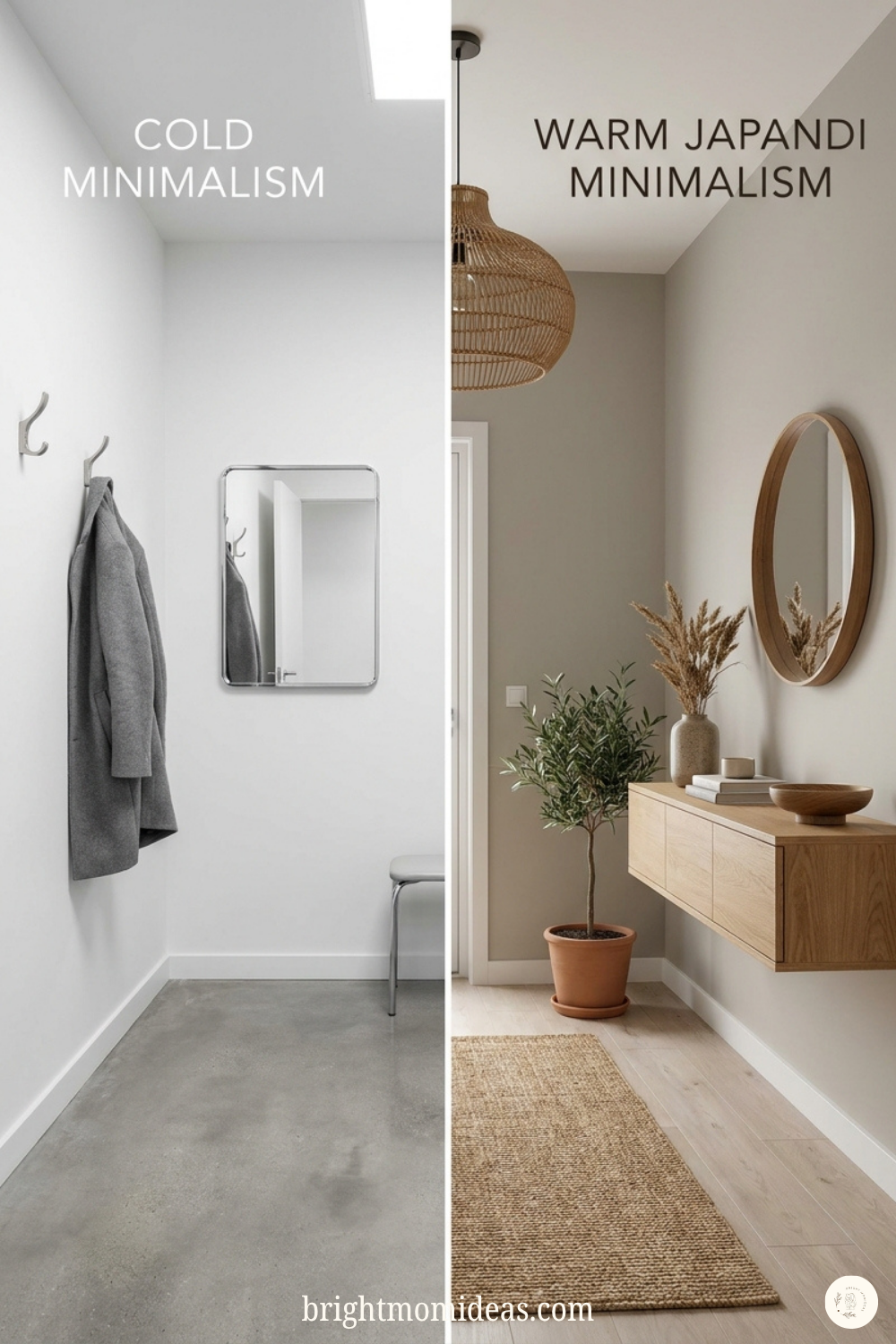
That is not Japandi. And that is not what minimalism is supposed to feel like at its best.
The philosophical difference between cold minimalism and Japandi minimalism is significant. Cold minimalism removes everything and leaves nothing in its place. Japandi minimalism removes everything unnecessary and replaces it with a small number of things that are genuinely beautiful, genuinely functional, and genuinely warm.
An entryway designed on Japandi principles will have less in it than most entryways. But what it has will be exactly right. And the feeling you get walking into it will be the opposite of cold. It will feel like the space is glad you are home.
The Foundation — Getting the Basics Right Before Anything Else
Before you buy a single piece of furniture or choose a paint color, there are two foundational questions worth answering for your entryway.
The first is what does this space need to do. An entryway that needs to handle coats, shoes, bags, keys, and mail for a family of four has completely different requirements from an entryway in a single person’s apartment that just needs somewhere to put a bag and decompress for thirty seconds after work. Know your functional requirements before you design anything else.
The second question is what do you want to feel when you walk in. Not what do you want the space to look like. What do you want to feel. Calm. Welcomed. Unhurried. Organized. Safe. Those feelings should guide every decision that follows — the color on the walls, the material of the console table, the lighting, the objects on display.
Japandi entryway design almost universally produces a feeling of calm and welcome — but the specific version of that feeling is yours to define.
Color — The First Decision That Sets Everything Else
Color in a Japandi entryway works differently than it does in other design styles. The goal is not to make a statement. The goal is to set a mood — specifically a mood of warmth and calm that the person walking through the door can feel before they have consciously registered anything about the space.
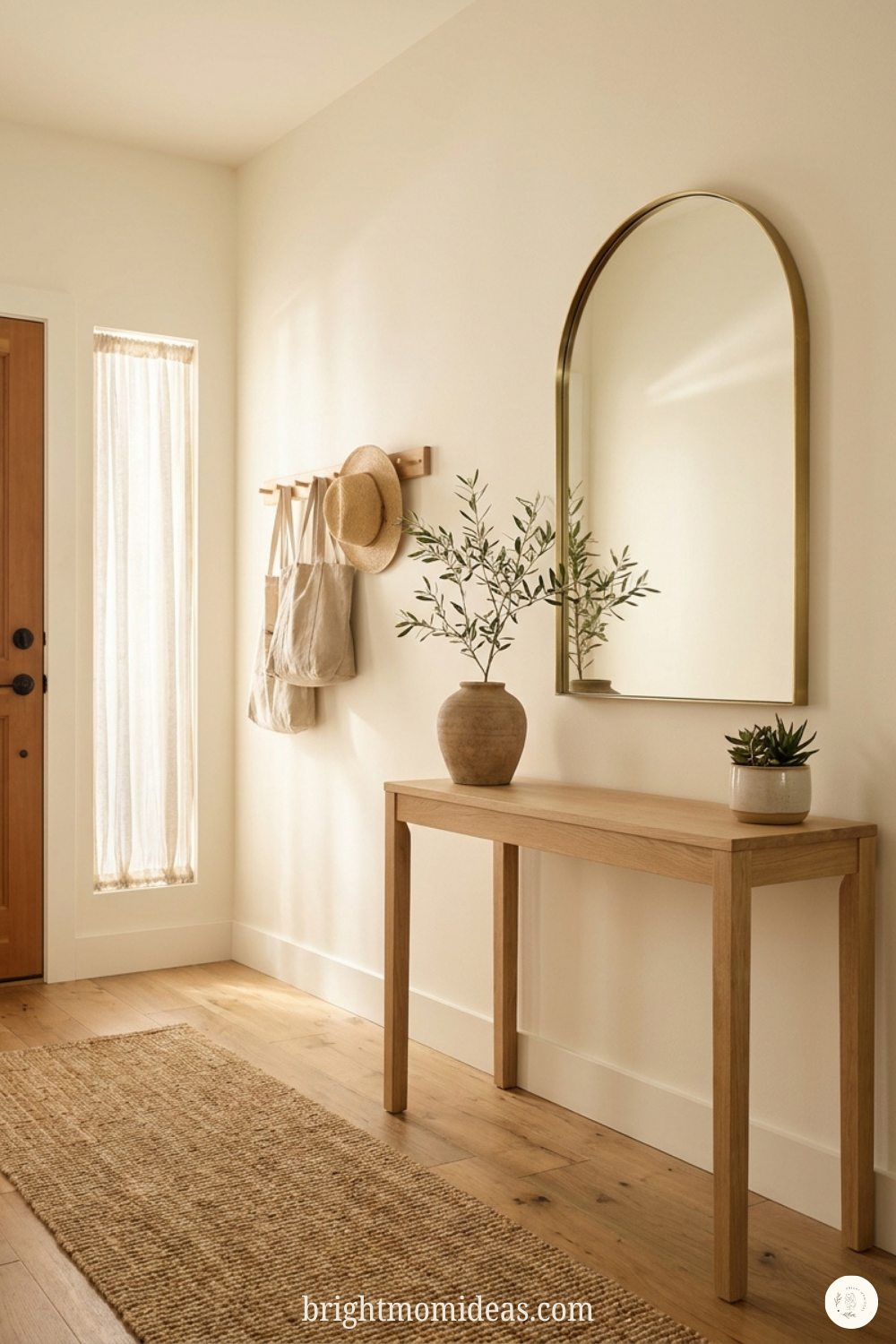
Warm Whites and Soft Creams
Warm white is the most popular Japandi entryway color and the most forgiving. But the specific tone of white matters enormously. A cool white with blue undertones will make an entryway feel like the clinical minimalism you are trying to avoid. A warm white with yellow or pink undertones — Benjamin Moore White Dove, Sherwin-Williams Alabaster, or Farrow and Ball Pointing — feels immediately softer and more human.
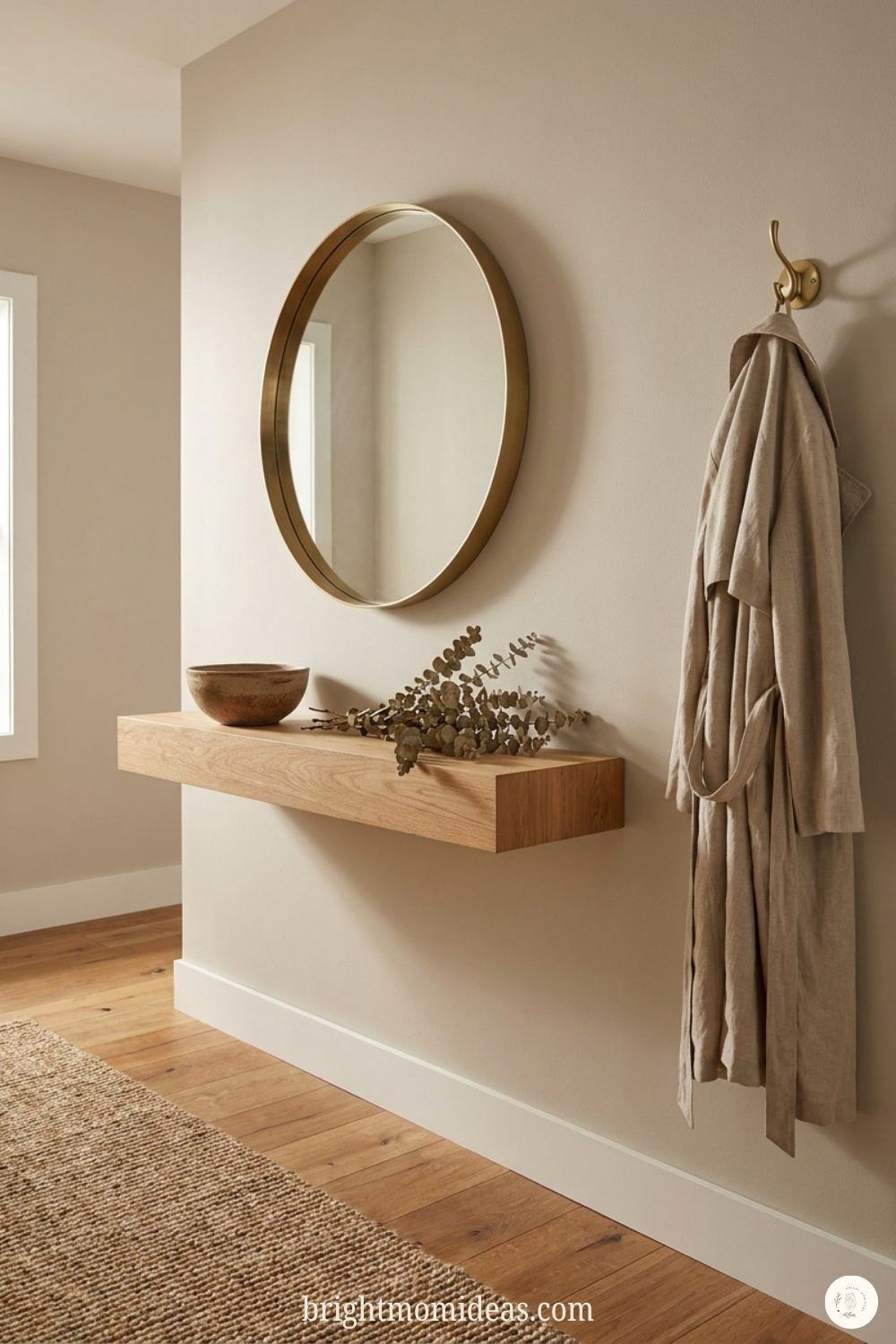
In an entryway that receives little natural light, warm white is almost always the right choice. It reflects light without being cold and creates a sense of quiet brightness that feels welcoming at any time of day.
Soft Earthy Neutrals
Warm greige, soft putty, and pale terracotta tones are increasingly popular in Japandi entryways because they ground the space immediately. Walking into an entryway painted in a warm greige tone feels different from walking into a white one — it feels more enclosed in the best possible way, like the space is holding you rather than exposing you.
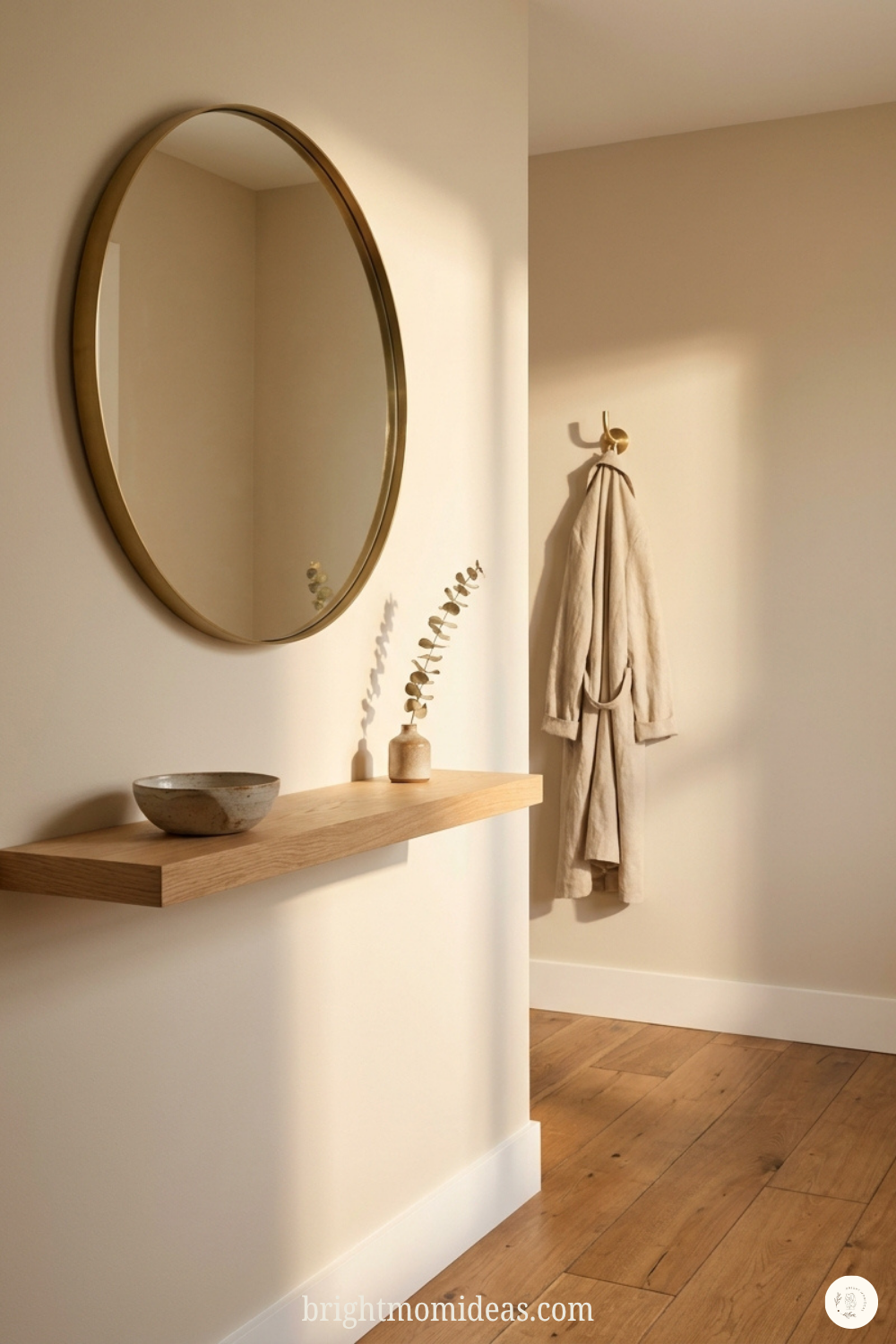
Sherwin-Williams Accessible Beige, Benjamin Moore Revere Pewter, and Farrow and Ball Elephant’s Breath are all beautiful in Japandi entryways and work across a wide range of natural light conditions.
Muted Sage Green
Sage green in an entryway brings nature into the first space you see when you come home. It works beautifully as a full wall color in an entryway because the enclosed nature of the space means even a relatively bold green reads as soft and quiet rather than overwhelming.
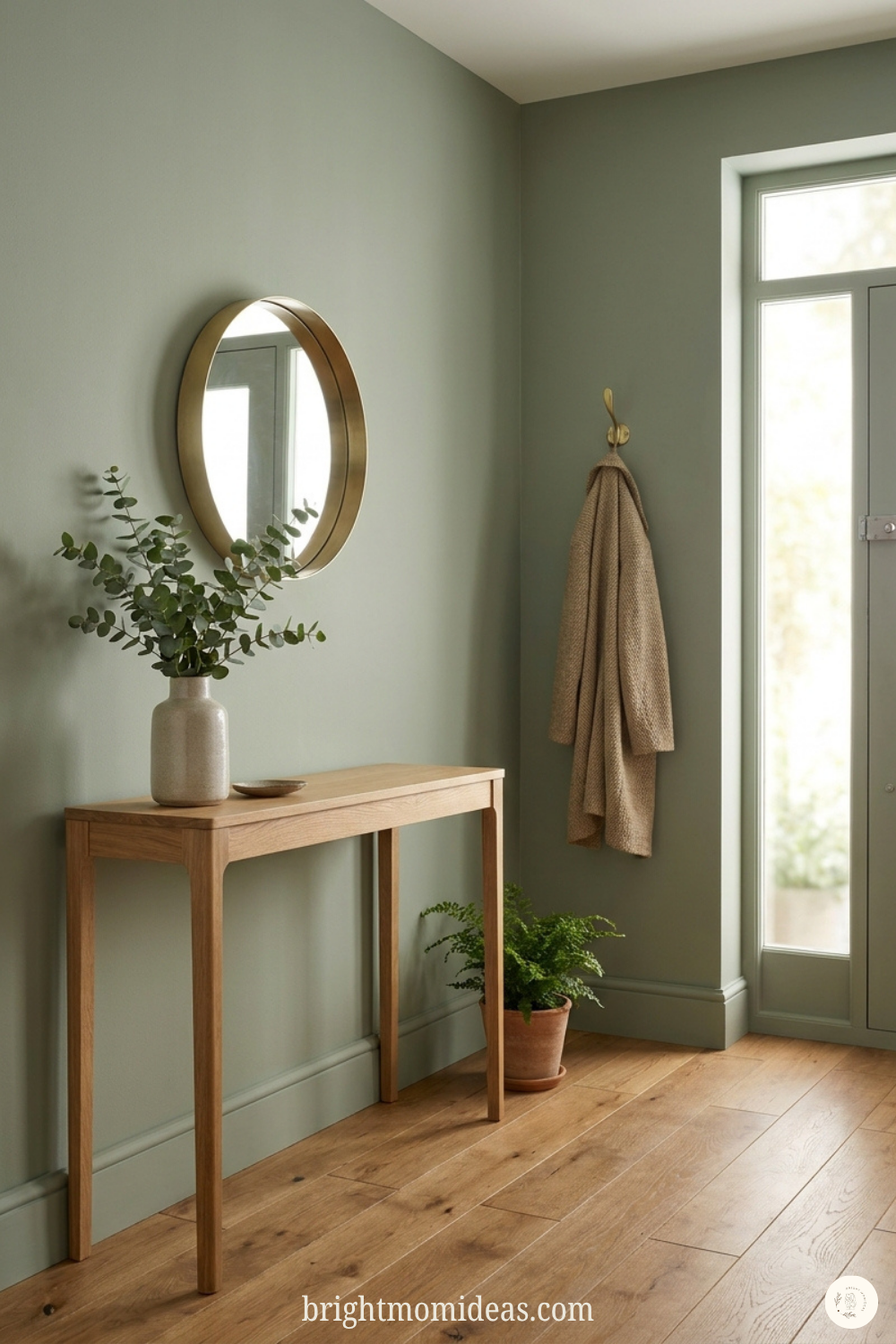
The most important thing with any Japandi entryway color is that it has warmth in its undertones. Cool colors — even muted cool colors — undermine the entire warmth philosophy that Japandi design is built on.
The Console Table — The Heart of a Japandi Entryway
If your entryway has room for a single piece of furniture, it should be a console table. The console table is to the entryway what the sofa is to the living room — the piece that everything else organizes itself around.
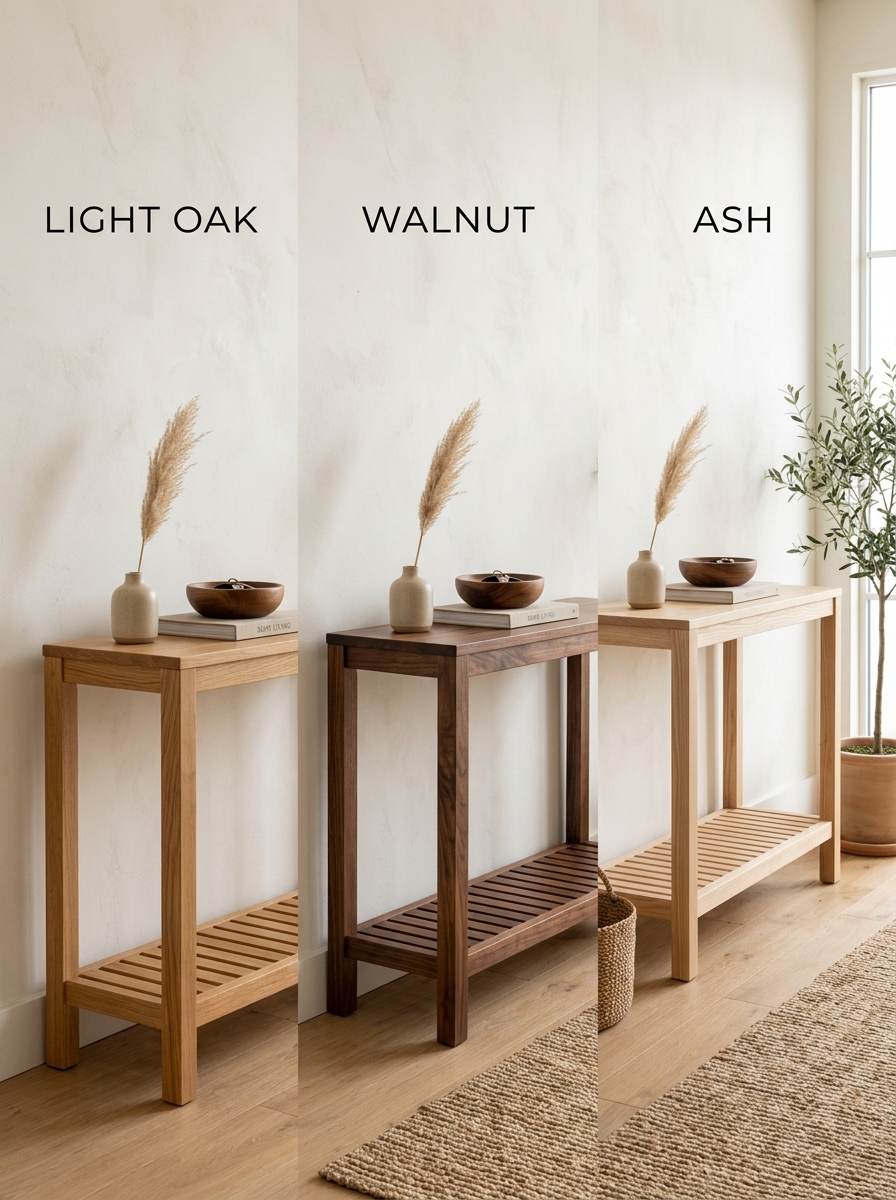
In a Japandi entryway, the console table should feel like a piece of furniture rather than a piece of storage. It should have warmth, material integrity, and a quality that makes it worth looking at on its own terms.
Natural Wood Console Tables
A console table in natural oak, walnut, or ash with simple clean lines is the quintessential Japandi entryway furniture choice. The wood grain brings nature and warmth into the space immediately. The clean lines prevent it from feeling rustic or traditional. And natural wood never goes out of style — which is the whole point of building a Japandi entryway in the first place.
Look for a console table with visible joinery or at least honest construction — a table that looks like it was made by someone who cared about the making. The slight imperfection of hand-finished wood edges, the variation in grain — these are not flaws in a Japandi context. They are exactly the wabi-sabi quality that separates a Japandi entryway from a cold showroom.
Slim and Proportional
An entryway console table should be slim — no deeper than 14 to 16 inches — so it does not encroach on the walkable space. Height should be around 30 to 32 inches. And the length should relate to the wall it sits against — not so short that it looks lost and not so long that it dominates.
In a narrow entryway, a floating console shelf mounted directly to the wall achieves the same visual effect as a table while taking up zero floor space and making the entryway feel significantly more open.
Styling the Console Table — The Three Object Rule
The console table surface is where most Japandi entryways either succeed completely or fall apart entirely.
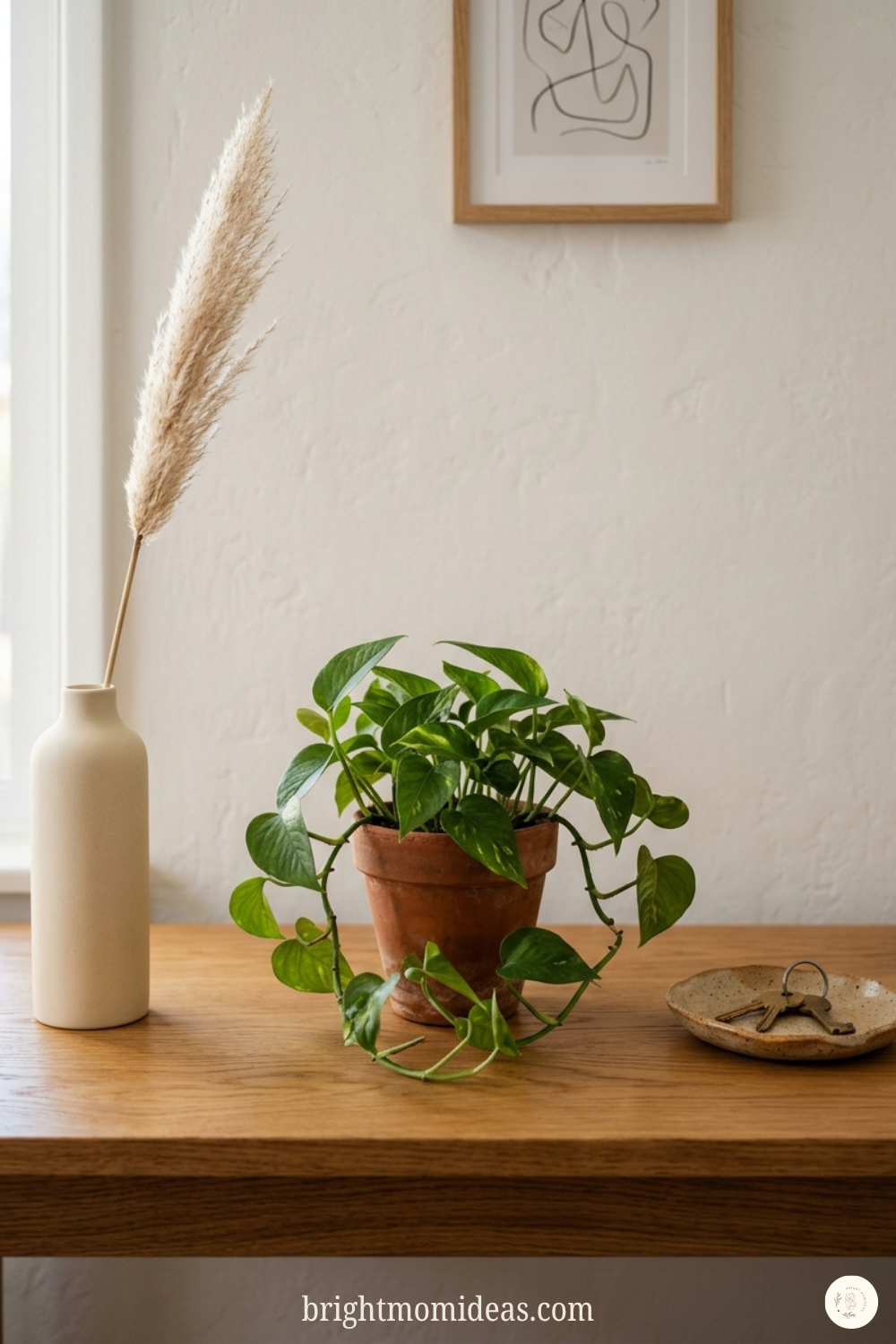
The temptation is to style it the way you would style any surface in your home — with a collection of objects, a few candles, some books, a plant or two, a decorative tray. But in a Japandi entryway, that approach creates exactly the visual noise you are trying to move away from.
The three object rule works consistently well for Japandi console table styling. Choose three objects. One tall, one medium, one small. Give each one breathing room. Let the table surface itself be visible between the objects — the wood grain or stone surface of the table is part of the composition, not just the background.
Something tall — a simple ceramic vase with a single dried stem or a few branches, a slim floor lamp beside the table, or a tall framed print leaning against the wall.
Something natural and alive — a small plant in a terracotta or ceramic pot. A single stem in a bud vase. Even a small bowl of pebbles or dried seed pods. Something that connects the entryway to the natural world.
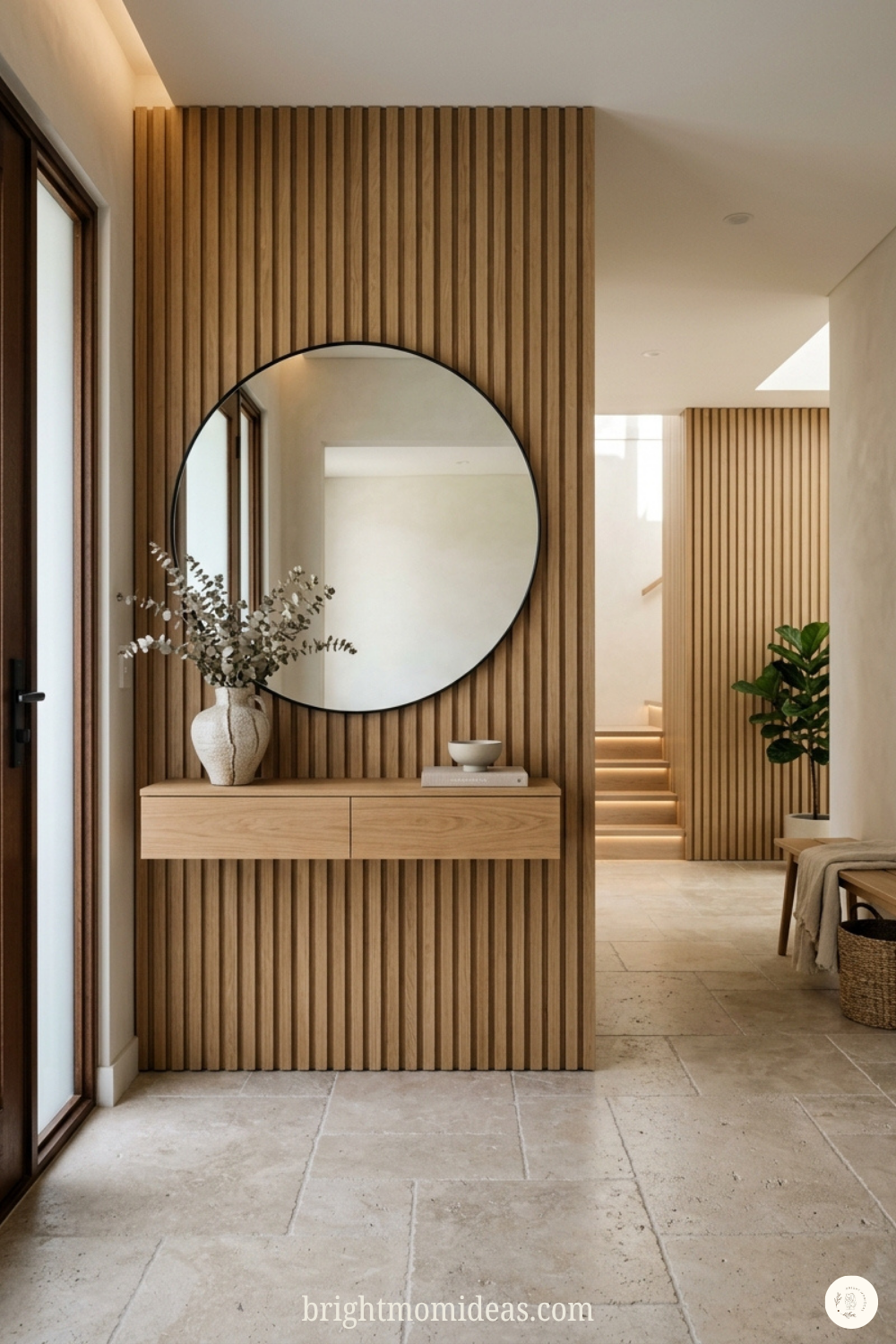
Something functional and beautiful — a small ceramic dish for keys and small change. A simple tray in natural wood or stone. A single candle in an earthy glaze vessel.
That is it. Three objects. Generous space. The table surface visible. The whole arrangement communicating that someone who lives here is thoughtful about what they bring into their home.
Lighting — The Detail That Changes Everything in an Entryway
Entryway lighting is consistently the most underestimated element in any entryway design. Most entryways have one overhead light that is either too bright and harsh or too dim to be useful. Neither serves the Japandi philosophy.
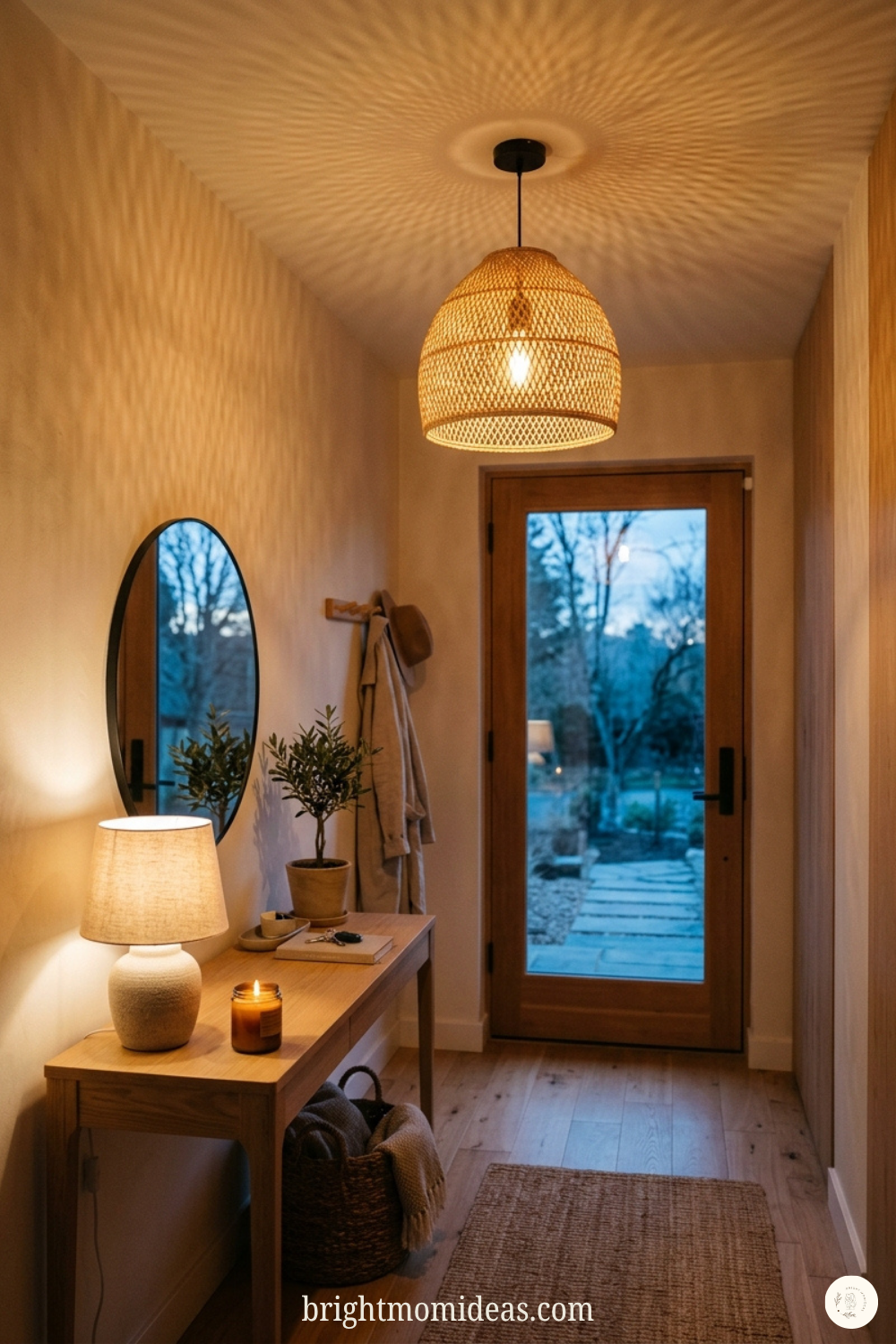
A Japandi entryway needs layered light — just like every other room in a Japandi home. The overhead light provides the functional layer. A secondary warm light source provides the atmospheric layer. And natural light from a window or door panel should be maximized rather than blocked.
For the overhead fixture, a simple rattan or washi paper pendant in a warm tone replaces the standard flush mount or recessed light. The pendant drops the light source lower and wraps it in a warm natural material that diffuses the light softly. Even a very simple pendant in natural rattan changes the entire feeling of an entryway immediately.
For the secondary light source, a small lamp on the console table with a warm-toned bulb creates an intimate pool of light that makes coming home in the evening feel genuinely welcoming. A small candle lit in the evening adds warmth and scent simultaneously.
Always use warm bulbs — 2700K maximum — in a Japandi entryway. The difference between a cool white bulb and a warm amber one in a small enclosed space like an entryway is dramatic and immediate.
Storage — Hiding What Needs to Be Hidden
A Japandi entryway that has no practical storage is a beautiful space that will become cluttered within a week. Real homes have coats. They have bags. They have shoes and umbrellas and all the physical evidence of lives actually being lived. The Japandi approach is not to pretend these things do not exist. It is to give them a home that keeps them out of sight.
Hooks Done Right
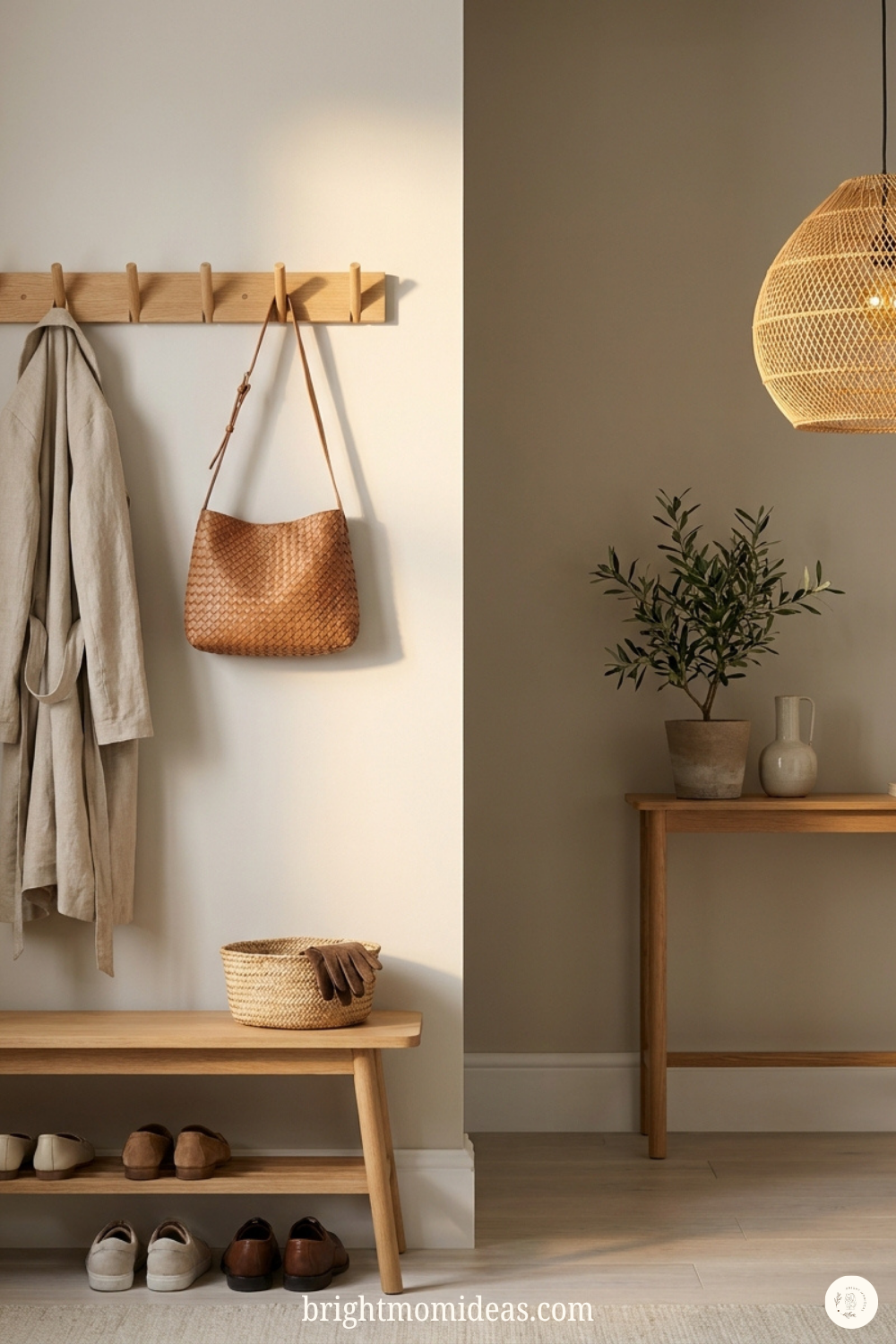
Wall-mounted hooks are the most space-efficient coat storage solution for an entryway and in a Japandi entryway they can be genuinely beautiful. Choose hooks in brushed brass, matte black, or natural wood — consistent with the hardware finish used elsewhere in the space. Mount them at a practical height and allow enough spacing between hooks that coats do not overlap and crush each other.
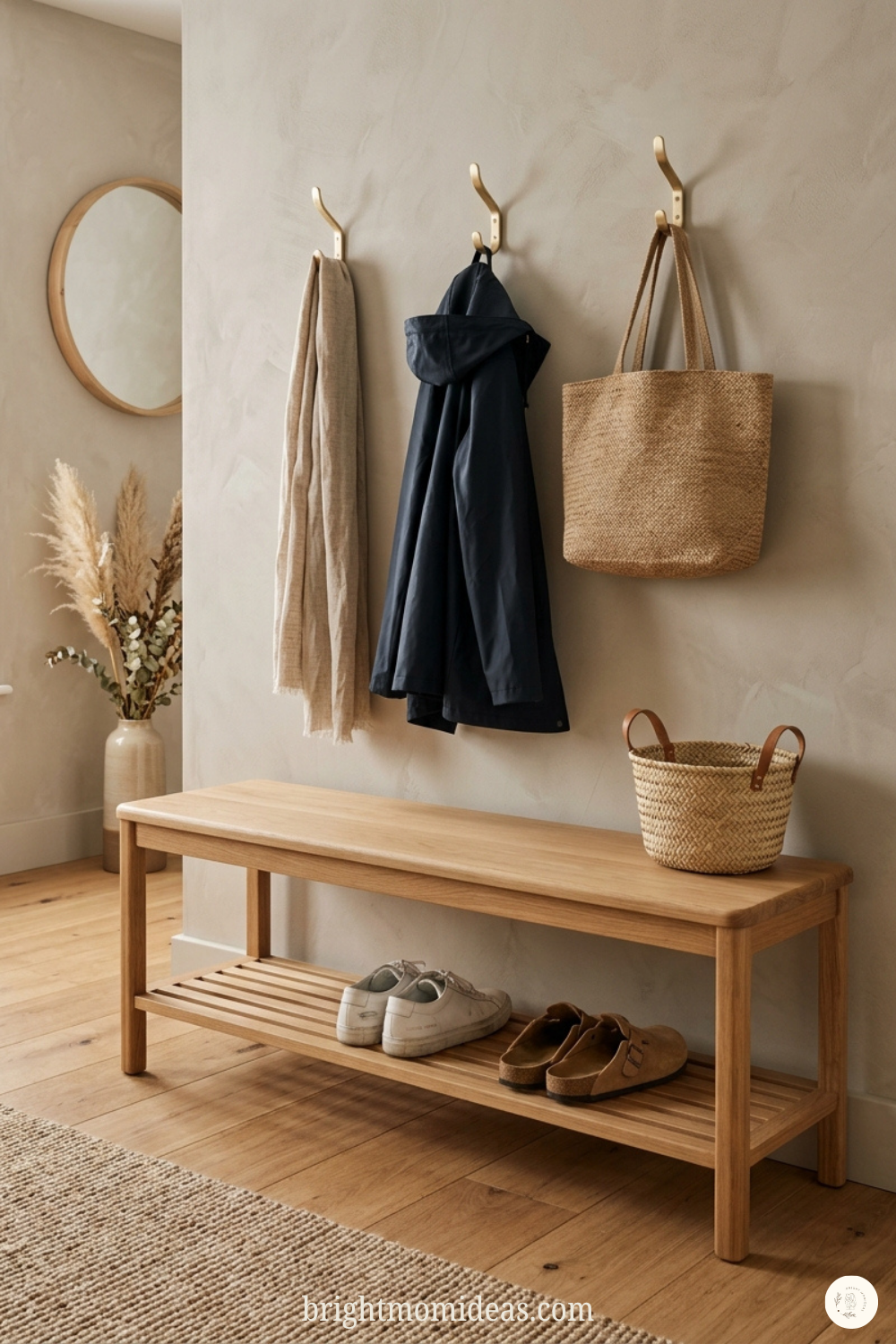
Resist the temptation to have as many hooks as possible. Three or four hooks that each hold one thing look intentional. Eight hooks crowded together with multiple items on each look chaotic regardless of how beautiful the hooks themselves are.
Shoe Storage
Shoes are the single biggest organizational challenge in most entryways. A simple low wooden bench with a shelf below for shoes solves the problem practically while adding a functional seating surface above. Alternatively, a slim low shoe stand with clean closed doors keeps everything hidden while doubling as additional console surface space.
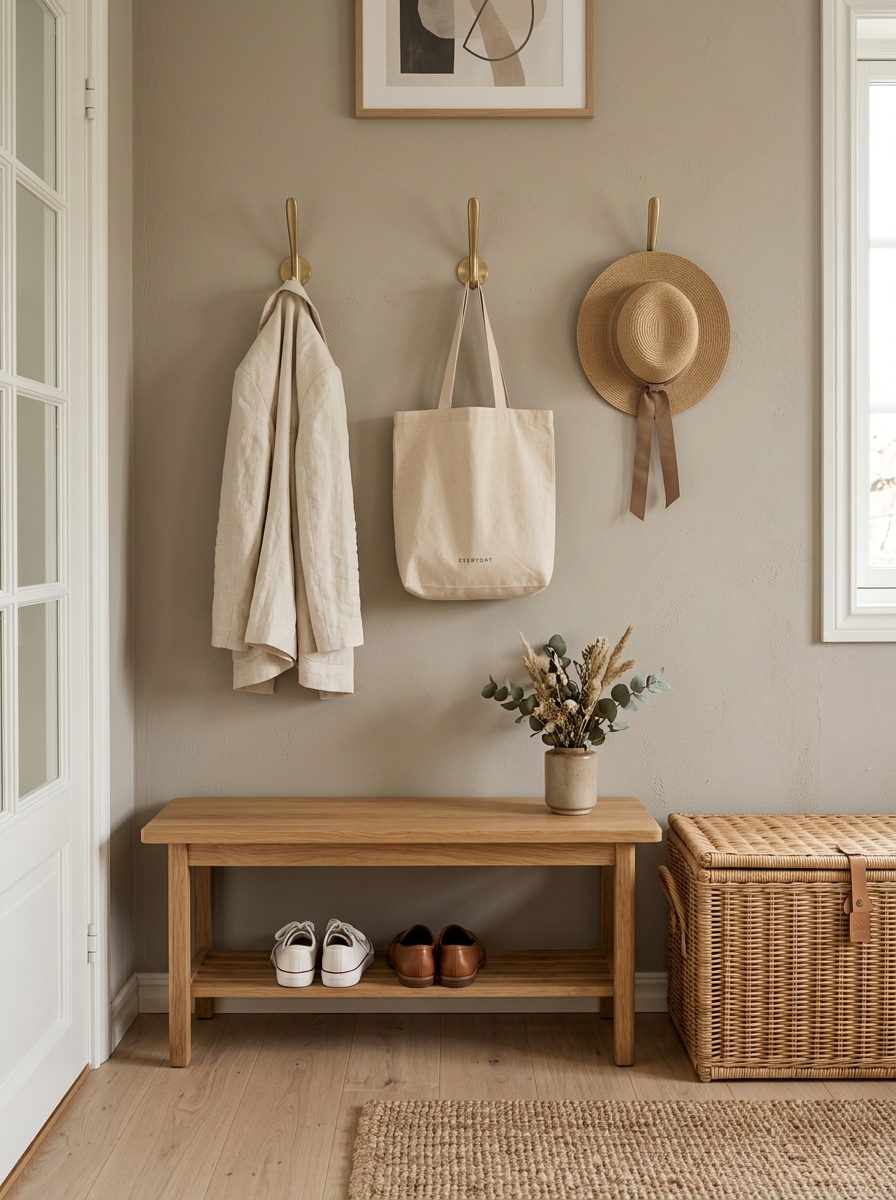
In a Japandi entryway, the shoes that are not currently being worn should not be visible. That single principle transforms the feel of the space more than almost any decorative decision.
Baskets and Bins
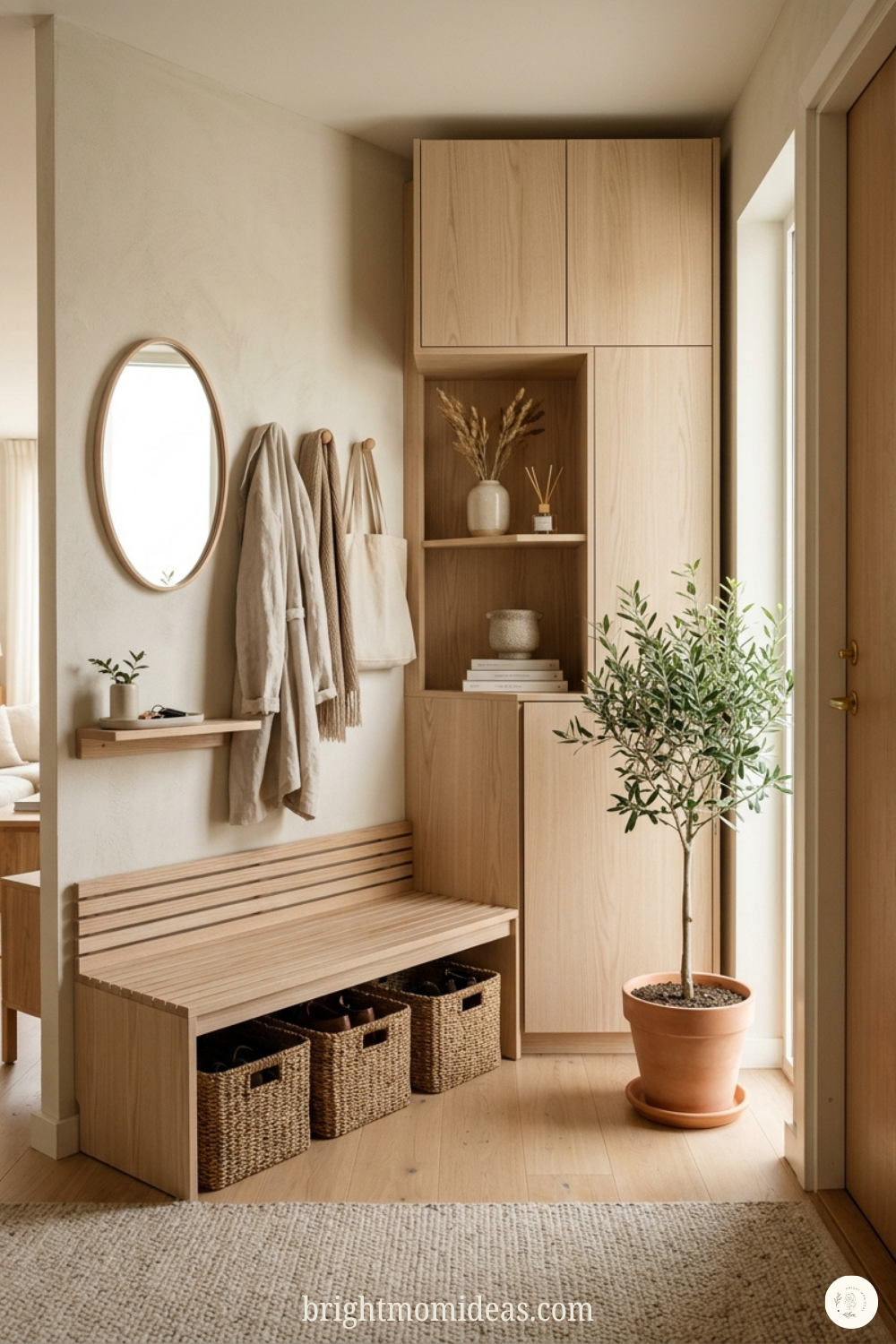
A single large woven basket beside the console table or under the bench provides overflow storage for bags, sports equipment, or anything else that needs to live near the door. In natural rattan or woven seagrass, a storage basket in a Japandi entryway looks like it belongs there rather than like a storage solution that was added as an afterthought.
The Mirror — Making a Small Entryway Feel Bigger
A mirror in a Japandi entryway serves two purposes simultaneously. It reflects light and makes the space feel larger. And it provides a functional moment — the place where you check your appearance before you leave the house.
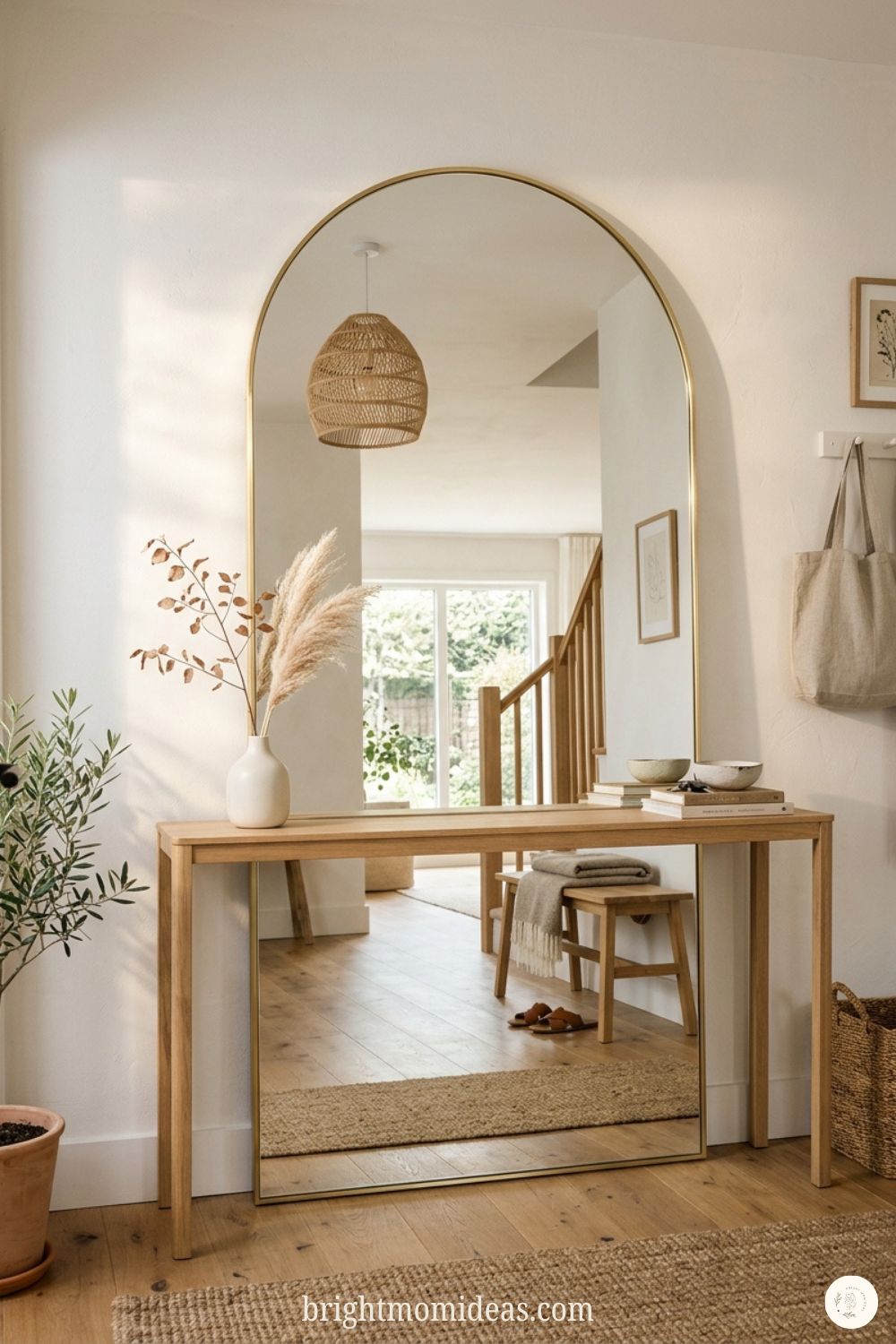
In a Japandi entryway, the mirror frame is as important as the mirror itself. An arch mirror with a thin natural wood or brushed brass frame is the most popular choice right now and works beautifully with almost every Japandi entryway palette. The arch shape adds softness and a slight architectural quality without being ornate.
Lean the mirror against the wall rather than hanging it if the space allows — a leaning mirror feels less formal and more considered. Or hang it slightly lower than standard so it relates more naturally to the console table below it.
Plants and Natural Elements
A Japandi entryway without any living or natural element feels slightly incomplete. Plants and natural objects are not optional additions in this aesthetic. They are part of the core material language.
A single floor plant in a large ceramic or terracotta pot beside the console table or in a corner adds scale and life to an entryway. A trailing pothos or a sculptural snake plant work particularly well because they are low maintenance and visually interesting even when small.
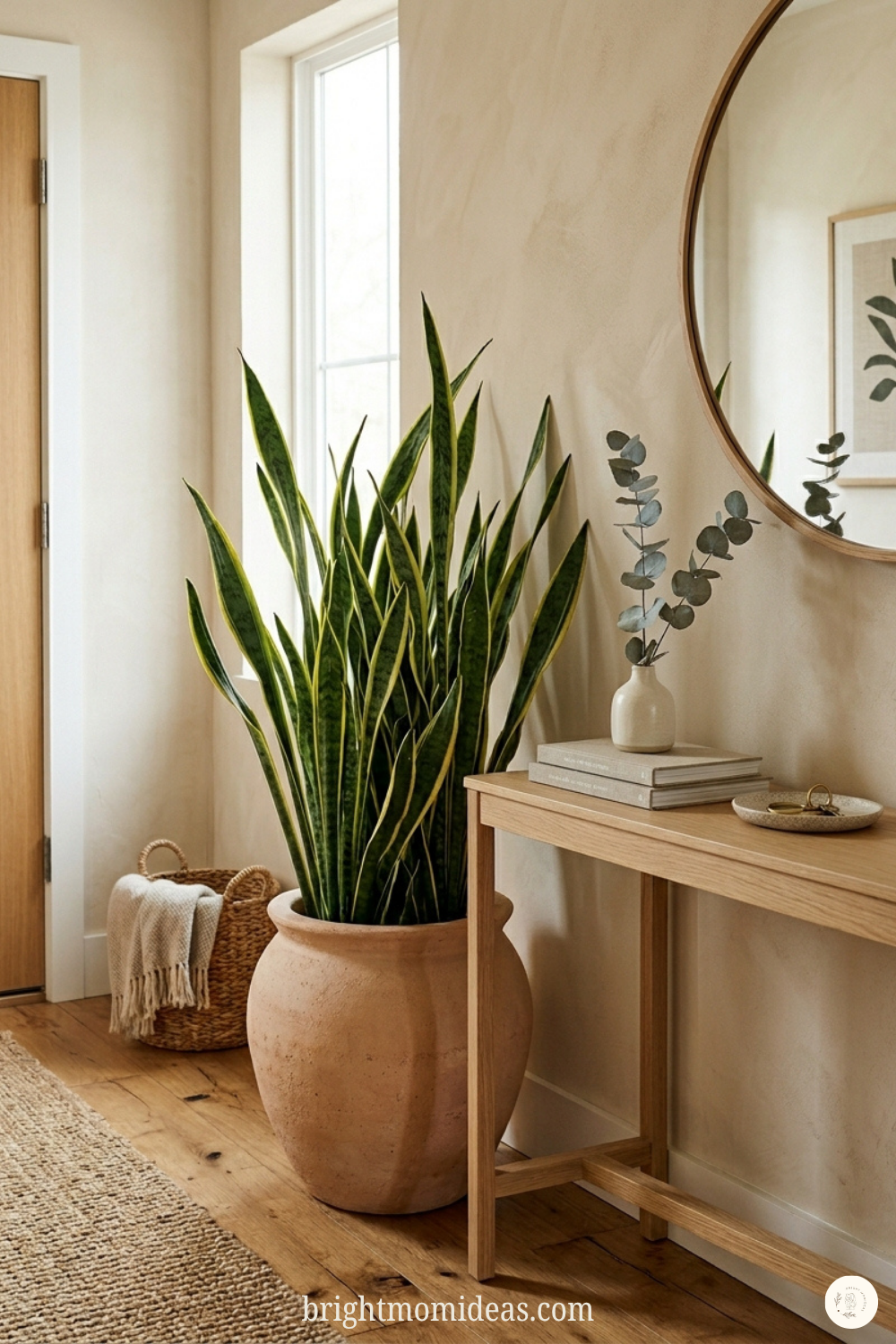
On the console table, a small bud vase with a single dried or fresh stem adds a natural element without taking up meaningful space. Dried pampas, a single eucalyptus branch, or one stem of whatever is growing in season — changed regularly as a small ritual of bringing the outside in.
The seasonal changing of the plant or stem on the console table is one of those small Japandi entryway habits that takes thirty seconds and makes the whole space feel alive and attended to.
Small Entryway — Making It Work When Space Is Limited
Not every home has a generous entryway. Many American homes have a narrow corridor, a small landing, or simply a door that opens directly into the living room. Japandi entryway design actually works better in small spaces than most other styles because its restraint is a natural fit for limited square footage.
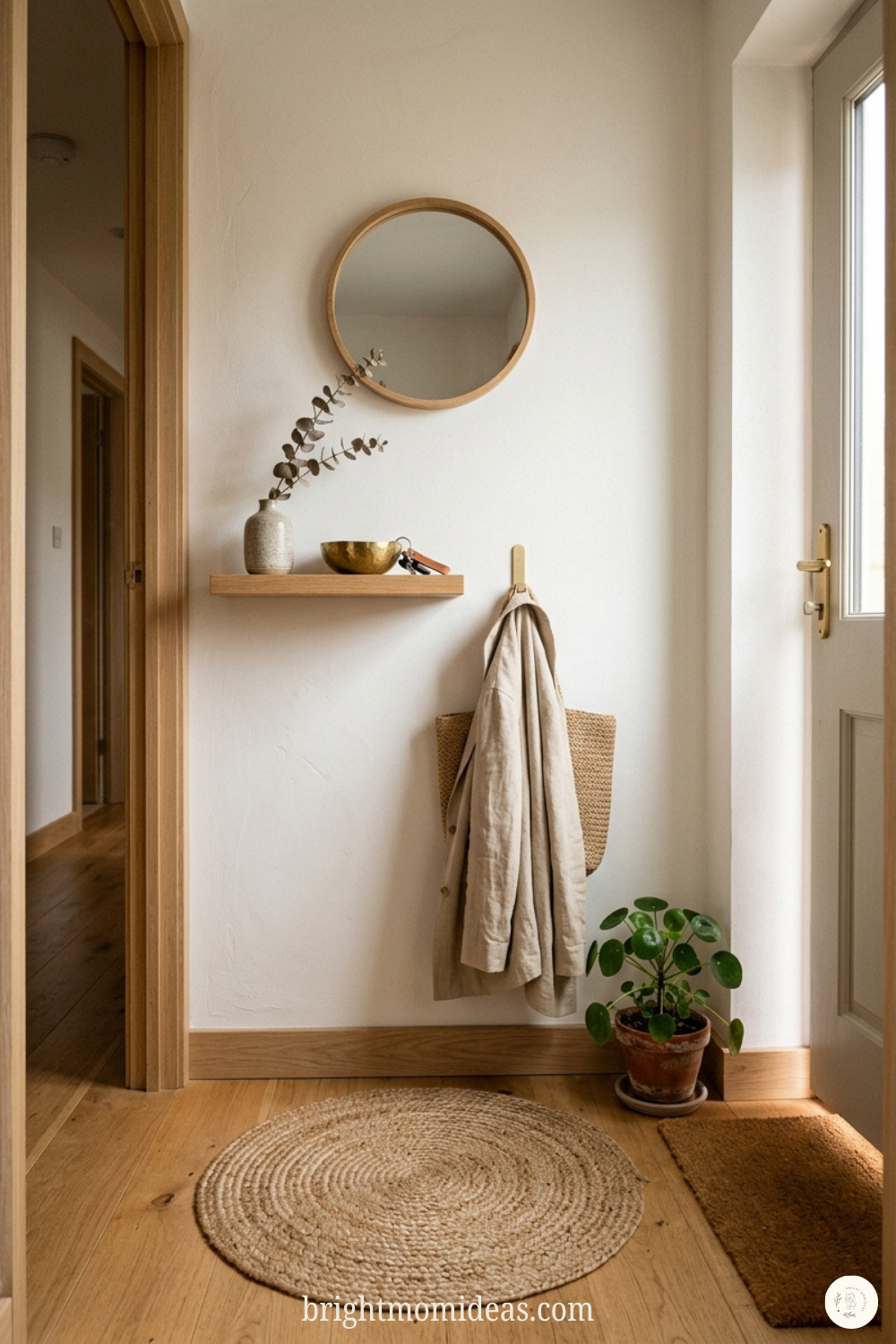
In a genuinely small entryway, the floating shelf replaces the console table. One or two hooks replace the full coat storage. A small round mirror replaces the large arch mirror. One plant instead of two. One object on the shelf instead of three.
The proportions change but the principles stay exactly the same. Warmth through material. Restraint in quantity. Natural elements. Considered lighting. The result is an entryway that feels intentional despite its small size — and intentional always feels larger than random, regardless of the actual square footage.
The Scent of a Japandi Entryway
This is the element that most entryway guides never mention — and it might be the one that has the most immediate impact on how your entryway feels.
Scent is the fastest way to communicate welcome. A Japandi entryway that smells of cedar, sandalwood, clean linen, or fresh eucalyptus communicates something to everyone who enters before they have consciously processed a single visual element.
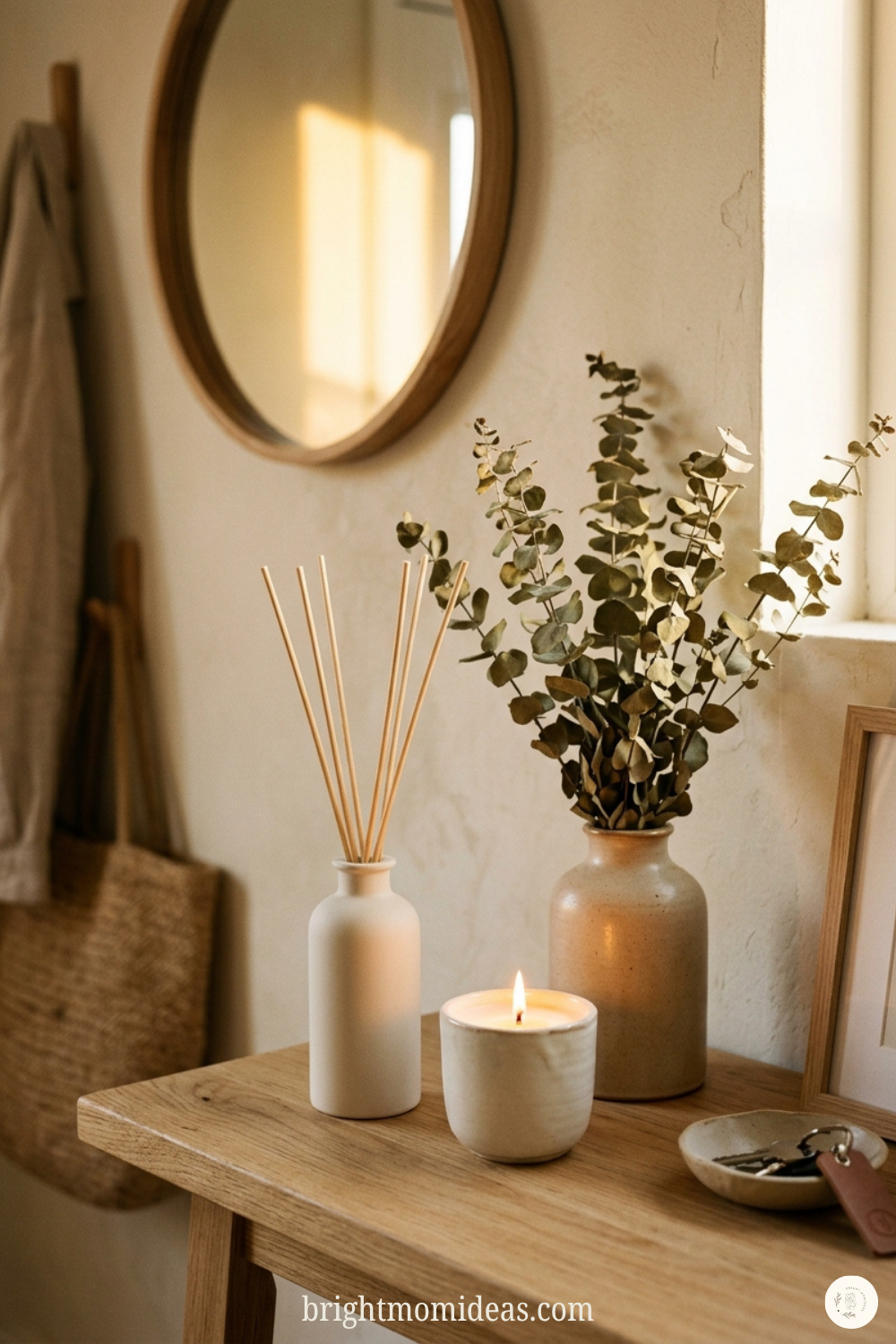
A single reed diffuser on the console table in a warm earthy scent. A small soy candle lit in the evening. Even a few fresh eucalyptus branches in a vase whose scent releases gently as you brush past them.
The scent of your entryway is the detail that visitors remember long after they have forgotten what color the walls were.
Final Thoughts
A Japandi entryway is not a complicated design project. It does not require expensive furniture or a professional designer. It requires a clear philosophy — warmth through natural materials, restraint in what is displayed, function that is honest and beautiful, and light that makes coming home feel like the reward it is supposed to be.
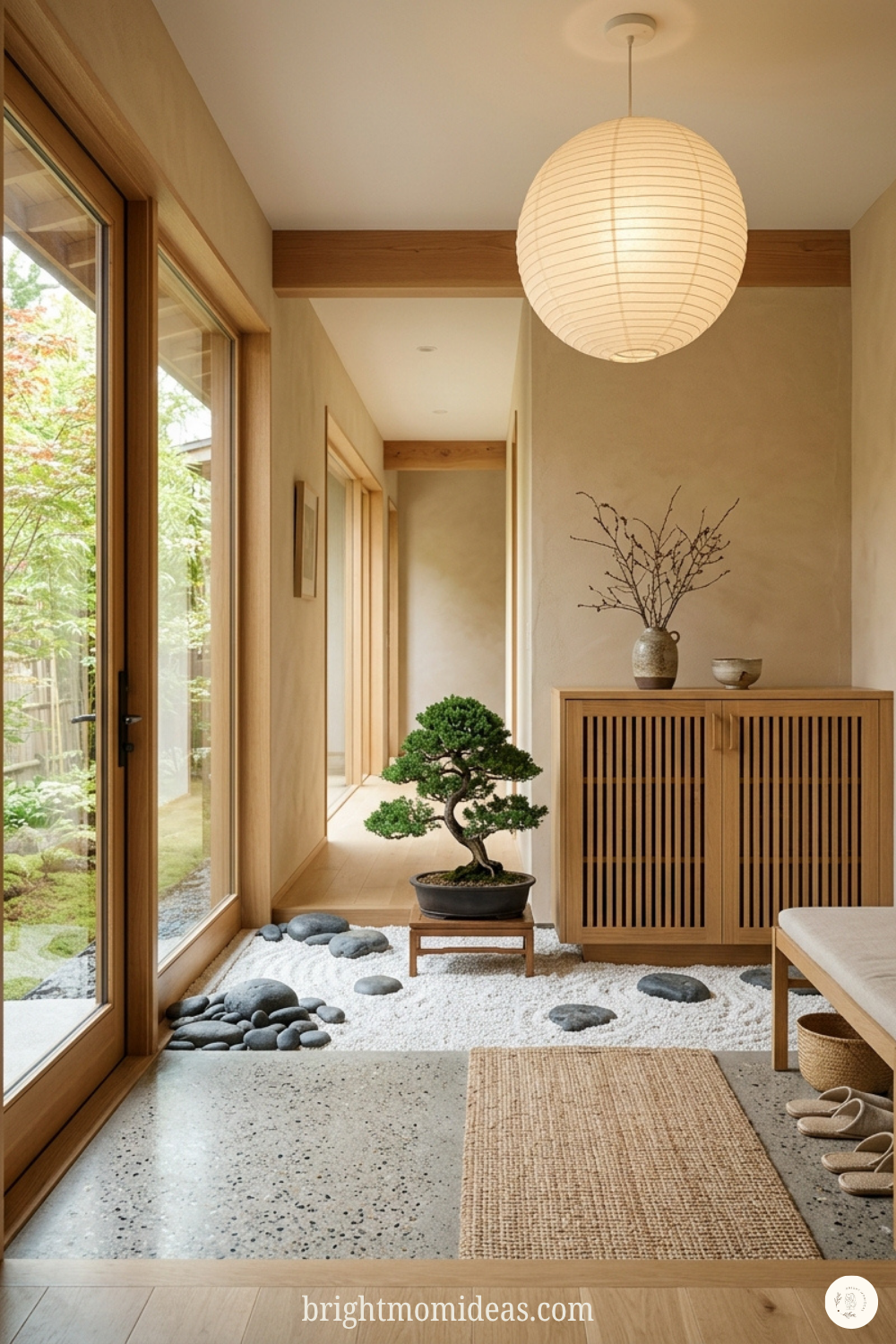
Start with the color on the walls. Then add a console table that you genuinely love the look of. Style it with three objects and give them space. Add a hook for coats and a place for shoes. Put one plant somewhere. Replace your overhead bulb with a warm one. Add a small lamp.
That is a Japandi entryway. It does not take long to create. But the feeling it creates — of coming home to a space that was designed to welcome you — that feeling does not get old.
Save this post to your Pinterest home décor boards and come back to it when you are ready to transform your entryway. 📌
Disclosure: This post contains affiliate links. If you purchase through these links I may earn a small commission at no extra cost to you. Thank you for supporting this blog.
1 thought on “Japandi Entryways That Make Minimalism Feel Warmer Not Colder”